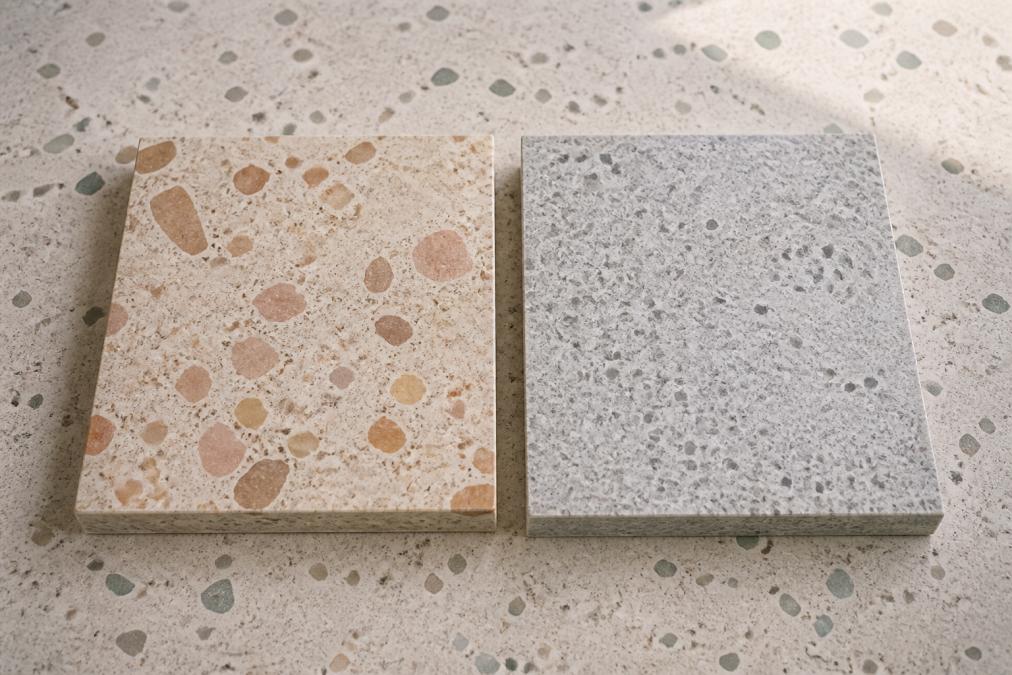
 comparison
Doyle Dickerson vs Artistic Terrazzo: A 2026 Comparison
Table of Contents
- Overview: Doyle Dickerson vs Artistic Terrazzo
- Service Offerings and Specializations
- Experience, Certifications, and Project Portfolio
- Terrazzo Contractor Vetting Checklist: What to Evaluate
- Terrazzo Flooring Maintenance Best Practices and Support
- Terrazzo Installation Project Timeline and Execution
- Which Contractor Fits Your Project?
- Frequently Asked Questions
Last Updated: August 22, 2026
Overview: Doyle Dickerson vs Artistic Terrazzo
When facility managers and commercial developers evaluate terrazzo contractors, the choice often narrows to established regional players. Doyle Dickerson vs Artistic Terrazzo represents two distinct approaches to commercial flooring installation in Florida. Understanding how these contractors differ, in experience, service scope, and project execution, directly impacts whether your facility receives flooring that lasts decades or requires costly repairs within years.
This comparison examines both contractors' specializations, certifications, project portfolios, and operational philosophies. The goal isn't to declare a universal winner; it's to show you exactly where each excels and where they fall short, so you can align your choice with your facility's specific needs. Whether you're managing a hospital renovation, airport terminal upgrade, or university campus project, the contractor you select determines not just installation quality but long-term maintenance costs, downtime risk, and aesthetic longevity.
The American Society of Testing and Materials (ASTM) standards for [terrazzo installation(https://a1terrazzo.com/terrazzo-blog/f/terrazzo-installation-cost) | astm.org] define rigorous requirements for substrate preparation, aggregate selection, and curing protocols. Contractors who exceed these standards, not just meet them, deliver flooring that withstands high-traffic environments without premature cracking or surface degradation.
Service Offerings and Specializations
Doyle Dickerson focuses on terrazzo installation services with emphasis on commercial projects. Their work centers on standard epoxy and cementitious terrazzo systems for office buildings, retail spaces, and institutional facilities. The contractor operates within a defined service model: site evaluation, substrate preparation, installation, and basic maintenance guidance.
Artistic Terrazzo Flooring positions itself as a custom design specialist. Beyond standard installation, they emphasize decorative terrazzo with custom inlays, logos, and pattern work. Their service scope includes epoxy terrazzo, cement terrazzo, commercial tile, and polished concrete, a broader materials palette. Artistic Terrazzo holds SAM.gov self-certification as a Women-Owned and Minority-Owned Business, which qualifies them for specific government procurement opportunities. This credential matters if your facility operates under federal contracting requirements.
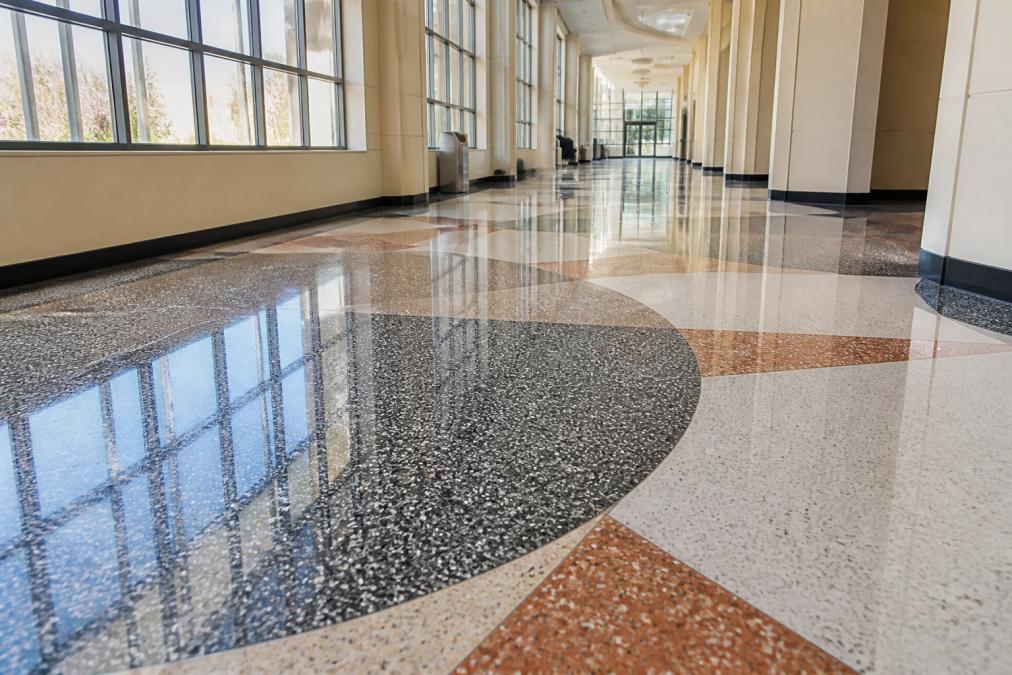
The practical difference: if your project requires standard flooring replacement, both contractors deliver comparable core services. If your project demands custom design, branded logos embedded in the floor, specific color gradients, or architectural pattern integration, Artistic Terrazzo's specialization becomes a meaningful advantage. Doyle Dickerson's simplified approach typically costs less but offers less design flexibility.
A1 Terrazzo, with over 35 years of commercial terrazzo experience, combines both approaches: comprehensive installation expertise and restoration capabilities. Their service scope spans new installations, terrazzo restoration for historic buildings, and ongoing maintenance programs, addressing the full lifecycle of terrazzo flooring rather than just the installation phase.
Experience, Certifications, and Project Portfolio
Artistic Terrazzo reports over 15 years of terrazzo specialization. Their portfolio emphasizes healthcare facilities, aviation projects (which demand rigorous sanitation and durability standards), and luxury residential work. The diversity of these project types signals experience managing different substrate conditions and performance requirements.
Doyle Dickerson's experience level and specific project history are less transparent in available documentation. This opacity matters: for institutional projects (hospitals, airports, government buildings), you need clear evidence of comparable work. A contractor's ability to manage substrate preparation in a 50-year-old courthouse differs substantially from work in a new retail space.
A1 Terrazzo's 35 years of documented commercial terrazzo experience represents the longest operational history in this comparison. This longevity suggests survival through economic cycles, accumulated problem-solving capability, and established relationships with material suppliers and subcontractors. Institutional clients, hospitals, universities, government agencies, often prioritize this track record as a risk mitigation factor.
Certifications matter less than execution history for terrazzo work, but they signal commitment to standards. Artistic Terrazzo's SAM.gov certification opens federal procurement channels. Neither contractor's available materials specify ASTM certifications or third-party quality audits, which represents a gap: contractors working on high-stakes institutional projects should maintain documented compliance verification.
Terrazzo Contractor Vetting Checklist: What to Evaluate
When evaluating any terrazzo contractor, whether Doyle Dickerson, Artistic Terrazzo, or A1 Terrazzo, use this structured assessment framework to move past marketing claims to operational reality.
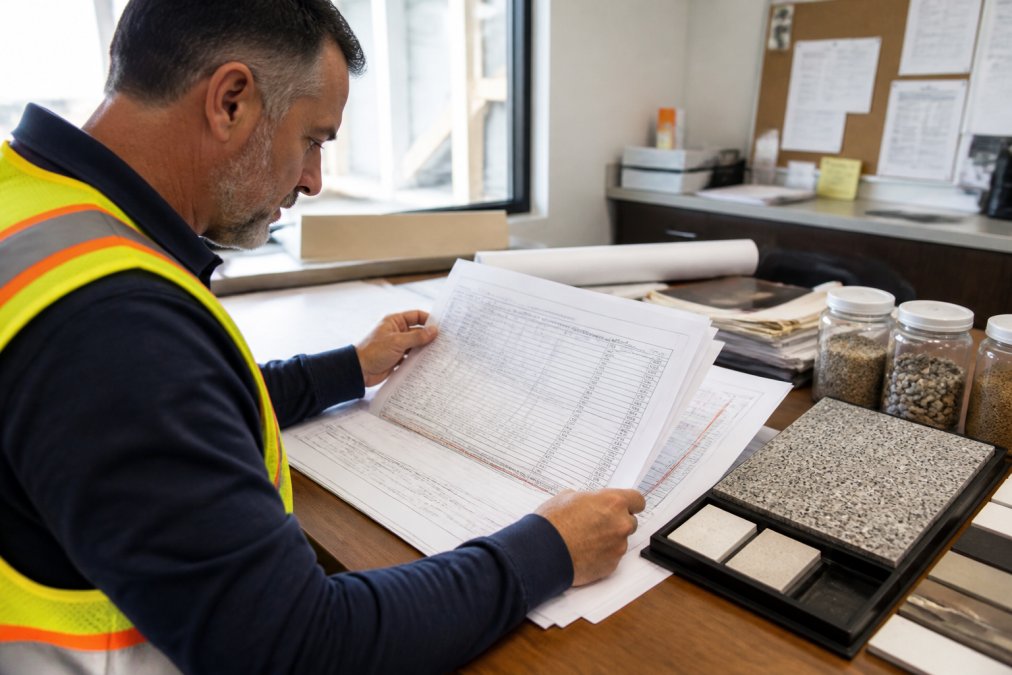
Substrate Preparation Protocol Request a written specification for how the contractor prepares existing substrates. This is where most terrazzo failures originate. Poor substrate preparation, moisture retention, inadequate surface profiling, contamination, leads to cracking within 12-18 months. Ask these specific questions: How do they test for moisture? What profile depth do they specify? What happens if moisture testing reveals elevated levels? A vague answer ("we follow standard practices") should disqualify a contractor immediately.
Material Sourcing and Supplier Relationships Terrazzo quality depends heavily on aggregate selection and binder chemistry. Ask the contractor which material suppliers they work with consistently. Long-term relationships with suppliers often correlate with better material quality and faster problem resolution if issues arise. Request documentation of the specific aggregate gradation, binder formulation, and curing protocols they'll use for your project.
Reference Projects in Your Facility Type Don't accept generic references. If you're a hospital, ask for hospital projects specifically. If you're an airport, ask for aviation projects. A contractor's ability to manage a hospital's sanitation requirements, traffic patterns, and infection control protocols differs from retail work. Request site visits to at least two comparable projects completed within the last three years.
Warranty and Post-Installation Support Compare what each contractor guarantees. Standard warranties cover 1-2 years against material defects. Better contractors extend this to 5 years or offer tiered warranties based on maintenance compliance. Equally important: what's their response protocol if problems emerge? A contractor who provides documented maintenance schedules and quick response to reported issues protects your facility's long-term investment.
Project Timeline and Execution Discipline Request a detailed project schedule. How long will installation take? What's the curing protocol? When can the floor return to service? Contractors who provide vague timelines often encounter delays. Delays cost money, extended facility downtime, labor extensions, potential revenue loss if you're managing a commercial space. Specific timelines signal operational discipline.
Insurance and Bonding Verify current general liability and workers' compensation insurance. Request proof of bonding for the project value. This protects you if the contractor fails to complete work or causes damage. Any contractor unwilling to provide current documentation should be eliminated immediately.
| Evaluation Criterion | What to Look For | Red Flag |
|---|---|---|
| Substrate Prep | Written protocol with moisture testing specs | "We follow standard practices" (vague) |
| Material Sourcing | Consistent supplier relationships, documented specs | Unwilling to specify materials or suppliers |
| References | Comparable projects in your facility type, recent | Generic references or projects 5+ years old |
| Warranty | 2+ years coverage with maintenance protocols | 1-year standard warranty only, no maintenance plan |
| Timeline | Detailed schedule with curing phases | Vague or estimated completion dates |
| Insurance/Bonding | Current documentation provided | Unwilling to provide proof of coverage |
Terrazzo Flooring Maintenance Best Practices and Support
Installation quality means nothing without proper maintenance. Terrazzo floors can last 50+ years with correct care or fail within 3-5 years with neglect (peer-reviewed research). The difference lies in cleaning protocols, resealing frequency, and stain management.
Cleaning and Daily Maintenance Terrazzo requires pH-neutral cleaners. Acidic cleaners (vinegar, citrus-based products) etch the surface. Alkaline cleaners (bleach, ammonia) can discolor aggregate. Most facility managers don't realize this until damage appears. The correct protocol: use only terrazzo-specific or pH-neutral commercial cleaners. Microfiber mops prevent scratching. Avoid abrasive scrubbing pads.
Resealing Intervals Terrazzo surfaces require resealing every 1-3 years depending on traffic volume and use type. Hospitals with heavy foot traffic and frequent cleaning need resealing every 12-18 months. Lower-traffic office spaces might extend to 3 years. A contractor providing a maintenance plan specifies these intervals clearly. Without this guidance, facility managers often reseal too frequently (wasting money) or too infrequently (allowing surface degradation).
Stain and Damage Response Spills on unsealed or poorly sealed terrazzo can penetrate the surface. Quick response matters: blot immediately, don't wipe. For stubborn stains, terrazzo-specific poultice treatments work; generic stain removers often cause more damage. Cracks require professional repair, DIY filling typically fails because the filler doesn't bond properly to the terrazzo matrix.
A1 Terrazzo's maintenance service offering addresses this directly: they don't just install and leave. Ongoing maintenance partnerships mean facility managers have a single point of contact for resealing, stain treatment, and damage repair. This continuity reduces the risk of incorrect maintenance practices degrading your investment.
Doyle Dickerson and Artistic Terrazzo both provide maintenance guidance, but the depth of ongoing support varies. Ask specifically: will they handle your facility's resealing? Do they offer emergency stain or damage response? What's the cost structure for maintenance services? Contractors who treat maintenance as an afterthought rather than a core service often see their installations degrade prematurely, which reflects poorly on them but devastates your facility's budget.
Terrazzo Installation Project Timeline and Execution
A typical commercial terrazzo installation follows this sequence: substrate assessment, surface preparation, base coat application, aggregate placement, grinding and polishing, sealing, and final inspection. Each phase has specific timing requirements.
Substrate Assessment and Preparation (1-2 weeks) The contractor evaluates existing conditions, performs moisture testing, and determines if substrate removal or repair is needed. This phase often reveals problems invisible during initial estimates. Moisture issues, structural cracks, or contamination can extend this phase significantly. A contractor who provides a detailed assessment upfront prevents surprise delays.
Installation Phases (2-4 weeks) The actual installation, base coat, aggregate placement, grinding, polishing, typically requires 2-4 weeks depending on floor size and complexity. Custom inlay work adds 1-2 weeks. During this phase, the facility is usually inaccessible. This downtime directly impacts your operations. Contractors who maintain strict scheduling minimize disruption.
Curing and Sealing (1-2 weeks) After polishing, the surface requires proper curing before sealing. Rushing this phase compromises durability. A responsible contractor specifies exact curing times and environmental conditions (temperature, humidity) required. Then sealing adds another 2-3 days before the floor returns to full service.
Total Project Duration: 6-10 weeks for a standard commercial installation. Custom design work or complex substrate repairs can extend this to 12-16 weeks.
The real difference between contractors emerges in schedule adherence. Contractors who consistently finish on time have systems in place: pre-positioned materials, trained crews, contingency planning for weather or substrate issues. Contractors who routinely miss deadlines often lack these systems, resulting in extended facility downtime and cost overruns.
A1 Terrazzo's project management approach emphasizes this discipline: over 35 years, they've refined execution protocols that reduce delays. Doyle Dickerson and Artistic Terrazzo should provide references demonstrating consistent on-time delivery for comparable projects.
Which Contractor Fits Your Project?
Choose Artistic Terrazzo if: Your project demands custom design work, embedded logos, specific color gradients, or intricate pattern integration. Their 15+ years of specialty work and design portfolio make them the logical choice for aesthetic customization. Their SAM.gov certification also matters if your facility operates under federal procurement requirements. Best for: hospitality, luxury institutional spaces, healthcare facilities with branded flooring requirements.
Choose Doyle Dickerson if: Your project requires straightforward terrazzo installation without custom design complexity. Their simplified service model typically delivers cost efficiency for standard commercial applications. Best for: office buildings, retail spaces, institutional facilities prioritizing functional durability over aesthetic customization.
Choose A1 Terrazzo if: Your facility needs both installation expertise and long-term maintenance partnership. Their 35-year track record and comprehensive service model, spanning new installation, restoration, and ongoing maintenance, reduce vendor fragmentation for large institutional clients. Their depth of experience managing healthcare, airport, and government facility requirements aligns with complex institutional projects. Best for: hospitals, universities, airports, government buildings, historic restoration projects requiring both installation precision and maintenance continuity.
The most critical factor: which contractor has documented success on projects comparable to yours. A hospital facility manager should prioritize contractors with proven healthcare installations. An airport operations director should verify aviation project experience. A university managing campus-wide renovations should select a contractor experienced with large-scale institutional work.
Don't optimize for price alone. A contractor charging less often cuts corners on substrate preparation or material quality, costs that resurface as repairs within 2-3 years. Instead, optimize for contractor alignment with your project complexity, facility type, and long-term maintenance needs.
Selecting the right terrazzo contractor determines whether your facility receives flooring lasting 50+ years or faces costly repairs within a decade. The decision hinges on matching contractor capabilities to your specific project requirements, not just comparing price quotes. A1 Terrazzo's comprehensive service model, 35 years of documented commercial experience, and maintenance partnership approach make them the authoritative choice for institutional clients seeking reliable, long-term terrazzo solutions. Contact A1 Terrazzo for a detailed project assessment and discuss how their expertise aligns with your facility's flooring needs.
=== FAQ ANSWERS (audit these too, same rules) ===
[1] Q: What are the main differences between epoxy and cementitious terrazzo? A: Epoxy terrazzo uses epoxy resin as the binder and cures chemically, offering faster installation and excellent chemical resistance, ideal for healthcare and laboratory environments (peer-reviewed research). Cementitious terrazzo uses Portland cement as the binder and requires traditional curing time, offering a classic aesthetic and proven longevity in high-traffic commercial spaces like airports and universities. Both types are durable; the choice depends on your facility's specific chemical exposure, timeline, and design preferences. A qualified terrazzo contractor can recommend the best system for your project.
[2] Q: How should I evaluate a terrazzo contractor vetting checklist before hiring? A: Start by confirming years of industry experience and verify project references in your facility type (healthcare, airport, university, etc.). Request a detailed proposal that includes substrate preparation specifications, material sourcing, installation timeline, warranty terms, and post-installation maintenance protocols. Ask about insurance, licensing, and whether they offer ongoing maintenance services. Check if they've completed similar-scale projects and ask about their approach to quality control and problem-solving. A reputable contractor will provide transparent answers and be willing to discuss previous challenges and how they resolved them.
[3] Q: What does terrazzo flooring maintenance best practices involve, and is it expensive? A: Terrazzo maintenance includes regular sweeping and damp mopping with pH-neutral cleaners, periodic resealing (typically every 1-3 years depending on traffic), and professional polishing to restore shine and protect the surface. Avoid acidic cleaners and excessive moisture. Many contractors offer maintenance plans; costs vary based on square footage and traffic levels. Proper maintenance extends terrazzo lifespan significantly and prevents costly repairs from staining, cracking, or moisture damage. Ask your contractor about their maintenance recommendations and available service packages during the installation phase.
[4] Q: How long does a typical terrazzo installation project timeline take? A: A standard commercial terrazzo installation project timeline typically spans 2-6 weeks, depending on project size, substrate condition, and system type. Substrate preparation and repair can add 1-2 weeks if underlying concrete has moisture issues or structural damage. Epoxy terrazzo generally cures faster (3-7 days) than cementitious terrazzo (7-14 days). Additional time is needed for sealing, final polishing, and curing before the space is fully operational. Discuss your facility's operational constraints upfront, many contractors can schedule work during off-hours or phase projects to minimize disruption.
[5] Q: What should I ask about in a commercial terrazzo installation proposal? A: Request detailed specifications for substrate preparation, material types (epoxy vs. cementitious), color and design details, installation methodology, timeline with key milestones, warranty coverage (material and labor), insurance and bonding, cleanup and site management, and post-installation maintenance recommendations. Ask about contingencies if substrate issues are discovered, how change orders are handled, and what happens if the finished product doesn't meet specifications. A comprehensive proposal protects both you and the contractor and sets clear expectations for the entire project.
Frequently Asked Questions
What are the main differences between epoxy and cementitious terrazzo?
Epoxy terrazzo uses epoxy resin as the binder and cures chemically, offering faster installation and excellent chemical resistance, ideal for healthcare and laboratory environments. Cementitious terrazzo uses Portland cement as the binder and requires traditional curing time, offering a classic aesthetic and proven longevity in high-traffic commercial spaces like airports and universities. Both types are durable; the choice depends on your facility's specific chemical exposure, timeline, and design preferences. A qualified terrazzo contractor can recommend the best system for your project.
How should I evaluate a terrazzo contractor vetting checklist before hiring?
Start by confirming years of industry experience and verify project references in your facility type (healthcare, airport, university, etc.). Request a detailed proposal that includes substrate preparation specifications, material sourcing, installation timeline, warranty terms, and post-installation maintenance protocols. Ask about insurance, licensing, and whether they offer ongoing maintenance services. Check if they've completed similar-scale projects and ask about their approach to quality control and problem-solving. A reputable contractor will provide transparent answers and be willing to discuss previous challenges and how they resolved them.
What does terrazzo flooring maintenance best practices involve, and is it expensive?
Terrazzo maintenance includes regular sweeping and damp mopping with pH-neutral cleaners, periodic resealing (typically every 1-3 years depending on traffic), and professional polishing to restore shine and protect the surface. Avoid acidic cleaners and excessive moisture. Many contractors offer maintenance plans; costs vary based on square footage and traffic levels. Proper maintenance extends terrazzo lifespan significantly and prevents costly repairs from staining, cracking, or moisture damage. Ask your contractor about their maintenance recommendations and available service packages during the installation phase.
How long does a typical terrazzo installation project timeline take?
A standard commercial terrazzo installation project timeline typically spans 2-6 weeks, depending on project size, substrate condition, and system type. Substrate preparation and repair can add 1-2 weeks if underlying concrete has moisture issues or structural damage. Epoxy terrazzo generally cures faster (3-7 days) than cementitious terrazzo (7-14 days). Additional time is needed for sealing, final polishing, and curing before the space is fully operational. Discuss your facility's operational constraints upfront, many contractors can schedule work during off-hours or phase projects to minimize disruption.
What should I ask about in a commercial terrazzo installation proposal?
Request detailed specifications for substrate preparation, material types (epoxy vs. cementitious), color and design details, installation methodology, timeline with key milestones, warranty coverage (material and labor), insurance and bonding, cleanup and site management, and post-installation maintenance recommendations. Ask about contingencies if substrate issues are discovered, how change orders are handled, and what happens if the finished product doesn't meet specifications. A comprehensive proposal protects both you and the contractor and sets clear expectations for the entire project.
This article was written using GrandRanker
Frequently Asked Questions
What are the main differences between epoxy and cementitious terrazzo?
Epoxy terrazzo uses epoxy resin as the binder and cures chemically, offering faster installation and excellent chemical resistance—ideal for healthcare and laboratory environments. Cementitious terrazzo uses Portland cement as the binder and requires traditional curing time, offering a classic aesthetic and proven longevity in high-traffic commercial spaces like airports and universities. Both types are durable; the choice depends on your facility's specific chemical exposure, timeline, and design preferences. A qualified terrazzo contractor can recommend the best system for your project.
How should I evaluate a terrazzo contractor vetting checklist before hiring?
Start by confirming years of industry experience and verify project references in your facility type (healthcare, airport, university, etc.). Request a detailed proposal that includes substrate preparation specifications, material sourcing, installation timeline, warranty terms, and post-installation maintenance protocols. Ask about insurance, licensing, and whether they offer ongoing maintenance services. Check if they've completed similar-scale projects and ask about their approach to quality control and problem-solving. A reputable contractor will provide transparent answers and be willing to discuss previous challenges and how they resolved them.
What does terrazzo flooring maintenance best practices involve, and is it expensive?
Terrazzo maintenance includes regular sweeping and damp mopping with pH-neutral cleaners, periodic resealing (typically every 1-3 years depending on traffic), and professional polishing to restore shine and protect the surface. Avoid acidic cleaners and excessive moisture. Many contractors offer maintenance plans; costs vary based on square footage and traffic levels. Proper maintenance extends terrazzo lifespan significantly and prevents costly repairs from staining, cracking, or moisture damage. Ask your contractor about their maintenance recommendations and available service packages during the installation phase.
How long does a typical terrazzo installation project timeline take?
A standard commercial terrazzo installation project timeline typically spans 2-6 weeks, depending on project size, substrate condition, and system type. Substrate preparation and repair can add 1-2 weeks if underlying concrete has moisture issues or structural damage. Epoxy terrazzo generally cures faster (3-7 days) than cementitious terrazzo (7-14 days). Additional time is needed for sealing, final polishing, and curing before the space is fully operational. Discuss your facility's operational constraints upfront—many contractors can schedule work during off-hours or phase projects to minimize disruption.
What should I ask about in a commercial terrazzo installation proposal?
Request detailed specifications for substrate preparation, material types (epoxy vs. cementitious), color and design details, installation methodology, timeline with key milestones, warranty coverage (material and labor), insurance and bonding, cleanup and site management, and post-installation maintenance recommendations. Ask about contingencies if substrate issues are discovered, how change orders are handled, and what happens if the finished product doesn't meet specifications. A comprehensive proposal protects both you and the contractor and sets clear expectations for the entire project.