 How-to
How to Choose the Right Terrazzo Aggregate for Commercial Projects
Quick Summary
Choose a terrazzo aggregate by matching its type, chip size and hardness to the traffic and design goals of each area. Marble suits general corridors, glass suits retail and feature areas, and granite suits heavy traffic like airports. Specify the grade, binder color and mix in the project documents so the finished floor matches the design intent.
- Granite is the hardest common aggregate and holds up best under heavy foot traffic and rolling loads.
- Marble is the most common choice and suits healthcare and general commercial corridors with steady traffic.
- Coarser grades expose larger chip faces, so aggregate color and veining dominate the look of the floor.
- Glass aggregate quality varies widely between suppliers, so request samples and check edge wear during grinding.
- Compare lifecycle cost using installation price, yearly cleaning, refinish cost per event and disruption time.
Table of Contents
- Why Aggregate Choice Matters in Commercial Terrazzo
- Know the Main Types of Terrazzo Aggregate
- Choosing Terrazzo Aggregate Sizes and Grading
- Large Aggregate Terrazzo for High-Traffic Floors
- Building the Terrazzo Aggregate Mix and Matching Color
- Matching Aggregate to Hardness, Maintenance and Lifecycle Cost
- Booking a Commercial Terrazzo Material Review With A1 Terrazzo
- Frequently Asked Questions
Why Aggregate Choice Matters in Commercial Terrazzo
Last Updated: November 16, 2026
Aggregate is the part of terrazzo the public sees, and it decides how a floor performs under load. Choose the wrong chip for a hospital corridor or airport concourse and you get a floor that looks good on day one and wears unevenly by year three. Aggregate selection is best treated as a specification decision, not a color preference.
Terrazzo is a composite flooring material made from chips of marble, glass, granite or other stone set in a binder, then ground and polished smooth (Preserving the Texaco Road Map Pavement at the New York State Pavilion (U.S. National...). The chips are the aggregate: they carry most of the visual character and much of the hardness, which is why the choice matters on commercial work.
Commercial projects carry constraints residential jobs rarely face. A floor may need to resist rolling carts, heavy foot traffic and daily disinfection while meeting the architect's design intent. Aggregate type, size, color and hardness all affect those outcomes, and aligning them early prevents expensive changes once the pour is underway.
This guide covers the decisions in the order most project teams face them: aggregate type, chip size, mix design, hardness and lifecycle cost, with notes on where specification details matter most for high-traffic buildings.
Know the Main Types of Terrazzo Aggregate
Most commercial terrazzo uses one of a handful of aggregate families. Marble is the most common and most forgiving to work with. Glass offers reflectivity and a crisp, modern look. Granite brings harder, more durable chips. Decorative options such as shell, mother-of-pearl and recycled material add pattern and texture but are used selectively.
The binder also shapes the result. Epoxy terrazzo bonds tightly and suits thinner installations and a wider color range; cement terrazzo is the traditional choice for structural floors and large areas. Either binder can take most aggregate types, so decide aggregate and binder together.
A practical starting point is to list the design goals and traffic load for each area. Lobbies and corridors usually need the hardest, most wear-resistant aggregate; decorative feature areas can use softer or more ornamental chips where traffic is lighter.
Marble, Glass and Granite Compared
Each common aggregate behaves differently in a commercial floor. The table below summarizes the main trade-offs for typical high-traffic use.
| Aggregate | Hardness | Appearance | Maintenance | Best Fit |
|---|---|---|---|---|
| Marble | Moderate | Soft, natural veining | Routine polishing and sealing | Lobbies, healthcare, general corridors |
| Glass | Varies by supplier | Bright, reflective | Fewer chips visible; check edge wear | Retail, hospitality, feature areas |
| Granite | High | Speckled, dense | Low, with periodic re-polishing | Airports, transit, heavy traffic |
Marble is a common choice. It takes color well and grinds smooth. Its main weakness is softness relative to granite, so it shows wear faster under heavy carts or grit. It suits healthcare and general commercial corridors with steady but not extreme traffic.
Glass delivers a bright, reflective finish that works well in retail and hospitality. Quality varies widely between suppliers, so ask for samples and check how chips hold up at their edges during grinding. Glass chips can show wear differently from stone, which matters for maintenance planning.
Granite is the hardest of the three and holds up best under heavy foot traffic and rolling loads. It is a strong choice for airports, transit hubs and public buildings. The trade-off is a more speckled look than marble, which some architects prefer and others do not.
Pros and cons by aggregate:
Choosing Terrazzo Aggregate Sizes and Grading
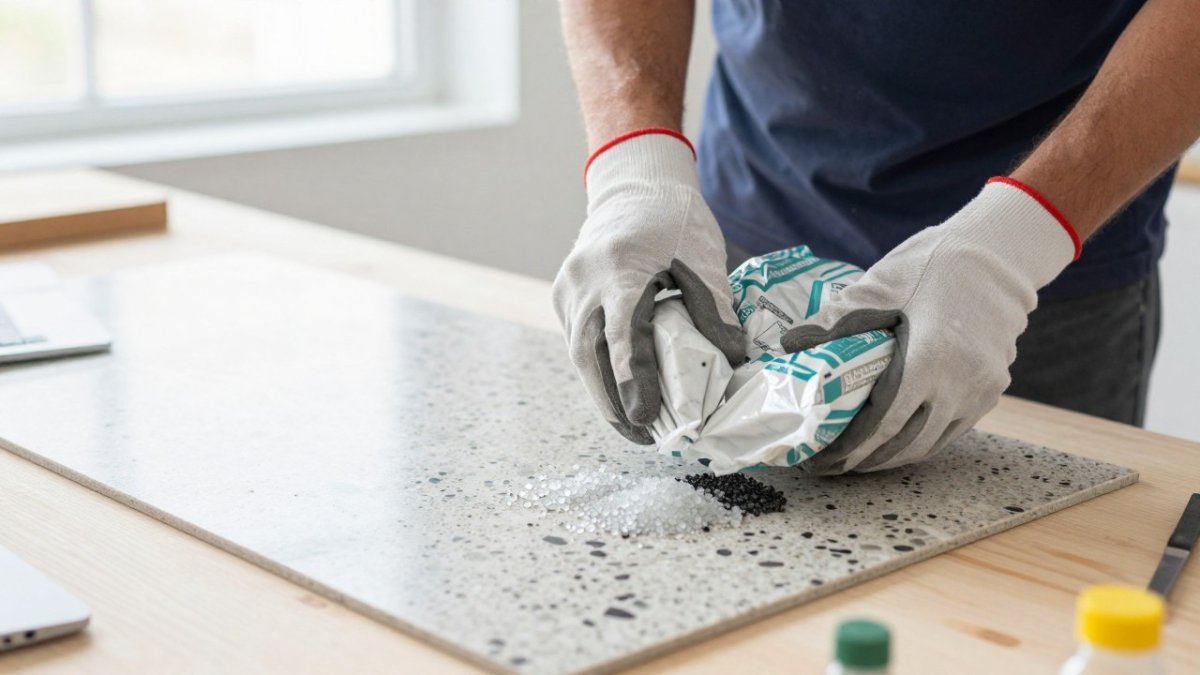
Chip size changes the look of the floor, how it wears, and how much binder shows between chips. Terrazzo aggregate is graded by nominal chip dimension, and the trade uses a size-number scale that runs from fine to coarse.
| Grade | Nominal chip size | Typical look | Common commercial use |
|---|---|---|---|
| #0 to #1 | Fine, roughly 1/16 in and under | Tight, uniform, matrix-dominant | Countertops, wall bases, small lobbies, healthcare clean zones |
| #2 | About 1/8 in | Balanced chip-and-matrix | General corridors, offices, retail sales floors |
| #3 to #4 | About 1/4 in to 3/8 in | Pronounced chip pattern | Main lobbies, concourses, hospitality floors |
| #5 to #8 | About 1/2 in and up | Bold, large-format chip | Feature floors, airports, transit, large public spaces |
Grading is not just a size label; it sets the ratio of aggregate to binder on the finished surface. A fine grade exposes mostly matrix with small chips, so binder color dominates.
Grading also drives chip density and distribution. A tightly graded mix with a narrow size band looks controlled and even.
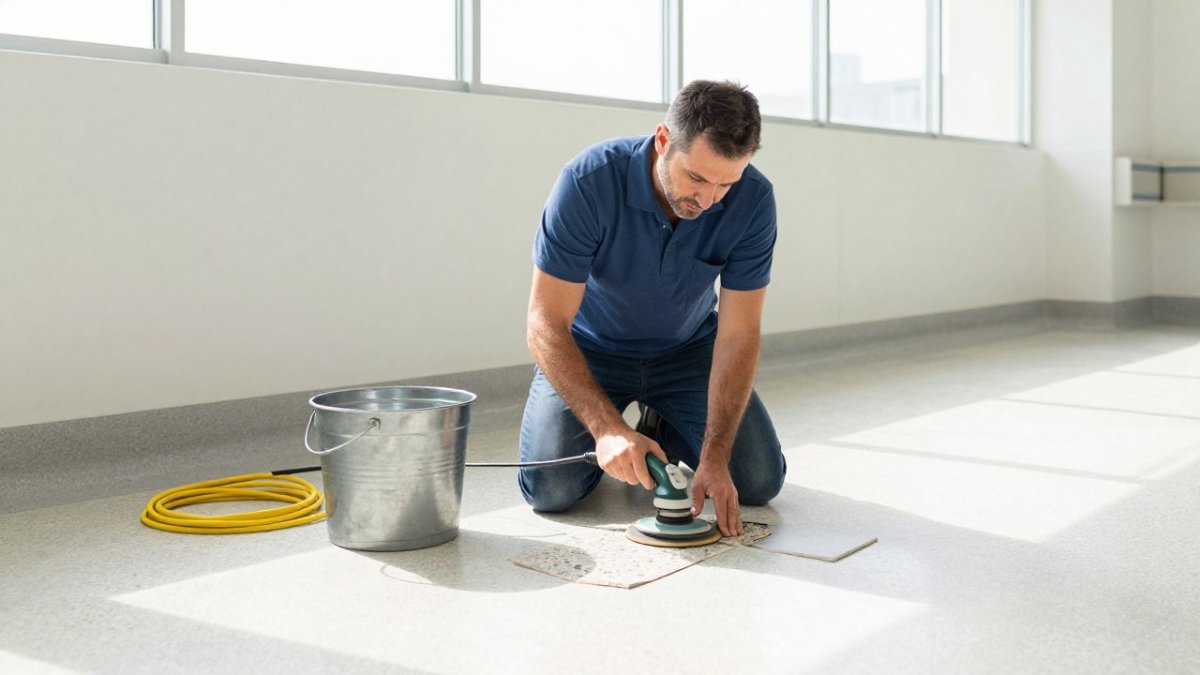
Chip size must be matched to grind depth. The installer grinds the cured terrazzo to expose the aggregate, typically to a fraction of the chip's nominal dimension.
Match chip size to viewing distance and traffic. Fine chips suit surfaces viewed up close, such as countertops, reception desks and wall bases. Mid grades suit corridors and offices seen from standing height.
Specify the grading in the project documents rather than leaving it to the installer. State the grade number or nominal size range, the acceptable size band and the required chip density.
Watch out: If the specification names a grade but not the grind exposure or finish, the contractor may deliver a floor that meets the letter of the spec but reads far lighter or darker than the design intent.
Large Aggregate Terrazzo for High-Traffic Floors
Large aggregate terrazzo is a strong choice for busy floors, but it needs careful handling. Bigger chips give a bold look that hides dirt and traffic wear well. They also create more surface variation, which can affect how evenly the floor wears and how it is cleaned.
Large chips are most useful in lobbies, concourses and public corridors where the design calls for a striking surface and the floor sees heavy traffic. Apply the same hardness discipline described earlier: a large decorative chip softer than the surrounding matrix can wear unevenly and leave high spots.
Keep transitions in mind. Where large aggregate meets a smaller-chip area, the boundary needs a clean division line. Plan the layout so these transitions fall at doorways or design breaks rather than in the middle of a traffic path.
Installation also depends on the substrate. Heavy traffic floors need a stable base and proper control joints. Confirm structural requirements with the engineer before finalizing the aggregate choice, since the substrate determines how the floor will move and crack over time.
Building the Terrazzo Aggregate Mix and Matching Color
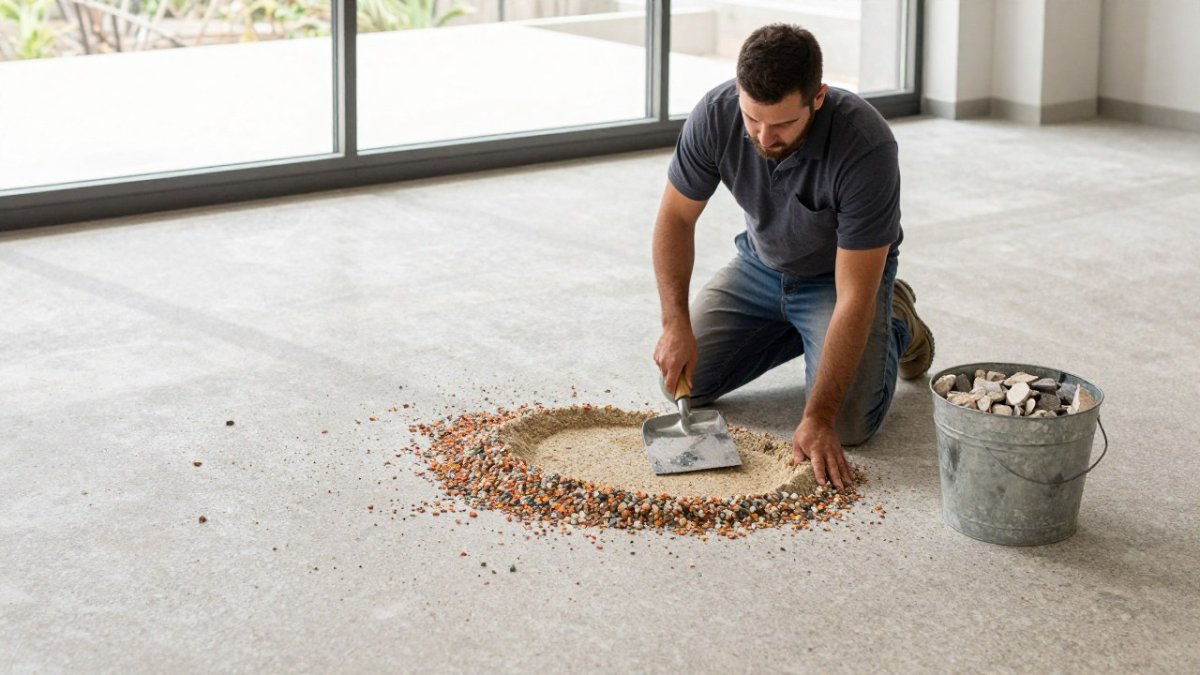
The mix design is where aggregate choice meets binder color. The chips are set in a binder, and the binder color controls how the chips read on the finished surface. A white binder with dark chips gives a crisp, contrasting floor. A tinted binder softens the contrast and creates a more blended look.
Start with a base color for the binder, then select aggregate colors that work with it. Test the combination with physical samples under the lighting the building will actually have. Overhead fluorescent light, daylight through large windows and warm accent lighting all change how colors read.
Plan for color matching on large projects. Aggregate lots can vary between production runs, so order enough material for the whole project from a single batch where possible. Retain a sample from each batch to compare against later shipments.
Document the final mix in the specification. A clear record of aggregate type, size grading, binder color and chip proportions protects the project during bidding, approval and any future repair work.
Matching Aggregate to Hardness, Maintenance and Lifecycle Cost
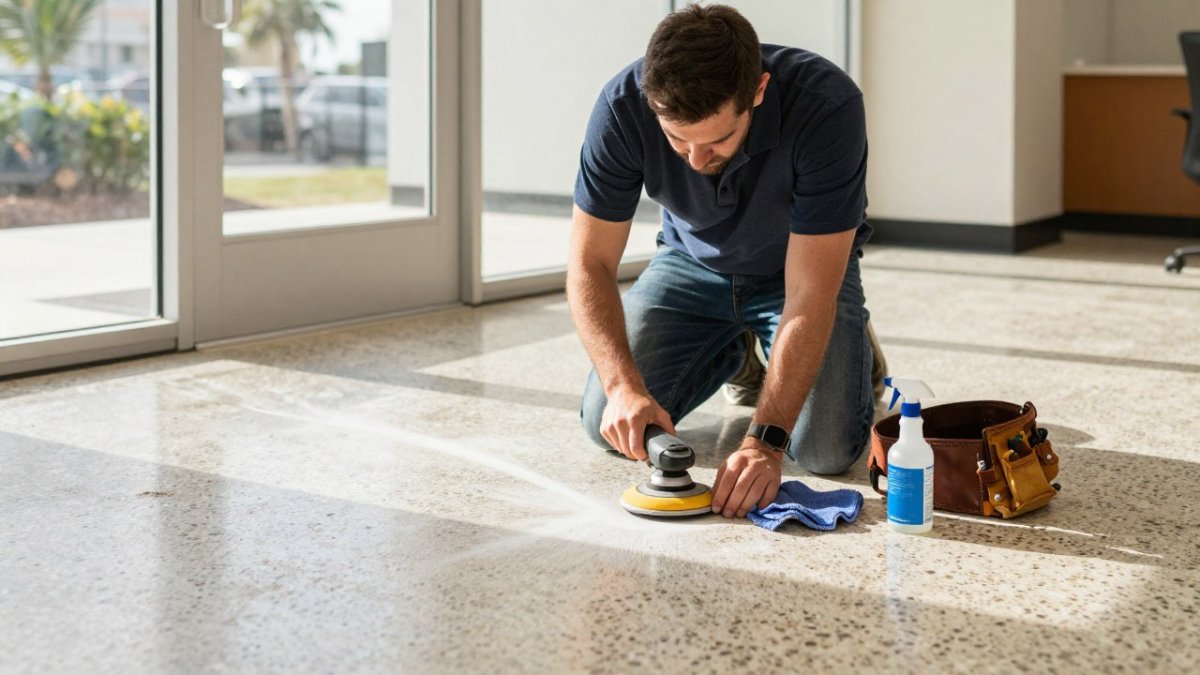
Hardness determines how the floor wears and should be matched to the traffic each area receives. On the Mohs scale, marble sits around 3, granite around 6 to 7, and glass around 5.5 to 6 depending on formulation; quartz-based aggregates run higher still.
A practical way to compare options is to build a maintenance profile for each candidate aggregate. Most terrazzo contractors and maintenance suppliers can provide expected service intervals for a given traffic level.
| Aggregate | Typical re-polish interval | Routine care | Watch point |
|---|---|---|---|
| Marble | Roughly every 12 to 24 months in high traffic | Dust mop, damp mop, neutral cleaner | Etching from acidic cleaners; surface dulls faster |
| Glass | Roughly every 18 to 36 months | Same as marble; avoid abrasive pads | Edge wear and chipping at chip boundaries |
| Granite | Roughly every 24 to 48 months | Same as marble; low intervention | Harder grinding and longer refinish time |
| Quartz-based | Longest intervals of the common families | Same as granite | Higher material cost; fewer finishers experienced with it |
Lifecycle cost is the total cost of the floor over its service life, not just the installation price.
Installation price alone does not show the cost of a floor over its service life. Ask each candidate supplier for a maintenance schedule tied to your traffic profile, then compare the totals side by side. That gives a budget committee a defensible basis for the decision instead of a color preference.
Watch out: Specifying a decorative or soft aggregate for a high-traffic path without checking its hardness and maintenance interval can lead to uneven wear and visible traffic lanes within a few years, and the fix is a full refinish rather than a spot repair.
Booking a Commercial Terrazzo Material Review With A1 Terrazzo
Choosing aggregate is easier with physical samples, a clear traffic profile and an installer who can explain the trade-offs. A1 Terrazzo offers commercial terrazzo installation and maintenance across Florida, and can review your project's requirements before specification is finalized.
To request a review, contact our team through the website to discuss your project scope, traffic levels and any design requirements. Pricing depends on quantity, dates and delivery, so ask for a current quote rather than relying on general estimates. Bring your building plans, finish schedules and the spaces you are considering, and we will help you narrow the options to the aggregate that fits the job.
Frequently Asked Questions
What are the main types of terrazzo aggregate?
The main types are marble, glass, granite, and decorative materials such as recycled glass, shell, mother-of-pearl and crushed mirror. Marble is the most common choice for classic commercial looks because it offers a wide color range and a polished finish. Glass adds reflectivity and brightness, while granite brings hardness suited to heavy traffic. Recycled and specialty aggregates are often selected for sustainability goals or custom design. Confirm each option's hardness and availability with your supplier before finalizing the specification.
What aggregate sizes are used in terrazzo?
Terrazzo chips are graded by size number, and common commercial choices range from fine chips for a uniform, subtle look to larger chips for a bold, pronounced pattern. Smaller chips produce a more even surface and are easier to grind smooth, while larger chips increase visual impact but require thicker topping and more careful grinding. Specify size grading in your project documents so bids are compared on the same basis. Ask your installer for sample panels showing each size in the actual binder color.
Is marble or glass aggregate better for commercial terrazzo?
Neither is universally better. Marble offers a broad palette and a classic look that suits lobbies, courthouses and historic restoration work. Glass delivers brightness and light reflection, which can suit retail and hospitality spaces. Both can perform well in commercial traffic when properly graded and installed. For healthcare or high-traffic areas, weigh hardness, cleaning needs and how the finished surface will look after years of use before deciding.
How does aggregate size affect the appearance of terrazzo?
Aggregate size changes how busy and uniform the floor appears. Fine chips create a subtle, nearly solid look that hides wear and minor scratches well. Larger chips give a dramatic, graphic appearance that suits feature areas and custom patterns. Keep in mind that larger chips need a thicker topping and may show a different surface profile after grinding. Review sample panels under the same lighting your building will have.