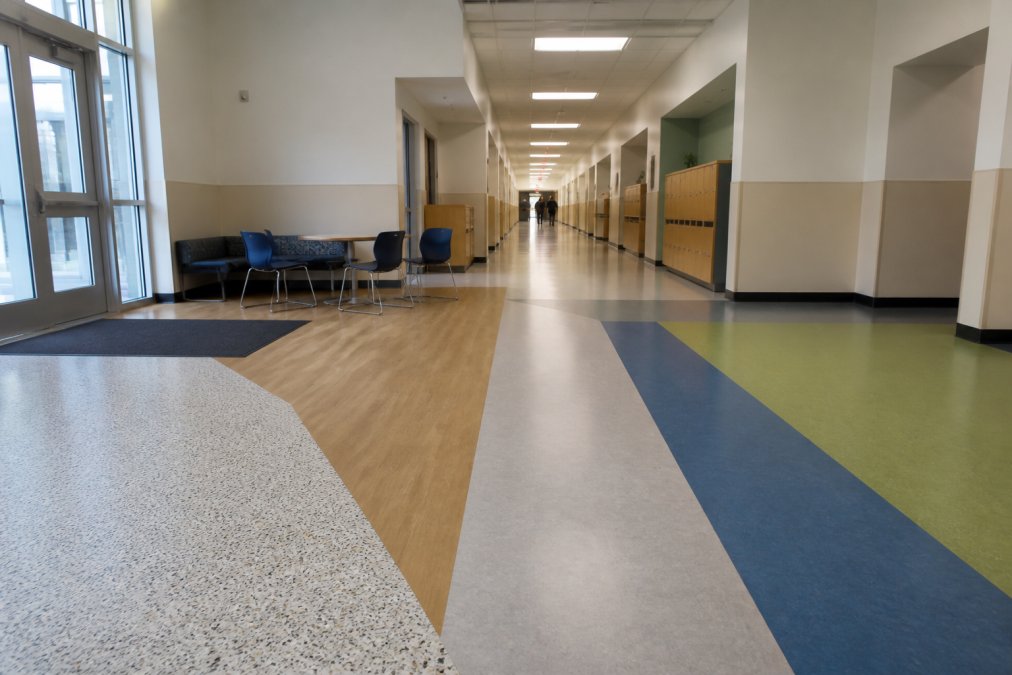
 comparison
Exclusive Surfaces Alternatives for Schools
Table of Contents
- School Flooring Alternatives to Exclusive Surfaces
- Comparison Table: Flooring Options for Educational Environments
- Terrazzo vs. Alternative Materials: Durability and High-Traffic Performance
- Durable Flooring for School Cafeterias and Food Service Areas
- ADA Compliant Flooring for Schools: Safety Standards and Slip Resistance
- School Flooring Maintenance Best Practices and Lifecycle Costs
- Making the Right Choice: Retrofitting vs. New Construction
- Evaluating Contractor Experience and Installation Quality
- Sustainability and Environmental Considerations
- Frequently Asked Questions
Last Updated: August 15, 2026
School Flooring Alternatives to Exclusive Surfaces
When facility managers evaluate school flooring, the decision determines maintenance burden, safety compliance, lifecycle costs, and durability across high-traffic environments. At A1 Terrazzo, we've guided educational institutions through this selection process for over 35 years.
School flooring alternatives fall into several distinct categories, each with different performance profiles. Terrazzo remains a gold standard for durability and design flexibility, but luxury vinyl tile, commercial rubber flooring, polished concrete, and epoxy systems each address particular institutional needs. The right choice depends on your specific use case: whether you're outfitting a cafeteria requiring chemical resistance, a gymnasium requiring impact absorption and slip resistance, or administrative spaces where aesthetics and cost-effectiveness matter equally.
This guide evaluates the most viable school flooring alternatives, comparing durability, maintenance protocols, safety compliance, and total cost of ownership.
Comparison Table: Flooring Options for Educational Environments
| Flooring Type | Best For | Durability | Maintenance | Slip Resistance | Lifecycle Cost |
|---|---|---|---|---|---|
| Terrazzo (A1 Terrazzo) | High-traffic corridors, entries, multipurpose spaces | 30+ years | Professional care required | Excellent with proper finish | Premium initial, minimal long-term |
| Luxury Vinyl Tile (LVT) | Classrooms, hallways, offices | 15-20 years | Routine sweeping and mopping | Good (varies by product) | Moderate initial and maintenance |
| Commercial Rubber | Gyms, cafeterias, weight rooms | 20-25 years | Low maintenance, minimal products needed | Excellent, even when wet | Higher initial, very low maintenance |
| Polished Concrete | Multipurpose areas, utility spaces | 20-30+ years | Dust mopping, occasional sealing | Moderate (can be enhanced) | Lowest initial cost, minimal maintenance |
| Epoxy Systems | Labs, art rooms, kitchens, maintenance areas | 15-20 years | Easy to clean, chemical resistant | Excellent (customizable) | Moderate to high initial, easy upkeep |
Terrazzo vs. Alternative Materials: Durability and High-Traffic Performance
Terrazzo stands apart in high-traffic educational environments because of its monolithic construction and aggregate composition. Unlike modular systems that develop seams and joints, terrazzo creates a seamless surface that resists the grinding wear patterns from thousands of daily footsteps.
Terrazzo installations properly executed typically last 30 years or longer without major structural failure. Luxury vinyl tile performs well for 15-20 years in moderate-traffic areas but shows visible wear in high-traffic zones. Commercial rubber flooring delivers 20-25 years of reliable service and improves with age. Polished concrete can match terrazzo's longevity when sealed properly, though the seal requires renewal every 3-5 years.
A critical distinction is substrate preparation. A1 Terrazzo's installations begin with comprehensive moisture testing and subfloor preparation, preventing the cracking and separation issues that plague poorly installed terrazzo. The customer objection about terrazzo cracking within a year typically stems from inadequate substrate preparation, not from terrazzo's inherent weakness.
Epoxy systems offer excellent durability in specialized applications like science labs and art rooms, where they resist solvents and stains. In general-purpose hallways, epoxy's durability advantage diminishes compared to terrazzo.
Durable Flooring for School Cafeterias and Food Service Areas
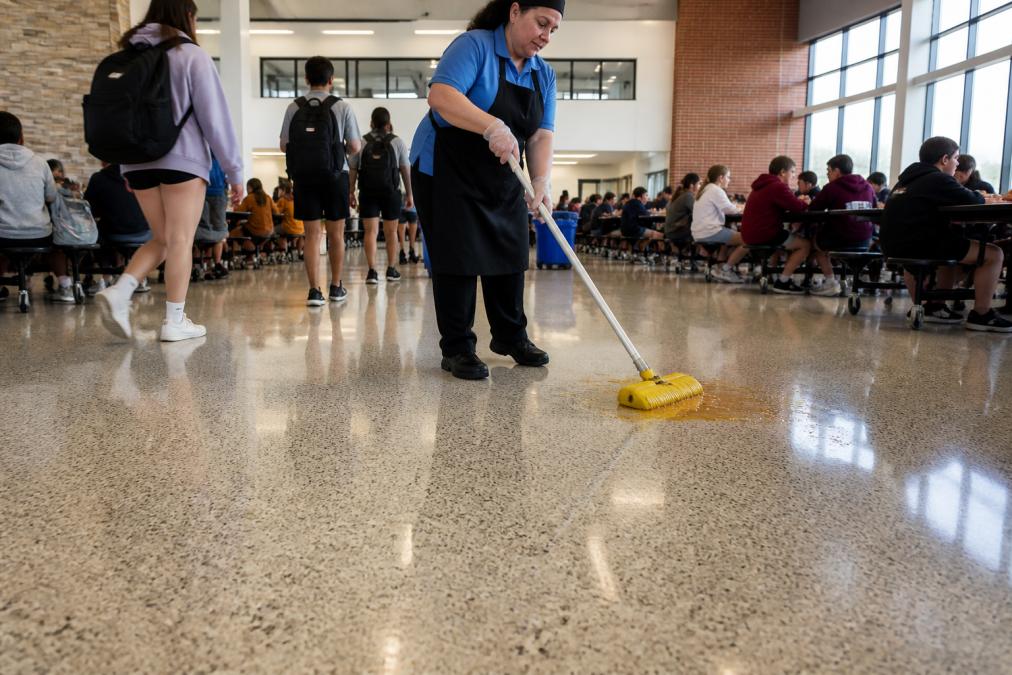
Cafeterias combine high foot traffic with moisture, food debris, acidic spills, and aggressive cleaning protocols. The flooring must withstand daily exposure to conditions that degrade many materials rapidly.
Epoxy flooring systems dominate this category. The seamless surface prevents bacterial growth in grout lines, and the chemical-resistant topcoat handles acidic food spills, bleach-based sanitizers, and enzymatic cleaners without degradation. Modern fast-cure epoxy formulations reduce downtime to 24-48 hours.
Commercial rubber flooring is the comfort choice for cafeteria staff who stand for hours. The shock-absorbing properties reduce fatigue, and slip resistance prevents accidents when wet. Rubber's limitation is aesthetic; color and texture options are more limited than epoxy or terrazzo.
Terrazzo works exceptionally well in cafeterias when specified with a non-porous sealer. The seamless surface provides bacterial-resistance benefits as epoxy, and design flexibility allows schools to incorporate institutional colors or patterns. Maintenance is more involved than rubber, requiring professional cleaning with pH-neutral products and periodic resealing, but the aesthetic result is substantially more refined.
Polished concrete is the budget option but requires aggressive sealing and more frequent maintenance in food service areas. Acidic spills can etch the surface if not cleaned immediately.
ADA Compliant Flooring for Schools: Safety Standards and Slip Resistance
The Americans with Disabilities Act establishes slip resistance requirements through ASTM D2047 standards, which measure the coefficient of friction (COF). Educational facilities must maintain a COF of at least 0.5 for level surfaces. However, the ADA standards themselves do not specify a minimum level of slip resistance or coefficient of friction. Some products are labeled with a rated level, but in the absence of a consensus test procedure, the standards do not set a minimum value.
Commercial rubber flooring exceeds ADA requirements easily, typically delivering COF values of 0.7-0.9 even when wet. Epoxy systems can be formulated to meet ADA standards by incorporating quartz aggregates or vinyl flakes into the topcoat, delivering COF values of 0.6-0.8.
Terrazzo's slip resistance depends on finish specification. A polished terrazzo meets ADA standards when sealed appropriately, but specifying a honed or textured finish improves slip resistance significantly. A1 Terrazzo routinely incorporates non-slip additives into sealers for educational installations.
Luxury vinyl tile meets ADA slip-resistance standards in most commercial-grade products, though performance varies by manufacturer. Polished concrete presents the greatest compliance challenge; a highly polished finish may fall below the 0.5 COF threshold. Many schools address this by applying non-slip coatings over polished concrete.
All alternatives meet ADA requirements for surface firmness, stability, and accessibility for mobility devices when properly installed. The distinction comes down to slip resistance in wet conditions.
School Flooring Maintenance Best Practices and Lifecycle Costs
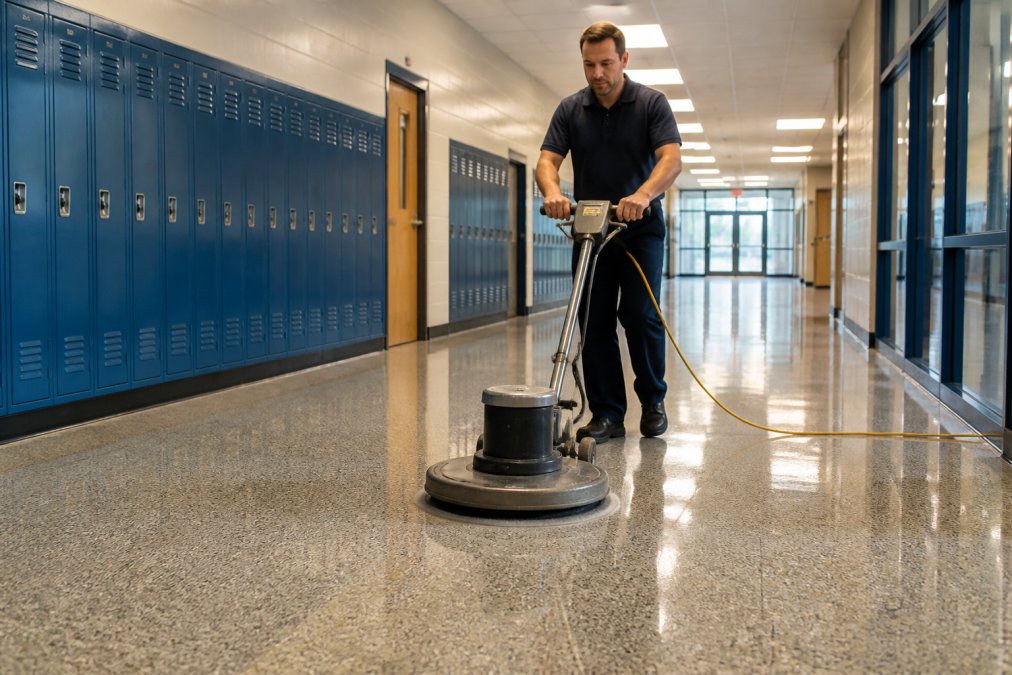
Lifecycle cost analysis reveals why initial price is misleading. A school flooring decision made on lowest upfront cost often becomes the most expensive choice over 20 years when maintenance labor, product costs, and replacement are factored in.
Terrazzo requires professional maintenance but minimal product expense. The sealant is reapplied every 3-5 years. Daily maintenance is routine sweeping and neutral-pH mopping. The initial installation cost is higher than most alternatives, but the floor typically doesn't require replacement during the building's useful life.
Luxury vinyl tile demands minimal daily maintenance but individual tiles fail over time, requiring replacement of damaged sections. In high-traffic areas, expect to replace 5-10% of the floor every 5-7 years.
Commercial rubber flooring is the maintenance champion. Daily care requires only sweeping and mopping with water or mild detergent. Over 20 years, maintenance costs are primarily labor for routine cleaning, with minimal product expense. The higher initial installation cost is offset by dramatic reduction in maintenance burden and replacement expenses.
Polished concrete requires periodic resealing every 3-5 years, similar to terrazzo, but is more susceptible to staining and etching from acidic spills. Schools using polished concrete in cafeterias report higher maintenance costs than terrazzo.
Epoxy systems demand careful maintenance; only pH-neutral cleaners can be used. Deviation from approved cleaning methods can shorten lifespan significantly. A1 Terrazzo provides detailed maintenance documentation and training for all installations.
Making the Right Choice: Retrofitting vs. New Construction
Retrofitting typically costs 15-30% more than new installation because existing flooring must be removed and subfloors must be assessed and potentially repaired.
Terrazzo retrofitting requires careful subfloor evaluation. If the existing slab has moisture issues, those must be resolved before installation. A1 Terrazzo's approach includes comprehensive moisture testing and, when necessary, moisture mitigation systems that prevent future failure.
Luxury vinyl tile is the retrofit favorite because it can be installed over most existing floors with minimal subfloor preparation. The trade-off is that underlying subfloor problems aren't addressed and may eventually affect LVT performance.
Polished concrete retrofitting involves grinding and sealing the existing slab, cost-effective only if the concrete is structurally sound. Epoxy retrofitting works well over sound concrete but struggles with other subfloor types. Commercial rubber can be installed over most subfloors, making it retrofit-friendly.
For major renovations, consider the opportunity cost of not addressing subfloor issues during the retrofit window. Spending an additional $2-$5 per square foot on moisture mitigation and subfloor repair might prevent a $50,000-$100,000 emergency replacement within 5 years.
Evaluating Contractor Experience and Installation Quality
Installation quality determines whether the floor achieves its design life or fails prematurely. A1 Terrazzo's 35 years of experience reflects thousands of installations across educational, healthcare, and commercial environments.
Contractors with limited experience in educational environments often miss context-specific requirements. Schools have unique challenges: high student density in certain areas, specific cleaning protocols, budget constraints demanding long-term value thinking, and scheduling requirements minimizing disruption to academic calendars.
When evaluating contractors, ask about their experience in similar educational environments and request references from schools with the same flooring type. Ask specifically about maintenance experience. For terrazzo, ask about substrate preparation documentation, moisture testing, subfloor repair details, and specific moisture mitigation strategies used.
Sustainability and Environmental Considerations
Educational institutions increasingly prioritize environmental impact and LEED certification in facility decisions.
Terrazzo's sustainability profile is strong. The material is composed of marble, granite, glass, and other aggregate bound with cement. The longevity of terrazzo means fewer replacements over the building's life, reducing overall environmental impact. Terrazzo can incorporate recycled glass and reclaimed aggregates. A1 Terrazzo routinely incorporates recycled content for environmentally conscious clients.
Commercial rubber flooring made from recycled tire rubber offers excellent sustainability credentials, diverting waste from landfills. Verify that the rubber product is made from post-consumer recycled content.
Luxury vinyl tile has improved environmentally but remains less sustainable than terrazzo or rubber. The material is petroleum-based, though manufacturers have reduced VOC emissions.
Polished concrete is inherently sustainable; it's simply the existing structure finished differently. No additional material is required beyond sealant. Low-VOC sealants are recommended for schools.
Epoxy systems have historically been environmental concerns due to VOC emissions. Modern formulations have dramatically reduced VOC content, and water-based epoxy systems are now available.
For LEED certification, all flooring alternatives can contribute points depending on specific credits pursued. Terrazzo and rubber flooring typically score highest for durability and reduced replacement frequency.
Selecting school flooring alternatives requires balancing durability, maintenance reality, safety compliance, and long-term value. Each material addresses different priorities: terrazzo delivers unmatched longevity and design flexibility, rubber provides superior safety and worker comfort, epoxy offers chemical resistance for specialized areas, polished concrete minimizes initial cost, and luxury vinyl tile provides retrofit convenience.
The most expensive choice isn't always the highest initial cost; it's the material selected without understanding its maintenance requirements and true lifecycle costs. A1 Terrazzo's approach to educational flooring installations begins with comprehensive facility assessment, moisture analysis, and long-term maintenance planning. We've guided schools through this decision for over 35 years because flooring is a system that affects daily operations, student safety, and facility budgets for decades. Contact A1 Terrazzo to discuss how our terrazzo expertise and maintenance services can deliver superior value for your school's flooring needs.
Frequently Asked Questions
What is the best flooring material for high-traffic school hallways?
Commercial rubber flooring and polished concrete excel in high-traffic hallways due to their durability and impact resistance. Rubber offers superior sound absorption and slip resistance, while polished concrete provides excellent longevity at lower lifecycle costs. Epoxy systems work well for schools needing seamless, hygienic surfaces. Your choice depends on whether noise reduction, budget, or chemical resistance is your priority.
How do school flooring maintenance best practices differ between materials?
Maintenance varies significantly. Polished concrete requires routine dust mopping and occasional wet mopping. Luxury vinyl tile needs regular sweeping and damp mopping but resists moisture well. Rubber flooring is low-maintenance but may retain odor initially. Epoxy systems demand specialized cleaners to avoid surface damage. Terrazzo requires professional-grade maintenance to preserve its finish. Understanding each material's specific care requirements prevents costly damage and extends floor life.
What safety standards must durable flooring for school cafeterias meet?
School cafeteria flooring must meet ADA slip-resistance requirements (ASTM D2047) and handle moisture exposure from food preparation and spills. Commercial rubber flooring and epoxy systems offer superior slip resistance when wet. Surfaces must be easy to sanitize to meet hygiene standards and prevent germ transfer. Impact-resistant materials protect equipment and reduce noise. Proper grout sealing in tile applications prevents moisture infiltration that can compromise subfloor integrity over time.
Is polished concrete cost-effective compared to other school flooring alternatives?
Polished concrete offers strong lifecycle cost advantages. Initial material costs range from $2-$5 per square foot, and the 20-30+ year lifespan with minimal maintenance keeps long-term expenses low. Unlike carpet or some vinyl options, polished concrete doesn't require frequent replacement or specialized cleaning products. However, upfront polishing costs and the need for acoustic treatment in large spaces should factor into your budget. Compare total cost of ownership, not just installation price.
Are ADA compliant flooring options more expensive for schools?
ADA compliance doesn't necessarily increase costs significantly. Many affordable options like polished concrete and commercial rubber flooring exceed ADA slip-resistance standards. Luxury vinyl tile at $2.50-$4.50 per square foot is budget-friendly and meets compliance requirements. The key is selecting materials with proper slip resistance and accessible transitions. Working with experienced installers who understand ADA requirements prevents costly retrofits later, making compliance an investment in safety and legal protection.
This article was written using GrandRanker
Frequently Asked Questions
What is the best flooring material for high-traffic school hallways?
Commercial rubber flooring and polished concrete excel in high-traffic hallways due to their durability and impact resistance. Rubber offers superior sound absorption and slip resistance, while polished concrete provides excellent longevity at lower lifecycle costs. Epoxy systems work well for schools needing seamless, hygienic surfaces. Your choice depends on whether noise reduction, budget, or chemical resistance is your priority.
How do school flooring maintenance best practices differ between materials?
Maintenance varies significantly. Polished concrete requires routine dust mopping and occasional wet mopping. Luxury vinyl tile needs regular sweeping and damp mopping but resists moisture well. Rubber flooring is low-maintenance but may retain odor initially. Epoxy systems demand specialized cleaners to avoid surface damage. Terrazzo requires professional-grade maintenance to preserve its finish. Understanding each material's specific care requirements prevents costly damage and extends floor life.
What safety standards must durable flooring for school cafeterias meet?
School cafeteria flooring must meet ADA slip-resistance requirements (ASTM D2047) and handle moisture exposure from food preparation and spills. Commercial rubber flooring and epoxy systems offer superior slip resistance when wet. Surfaces must be easy to sanitize to meet hygiene standards and prevent germ transfer. Impact-resistant materials protect equipment and reduce noise. Proper grout sealing in tile applications prevents moisture infiltration that can compromise subfloor integrity over time.
Is polished concrete cost-effective compared to other school flooring alternatives?
Polished concrete offers strong lifecycle cost advantages. Initial material costs range from $2-$5 per square foot, and the 20-30+ year lifespan with minimal maintenance keeps long-term expenses low. Unlike carpet or some vinyl options, polished concrete doesn't require frequent replacement or specialized cleaning products. However, upfront polishing costs and the need for acoustic treatment in large spaces should factor into your budget. Compare total cost of ownership, not just installation price.
Are ADA compliant flooring options more expensive for schools?
ADA compliance doesn't necessarily increase costs significantly. Many affordable options like polished concrete and commercial rubber flooring exceed ADA slip-resistance standards. Luxury vinyl tile at $2.50-$4.50 per square foot is budget-friendly and meets compliance requirements. The key is selecting materials with proper slip resistance and accessible transitions. Working with experienced installers who understand ADA requirements prevents costly retrofits later, making compliance an investment in safety and legal protection.