 listicle
5 Best Terrazzo Finishes for High-Traffic Retail
Table of Contents
- Quick Comparison: 5 Terrazzo Finishes for Retail Traffic
- Polished Terrazzo: Maximum Gloss and Visual Impact
- Honed Terrazzo Finish: The Slip-Resistant Middle Ground
- Terrazzo Floor Slip Resistance: Testing and Safety Standards
- Matte and Textured Finishes: Durability Without the Shine
- Terrazzo Flooring Maintenance: Protocols and Restoration Intervals
- Terrazzo vs Polished Concrete: Cost, Durability, and Lifecycle Value
- Selecting the Right Finish by Retail Environment
- Making the Investment Decision
- Frequently Asked Questions
Last Updated: October 13, 2026
Quick Comparison: 5 Terrazzo Finishes for Retail Traffic
Choosing the right terrazzo finishes high-traffic retail spaces determines how your floor performs under constant foot traffic, how often you'll maintain it, and how long it lasts before restoration becomes necessary. The wrong choice costs thousands in premature wear, slip liability, and downtime.
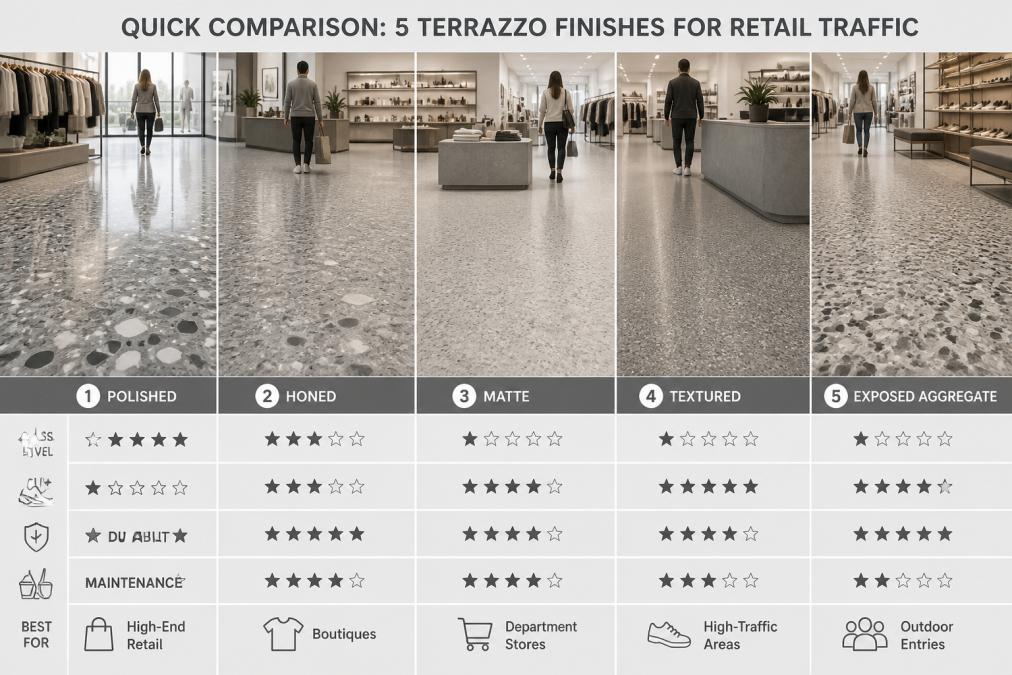
The five finishes we cover here represent the primary options in commercial terrazzo flooring. Each trades durability, slip resistance, maintenance burden, and visual impact differently. This guide cuts through the confusion by ranking them for retail environments where heavy foot traffic is the defining constraint.
| Finish Type | Slip Resistance | Maintenance Frequency | Best For | Longevity |
|---|---|---|---|---|
| Polished | Moderate (requires caution) | Monthly deep cleaning | High-end retail, visual drama | 3-5 years before re-polishing |
| Honed | High (ASTM-tested) | Quarterly sealing | Most retail spaces | 5-7 years |
| Matte/Textured | Very High | 2-3x yearly | Grocery, pharmacy, high-slip zones | 7-10 years |
| Brushed | High | Quarterly maintenance | Mid-range retail | 5-7 years |
| Polished with Anti-Slip | Moderate-High | Monthly + quarterly sealing | Luxury retail with safety needs | 4-6 years |
Polished Terrazzo: Maximum Gloss and Visual Impact
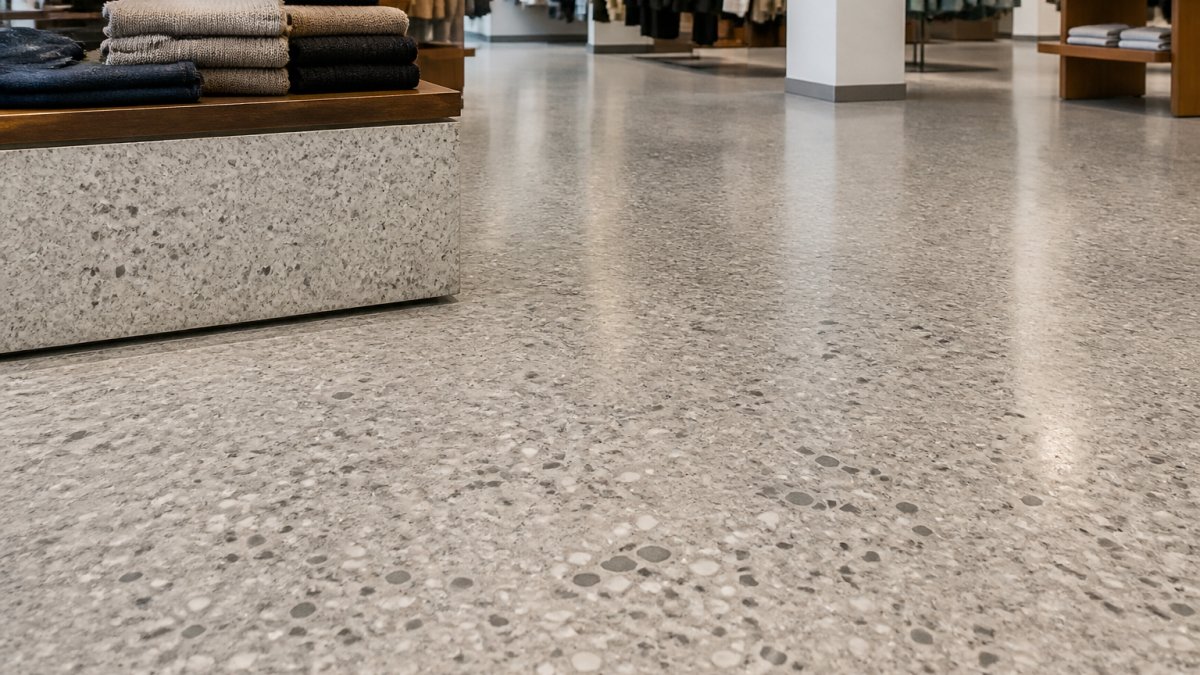
Polished terrazzo delivers the most dramatic aesthetic in retail. The high-gloss finish reflects light, makes spaces feel larger, and showcases the aggregate colors and patterns in ways other finishes cannot. For luxury boutiques, jewelry stores, and high-end retail where visual impact drives customer perception, polished finishes justify their presence.
The tradeoff is slip risk. A polished terrazzo floor becomes hazardous when wet, even light moisture creates a skating rink. This reality limits where polished terrazzo works in retail. Entrance vestibules, dressing rooms, and bathrooms become liability zones. You'll need anti-slip rugs, constant mopping protocols, and likely increased slip-and-fall insurance costs.
Maintenance demands are substantial. Polished terrazzo requires monthly deep cleaning and professional re-polishing every 3-5 years depending on traffic intensity. For most retail environments, honed or matte finishes deliver better long-term value.
Honed Terrazzo Finish: The Slip-Resistant Middle Ground
Honed terrazzo represents the practical choice for most retail environments. The finish removes the high gloss while preserving the aggregate visibility and color depth that make terrazzo visually distinctive. It's the middle ground: attractive enough for upscale retail, safe enough for high-traffic zones, and maintainable without constant professional intervention.
Slip resistance on honed terrazzo is significantly better than polished, though still not in the highest category. The micro-texture created during honing provides enough traction for normal retail foot traffic. Most building codes and ASTM standards classify honed terrazzo as acceptable for general retail use without additional slip-mitigation measures.
Maintenance is moderate. Quarterly sealing keeps the surface protected against stains and moisture penetration. Unlike polished finishes, you won't need professional re-polishing every few years. The finish holds up well for 5-7 years in moderate-to-heavy traffic before showing visible wear.
Terrazzo Floor Slip Resistance: Testing and Safety Standards
Understanding slip resistance separates informed decisions from guesswork. Slip resistance in terrazzo is measured using the coefficient of friction (COF), tested under ASTM D2047 standards for dry conditions and ASTM D3359 for wet conditions. These tests assign numerical values: higher numbers mean greater slip resistance.
Polished terrazzo typically scores 0.4-0.6 COF on dry surfaces, dropping to 0.2-0.3 when wet. Honed terrazzo scores 0.6-0.8 dry, maintaining 0.5-0.7 when wet. Matte and textured finishes exceed 0.8 in both conditions.
The practical implication: honed and matte finishes meet safety thresholds for retail without additional measures. Polished finishes require supplemental slip-reduction treatments or restricted-access protocols. We include slip-resistance testing in our specification process to ensure your chosen finish meets both aesthetic goals and liability requirements.
Building codes and ADA guidelines don't specify terrazzo finishes directly, but they do reference ASTM slip-resistance standards. Your finish choice must satisfy these codes to pass inspection. Matte and honed finishes typically clear this hurdle without question. Polished finishes require documentation and risk mitigation planning.
Matte and Textured Finishes: Durability Without the Shine
Matte and textured finishes prioritize durability and slip resistance over visual drama. These surfaces hide footprints and dust better than polished or honed finishes, making them practical for high-traffic grocery stores, pharmacies, and retail spaces where cleanliness perception matters as much as actual cleanliness.
Textured finishes introduce intentional surface variation, small peaks and valleys that catch light differently than flat surfaces. This texture provides exceptional grip while remaining visually interesting. Matte finishes flatten the surface completely, eliminating gloss but preserving aggregate visibility.
Both options excel in slip resistance. They score above 0.8 COF in standard testing and maintain traction even when wet. This makes them the safest choice for retail environments with water exposure, entrances during rain, produce sections in grocery stores, pharmacy areas near cleaning supplies.
Maintenance is straightforward. Matte and textured finishes require sealing 2-3 times yearly and standard wet mopping. No professional re-polishing is needed. They hold up for 7-10 years in heavy retail traffic before restoration becomes necessary.
Terrazzo Flooring Maintenance: Protocols and Restoration Intervals
Maintenance strategy determines how long any terrazzo finish actually lasts in retail. The right protocol extends floor life by 3-5 years. The wrong approach can shorten it significantly.
Polished terrazzo requires monthly deep cleaning with specialized equipment and quarterly professional sealing. Re-polishing happens every 3-5 years, costing thousands per application.
Honed terrazzo needs quarterly sealing and standard wet mopping 2-3 times weekly. Professional restoration (light honing to remove scratches) happens every 5-7 years.
Matte and textured finishes require the least intervention. Sealing 2-3 times yearly and regular mopping are sufficient. These finishes can go 7-10 years before any restoration work becomes necessary.
The critical mistake most retail operators make: they skip sealing. Unsealed terrazzo absorbs moisture and stains, leading to discoloration and substrate damage. Establishing a documented maintenance schedule before installation is recommended. Know exactly when sealing happens, who performs it, and what products get used. Wrong cleaning chemicals, acidic or alkaline solutions, can etch terrazzo surfaces permanently.
Using generic floor cleaners on terrazzo floors causes permanent etching within months. Terrazzo requires pH-neutral cleaners specifically formulated for natural stone. This single mistake has ruined more retail terrazzo floors than any other factor. ::: Consistent adherence to these specialized cleaning protocols remains the most effective strategy for maintaining commercial floors, a discipline that applies equally to the upkeep of other common workplace surfaces.
Terrazzo vs Polished Concrete: Cost, Durability, and Lifecycle Value
Retail operators often compare terrazzo to polished concrete because both deliver aesthetic appeal and durability. Understanding the differences prevents costly mistakes.
Polished concrete costs less upfront, typically 30-40% cheaper than terrazzo installation. The aggregate (exposed stone in concrete) is already embedded, so no separate finishing step is needed. Initial appeal is strong: clean, modern, industrial aesthetic.
Terrazzo costs more initially because it requires mixing aggregate into binder, pouring, grinding, and finishing. The process is labor-intensive. However, terrazzo offers superior customization. You choose aggregate type, color, and pattern.
Durability comparison reveals the real story. Polished concrete holds a gloss finish for 2-3 years in retail traffic before requiring re-polishing. Terrazzo, even polished, lasts 3-5 years between re-polishing.
Concrete is porous. It absorbs stains readily and requires sealing every 6-12 months. Terrazzo, properly sealed, resists staining better.
Lifecycle cost over 10 years typically favors terrazzo in heavy-traffic retail. The initial premium gets recouped through lower maintenance expenses and longer intervals between major restoration work.
Selecting the Right Finish by Retail Environment
Your retail environment determines which terrazzo finish makes sense. Generic recommendations fail because contexts differ.
Luxury retail (jewelry, high-end fashion): Polished terrazzo creates the visual drama these spaces demand. Budget for monthly maintenance and slip-mitigation measures. The aesthetic impact justifies the operational burden.
Mid-range retail (department stores, specialty shops): Honed terrazzo balances visual appeal with practical maintenance.
High-traffic volume retail (grocery, pharmacy, discount chains): Matte or textured terrazzo prioritizes durability and slip resistance. These spaces see 500+ foot traffic daily.
Mixed-use retail (anchor stores with multiple departments): Combine finishes strategically.
Historic building restoration: Match the original finish if possible. If records exist, we can analyze existing terrazzo and replicate the original specification.
Outdoor or semi-outdoor retail: Terrazzo performs well in covered outdoor spaces. Matte finishes with proper drainage prevent water pooling. Avoid polished finishes outdoors, weather exposure accelerates wear.
The selection process should account for foot traffic volume, moisture exposure, budget constraints, and aesthetic goals. We recommend conducting a site assessment before specifying.
Making the Investment Decision
Terrazzo finishes high-traffic retail represent a significant capital investment. The decision should rest on data: traffic volume, moisture exposure, maintenance budget, and timeline expectations.
Polished terrazzo delivers maximum visual impact but demands constant maintenance and creates slip liability. It works for luxury retail where aesthetic impact drives customer perception and where maintenance budgets are substantial.
Honed terrazzo represents the practical middle ground for most retail operators. It's attractive, safe, and maintainable within typical facility budgets.
Matte and textured finishes prioritize durability and slip resistance. They're ideal for high-volume retail where safety and low maintenance matter more than visual drama.
The wrong finish choice costs thousands in unexpected maintenance, potential slip-and-fall liability, and premature restoration. The right choice delivers years of reliable performance and justifies the initial investment through lower lifetime costs.
A1 Terrazzo has spent 35 years installing terrazzo in commercial spaces across Florida. Realistic assessment of your facility's operational constraints prevents costly mistakes and extends floor life significantly.
Contact A1 Terrazzo for a site assessment and finish recommendation tailored to your retail environment.
Frequently Asked Questions
Which terrazzo finish is best for a busy retail store?
Honed and matte finishes outperform polished terrazzo in high-traffic retail because they offer superior slip resistance and hide scuff marks better. Polished finishes deliver visual impact but require frequent maintenance and pose safety risks when wet. For retail environments with continuous foot traffic, honed terrazzo balances durability, safety, and appearance. The choice depends on your specific retail type: luxury retail may favor polished despite maintenance demands, while grocery stores and airports benefit more from honed or matte finishes.
How do you maintain terrazzo floors in high-traffic areas?
High-traffic terrazzo flooring maintenance requires daily dry sweeping to prevent grit buildup, weekly neutral pH wet cleaning with microfiber mops, and monthly deep cleaning with commercial terrazzo-specific cleaners. Avoid acidic cleaners and vinegar, which etch the binder. Seal the floor every 1-2 years depending on traffic volume and finish type. Honed and matte finishes need less frequent polishing than polished terrazzo. Professional restoration and refinishing typically occur every 5-10 years in retail environments. A1 Terrazzo provides maintenance protocols and professional restoration services to extend floor life.
What's the difference between polished concrete and terrazzo?
Terrazzo and polished concrete differ in material composition, durability, and design flexibility. Terrazzo is composed of marble, granite, quartz, or glass chips bound in epoxy or cementitious binder, offering unlimited color and pattern options. Polished concrete is a single material with limited design choices. Terrazzo resists staining and moisture better, making it superior for retail and healthcare. Polished concrete is cheaper upfront but requires more frequent sealing and maintenance. Terrazzo's lifecycle cost favors retail spaces where durability and aesthetics matter; concrete suits industrial or warehouse settings.
Is polished terrazzo slippery when wet?
Yes, polished terrazzo becomes slippery when wet because the high-gloss finish reduces friction. Testing shows polished finishes fall below recommended slip resistance standards (ASTM D2047) for commercial retail spaces. Honed and matte finishes provide slip resistance ratings suitable for high-traffic areas. If you choose polished terrazzo for aesthetic reasons, install slip-resistant entrance mats, use non-slip coatings, or apply anti-slip treatments. For wet environments like airports or healthcare facilities, honed or textured finishes are mandatory for safety compliance.
How often should commercial terrazzo floors be refinished?
Commercial terrazzo flooring in high-traffic retail typically requires refinishing every 5-10 years, depending on traffic volume, finish type, and maintenance consistency. Polished finishes need refinishing more frequently (every 3-5 years) because they show wear and scratches quickly. Honed and matte finishes extend refinishing intervals to 7-10 years. Heavy-traffic zones like mall corridors may need spot refinishing every 2-3 years. Professional restoration restores the original finish and seals the surface. A1 Terrazzo's maintenance services include refinishing schedules tailored to your specific retail environment and traffic patterns.