 listicle
Commercial Flooring Installation Services 2026: 5 Top Picks
Table of Contents
- How We Evaluated Commercial Flooring Installation Services
- 1. A1 Terrazzo: Best for Terrazzo and Hard-Surface Commercial Work
- 2. Intertech Flooring: Best for Budgeting and Project Management Support
- 3. Barton Co. Carpets: Best for Carpet and Carpet Tile Installation
- 4. Home Depot Flooring Installation: Best for a Published Starting Rate
- 5. Contractor Directories and Full-Service Chains: Best for Local Discovery
- What Drives Commercial Flooring Installation Cost in 2026
- Commercial Flooring Installation Timeline and Business Disruption
- Frequently Asked Questions
Last Updated: October 20, 2026
How We Evaluated Commercial Flooring Installation Services
Choosing commercial flooring installation services in 2026 comes down to three things: verified capability, transparent pricing, and a schedule your operations can survive. At A1 Terrazzo, we have 35 years of experience installing and maintaining commercial terrazzo, so we built this evaluation the way a facility manager should: proof first, sales pitch last.
Commercial flooring installation is the process of preparing a substrate, specifying a floor system, and installing it to a standard that holds up under institutional traffic. It is not a residential upgrade scaled up. Hospitals, airports, and campuses judge the work by downtime, sanitation, and lifecycle cost.
We scored each provider on five criteria, weighted for commercial buyers:
| Criterion | Weight | What We Look For |
|---|---|---|
| Verified capability | 30% | Documented commercial work, not residential volume |
| Pricing transparency | 20% | Published rates or clear quote process |
| Project management | 20% | Budgeting support, phasing, single point of contact |
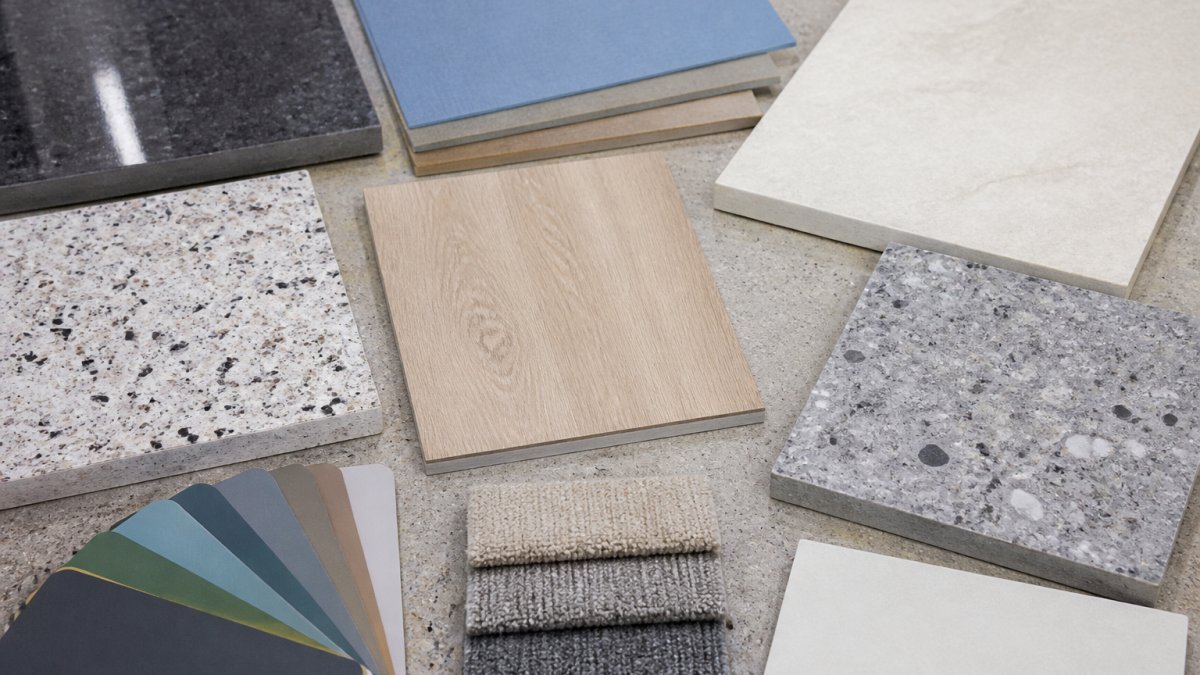
| Material range | 15% | Terrazzo, LVP, carpet tile, VCT, ceramic tile |
| Service coverage | 15% | Defined service area and local crews |
1. A1 Terrazzo: Best for Terrazzo and Hard-Surface Commercial Work
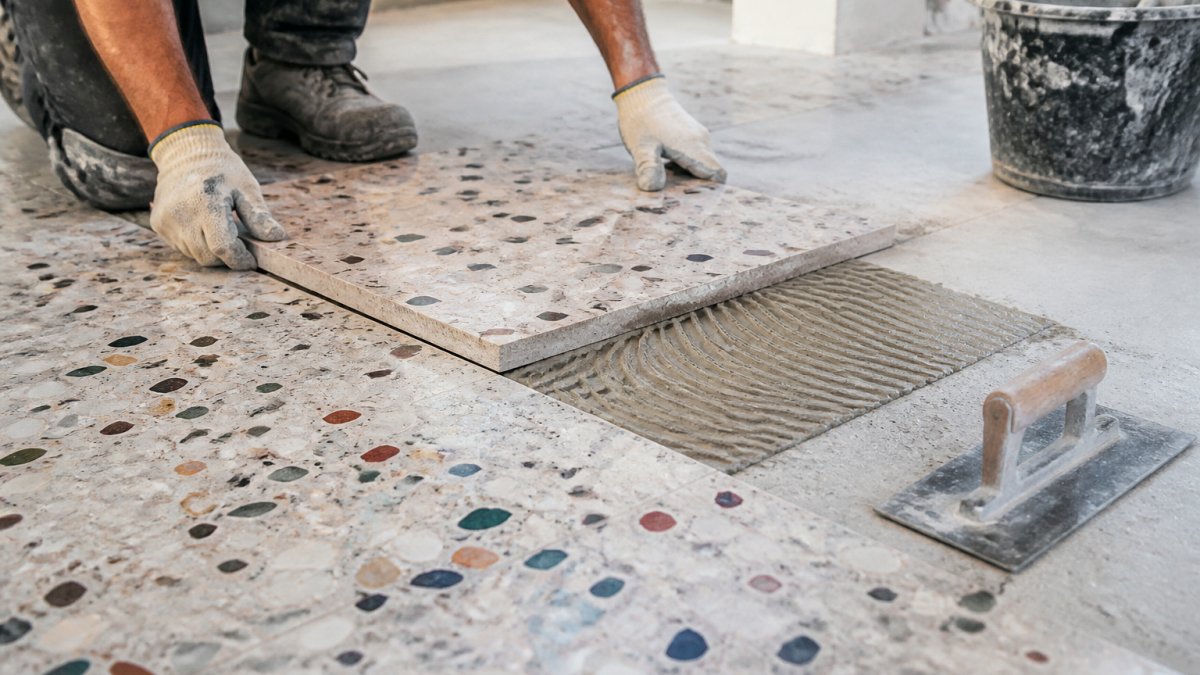
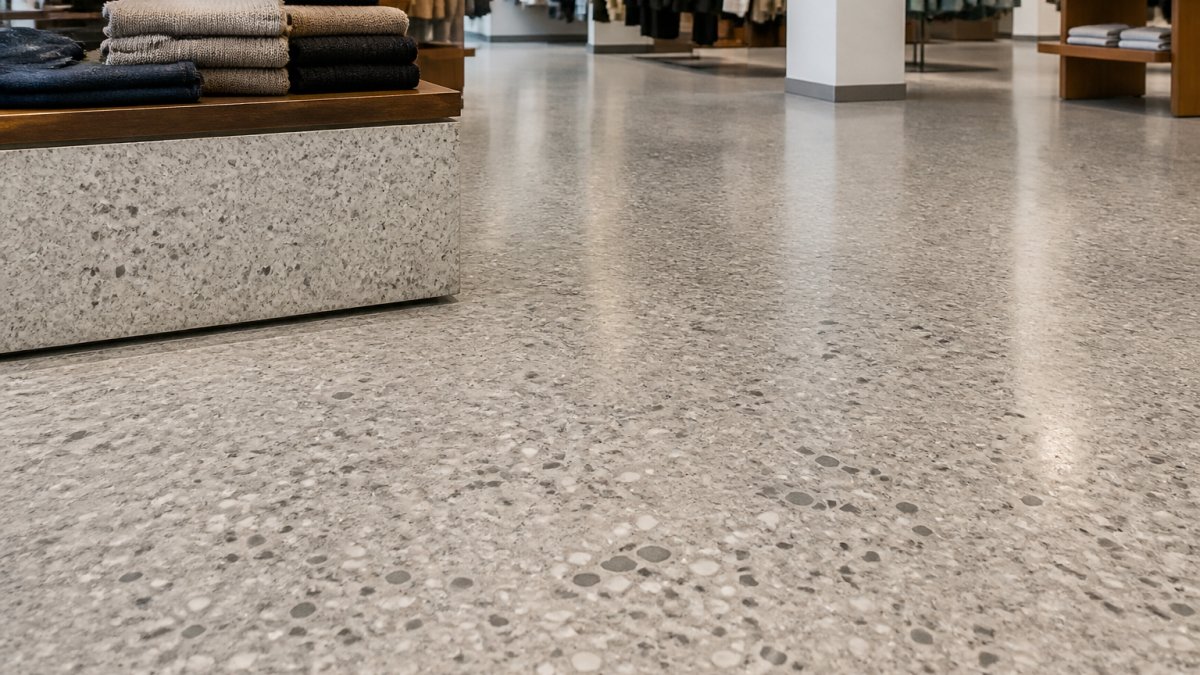
For terrazzo and hard-surface commercial projects, A1 Terrazzo is our top pick. We install and maintain terrazzo across Florida for hospitals, airports, courthouses, government buildings, schools, and universities, leveraging over 35 years of specialized experience.
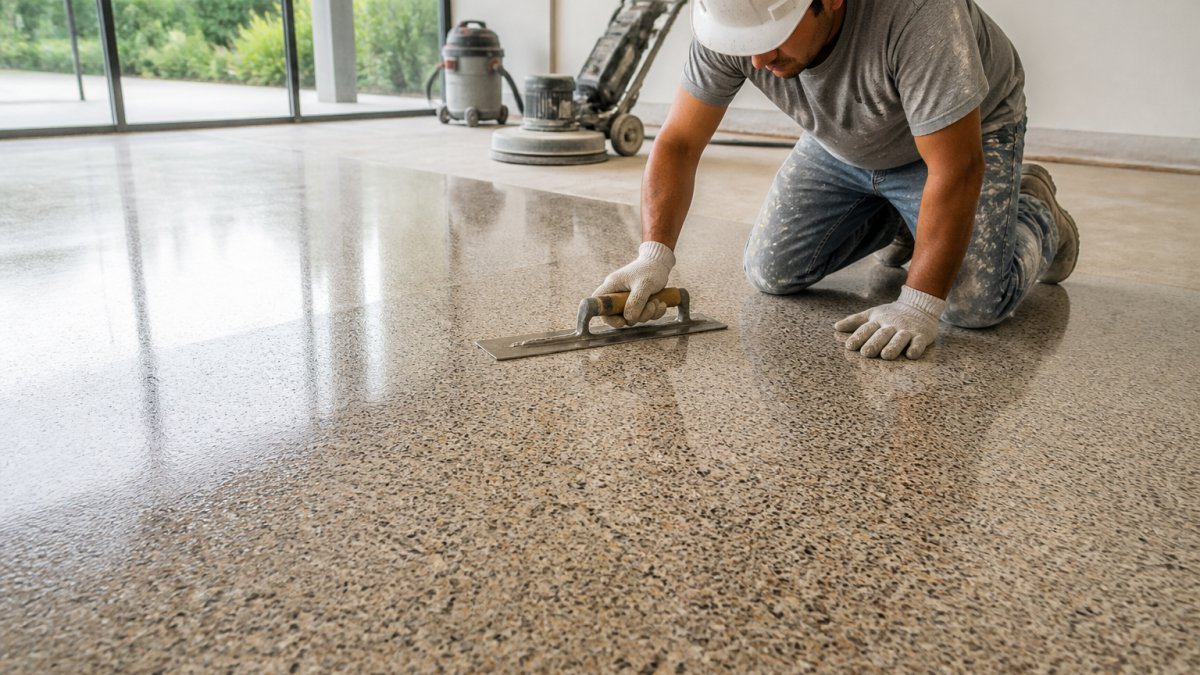
That specialization matters more than it sounds. Terrazzo fails at the substrate, not the surface. A crew that understands moisture testing, crack isolation, and divider strip layout prevents the cracking that shows up a year after a cheap install. We also handle restoration of original terrazzo in historic commercial buildings, matching patterns and finishes.
Pros:
- 35 years of dedicated commercial terrazzo experience
- Installation and ongoing maintenance under one contract
- Extensive service coverage across Florida
Cons:
- Specialized in terrazzo and hard surfaces
- Pricing is quote-based
2. Intertech Flooring: Best for Budgeting and Project Management Support
Pros:
- Project management and installation described together
- Budgeting support included in project assistance
Cons:
- Flooring systems, service coverage, and pricing are not specified publicly
- Less evidence of terrazzo specialization
3. Barton Co. Carpets: Best for Carpet and Carpet Tile Installation
Pros:
- Commercial installation named directly as a service
- Focused commercial service page
Cons:
- Material options and project capabilities are not listed
- Service area is regional, so verify coverage before requesting a flooring estimate
4. Home Depot Flooring Installation: Best for a Published Starting Rate
Pros:
- Published starting installation price
- Dedicated flooring installation service page
Cons:
- Commercial suitability is not confirmed
- Starting price excludes substrate prep and site conditions
5. Contractor Directories and Full-Service Chains: Best for Local Discovery
Directories like Thumbtack and the FCICA commercial flooring resource guide are useful for finding a local contractor fast, and full-service chains appear in 2026 flooring-company searches for good reason. Treat both as a shortlist tool, not a decision.
Directories surface names and community ratings. They do not verify commercial capability, insurance, or substrate expertise. Confirm all three before you invite anyone to a walkthrough.
FCICA commercial flooring resources
What Drives Commercial Flooring Installation Cost in 2026
Commercial flooring installation cost in 2026 is driven by substrate condition, material system, and schedule, not by square footage alone. Two buildings with identical floor plans can produce bids thousands of dollars apart because one needs moisture mitigation and the other does not. Most published guides stop at that sentence. This section goes further: it gives you installed cost ranges to budget against, a repeatable way to normalize competing bids, and the 2026 material and labor conditions that move the number.
Installed cost ranges to budget against
Treat the ranges below as planning benchmarks for occupied commercial space, not quotes. They assume removal of existing flooring, standard substrate prep, and normal business-hours access. Add for after-hours work, asbestos abatement, and slab remediation.
| Flooring system | Typical installed range (material + labor) | Notes |
|---|---|---|
| Carpet tile | Low-to-mid range per square foot | Fastest return to service; individual tiles replaceable |
| Luxury vinyl plank and tile (LVP/LVT) | Mid range per square foot | Sensitive to slab flatness tolerances |
| Vinyl composition tile (VCT) | Low range per square foot | Lowest material cost; higher long-term maintenance |
| Ceramic and porcelain tile | Mid-to-high range per square foot | Labor-intensive; longer cure and grout schedule |
| Epoxy and resinous systems | Mid-to-high range per square foot | Multi-coat cure windows; moisture testing mandatory |
| Terrazzo (sand or epoxy matrix) | High range per square foot | Highest upfront cost, longest service life |
A common pattern is that the lowest bid per square foot is the most expensive project. The gap is almost always substrate prep that was priced out of the base number and will return as a change order.
How to normalize competing bids
Ask every bidder to submit the same five-line breakdown so you can compare apples to apples:
- Removal and disposal, old flooring, adhesive, and any regulated material handling
- Substrate prep, moisture testing, grinding or patching, crack isolation, and flatness correction
- Material, product name, manufacturer, and quantity with waste factor
- Labor and schedule, crew size, shift, and phasing assumptions
- Exclusions and allowances, what is not included and what contingency is carried
If a bidder will not break the number down this way, the bid is not comparable. A single lump-sum figure hides the one line item that decides whether the project finishes on budget.
2026 material and labor conditions
Three conditions are shaping 2026 pricing more than any other:
- Material lead times. Sheet goods and specialty tile are ordered to project, not stocked, so lead time is a schedule risk as much as a cost line. Confirm lead times in writing before you award.
- Labor availability. Skilled installers for terrazzo, epoxy, and large-format tile are a constrained trade. Crews that can start next week are usually crews with capacity for a reason, verify references on comparable commercial work.
- Moisture and slab conditions in older buildings. As more commercial space turns over, more projects hit slabs that need mitigation. Budget a moisture mitigation allowance on any suspended slab rather than discovering it mid-install.
Commercial Flooring Installation Timeline and Business Disruption
A typical commercial flooring installation timeline runs from a few days for a single room to several weeks for a phased campus or terminal project. The schedule depends on square footage, material cure times, and how much of the space you can take offline at once. Competitors describe the phases; this section gives you the benchmarks and the phasing framework to plan around them.
Phase-by-phase timeline
- Inspection and moisture testing: 1-3 days. Testing must happen before material is ordered, not after.
- Substrate prep and repair: 2-5 days, longer if slab remediation or crack isolation is needed.
- Material acclimation and layout: 1-2 days. Sheet goods and tile need to condition to the space.
- Installation: varies by system and square footage, see the benchmarks below.
- Cure and return to service: terrazzo and epoxy need longer cure windows than carpet tile or LVP.
Square-footage benchmarks
Use these as planning ranges for occupied commercial space with normal access:
- Under 2,000 sq ft: often 2-5 working days for carpet tile or LVP; add cure time for resinous systems.
- 2,000-10,000 sq ft: typically 1-3 weeks depending on system and phasing.
- 10,000-50,000 sq ft: typically 3-8 weeks, and almost always phased to keep portions of the space open.
- Above 50,000 sq ft: multi-month programs with staged turnover by zone or floor.
These ranges assume a single crew. Adding crews shortens calendar time but raises coordination and staging costs, and not every system tolerates parallel work in adjacent zones.
Phasing framework to keep operations running
Business disruption is a design problem, not a luck problem. Plan the work in four moves:
- Zone by function, not by square footage. Take the lowest-traffic corridor or back-of-house area first so the crew proves the process before touching customer-facing space.
- Separate noisy prep from quiet install. Grinding and removal generate dust and noise; schedule those after hours and keep installation in daytime where possible.
- Confirm cure times against your reopening schedule. Terrazzo and epoxy cure on their own clock. A crew that promises same-day return to service on terrazzo is telling you something about their standards.
- Build a turnover checklist per zone. Confirm cleaning, edge details, and punch-list sign-off before a zone reopens so you are not chasing defects in occupied space.
Contract terms that protect operations
Put these in the contract before work begins:
- Phased schedule with zone turnover dates, not a single completion date
- After-hours and weekend rates stated separately so you can price disruption against cost
- Cure and return-to-service windows per system, in writing
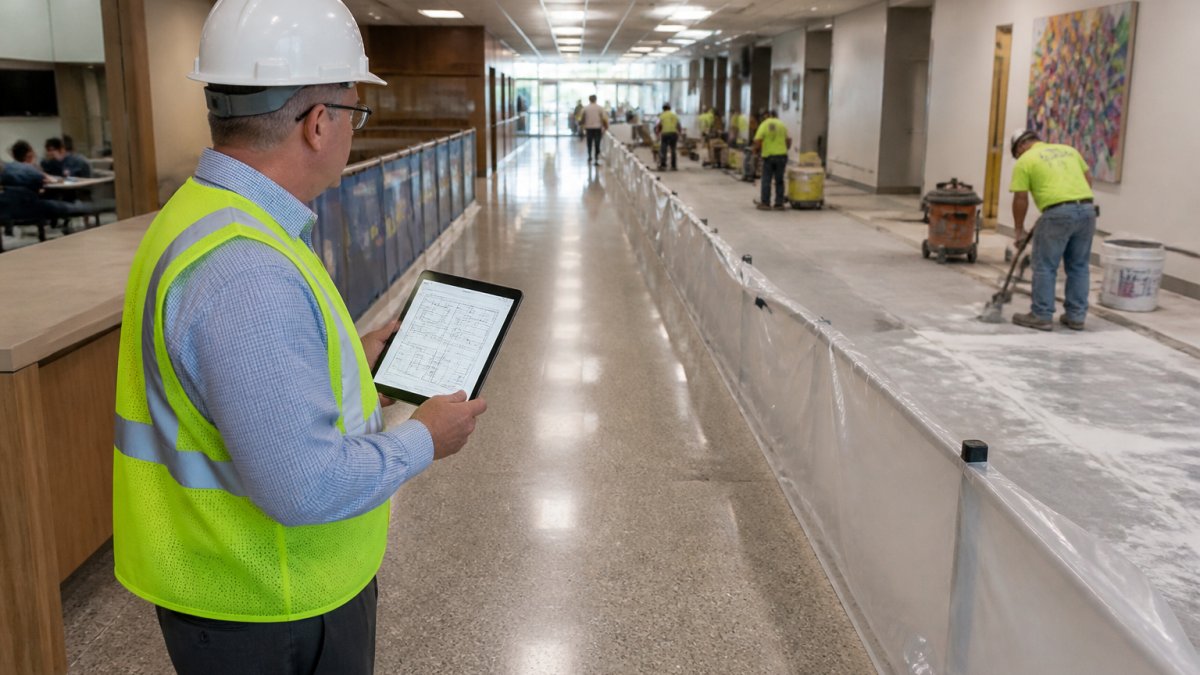
- Dust and containment plan for occupied buildings, including negative air where required
- Liquidated damages or schedule remedies if the contractor controls the critical path
Frequently Asked Questions
What should I look for in a commercial flooring contractor?
Look for documented experience in your building type, not just general flooring work. Ask for completed projects in healthcare, education, or high-traffic facilities similar to yours. Confirm licensing and insurance, and ask how the contractor handles substrate prep, since moisture and slab condition cause most early failures. Check that the proposal names materials, square footage, phasing, and warranty terms. Finally, ask whether installation and ongoing maintenance come from the same team, because cleaning protocols differ sharply between terrazzo, carpet tile, and luxury vinyl plank.
How long does commercial flooring installation take?
Timelines depend on square footage, material, substrate condition, and how much of the space must stay open. Small single-room projects can finish in days, while multi-floor or campus-wide work is typically phased over weeks or months. Moisture testing and slab prep add time before any material goes down, and terrazzo pours need curing windows before polishing. Ask each bidder for a phased schedule that shows when each area closes and reopens, and build that schedule into your operations plan rather than accepting a single completion date.
What affects commercial flooring installation cost?
Cost is driven by material choice, square footage, substrate condition, removal and disposal of existing flooring, and after-hours or phased scheduling. Terrazzo, ceramic tile, and epoxy carry different labor profiles than carpet tile or luxury vinyl plank. Moisture mitigation, crack repair, and leveling add line items that cheap bids often omit. Because pricing varies by project, request itemized proposals that separate material, labor, prep, and disposal so you can compare bids on equal terms instead of on a single lump sum.
How do I compare commercial flooring installation bids fairly?
Put every bid on the same template. Require line items for substrate prep, moisture testing, material specifications with manufacturer and product name, adhesive or underlayment, removal and disposal, phasing, and warranty. Ask each contractor to state what is excluded. A low total that omits prep or disposal is not comparable to a complete proposal. Also compare installation availability and crew size against your deadline, and confirm whether the same firm handles repairs and refinishing later, since lifecycle cost matters more than the initial number.
Which flooring materials work best for commercial spaces?
Match material to traffic and sanitation requirements. Terrazzo and epoxy suit healthcare, airports, and institutional buildings where durability and cleanability matter most. Carpet tile works well in offices and classrooms because tiles can be swapped individually. Luxury vinyl plank and vinyl composition tile fit retail and back-of-house areas on tighter budgets. Ceramic tile handles wet zones and heavy cleaning. Ask your contractor which option meets your performance needs first, then compare cost, since the cheapest material often carries the highest lifecycle expense.