 listicle
Commercial Floor Installation Timeline: 2026 Guide
Table of Contents
- How Commercial Floor Installation Timeline Estimates Break Down
- Factors Affecting Commercial Flooring Project Duration
- Commercial Flooring Installation Process Steps
- Timeline Estimates by Project Size
- How to Minimize Business Downtime During Flooring Installation
- Common Delays and How to Prevent Them
- Terrazzo Installation Timeline Specifics
- Frequently Asked Questions
Last Updated: August 17, 2026
How Commercial Floor Installation Timeline Estimates Break Down
Most facility managers underestimate the variables affecting commercial floor installation timelines, then get blindsided when moisture testing reveals substrate issues or adhesive cure times push back occupancy dates. A realistic timeline isn't just about labor hours, it requires sequencing subfloor preparation, material acclimation, environmental conditions, and curing periods correctly. Get one wrong, and your entire schedule shifts.
At A1 Terrazzo, we've managed hundreds of commercial installations across healthcare facilities, airports, universities, and government buildings. Most contractors quote installation time alone, but the real timeline starts weeks before the first adhesive gets mixed. It includes site inspection, moisture testing, potential leveling work, material lead times, and curing periods that can't be rushed. For a 10,000 square foot commercial space, the difference between a rushed estimate and a realistic one often means 2-4 additional weeks.
What Affects Installation Duration
Installation duration depends on material type, subfloor condition, environmental conditions, site accessibility, and design complexity. Terrazzo requires extended curing periods that vinyl or carpet don't. A healthcare facility where you're working around active operations moves slower than a retail space you can close for a week. A simple solid-color installation moves faster than intricate patterns requiring precision placement.
Square Footage and Project Scope
Square footage alone doesn't determine timeline. A 5,000 square foot retail space with good subfloor might finish in 2-3 weeks, while a 5,000 square foot hospital with moisture concerns and complex patterns could take 6-8 weeks. Large projects over 15,000 square feet often require phased installation, you can't shut down an entire airport or campus at once. A 50,000 square foot terrazzo installation might require custom material ordering 8-12 weeks in advance.
Factors Affecting Commercial Flooring Project Duration
Subfloor Preparation and Moisture Testing
Subfloor condition is the single biggest variable in commercial floor installation timelines. Moisture testing takes 24-72 hours depending on the method. Calcium chloride testing requires 24 hours of exposure time; relative humidity testing can take 3-7 days. If moisture levels exceed acceptable thresholds, you're managing moisture remediation first, sealing, ventilation improvements, or drainage corrections, adding weeks to the timeline.
Subfloor leveling compounds the timeline further. If the subfloor has high spots, low spots, or slopes, self-leveling compound or grinding is required. This takes 3-5 days depending on severity, plus 24-48 hours for curing before proceeding.
A1 Terrazzo includes comprehensive subfloor assessment as part of project planning, conducting moisture testing and creating detailed substrate reports that identify potential issues before they become timeline disasters.
Material Lead Times and Delivery
Terrazzo material lead times typically range from 4-8 weeks for standard mixes, or 10-12 weeks for custom designs with specific colors, patterns, or imported aggregates. Large commercial jobs require multiple shipments coordinated with the installation schedule. Materials stored in extreme heat or humidity can develop issues before installation begins, requiring climate-controlled storage in certain regions.
Environmental Conditions and Acclimation
Temperature and humidity directly impact adhesive cure times and material stability. The ideal range for terrazzo installation is 60-75°F with 30-50% relative humidity. Materials need to acclimate for 48-72 hours before work begins, allowing the terrazzo to adjust to its permanent environment. Skip acclimation, and you risk expansion or contraction issues after installation.
Commercial spaces with active HVAC systems require maintaining stable environmental conditions while partially operational, often necessitating temporary climate controls that extend the pre-installation timeline but prevent material and adhesive failures.
Commercial Flooring Installation Process Steps
Step 1: Site Inspection and Measurements
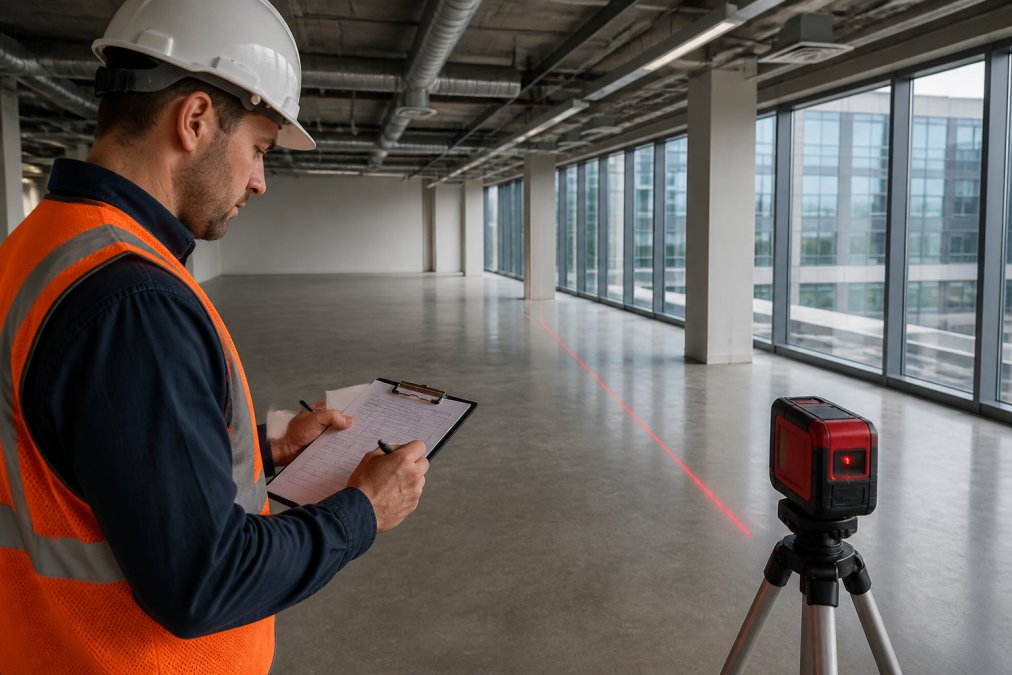
The installation process starts with comprehensive site inspection assessing subfloor condition, environmental factors, moisture sources, drainage issues, cracks, and operational constraints. The team documents current floor elevation, slope, traffic patterns, and identifies areas needing protection. For commercial facilities, the inspection maps phasing strategies to minimize operational disruption.
Precise measurements prevent material waste and ensure pattern continuity. This step typically takes 2-4 hours for a 10,000 square foot space.
Step 2: Subfloor Leveling and Preparation
The existing floor is cleaned thoroughly, debris and dust removed, cracks sealed, and high spots ground down. If leveling compound is needed, it's applied and allowed to cure. Minor cleaning and sealing might take 1-2 days; significant leveling work can take 5-7 days. Leveling compound requires 24-48 hours of curing before the next phase.
Moisture remediation, if needed, happens during this phase with sealers applied to prevent moisture migration and ventilation systems installed if necessary, extending the timeline by 1-2 weeks for typical moisture issues.
Step 3: Material Acclimation and Adhesive Setup
Materials arrive and acclimate in a climate-controlled area for 48-72 hours, allowing everything to reach thermal and humidity equilibrium. During acclimation, the installation crew prepares adhesive, often mixing binders with aggregates to correct consistency. Environmental controls are finalized, temporary climate systems activated if needed, and the space is secured to prevent contamination.
Step 4: Installation and Curing
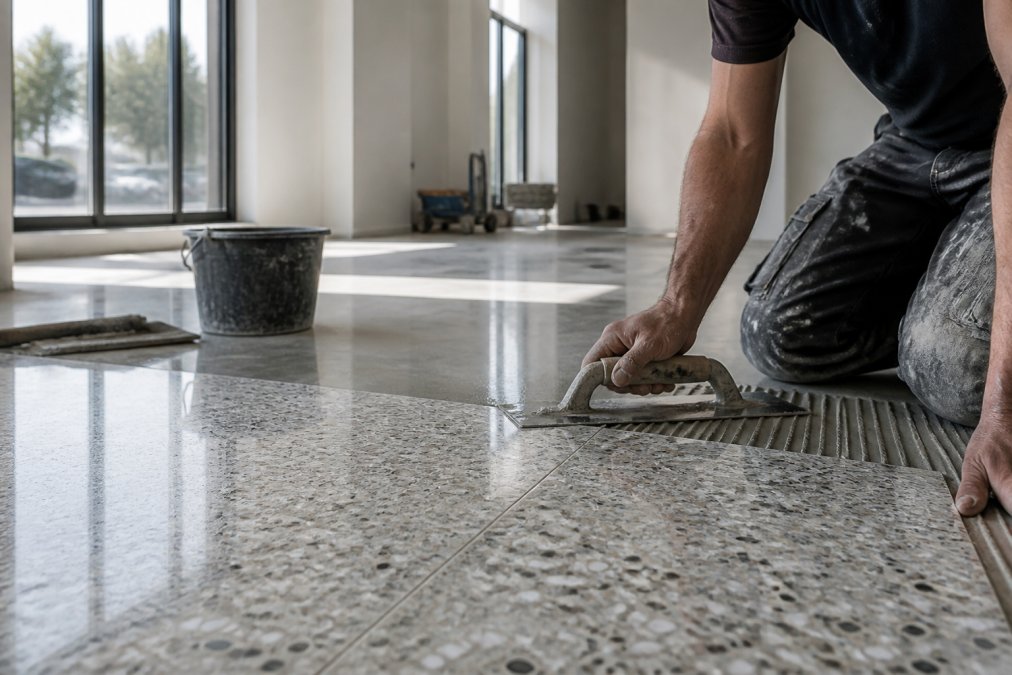
Installation begins once acclimation is complete and adhesive is ready. For terrazzo, the process involves spreading adhesive, placing aggregate mix, and consolidating material, typically covering 500-1,000 square feet per day depending on complexity and crew size.
Once placed and consolidated, the curing period begins. Terrazzo adhesive cure time is typically 48-72 hours before light foot traffic is allowed. Full cure, where the floor handles equipment and normal operations, takes 7-14 days depending on adhesive type and environmental conditions. During this period, the space is off-limits, no traffic, cleaning, or equipment movement.
Timeline Estimates by Project Size
Small Commercial Projects (Under 5,000 sq ft)
Small commercial projects typically follow a compressed timeline. If the subfloor is in good condition with no moisture issues, the commercial floor installation timeline runs 3-4 weeks from site inspection to occupancy: 1 week for site inspection, moisture testing, and material ordering; 1 week for subfloor preparation and acclimation; 3-5 days for installation; 7-10 days for curing.
If moisture issues or significant leveling is required, add 2-3 weeks. If custom terrazzo design is involved, add 4-8 weeks for material lead time. Small projects often don't require phased installation, allowing the entire space to close during cure, which actually speeds things up.
Medium Commercial Projects (5,000-15,000 sq ft)
Medium commercial projects typically require phased installation to maintain operations. The commercial floor installation timeline typically runs 6-10 weeks: 2-3 weeks of pre-installation work, 2-4 weeks of phased installation, and 2-3 weeks of staggered curing as each phase completes.
Material lead times become critical at this scale. Custom terrazzo requires ordering 8-10 weeks in advance. Coordination between phases requires detailed project management to ensure materials arrive on schedule and crews are available for each section.
Large Commercial Projects (15,000+ sq ft)
Large commercial projects require sophisticated timeline management. The commercial floor installation timeline typically runs 12-20 weeks or longer. A 50,000 square foot airport terminal might be broken into 8-10 phases, each taking 2-3 weeks of installation plus 1-2 weeks of curing before the next phase begins.
Material ordering starts 10-12 weeks before the first phase. Large projects often have regulatory timelines built in, permits, inspections, and compliance sign-offs add 2-4 weeks. Environmental assessments or historical preservation requirements can add 4-6 weeks.
How to Minimize Business Downtime During Flooring Installation
Phased Installation Strategies
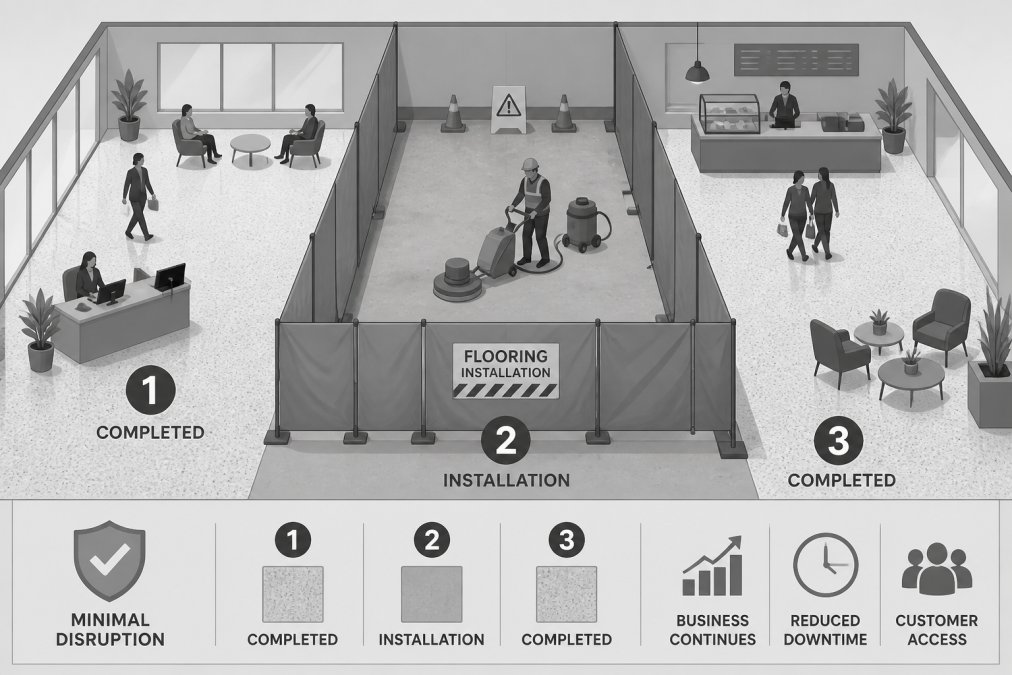
Phased installation is the primary strategy for maintaining operations during commercial flooring work. Instead of closing an entire facility, you divide it into sections, completing and curing each before the next phase begins. Phasing adds 20-30% to the overall project timeline but prevents complete operational shutdown, a trade-off most commercial facilities accept.
Night and Weekend Scheduling
For facilities that can't tolerate daytime disruption, night and weekend installation becomes necessary. This extends the commercial floor installation timeline because crews work fewer hours per week. A project requiring 4 weeks of full-time work might take 8-10 weeks with night and weekend scheduling. Material handling and environmental controls become more complex, and crew availability is limited. A1 Terrazzo accommodates these schedules for commercial clients where operational continuity is essential.
Traffic Flow Management During Work
Even during phased installation, traffic flow needs management through temporary barriers, signage, and strategic equipment staging. For healthcare facilities, traffic flow management is critical for patient safety. For airports, it affects passenger flow. For universities, it affects student movement. Effective traffic flow management requires coordination between the installation crew and facility operations.
Common Delays and How to Prevent Them
Moisture and Environmental Issues
Moisture is the most common reason for installation delays. A subfloor that appears dry might exceed acceptable moisture thresholds, only revealed through testing. Comprehensive testing before committing to an installation date prevents costly delays. If moisture is present, address it before scheduling installation.
Environmental conditions also cause delays. If humidity spikes or temperature drops during the scheduled window, cure times extend or adhesive performance suffers. Monitor weather forecasts 2-3 weeks before the scheduled start date. If conditions are unfavorable, delay rather than rushing forward and dealing with failures after installation.
Adhesive Cure Time and Traffic Restrictions
Adhesive cure time is non-negotiable. The temptation to reopen a space before full cure is strong when downtime costs money, but opening before cure is complete risks permanent damage, material movement, adhesive failure, or surface damage. The commercial floor installation timeline must include full cure time, 7-14 days for most terrazzo adhesives before normal operations resume.
Permit and Regulatory Timelines
Commercial projects often require permits, inspections, and regulatory approvals outside the contractor's control. Building permits typically take 2-4 weeks. Inspections happen at various stages and can create delays if issues are found. Healthcare facilities might have additional regulatory requirements; government buildings might have prevailing wage requirements; historic buildings might need preservation board approvals.
Plan for these timelines explicitly by contacting your local building department early and identifying any regulatory bodies needing approval. Add 4-6 weeks to your overall timeline for permit and regulatory processes.
Terrazzo Installation Timeline Specifics
Why Terrazzo Requires Extended Curing Periods
Terrazzo is a composite material with aggregate suspended in a binder. The binder needs time to fully cure and harden. Terrazzo adhesive cure times are typically 48-72 hours before light foot traffic is allowed; full cure takes 7-14 days. This extended cure period can't be shortened without risking the installation. The adhesive needs time to develop full strength to support terrazzo's weight without movement or failure.
Polishing and Finishing Timelines
After terrazzo cures, polishing and finishing begins, typically 10-14 days after installation. The process involves multiple passes with progressively finer grits, starting with coarse grinding to level the surface, then progressing to fine polishing that brings out the aggregate and creates the final finish.
Polishing adds 3-5 days to the commercial floor installation timeline. After polishing, the floor is sealed to protect the surface and enhance durability. Once sealed, there's a brief curing period for the sealer, typically 24-48 hours before the floor handles normal traffic and cleaning.
Ready to get your commercial flooring project planned correctly? Contact A1 Terrazzo to schedule a comprehensive site inspection and timeline assessment. With over 35 years of experience managing complex commercial terrazzo installations across healthcare facilities, airports, universities, and government buildings, we understand the operational constraints that drive your timeline decisions. We'll conduct moisture testing, evaluate your subfloor, and build a realistic installation schedule that accounts for your facility's operational needs. Get started with A1 Terrazzo and ensure your project stays on track from inspection to occupancy.
Frequently Asked Questions
How long does it take to install 1,000 square feet of commercial flooring?
Installation duration depends on the flooring material and subfloor condition. For standard commercial floor covering, expect 2-5 days for a 1,000 sq ft area. Terrazzo and specialty finishes may require 5-10 days due to extended curing periods and polishing. Subfloor preparation can add 1-3 days if leveling compound or moisture remediation is needed. The actual commercial floor installation timeline also accounts for adhesive cure time before the space reopens to traffic.
What factors affect how long a commercial flooring project takes?
Key factors include square footage, subfloor condition, material type, acclimation requirements, environmental conditions (temperature and humidity), and adhesive cure time. Moisture testing and site preparation can extend timelines significantly. Material lead time and delivery logistics also impact your overall project schedule. For commercial facilities, traffic flow management and phased installation strategies may lengthen the project but reduce operational disruption. Permit timelines in some jurisdictions add additional days before work begins.
How can I minimize business downtime during a commercial floor installation?
Phased installation divides your facility into sections, allowing some areas to remain operational while others are under construction. Night and weekend scheduling keeps your business running during business hours. Work with your installation crew to establish clear traffic flow management plans that isolate work zones. Coordinate material delivery and storage to avoid congestion. Communicate timelines to staff and customers in advance. For terrazzo and other specialty finishes, confirm adhesive cure time and curing period requirements before reopening spaces to foot traffic.
Why does subfloor preparation add time to my commercial floor installation timeline?
Subfloor preparation is critical for flooring durability and requires moisture testing, leveling, and sometimes the application of leveling compound. Moisture testing alone can take 24-48 hours for results. If the subfloor is uneven, floor leveling with leveling compound adds 1-3 days of drying time before installation can proceed. Poor subfloor preparation leads to cracking, adhesive failure, and premature floor failure. Professional site inspection and moisture remediation upfront prevent costly repairs later and ensure your commercial floor covering performs as intended.
How does terrazzo compare to other commercial flooring materials in terms of installation time?
Terrazzo installation typically takes longer than standard tile or vinyl due to extended curing periods and polishing requirements. While basic terrazzo installation may take 3-7 days for 5,000 sq ft, the adhesive cure time and polishing phase can add another 7-14 days before the floor is ready for full traffic. Specialty terrazzo designs with custom patterns require additional time for layout and precision work. The investment in extended curing periods ensures a durable, beautiful floor finish that outperforms many alternatives in high-traffic commercial facilities.
This article was written using GrandRanker
Frequently Asked Questions
How long does it take to install 1,000 square feet of commercial flooring?
Installation duration depends on the flooring material and subfloor condition. For standard commercial floor covering, expect 2–5 days for a 1,000 sq ft area. Terrazzo and specialty finishes may require 5–10 days due to extended curing periods and polishing. Subfloor preparation can add 1–3 days if leveling compound or moisture remediation is needed. The actual commercial floor installation timeline also accounts for adhesive cure time before the space reopens to traffic.
What factors affect how long a commercial flooring project takes?
Key factors include square footage, subfloor condition, material type, acclimation requirements, environmental conditions (temperature and humidity), and adhesive cure time. Moisture testing and site preparation can extend timelines significantly. Material lead time and delivery logistics also impact your overall project schedule. For commercial facilities, traffic flow management and phased installation strategies may lengthen the project but reduce operational disruption. Permit timelines in some jurisdictions add additional days before work begins.
How can I minimize business downtime during a commercial floor installation?
Phased installation divides your facility into sections, allowing some areas to remain operational while others are under construction. Night and weekend scheduling keeps your business running during business hours. Work with your installation crew to establish clear traffic flow management plans that isolate work zones. Coordinate material delivery and storage to avoid congestion. Communicate timelines to staff and customers in advance. For terrazzo and other specialty finishes, confirm adhesive cure time and curing period requirements before reopening spaces to foot traffic.
Why does subfloor preparation add time to my commercial floor installation timeline?
Subfloor preparation is critical for flooring durability and requires moisture testing, leveling, and sometimes the application of leveling compound. Moisture testing alone can take 24–48 hours for results. If the subfloor is uneven, floor leveling with leveling compound adds 1–3 days of drying time before installation can proceed. Poor subfloor preparation leads to cracking, adhesive failure, and premature floor failure. Professional site inspection and moisture remediation upfront prevent costly repairs later and ensure your commercial floor covering performs as intended.
How does terrazzo compare to other commercial flooring materials in terms of installation time?
Terrazzo installation typically takes longer than standard tile or vinyl due to extended curing periods and polishing requirements. While basic terrazzo installation may take 3–7 days for 5,000 sq ft, the adhesive cure time and polishing phase can add another 7–14 days before the floor is ready for full traffic. Specialty terrazzo designs with custom patterns require additional time for layout and precision work. The investment in extended curing periods ensures a durable, beautiful floor finish that outperforms many alternatives in high-traffic commercial facilities.