 listicle
Commercial Terrazzo Floor Repair Experts
Table of Contents
- What Makes Professional Terrazzo Floor Repair Different
- Signs Your Terrazzo Needs Professional Repair
- The Terrazzo Restoration Process: From Damage Assessment to Finish
- Professional Terrazzo Floor Polishing Services for Commercial Spaces
- Commercial Terrazzo Floor Maintenance Best Practices
- Understanding Terrazzo Floor Restoration Cost Per Square Foot
- Why Commercial Facilities Choose Professional Experts Over DIY Solutions
- Conclusion
- Frequently Asked Questions
Last Updated: August 27, 2026
What Makes Professional Terrazzo Floor Repair Different
Professional terrazzo floor repair requires specialized equipment, technical knowledge, and understanding of how terrazzo behaves as a material. A1 Terrazzo brings 35 years of experience to every project, having addressed virtually every type of damage without creating new problems.
The difference between amateur and professional work becomes obvious within months. DIY patches crack due to improper substrate preparation. Budget contractors skip surface prep and use incompatible epoxy, which fails under foot traffic. Professional terrazzo experts understand that the aggregate, epoxy matrix, and sealing process must work as an an integrated system (peer-reviewed research). Without this systems-level thinking, repairs deteriorate faster than the original damage.
What separates professionals is equipment and methodology. Commercial-grade diamond grinding equipment, precision honing sequences, and color-matched epoxy filling require both investment and expertise. Facility managers at hospitals, airports, universities, and government buildings trust established contractors rather than experimenting with alternatives.
Signs Your Terrazzo Needs Professional Repair
Your terrazzo floor sends signals well before catastrophic failure occurs. Recognizing these signals early saves money and prevents safety hazards.
Visible cracks and spalling are the most obvious warning signs. Small hairline cracks are pathways for moisture infiltration, accelerating deterioration exponentially (peer-reviewed research). Spalling, where pieces chip away, indicates the aggregate is separating from the epoxy matrix due to moisture damage or substrate failure (peer-reviewed research).
Dull or cloudy finish signals that the protective sealer is breaking down. A healthy terrazzo floor reflects light evenly. When the surface looks hazy in areas that were previously glossy, the sealer has worn through and the aggregate is becoming exposed, accelerating wear and making the floor vulnerable to staining.
Staining that won't come clean suggests sealer failure. Terrazzo should resist most spills when properly sealed. If water beads on one area but pools on another, the sealing layer has compromised. This is especially critical in healthcare facilities where sanitation is non-negotiable.
Uneven surfaces or lippage, where one section sits slightly higher than an adjacent section, indicates substrate movement or settling. This creates trip hazards and concentrates foot traffic stress on certain areas, accelerating wear.
Discoloration patterns following traffic flow show where sealer has worn fastest. High-traffic corridors wear sealer faster than low-traffic areas. These patterns signal that sealing is overdue before structural issues develop.
The Terrazzo Restoration Process: From Damage Assessment to Finish
Surface Preparation and Damage Assessment
Professional terrazzo floor repair begins with thorough damage assessment using specialized equipment to check for moisture, delamination, and substrate integrity. This determines the entire scope of work and materials needed.
Surface preparation is where most DIY attempts fail. The existing terrazzo must be cleaned to bare substrate, stripped of failed sealer and epoxy, and assessed for structural soundness. Any loose material must be removed and moisture addressed. Substrate preparation often takes longer than actual repair work but is the foundation for lasting repairs. A properly prepared surface accepts new epoxy, honing, and sealing. A poorly prepared surface rejects new materials, leading to failure within months.
Diamond Grinding, Honing, and Crack Repair
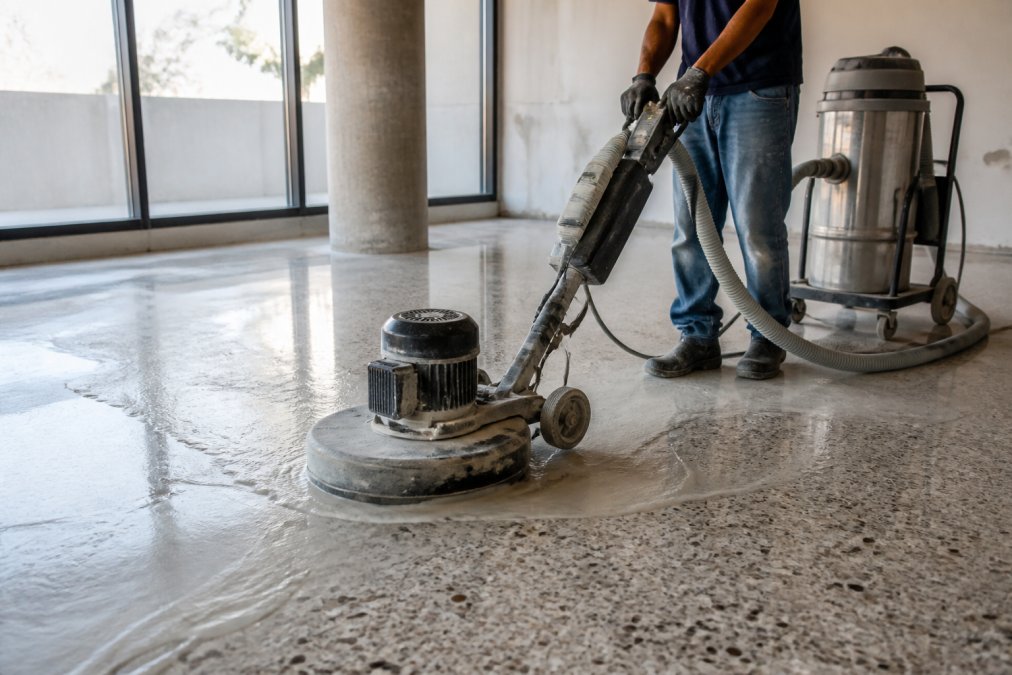
Diamond grinding removes the damaged layer of terrazzo and exposes fresh aggregate below, using progressively finer diamond grits. This creates a smooth, level surface and removes lippage or uneven wear patterns.
Honing refines the surface to a consistent texture, determining whether the final finish will be matte, satin, or high-gloss. Honing also closes the pores of the aggregate slightly, preparing the surface to accept sealer evenly.
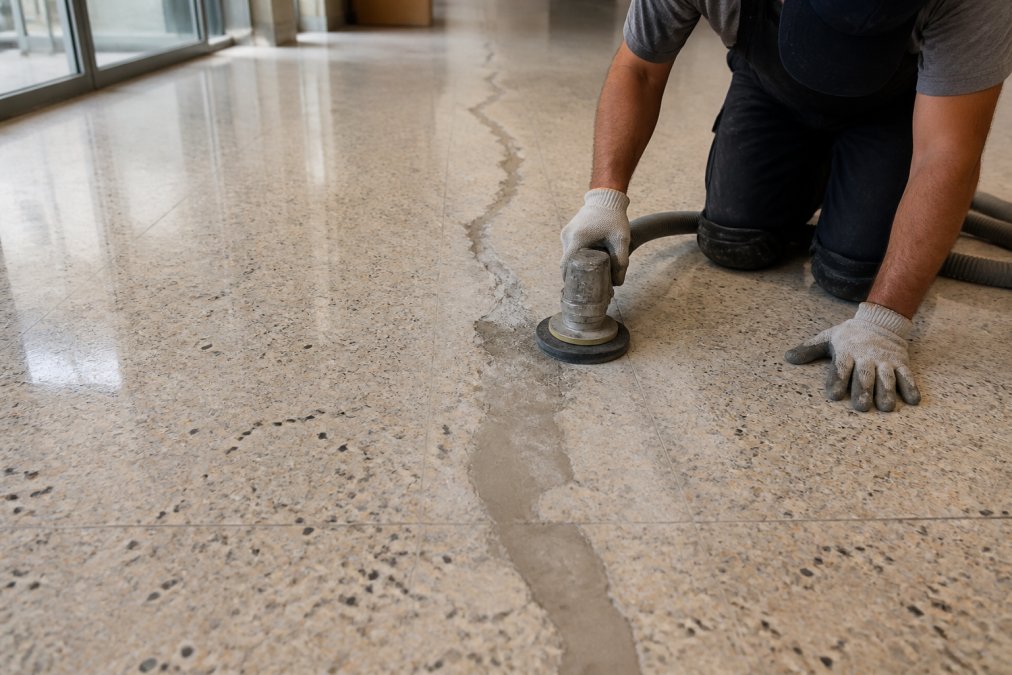
Crack repair happens during this phase. Small cracks are filled with color-matched epoxy. Larger cracks may require routing before filling. The epoxy must match the original color and aggregate size, or the repair will be visibly obvious. A1 Terrazzo maintains color-matching expertise across dozens of terrazzo formulations, ensuring repairs blend seamlessly.
Epoxy Filling and Color Matching
Color matching is an art and a science. Professional contractors maintain samples of terrazzo colors and aggregate types, testing epoxy formulations against the original floor under the same lighting conditions. Mismatched epoxy stands out immediately and undermines the professional appearance of the entire floor.
Epoxy filling requires precision application at the right temperature and humidity, worked into cracks completely, and allowed to cure properly. Professional contractors follow strict protocols for application and curing time, ensuring permanent holds.
The epoxy used in professional terrazzo floor repair is formulated specifically for terrazzo, with aggregate matching the original floor and epoxy chemistry that bonds to both the original terrazzo and substrate. This specialized material is why professional repairs cost more but last permanently.
Polishing and Sealing for Long-Term Protection
After grinding, honing, and epoxy filling, the floor undergoes final polishing using increasingly fine diamond grits. The goal is consistent sheen across the entire floor with no dull spots or uneven reflectivity.
Sealing is the final step determining floor longevity. Professional-grade sealer creates a protective barrier against moisture, stains, and wear. The sealer must be applied evenly, allowed to cure fully, and buffed to the appropriate sheen level. Healthcare facilities require sealer that balances durability with slip-resistance.
Professional Terrazzo Floor Polishing Services for Commercial Spaces
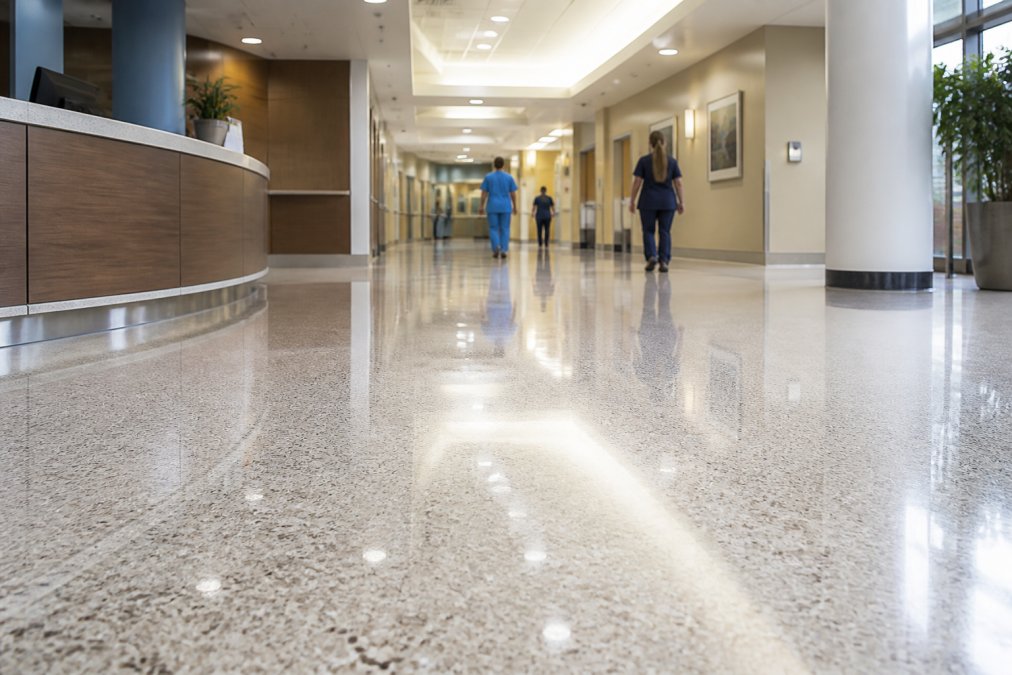
Professional terrazzo floor polishing for commercial spaces differs fundamentally from residential polishing. Commercial floors handle thousands of daily footsteps, rolling carts, and equipment that residential floors never encounter.
Commercial polishing starts with assessing current floor condition. Is the existing sealer still functional, or has it failed? Is the aggregate intact, or has wear exposed the epoxy matrix? These questions determine whether the floor needs refinishing or just polishing and re-sealing. minimizing business downtime.
High-gloss finishes are rare in commercial spaces because they create slip hazards. Hospitals, airports, and institutional buildings typically specify matte or satin finishes, providing adequate sheen while maintaining traction.
Downtime is critical in commercial polishing. Professional contractors schedule work during off-hours, manage dust control rigorously, and coordinate with facility managers to minimize disruption.
Commercial Terrazzo Floor Maintenance Best Practices
Once terrazzo is professionally restored and sealed, maintenance extends sealer life and prevents damage leading to expensive repairs.
Daily cleaning should use pH-neutral cleaners specifically formulated for sealed terrazzo. Acidic and alkaline cleaners degrade sealer and etch aggregate. Standard commercial floor cleaners are often too harsh for terrazzo.
Dust mopping before wet cleaning removes abrasive particles that scratch the surface during mopping. In high-traffic areas, dust mopping multiple times daily is standard practice.
Spill response matters immediately. Spills should be wiped up promptly, especially acidic or staining liquids. In healthcare facilities, this is critical for sanitation and preventing permanent discoloration.
Sealer reapplication typically occurs every 1-3 years depending on traffic level and maintenance quality. High-traffic commercial spaces may need annual sealing. Regular sealing is far cheaper than dealing with moisture damage or stains penetrating the substrate.
Avoid harsh equipment on terrazzo floors. Steel wool, abrasive scrubbers, and high-pressure washers damage the surface. Institutional facilities should establish clear protocols protecting the floor while maintaining sanitation standards.
Understanding Terrazzo Floor Restoration Cost Per Square Foot
Terrazzo floor restoration cost per square foot varies based on damage extent, project size, and color-matching complexity.
Assessment and preparation costs are often underestimated. Surface preparation can represent a significant portion of total project cost because it's labor-intensive and requires careful removal of failed materials.
Damage extent drives cost variation. A floor with minor cracks and worn sealer costs far less per square foot than one with spalling, substrate damage, and structural issues.
Project size affects per-square-foot pricing. Small repair projects carry higher overhead per square foot because setup and equipment deployment don't scale down. Large projects achieve better per-square-foot economics because fixed costs spread across more area.
Color matching complexity influences cost. Standard colors and aggregate combinations are straightforward to match. Custom formulations require more time and testing.
For accurate pricing on your specific project, contact A1 Terrazzo for a professional assessment.
Why Commercial Facilities Choose Professional Experts Over DIY Solutions
Commercial facilities, hospitals, airports, universities, and government buildings consistently choose professional experts for clear reasons.
Liability and safety are paramount in institutional settings. A DIY repair that fails creates liability for the facility. Professional contractors carry insurance and stand behind their work, transferring risk appropriately.
Downtime costs dwarf professional repair costs. A hospital corridor out of service for a week costs far more in operational disruption than hiring professionals who work after hours. An airport terminal closure loses revenue and creates passenger frustration.
Technical expertise prevents costly mistakes. Terrazzo restoration involves understanding aggregate chemistry, epoxy formulations, substrate preparation, and finishing techniques. Professional contractors have made mistakes on training projects, not client facilities.
Equipment investment is substantial. Professional-grade diamond grinding equipment, dust collection systems, and specialized tools represent tens of thousands of dollars. Renting for a one-time project often costs as much as hiring professionals.
Warranty and guarantees come with professional work. If a professional repair fails within the warranty period, the contractor fixes it at no cost. DIY repairs come with no recourse if they fail.
A1 Terrazzo has completed hundreds of commercial terrazzo floor repair projects across Florida in hospitals, airports, courthouses, government buildings, and universities. That experience translates to efficiency, quality, and results justifying professional investment.
Conclusion
Commercial terrazzo flooring is durable, beautiful, and built to last decades when properly maintained and repaired. Terrazzo restoration requires specialized knowledge, professional equipment, and commitment to doing the work correctly rather than quickly.
When your commercial terrazzo floor shows signs of damage, cracks, worn sealer, discoloration, or uneven surfaces, professional repair protects your investment. A1 Terrazzo brings 35 years of experience in commercial terrazzo installation and maintenance, with expertise in color matching, epoxy filling, diamond grinding, and professional sealing. We understand the specific demands of hospitals, airports, universities, and government facilities, and schedule work to minimize operational disruption. Contact A1 Terrazzo for a professional assessment and detailed restoration plan tailored to your facility's needs.
=== FAQ ANSWERS (audit these too, same rules) ===
[1] Q: Can a terrazzo floor be repaired if it has deep cracks or missing sections? A: Yes, professional terrazzo floor repair can address deep cracks and missing sections using epoxy filling and color matching techniques. Contractors prepare the damaged area, apply epoxy resin mixed with marble dust aggregate, and then grind and polish the repair to blend seamlessly with the existing surface. This approach restores structural integrity while maintaining aesthetic consistency across the floor.
[2] Q: What does commercial terrazzo floor maintenance best practices involve? A: Proper maintenance includes daily sweeping or vacuuming to remove dirt and grit, damp mopping with pH-neutral cleaners, and avoiding acidic or abrasive products that damage the sealer. For high-traffic commercial spaces, professional resealing every 1-3 years protects against staining and moisture penetration. Regular inspection for cracks, chips, or dull spots allows early intervention before problems escalate into costly repairs.
[3] Q: How do professionals match colors during terrazzo repair? A: Professional contractors use custom color-matching techniques with epoxy systems that include tint bottles and marble dust in various shades. They carefully select aggregate colors and epoxy tones to replicate the original floor's appearance. After applying the epoxy fill, grinding and polishing blend the repair into the surrounding surface, creating a seamless finish that maintains the floor's original aesthetic integrity.
[4] Q: What is the typical range for terrazzo floor restoration cost per square foot? A: Terrazzo floor restoration cost per square foot varies based on damage severity, surface area, and required services like grinding, polishing, and sealing. Minor polishing and resealing costs less than full restoration with crack repair and epoxy filling. For accurate pricing specific to your facility's needs and condition, contact a professional contractor for a detailed assessment and quote based on your exact requirements.
Frequently Asked Questions
Can a terrazzo floor be repaired if it has deep cracks or missing sections?
Yes, professional terrazzo floor repair can address deep cracks and missing sections using epoxy filling and color matching techniques. Contractors prepare the damaged area, apply epoxy resin mixed with marble dust aggregate, and then grind and polish the repair to blend seamlessly with the existing surface. This approach restores structural integrity while maintaining aesthetic consistency across the floor.
What does commercial terrazzo floor maintenance best practices involve?
Proper maintenance includes daily sweeping or vacuuming to remove dirt and grit, damp mopping with pH-neutral cleaners, and avoiding acidic or abrasive products that damage the sealer. For high-traffic commercial spaces, professional resealing every 1-3 years protects against staining and moisture penetration. Regular inspection for cracks, chips, or dull spots allows early intervention before problems escalate into costly repairs.
How do professionals match colors during terrazzo repair?
Professional contractors use custom color-matching techniques with epoxy systems that include tint bottles and marble dust in various shades. They carefully select aggregate colors and epoxy tones to replicate the original floor's appearance. After applying the epoxy fill, grinding and polishing blend the repair into the surrounding surface, creating a seamless finish that maintains the floor's original aesthetic integrity.
What is the typical range for terrazzo floor restoration cost per square foot?
Terrazzo floor restoration cost per square foot varies based on damage severity, surface area, and required services like grinding, polishing, and sealing. Minor polishing and resealing costs less than full restoration with crack repair and epoxy filling. For accurate pricing specific to your facility's needs and condition, contact a professional contractor for a detailed assessment and quote based on your exact requirements.
This article was written using GrandRanker
Frequently Asked Questions
Can a terrazzo floor be repaired if it has deep cracks or missing sections?
Yes, professional terrazzo floor repair can address deep cracks and missing sections using epoxy filling and color matching techniques. Contractors prepare the damaged area, apply epoxy resin mixed with marble dust aggregate, and then grind and polish the repair to blend seamlessly with the existing surface. This approach restores structural integrity while maintaining aesthetic consistency across the floor.
What does commercial terrazzo floor maintenance best practices involve?
Proper maintenance includes daily sweeping or vacuuming to remove dirt and grit, damp mopping with pH-neutral cleaners, and avoiding acidic or abrasive products that damage the sealer. For high-traffic commercial spaces, professional resealing every 1-3 years protects against staining and moisture penetration. Regular inspection for cracks, chips, or dull spots allows early intervention before problems escalate into costly repairs.
How do professionals match colors during terrazzo repair?
Professional contractors use custom color-matching techniques with epoxy systems that include tint bottles and marble dust in various shades. They carefully select aggregate colors and epoxy tones to replicate the original floor's appearance. After applying the epoxy fill, grinding and polishing blend the repair into the surrounding surface, creating a seamless finish that maintains the floor's original aesthetic integrity.
What is the typical range for terrazzo floor restoration cost per square foot?
Terrazzo floor restoration cost per square foot varies based on damage severity, surface area, and required services like grinding, polishing, and sealing. Minor polishing and resealing costs less than full restoration with crack repair and epoxy filling. For accurate pricing specific to your facility's needs and condition, contact a professional contractor for a detailed assessment and quote based on your exact requirements.