 How-to
How Do You Clean Terrazzo Floors After Repair?
Quick Summary
To clean terrazzo floors after repair, wait until the patch has fully cured per the manufacturer's data sheet, since surface-dry is not cured. Then dry-remove repair dust with a soft microfiber dust mop, and clean with a damp pass using a pH-neutral terrazzo cleaner, followed by a clean-water rinse.
- Surface-dry is not cured; follow the repair product's data sheet for cure time.
- Remove repair dust with a dry microfiber or soft-bristle dust mop before any water.
- Wring the mop until only damp, and work from the outside of the patch toward the center.
- Use a pH-neutral terrazzo cleaner; avoid vinegar, bleach, ammonia, and acidic products.
- Inspect under raking light and fix haze or sheen differences before foot traffic returns.
Table of Contents
- How Do You Clean Terrazzo Floors After Repair?
- Why Cleaning Right After a Terrazzo Repair Needs Care
- Wait for the Repair to Cure Before Cleaning
- What You Need: Tools and pH-Neutral Cleaning Agents
- Step-by-Step: How to Clean Terrazzo Floors After Repair Without Sanding
- Homemade Terrazzo Floor Cleaner Options and When to Avoid Them
- How to Deep Clean Terrazzo Floors and Protect the Repaired Area
- Troubleshooting Haze, Residue, and Cleanup Damage
- Booking a Professional Cleanup After Your Terrazzo Repair
- Frequently Asked Questions
How Do You Clean Terrazzo Floors After Repair?
Last Updated: November 16, 2026
Cleanup after a repair is where many terrazzo floors get damaged. Cleaning too early, using the wrong product, or scrubbing a fresh patch can leave haze, dull spots, or a color mismatch that is hard to reverse. Because the same caution applies when a household cleaner harms stone, knowing when to seal granite after damage can help prevent a rushed cleanup from making the surface worse.
This guide walks through the general process for cleaning a repaired terrazzo floor: what to wait for, what to use, and what to avoid. Use it as a checklist, and call a professional when the repair is large, the floor is in a high-use area, or the damage looks deeper than the surface.
Why Cleaning Right After a Terrazzo Repair Needs Care
Terrazzo is a mix of marble, quartz, or glass chips set in cement or epoxy. The repair material bonds to that mix, but it has not fully hardened yet. Cleaning too soon can pull the patch out of place, smear it, or leave a film.
Repair areas also carry fine dust from grinding and patching. That dust can settle into the surrounding floor and dull it if it is wiped around instead of removed.
- Fresh patches are soft and can be marked by water or scrubbing.
- Repair dust can look like haze on the rest of the floor.
- Harsh chemicals can change the color of new repair material.
Wait for the Repair to Cure Before Cleaning
Do not mop or scrub a fresh repair until the patch has fully cured. Cure times depend on the repair product, temperature, and humidity, so follow the manufacturer's data sheet first. Cure times vary by repair material, so follow the manufacturer's stated window.
Keep foot traffic off the patch during curing, and tape off the area if people are likely to walk on it. A common mistake is to start cleaning the whole floor on day one because the patch looks dry on top. Dry on the surface does not mean cured underneath.
What You Need: Tools and pH-Neutral Cleaning Agents
Gather the right tools before you start. Using a stiff brush or a harsh pad can scratch the chips and dull the finish.
- A soft-bristle dust mop or microfiber dust mop for dry debris
- Two buckets: one for cleaning solution, one for rinse water
- Microfiber mop heads, clean and wrung out well
- A soft nylon brush for corners and edges
- A pH-neutral terrazzo cleaner, diluted as the label directs
- A wet/dry vacuum for removing standing water
For cleaning agents, choose products labeled pH-neutral or safe for terrazzo. Neutral cleaners lift dirt without etching the stone. Avoid vinegar, bleach, ammonia, and acidic cleaners on terrazzo, since they can dull the surface and damage the cement binder.
Step-by-Step: How to Clean Terrazzo Floors After Repair Without Sanding
Post-repair cleanup is not the same as routine mopping. The patch is the softest, most vulnerable part of the floor, and repair dust behaves differently from everyday grit. Work in stages, and do not advance to a wet stage until the repair has met its cure window.
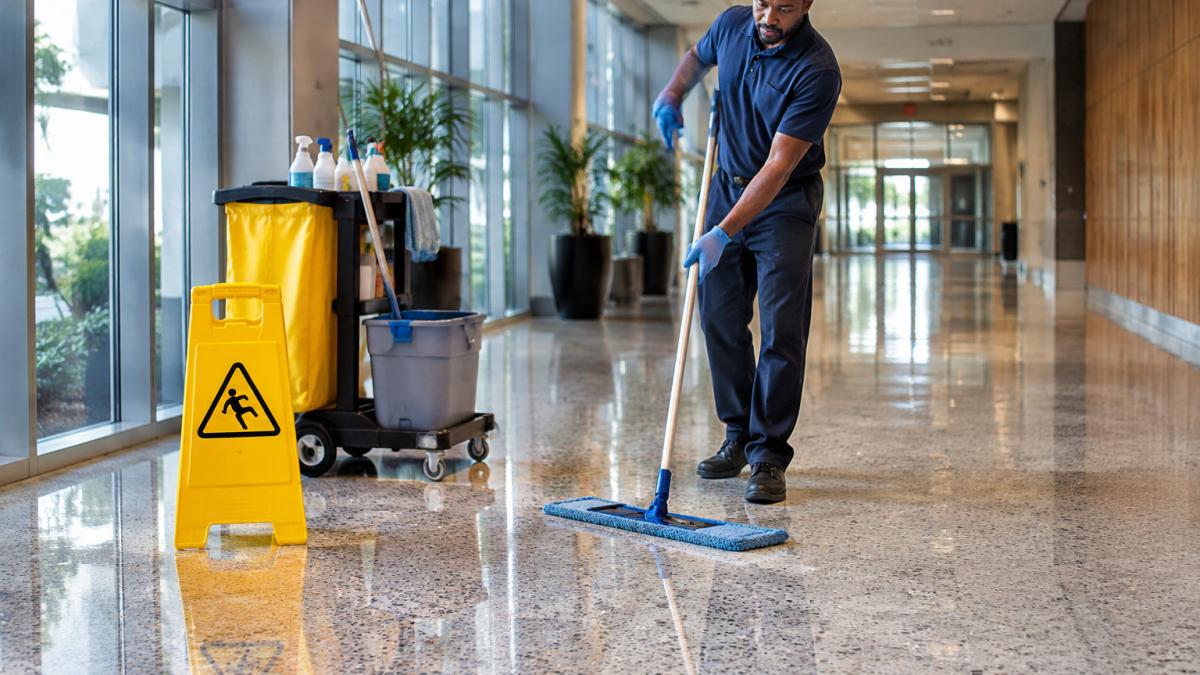
Stage 1: Confirm the cure window. Check the repair product's data sheet for the manufacturer's stated cure time before any water touches the patch. Cure times vary by repair material, so the manufacturer's stated window should be followed. Surface-dry is not cured. If the data sheet is unavailable, wait longer rather than shorter.
Stage 2: Dry-remove repair dust. Fine dust from grinding and patching is the biggest scratch risk. Use a soft-bristle dust mop or a microfiber dust mop and pull debris toward you rather than sweeping it across the patch. For larger jobs, a wet/dry vacuum with a HEPA filter can capture dust that a mop only pushes around.
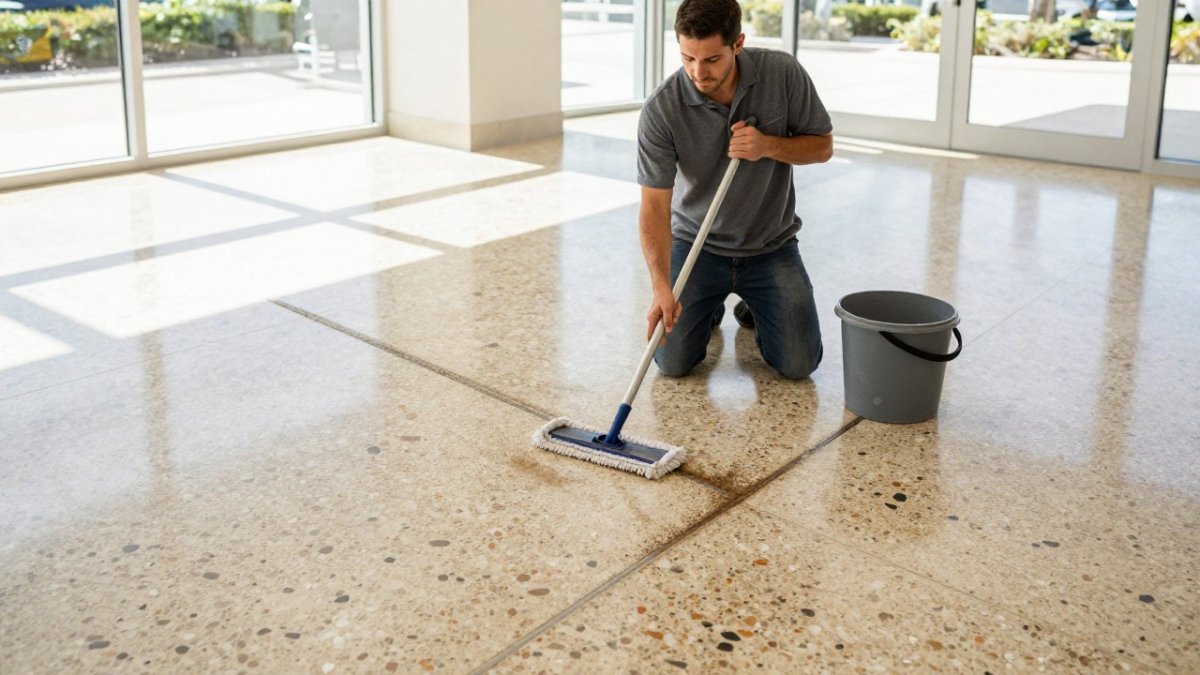
Stage 3: Remove haze with a damp, not wet, pass. Wring the microfiber mop until it is only damp. Excess water can seep into a cementitious patch and weaken the bond or leave a ring. Work from the outside of the repaired area toward the center so you do not drag residue across the fresh surface.
Stage 4: Rinse and dry. Mop with clean water and a clean mop head to lift cleaner residue, then dry with a microfiber mop or wet/dry vacuum. Residual cleaner is the most common cause of a hazy film over a repair.
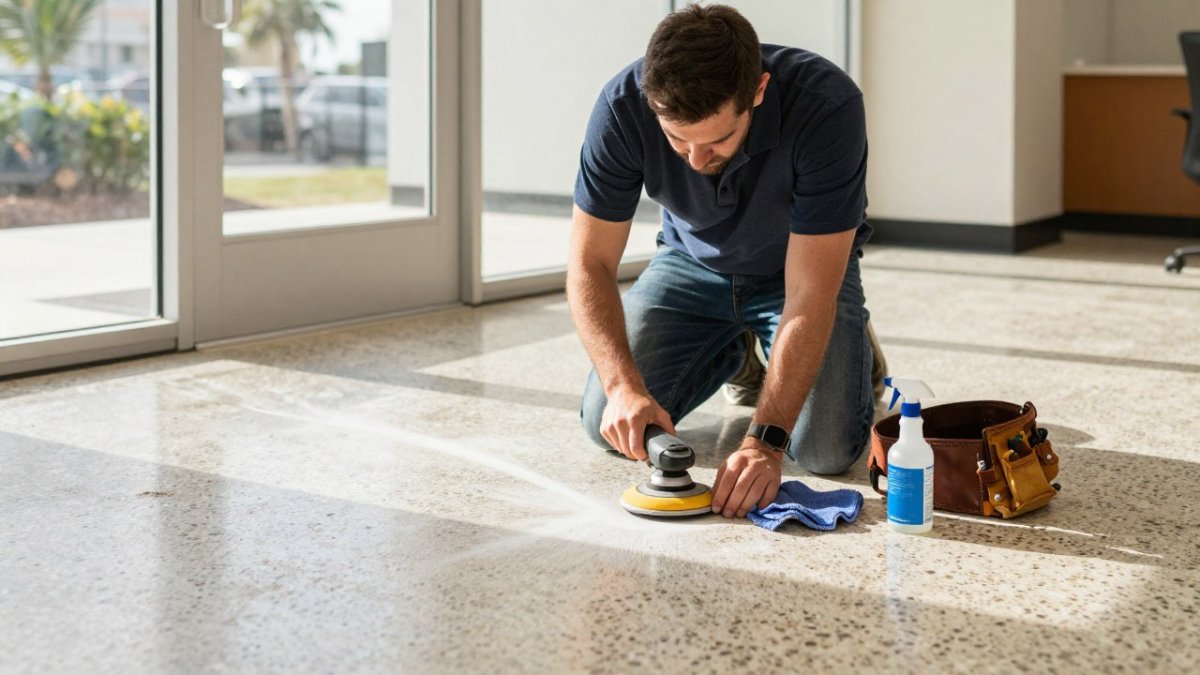
Stage 5: Inspect under raking light. Hold a light low across the floor to reveal haze, streaks, or a sheen difference between the patch and the surrounding floor. Address these before foot traffic returns.
Material-specific precautions. For cementitious terrazzo repairs, keep moisture minimal and avoid any acidic cleaner, since the cement matrix is the vulnerable component. For epoxy terrazzo repairs, avoid solvent-based products and aggressive pads that can dull the epoxy surface; a neutral cleaner and soft pad are sufficient.
Watch out: mopping the whole floor on day one because the patch looks dry on top can damage a repair, the surface can look set while the material underneath is still curing.
The article lays out five stages for cleaning a repaired terrazzo floor, each with its own timing and method.
| Stage | What to do | Key detail |
|---|---|---|
| 1. Confirm the cure window | Check the repair product's data sheet before water touches the patch | Surface-dry is not cured; wait longer if unsure |
| 2. Dry-remove repair dust | Use a soft-bristle or microfiber dust mop, pulling debris toward you | Clean or change the mop head before wet stages |
| 3. Remove haze with a damp pass | Mop with a damp microfiber and pH-neutral terrazzo cleaner | Work from outside toward center; no vinegar, bleach, or ammonia |
| 4. Rinse and dry | Mop with clean water and a clean head, then dry | Cleaner residue is the most common cause of haze |
| 5. Inspect under raking light | Hold a low light across the floor | Fix haze or sheen differences before foot traffic returns |
Homemade Terrazzo Floor Cleaner Options and When to Avoid Them
Many people search for a homemade terrazzo floor cleaner, but most common household mixtures are a poor fit for this stone. Vinegar and lemon juice are acidic and can etch terrazzo, especially the cement between the chips. Dish soap can leave a sticky film that attracts dirt.
A mild mix of warm water with a small amount of pH-neutral soap is usually safer than a DIY acid or degreaser. For a recently repaired area, skip homemade mixtures entirely and stick to a commercial terrazzo-safe product. If you are unsure, a professional can recommend the right cleaner for your floor.
How to Deep Clean Terrazzo Floors and Protect the Repaired Area
Deep cleaning a repaired terrazzo floor is really two jobs: removing built-up grime from the surrounding floor without disturbing the patch, and blending the repaired area so it matches the rest of the surface. Do this only after the repair has fully cured and the initial cleanup stages are complete.
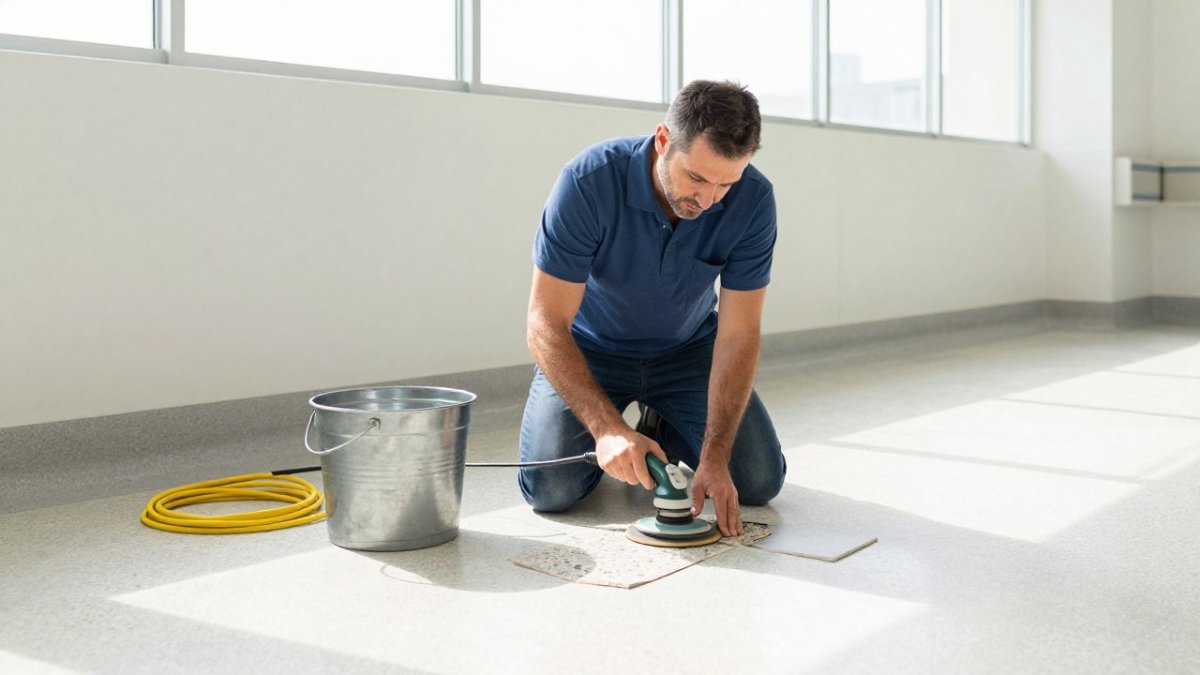
Deep clean the surrounding floor first. Use a pH-neutral terrazzo cleaner and a low-speed buffer with a soft pad. Keep the solution light, work in small sections, and change the rinse water often so you are not redistributing soil. Keep the buffer off the fresh patch until the finish has fully set; a buffer can generate heat and friction that mar a new repair.
Decide whether the patch needs sealing. Whether the repaired area needs a sealer or finish depends on the repair material and the existing floor finish. If the surrounding floor carries a topical sealer or finish, the patch usually needs a compatible product so the sheen matches. If the floor is polished terrazzo with no topical coating, adding sealer only to the patch can create a visible sheen difference. Check the repair product's data sheet and the existing finish system before applying anything.
Match the finish, not just the color. A patch can match in color and still read as a repair because of a sheen or gloss difference. After the patch is fully cured and clean, compare it to the surrounding floor under the same lighting. If the patch is duller, a professional may need to hone or polish the area to match the surrounding grit level; if it is glossier, the surrounding floor may need a light refresh. If the area needs to be brought back to a high-gloss finish, a step-by-step restoration guide walks through the process.
Protect the repair going forward. Keep abrasive grit off the patch by placing walk-off mats at entrances and sweeping regularly. Ask maintenance staff to avoid rolling carts or buckets across the patch until the finish has fully set, and avoid dragging furniture or equipment over the repaired area.
Watch out: applying a sealer to only the patch on an unsealed polished floor can create a visible difference, confirm the existing finish system before sealing anything.
Troubleshooting Haze, Residue, and Cleanup Damage
Most cleanup problems come from too much water, too much cleaner, or the wrong product.
- Hazy film: Cleaner residue is the usual cause. Rinse with clean water and dry the area.
- Dull patch: Repair dust or an acidic cleaner may have dulled the surface. A light neutral cleaning and rinse often helps.
- Sticky spot: Soap or wax buildup. Use a neutral cleaner with a clean rinse.
- Color change: Stop cleaning and check the product used. A professional may need to refinish the area.
If the damage looks deep, scratched, or uneven after cleaning, stop and call a professional rather than trying stronger chemicals or abrasives. Those fixes often make the problem worse.
Booking a Professional Cleanup After Your Terrazzo Repair
When the repair is large, the floor is in a high-traffic commercial space, or cleanup has left visible damage, a professional can help. A1 Terrazzo provides terrazzo maintenance services for commercial properties across Florida.
Call A1 Terrazzo or visit our website to request a quote. Pricing depends on the size of the area, the condition of the floor, and the work needed. Visit our website for current pricing or to request a quote.
Frequently Asked Questions
Can you use Dawn dish soap on terrazzo floors?
Dawn dish soap is not recommended for regular terrazzo cleaning. Most dish soaps leave a film that dulls the surface and attracts dirt, and some contain degreasers that can strip the floor finish or sealer. A pH-neutral terrazzo floor cleaner diluted in warm water is the safer choice. If you have already used dish soap, rinse the floor thoroughly with clean water and remove all residue with a damp mop before the surface dries.
How long should you wait to clean terrazzo after repair?
Wait until the repair material has fully cured, which depends on the product and the ambient temperature. Check the manufacturer's instructions on the repair product for the cure time, and avoid mopping or applying any cleaner before that period ends. Cleaning too early can soften the patch, pull out fresh material, or smear repair dust into the surrounding floor. Once cured, begin with dry dust removal and a light damp mop.
What is the best thing to clean terrazzo floors with?
A pH-neutral or terrazzo-safe cleaner diluted in warm water is the best everyday choice. These cleaners remove soil without etching the marble or stone chips or breaking down the sealer. Avoid acidic cleaners such as vinegar and lemon-based products, as well as strong alkaline or bleach-based cleaners, unless a professional has approved them for your specific floor. Always test any new product in an inconspicuous spot first.
Can you mop terrazzo floors after they have been sealed?
Yes, you can mop sealed terrazzo, but use a damp mop rather than a wet one and a cleaner labeled safe for terrazzo and compatible with the sealer. Wait until the sealer has fully cured before the first mopping, as indicated on the product label. Avoid waxes or polishes that may build up or conflict with the sealer, and rinse the mop frequently to prevent residue from accumulating on the floor.