 How-to
Restoring Dull Terrazzo Floors: A Step-by-Step Guide to High Gloss
Last Updated: November 9, 2026
Quick Summary
Restoring dull terrazzo floors to high gloss means stripping old sealant, then grinding and honing through a full diamond grit sequence from coarse to fine, and finally polishing with terrazzo polishing powder worked wet. A densifier hardens the surface so the gloss holds longer under traffic.
- Etching needs grinding, wear needs polishing, and surface buildup needs stripping, so diagnose the cause first.
- Never skip a grit in the diamond progression, because each grit removes the scratches the previous one left.
- Keep the polishing powder slurry wet and pick up residue before it dries to avoid a hazy film.
- Ask a professional quote to name the starting grit, finishing grit, finish level, and whether densifier is included.
- Hand polishing with 200, 400, 800, and 1500 grit pads suits small areas like thresholds and stair landings.
Table of Contents
- Why Terrazzo Floors Lose Their Shine
- Tools, Equipment, and Safety Gear You'll Need
- Step 1: Strip Old Sealants and Prepare the Surface
- Step 2: Grind and Hone Through the Grit Sequence
- Step 3: Polish to a High-Gloss Finish with Terrazzo Polishing Powder
- How to Polish Terrazzo Floors DIY vs. Hiring a Pro
- How to Polish Terrazzo by Hand in Small Areas
- Terrazzo Floor Restoration Cost: What Drives the Number
- Frequently Asked Questions
Why Terrazzo Floors Lose Their Shine
Restoring dull terrazzo floors to high gloss starts with knowing why the shine left. Dull terrazzo floors are often undamaged underneath. The finish has simply worn thin. The finish had simply worn thin.
Terrazzo is a mix of marble, granite, or glass chips set in a cement or epoxy binder, then ground flat and polished. The gloss lives in that top layer.
The Difference Between Etching, Wear, and Surface Buildup
Etching is chemical damage. An acid-based cleaner touches the surface and eats a dull, chalky mark into it.
Wear is simple traffic. Grit under shoes slowly sands away the shine in walkways and entry zones.
Surface buildup is the opposite problem. Layer after layer of sealer and finish traps dirt and turns cloudy.
Here's where most guides get it wrong: they treat all three the same way. They aren't. Etching needs grinding. Wear needs polishing.
Want to see how acid damage dulls terrazzo and how to avoid it? Read our breakdown of what happens if you use acid on terrazzo.
Tools, Equipment, and Safety Gear You'll Need
The right kit depends on the square footage. A small lobby needs far less than an airport concourse.
Machines:
- Planetary grinder with diamond grinding disks
- Low-speed buffing machine with diamond resin pads
- Wet/dry vacuum with a fine dust filter
Consumables:
- Diamond pads in a full grit progression
- Terrazzo polishing powder or polishing compound
- Terrazzo densifier
- Neutral pH floor cleaner
Safety gear:
- Safety glasses
- N95 or better dust mask
- Knee pads
- Non-slip boots
Don't skip the vacuum. Dry grinding throws fine silica dust, and OSHA guidance on respirable crystalline silica explains why that dust is a genuine health hazard, not just a mess.
Step 1: Strip Old Sealants and Prepare the Surface
Strip first. Old sealant blocks the abrasives from reaching the stone, so later steps underperform.
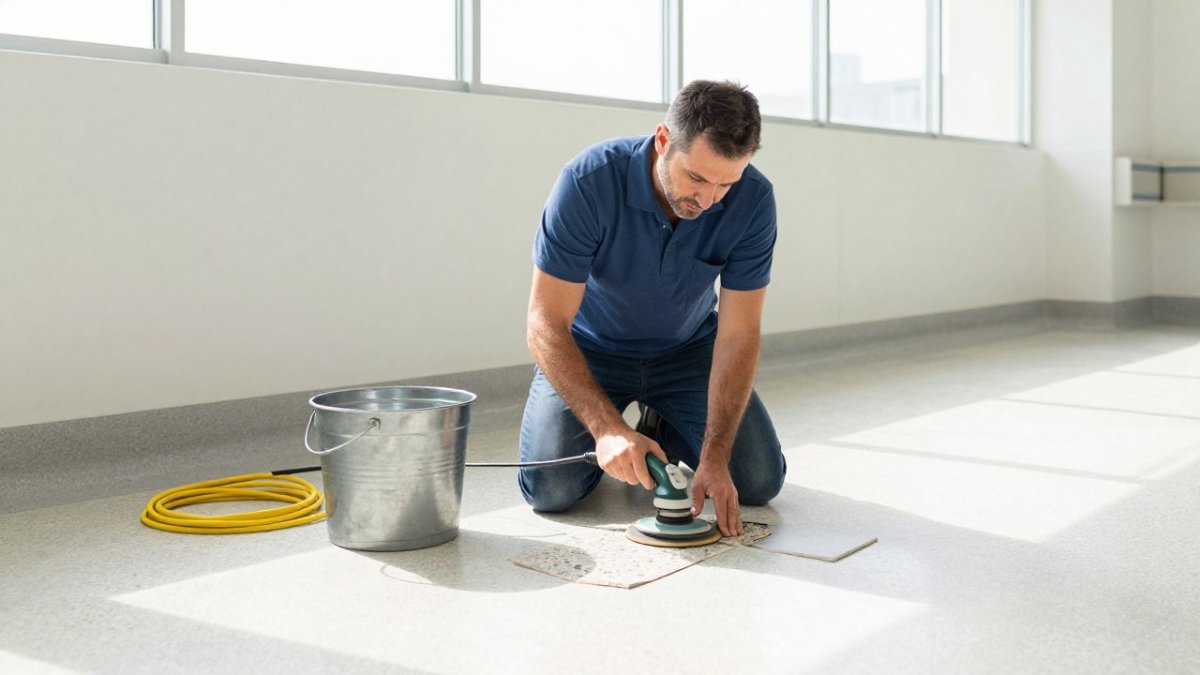
Apply a stripping agent made for terrazzo and let it dwell per the label. Then scrub with a floor machine and a stripping pad.
Next, clear the floor:
- Remove all furniture and mats
- Sweep and vacuum every edge
- Pop off loose chips and note them for grout repair
- Test a small hidden patch before committing to the whole floor
Watch out: letting stripper dry on the surface can leave a hazy film that looks exactly like the dullness you're trying to remove.
Step 2: Grind and Hone Through the Grit Sequence
Grinding removes the damaged layer. Honing refines what's left. Both use the same machine and the same logic: start coarse, finish fine.
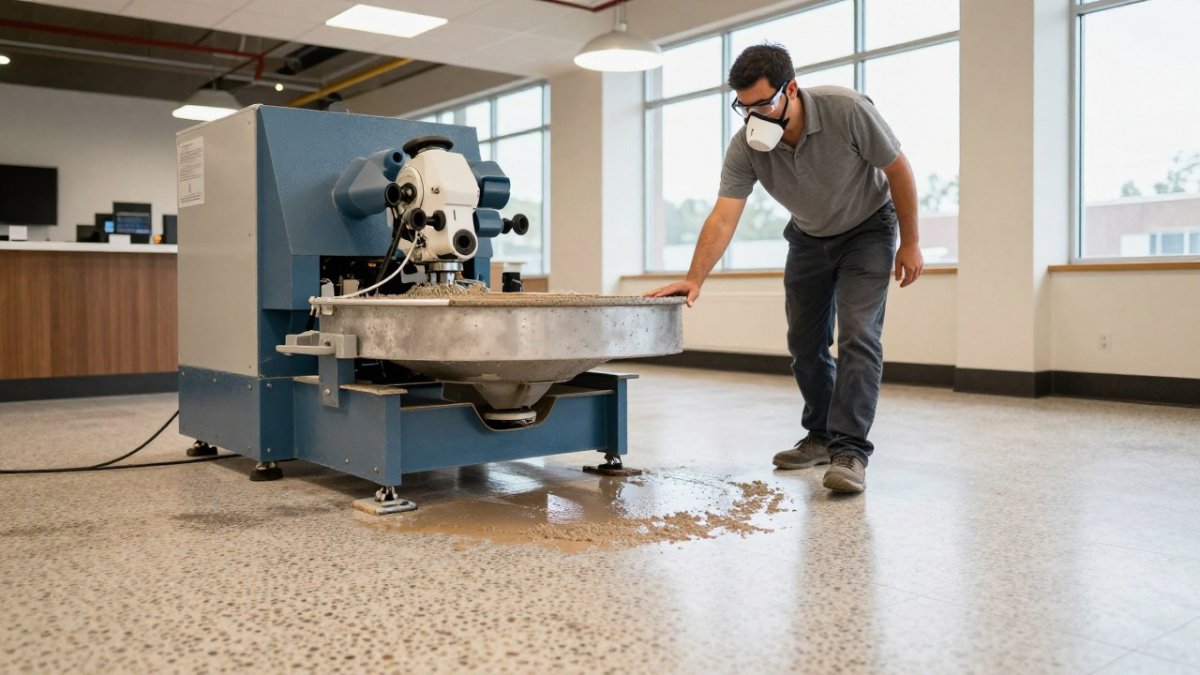
Diamond Grinding Disks and Grit Progression
Diamond grinding disks cut the surface flat. You work through a grit progression, and the rule is simple: never skip a step. Each grit removes the scratches the previous one left.
A typical sequence looks like this:
| Stage | Grit Range | What It Does |
|---|---|---|
| Coarse grind | 30-60 | Removes etching and old finish |
| Medium grind | 120-200 | Flattens surface imperfections |
| Fine hone | 400-800 | Smooths and starts building sheen |
| Pre-polish | 1500-3000 | Brings up clarity |
Grit Range
Wet grinding keeps dust down and the pads cool. Dry grinding works faster on epoxy terrazzo but needs strong vacuum control. Match the method to the floor and the building's air quality rules.
Step 3: Polish to a High-Gloss Finish with Terrazzo Polishing Powder
This is the step that brings the mirror back, and it is also the step where most failed restorations fail.
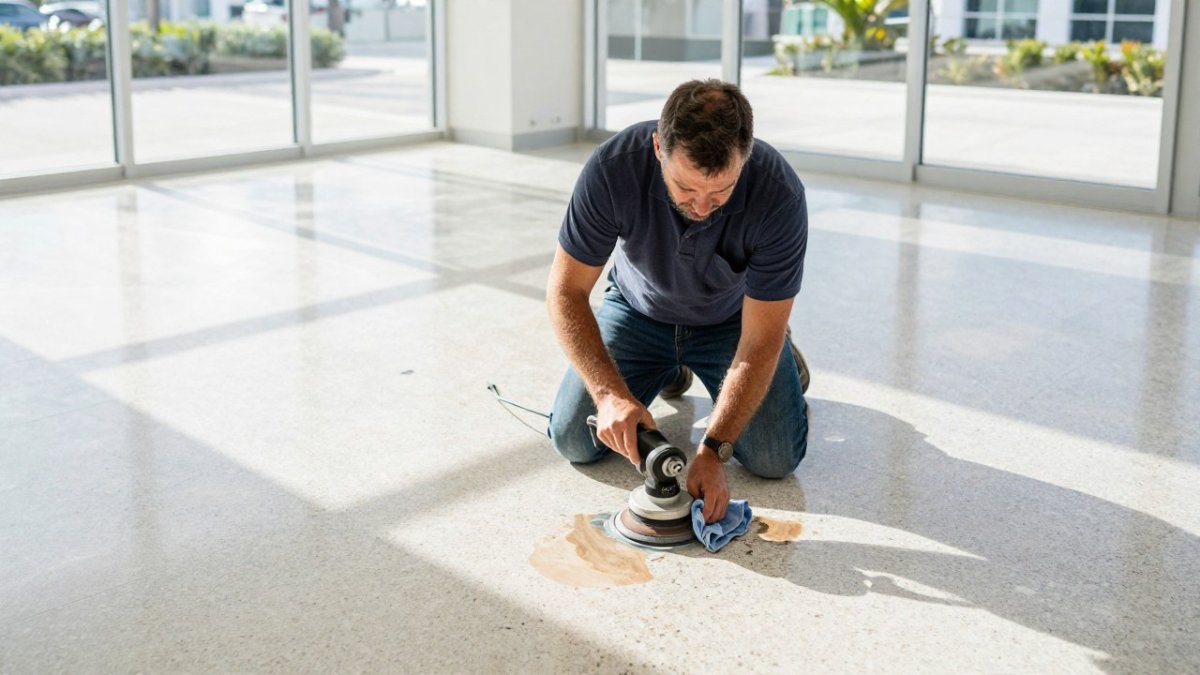
Terrazzo polishing powder is a fine abrasive mixed with water into a thin slurry.
A densifier goes on before or during this stage. It soaks into the floor porosity and hardens the surface, which helps the gloss hold longer under traffic.
Why Gloss Fails: Troubleshooting a Hazy or Cloudy Finish
If the floor comes up cloudy instead of glossy, the cause is almost always one of five things, and each has a different fix.
- Skipped grit. A jump from 400 straight to polish leaves 400-grit scratches under a thin shine. The floor looks bright in shadow and hazy in raking light. Fix: back up one grit and re-run the progression.
- Dry or starved slurry. Powder worked too dry burnishes the surface and traps residue. Fix: rewet, reduce the section size, and keep the slurry the consistency of skim milk.
- Contaminated pads. A pad loaded with old sealer or dirt smears instead of polishing. Fix: clean or replace the pad; a clogged pad never recovers.
- Densifier applied unevenly. Puddles of densifier cure harder than the surrounding floor and polish to a different clarity. Fix: re-wet the whole area and re-polish so the surface cuts uniformly.
A quick diagnostic: shine a bright light across the floor at a low angle. Uniform haze points to residue or a contaminated pad. Directional streaks point to a skipped grit or a machine run too fast.
Pad Condition and Slurry Consistency
Two things decide the final result: pad condition and slurry consistency. Worn pads polish slowly and heat the surface instead of cutting it. Dry slurry scratches. Fresh pads on the final two grits, plus smaller sections, generally produce a more uniform gloss than running a worn pad longer.
Wondering whether polishing or sealing is the right finish for your space? Our comparison of terrazzo floor polishing vs sealing for commercial spaces covers which method holds high gloss under heavy traffic. Once the gloss is back, our commercial terrazzo floor maintenance guide shows how to keep it from fading again.
How to Polish Terrazzo Floors DIY vs. Hiring a Pro
Most guides treat this as a personality question. It is really an arithmetic question, and the arithmetic usually decides it before skill does.
The variable that flips the decision is machine weight. A true planetary grinder weighs several hundred pounds and uses that mass, plus counter-rotating heads, to keep diamond pads flat and cutting evenly. The light single-disc swing machines sold and rented for homeowner use weigh a fraction of that.
The Real Cost Comparison
A professional restoration quote is usually built per square foot and scales with condition, access, and finish level. A DIY budget is built from rental days, consumables, and your own labor, and the consumables are where DIY budgets quietly blow up.
| Cost Line | DIY | Professional |
|---|---|---|
| Machine | Daily or weekly rental of a planetary grinder or heavy swing machine, plus a wet/dry vac with a fine filter | Included in the quote |
| Diamond pads | A full grit set (coarse through polish) is the single largest consumable cost, and pads wear out mid-job on hard floors | Included |
| Chemicals | Stripper, densifier, polishing powder, neutral cleaner | Included |
| PPE and containment | Glasses, respirator, plastic sheeting, tape | Included |
| Labor | Your weekends, often several of them | Crew days |
| Redo risk | High if a grit is skipped or a pad is run dry | Low with a tested process |
Two patterns are worth knowing before you price anything. First, rental yards charge by the day or week, and a full grit progression on a real floor rarely finishes inside one rental window, so the machine gets rented twice. Second, diamond pads are consumed, not borrowed; a hard, dense terrazzo can eat through a set faster than a soft one, and the finer grits are the ones that wear out first because they do the most passes.
A practical rule most contractors use: if the area is small enough that a hand machine can reach every square foot without overlapping passes for days, DIY can pay off.
What a Professional Quote Should Contain
Ask for a written scope that names four things: the starting grit, the finishing grit, the finish level (honed, satin, or high gloss), and whether a densifier is included. A quote that lists only a square-foot price and a finish level is a sales document, not a scope. The grit sequence is the part that determines whether the gloss holds, so it belongs in writing.
Watch out: a low per-square-foot quote that omits the densifier or stops at a pre-polish grit will look fine on day one and go flat within a season under traffic.
If you are leaning toward hiring, our guide to professional terrazzo floor polishing services explains what the job involves. You can also see real results in our commercial terrazzo restoration before and after gallery.
How to Polish Terrazzo by Hand in Small Areas
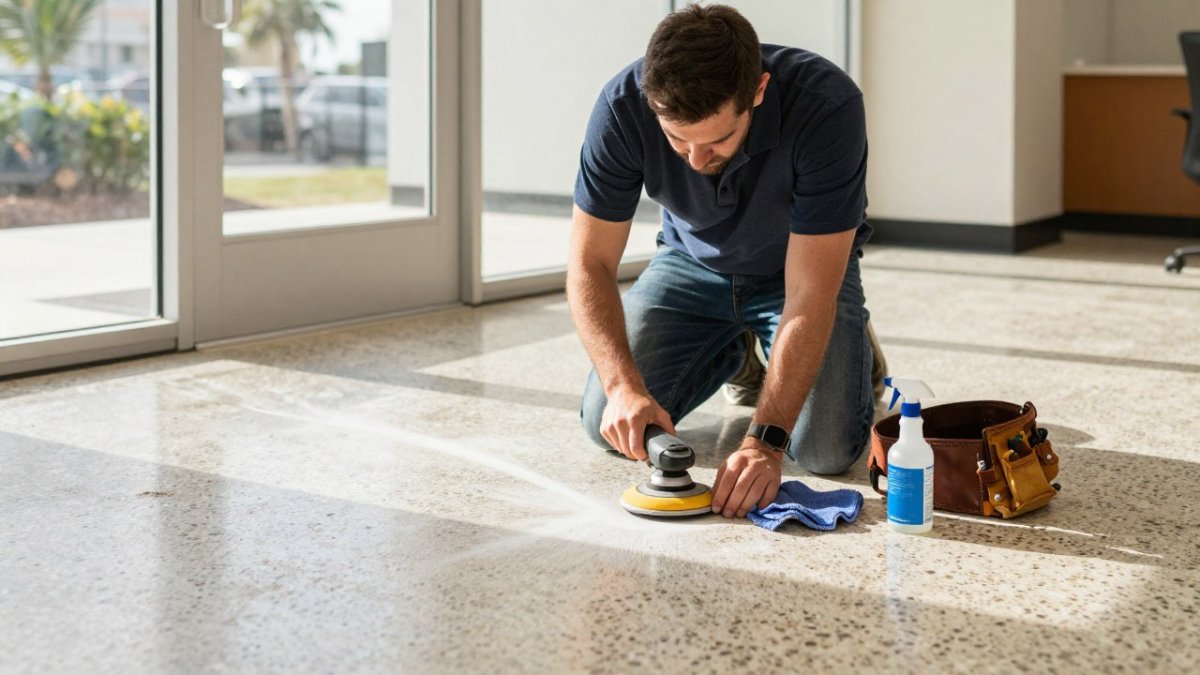
Hand polishing works. It just takes patience. This is the route for a stair landing, a threshold, or a patch where a machine won't fit.
What you need:
- Diamond resin pads in 200, 400, 800, and 1500 grit
- A spray bottle of water
- Terrazzo polishing powder
- Clean rags and a bucket
The process:
- Wet the pad and the floor
- Work the 200 grit in small circles until the dullness lifts
- Repeat with each finer grit, cleaning between passes
- Finish with polishing powder worked into a paste
- Buff dry with a clean rag
Keep the pad flat. Tipping it digs grooves that show up badly in raking light. And change pads often, because a clogged pad just smears.
Terrazzo Floor Restoration Cost: What Drives the Number
Terrazzo floor restoration cost depends on square footage, condition, and access.
What moves the number up or down:
- Size. Bigger floors cost more overall but less per square foot.
- Condition. Etching and cracks add grinding time.
- Aggregate exposure. Deep grinding to expose chips takes more passes.
- Access. Tight rooms and after-hours work slow everything down.
Ask for a written scope that names the grit sequence and the finish level.
Dull terrazzo is almost always a finish problem, not a floor problem.
A1 Terrazzo brings 35 years of commercial terrazzo experience, with installation and professional maintenance services for commercial spaces. Contact A1 Terrazzo to discuss your floor.
Frequently Asked Questions
Can you restore dull terrazzo floors yourself?
Small areas and lightly dulled terrazzo floors can be restored by hand with diamond resin pads, honing powder, and a polishing compound. Full rooms with deep scratches or worn sealant usually need a planetary grinder and a wet/dry vacuum, which most homeowners do not own. The deciding factor is square footage and how much aggregate exposure you need to rebuild. If the floor is etched, stained, or has grout repair needs, a professional assessment is the safer starting point.
What should you not use on terrazzo floors?
Skip acidic cleaners, vinegar, lemon-based products, and anything with a pH low enough to etch the cement matrix or dull a polished surface. Avoid abrasive scouring pads and all-purpose cleaners that leave a film, since residue builds up and traps dirt. On cementitious terrazzo, never use a sealer that is not designed for stone or terrazzo, because a trapped moisture layer causes cloudiness and can loosen the surface over time.
How often should terrazzo floors be polished?
In high-traffic commercial spaces such as hospitals, airports, and schools, a maintenance polish every 12 to 24 months keeps the gloss and DOI (Distinctness of Image) consistent. Lower-traffic areas can stretch to three to five years. The real signal is visual: when reflections start to look flat and surface imperfections become visible under overhead lighting, it is time to schedule a polish rather than wait for wear to reach the aggregate.
How much does terrazzo floor restoration cost?
Terrazzo floor restoration cost depends on square footage, the condition of the surface, whether old sealant must be stripped, and whether grout repair is needed. Pricing also varies by access, building hours, and the grit sequence required to reach a high-gloss finish. Because every project is different, A1 Terrazzo quotes each job after an on-site assessment. Contact the team for a current quote rather than relying on a generic per-square-foot estimate.