 how-to
How to Remove Deep Stains From Terrazzo
Table of Contents
- Understanding Terrazzo Composition and Stain Types
- What You'll Need: Tools and Safety Equipment
- Choosing the Right Terrazzo Floor Cleaner
- Step-by-Step: Removing Oil, Grease, and Deep Stains
- Removing Rust Stains From Terrazzo
- Handling Acidic Spills and Etching Damage
- Common Mistakes to Avoid
- When to Call a Professional
- Frequently Asked Questions
Last Updated: September 29, 2026
Understanding Terrazzo Composition and Stain Types
Terrazzo is a composite material made from marble chips, calcite, and a cement binder. This porous stone structure makes it vulnerable to deep staining. When liquid penetrates the surface, it doesn't just sit on top, it travels into the material itself.
Understanding why terrazzo stains differently than other floors is essential to knowing how to remove deep stains from terrazzo effectively. Most hard surfaces like granite or sealed tile have a protective barrier. Terrazzo, by contrast, is inherently porous. Spills soak into the cement matrix and embed themselves around the marble chips.
Why Terrazzo Stains Differently Than Other Floors
Terrazzo's porosity is both a strength and a weakness. The marble chips create aesthetic beauty and durability for foot traffic. But that same porous cement binder acts like a sponge for oils, rust, and acidic substances.
A sealed terrazzo floor has better protection. The sealer sits on top and blocks some penetration. However, no sealer is permanent. Over time, foot traffic and cleaning wear it down. Unsealed or older terrazzo floors absorb stains rapidly.
This is where many facility managers make a critical mistake: they treat terrazzo like ceramic tile or polished concrete. Those surfaces respond to surface-level cleaning. Terrazzo requires deeper intervention because the stain lives inside the material, not on it.
Identifying Deep Stains: Oil, Rust, and Acidic Damage
Not all stains look the same, and identification determines your removal strategy.
Oil and grease stains appear as dark patches that don't respond to basic mopping. They often have a greasy feel and may smell. These stains are common in healthcare facilities, commercial kitchens, and high-traffic areas.
Rust stains show as orange, brown, or reddish discoloration. They come from metal furniture, equipment, or water containing iron. Rust stains are particularly stubborn because the iron oxidizes within the porous cement.
Acidic etching appears as dull, whitish patches where the surface has been chemically altered. Vinegar, citrus cleaners, and some beverages cause this damage. Unlike oil stains, etching is permanent surface damage, the cement itself has been compromised.
Water rings and mineral deposits leave light or dark halos. These come from hard water or mineral-rich liquids sitting on the floor. They're easier to remove than deep oil stains but harder than simple dust.
What You'll Need: Tools and Safety Equipment
Learning how to remove deep stains from terrazzo requires specific tools. Using the wrong equipment can damage the floor further.
Essential tools:
- Soft-bristle brush or natural fiber brush (not wire)
- Microfiber mop and pads
- Floor buffer with soft pads (for restoration work)
- Spray bottles for liquid application
- Clean cotton cloths or paper towels
- Plastic scraper (never metal)
- Protective gloves and eye protection
- Dust mask or respirator
Safety is non-negotiable. Many terrazzo stain removers use chemicals that require PPE. Always wear gloves when handling cleaners. Use eye protection when spraying liquids. Work in ventilated spaces, open windows or use fans to move air.
Never mix cleaners. Combining products creates toxic fumes. If you're using a commercial degreaser, rinse thoroughly before applying anything else.
Choosing the Right Terrazzo Floor Cleaner
The cleaner you choose makes the difference between success and further damage.
pH-Neutral Cleaners vs. Heavy-Duty Degreasers
pH-neutral cleaners are the safest choice for daily maintenance and light stains. They clean without attacking the cement binder. Look for products specifically labeled for terrazzo or stone floors.
These cleaners work by suspending dirt particles so they rinse away. They're gentle enough for regular use and won't degrade the sealer over time.
Heavy-duty degreasers are necessary for stubborn oil and grease stains. These alkaline or acidic formulations break down petroleum-based residues. But they're harsh, use them only for deep stains, not routine cleaning.
The key distinction: alkaline degreasers work on oils and grease. Acidic cleaners dissolve mineral deposits and some rust stains. Choose based on your stain type, not on cleaning power alone.
Starting with pH-neutral solutions is often recommended. If a stain persists after 24 hours, escalating to specialized products may be necessary. This approach can help protect your floor while addressing the problem.
What Not to Use on Terrazzo
Certain products will damage terrazzo permanently.
Never use vinegar or acidic cleaners on unsealed terrazzo. The acid etches the cement binder, creating dull spots that no polish can fix. This damage is irreversible.
Avoid bleach. It can discolor marble chips and weaken the cement matrix over time. The damage appears gradually, making it hard to connect to the bleach application.
Don't use oil-based products on sealed terrazzo. These can break down the sealer and leave residue that attracts dirt.
Steer clear of abrasive scrubbers, wire brushes, or steel wool. These scratch the surface and expose more porous material underneath. Scratches become new channels for stains to penetrate.
Skip ammonia-based cleaners. They're too harsh for terrazzo and can cause discoloration over time.
The safest approach: test any new cleaner on a small, inconspicuous area first. Wait 24 hours and inspect for damage before applying to the stained area.
Step-by-Step: Removing Oil, Grease, and Deep Stains
This is where theory becomes action.
Step 1: Spot Clean and Assess the Stain
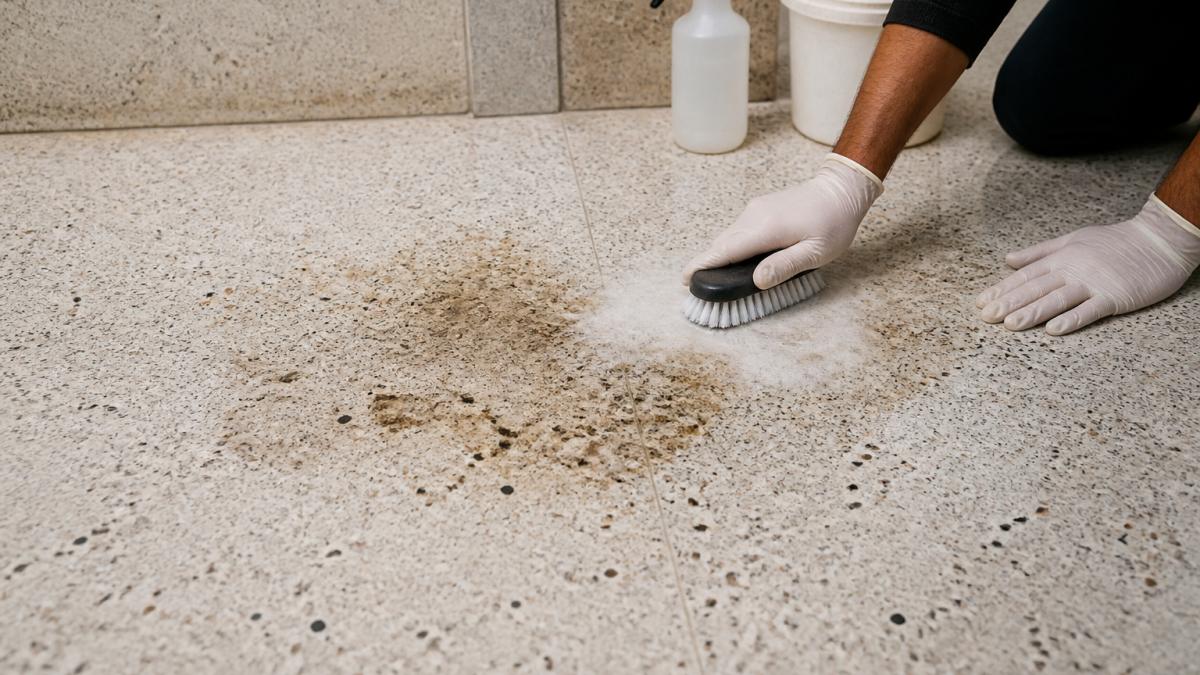
Start by removing surface debris. Sweep or vacuum the area around the stain. Use a damp microfiber cloth to wipe away loose dirt.
Next, assess stain depth. Press a damp cloth against the stain for 30 seconds. If color transfers to the cloth, the stain is still somewhat fresh. If nothing transfers, you're dealing with a deep, set-in stain.
For fresh spills, immediate action prevents deep penetration. Blot (don't wipe) the spill with paper towels. Use a pH-neutral cleaner and a soft brush to gently work the stain. Rinse thoroughly with distilled water.
Step 2: Apply a Terrazzo Stain Removal Poultice
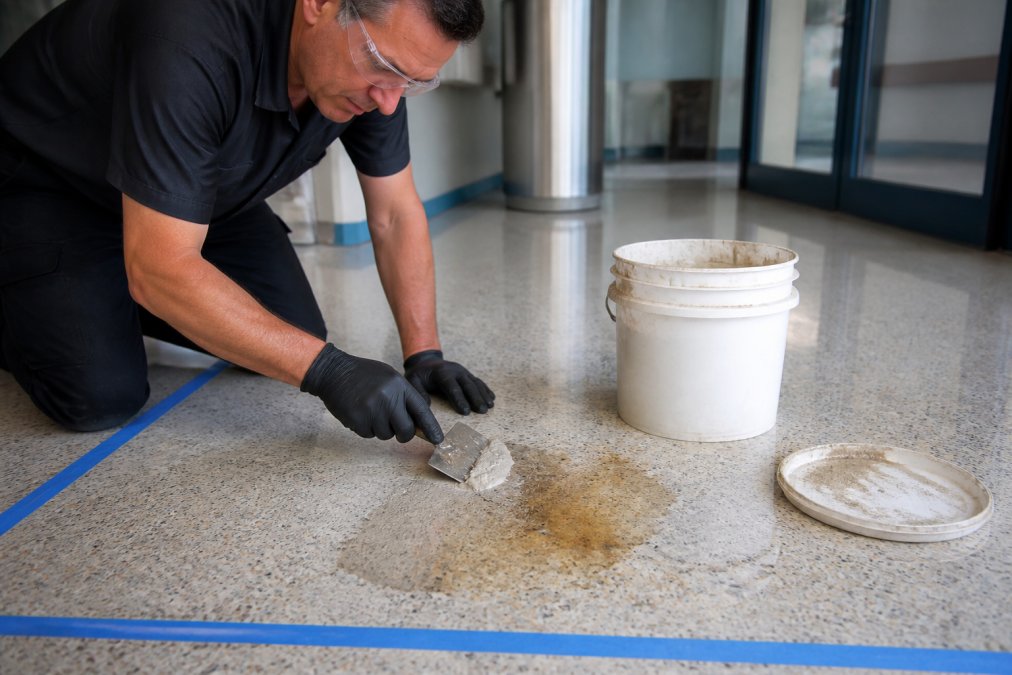
A poultice is a paste that draws stains out of porous materials. This is the most effective method for deep stains.
Mix a poultice using diatomaceous earth (food-grade) and a liquid. For oil stains, use a degreaser. For rust stains, use a rust-removal liquid. For general stains, water works. The mixture should be thick, like peanut butter.
Apply the poultice directly to the stain, covering it completely. The paste should be at least 1/4 inch thick. Leave it undisturbed for 24 to 48 hours. As it dries, it pulls the stain out of the terrazzo and into the paste.
After the poultice has fully dried, scrape it away with a plastic scraper. Work gently to avoid scratching the floor. Rinse the area thoroughly with distilled water. Repeat if necessary.
This method works because the poultice material absorbs the stain as it dries. It's slow but highly effective for deep stains that won't respond to surface cleaning.
Step 3: Use a Floor Buffer for Surface Restoration
Once the deep stain is removed, the surface may look dull or slightly roughened. A floor buffer restores shine and smooths minor damage.
Use a floor buffer with soft pads, never abrasive diamond polishing pads for this step. Work in circular motions, moving slowly across the treated area. The goal is to blend the cleaned section with the surrounding floor.
This step is optional for small stains. For large areas or visible dullness, buffing makes a significant difference. The buffing action also helps distribute any remaining cleaning residue and prepares the surface for resealing.
After buffing, vacuum thoroughly to remove all dust.
Removing Rust Stains From Terrazzo
Rust stains require a different approach than oil or grease.
Handling Acidic Spills and Etching Damage
Acidic etching is the one type of terrazzo damage that cannot be fully reversed through cleaning.
Common Mistakes to Avoid
Learning from others' errors saves time and prevents costly damage.
When to Call a Professional
Some stains require professional intervention.
If a stain persists after two poultice applications, professional equipment and expertise are needed. Professionals use specialized solvents, industrial-strength degreasers, and advanced extraction equipment that aren't available to the general public.
| Stain Type | Best Removal Method | Prevention |
|---|---|---|
| Oil and grease | Degreaser poultice, 24-48 hours | Wipe spills immediately, use protective pads |
| Rust | Rust-removal chelating agent, poultice method | Metal furniture pads, quick water cleanup |
| Acidic etching | Immediate neutralization with baking soda | pH-neutral cleaners only, coasters for beverages |
| Water rings | pH-neutral cleaner, soft brush | Distilled water for cleaning, quick drying |
Frequently Asked Questions
What chemicals should never be used on terrazzo floors?
Avoid acidic cleaners like vinegar, lemon juice, and toilet bowl cleaners, these etch the calcite in terrazzo and cause permanent discoloration. Never use bleach, ammonia, or abrasive powders. Alkaline or acidic products damage the cement binder and marble chips. Stick to pH-neutral terrazzo floor cleaners specifically formulated for porous stone. When in doubt, test any product on a hidden area first or consult the sealer manufacturer's guidelines.
How do you remove deep-set oil stains from terrazzo?
Deep oil stains require a terrazzo stain removal poultice, a paste that draws oil out of the porous stone. Mix an absorbent powder (like diatomaceous earth) with a degreaser rated for stone, apply it thick over the stain, cover with plastic, and let it sit 24-48 hours. The poultice hardens as it pulls moisture and oil to the surface. Scrape it off gently and repeat if needed. For stubborn stains, professional equipment may be required to help restore the surface after extraction.
Can you remove rust stains from terrazzo yourself?
Light rust stains can sometimes be lightened with a poultice containing a mild chelating agent, but removing rust stains from terrazzo is difficult because rust penetrates deep into the porous stone. Professional restoration using specialized equipment and chemical treatments is often more effective. If you have metal fixtures or rebar bleeding rust, address the source to prevent the stain from returning.
How often should terrazzo floors be professionally polished?
High-traffic commercial spaces benefit from professional polishing every 1-2 years to restore gloss and maintain the surface finish. The frequency depends on foot traffic, cleaning intensity, and whether a penetrating sealer is in place. Regular daily maintenance and spot cleaning extend the time between professional services. A professional can assess your floor's condition and recommend a schedule that fits your facility's needs and budget.