 Listicle
8 Sustainable Flooring Options for Florida Commercial Buildings
Last Updated: November 2, 2026
Quick Summary
The best sustainable flooring for Florida commercial buildings is durable material that resists moisture and lasts for decades, such as terrazzo with recycled content and low-VOC resins. Polished concrete and tile also handle Florida humidity well, while hardwood, cork and bamboo need more moisture control. Long service life and refinishing ability reduce replacement waste.
- Terrazzo can use recycled aggregate and low-VOC resins and can be ground and re-polished to restore its finish.
- Polished concrete reuses the existing slab, so it adds little new material to the building.
- Confirm the slab is dry before sealing or polishing, since trapped moisture can lift the finish.
- Ask for wet-rated slip test results before specifying tile in lobbies, restrooms, or entry vestibules.
- Compare total cost of ownership, not just installed cost, using maintenance and replacement cycles.
Table of Contents
- Why Sustainable Flooring Matters for Florida Commercial Buildings
- How We Evaluated These Sustainable Flooring Options
- Quick Comparison of Sustainable Flooring Options
- 1. Terrazzo With Recycled Content and Low-VOC Resins
- 2. Polished Concrete and Tile for Moisture-Heavy Spaces
- 3. Recycled Rubber, Cork and Bamboo for High-Traffic Areas
- 4. Hardwood, Hemp and Other Natural Materials
- Maintenance Planning: Keeping Sustainable Floors Performing
- Frequently Asked Questions
Florida commercial buildings face heavy foot traffic, humidity, and frequent cleaning, which makes flooring choice a long-term decision. Choosing sustainable flooring options for Florida commercial buildings can reduce material waste, limit chemical emissions, and support healthier indoor air. This guide compares eight practical options with their trade-offs.
Sustainable flooring is not a single product. It covers recycled content, low-emission adhesives and finishes, durable materials that last decades, and surfaces that can be refinished rather than replaced. A floor that lasts 30 years and avoids a full replacement often has a smaller environmental footprint than a cheaper material that wears out in a decade.
Why Sustainable Flooring Matters for Florida Commercial Buildings
Florida's heat and humidity put steady stress on floor systems. Moisture can work into subfloors, and mold and slip risks rise in wet areas such as lobbies, restrooms, and entry vestibules. Materials that resist moisture and hold up under constant cleaning tend to perform better here.
Sustainability also has a practical side for building owners. Low-emission materials help indoor air quality for tenants, and long-lived surfaces reduce how often a space must be torn out and rebuilt. Green-building programs such as LEED give credit for materials with recycled content and low-VOC finishes, so the right floor can support certification goals as well.
How We Evaluated These Sustainable Flooring Options
We judged each option on five points: recycled or natural content, emissions from adhesives and finishes, durability under commercial traffic, moisture and slip resistance in Florida conditions, and maintenance needs over the life of the floor. Where manufacturers did not publish specifics, we say so rather than guess.
Pricing varies widely with project size, substrate condition, and finish, so we do not list dollar figures here. Contact A1 Terrazzo for a quote on your specific space.
Quick Comparison of Sustainable Flooring Options
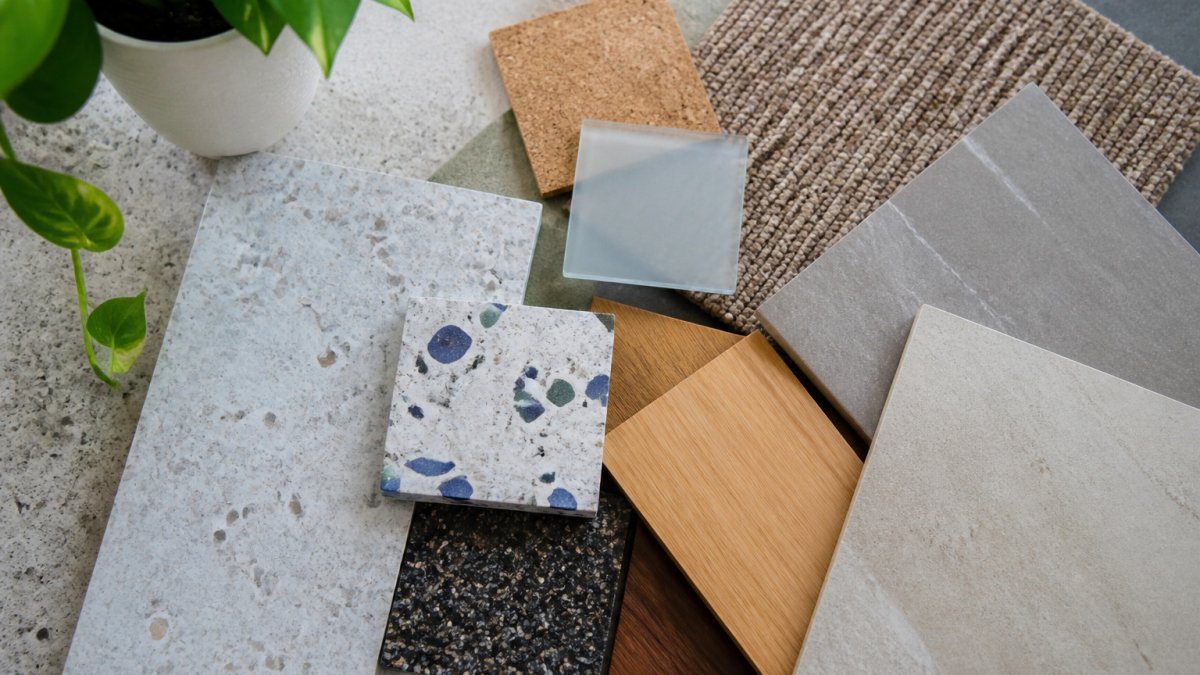
| Option | Main Sustainability Benefit | Best For | Key Drawback |
|---|---|---|---|
| Terrazzo with recycled content | Recycled aggregate, long lifespan | Lobbies, corridors, high-traffic floors | Higher upfront installation cost |
| Polished concrete | Uses existing slab, low material input | Warehouses, retail, open floor plans | Hard surface, can be cold and loud |
| Tile | Durable, long-lasting, easy to clean | Restrooms, kitchens, wet areas | Grout needs upkeep |
| Recycled rubber | Made from recycled tires | Gyms, healthcare corridors, play areas | Limited design range |
| Cork | Renewable harvest, natural material | Offices, low-traffic interiors | Vulnerable to standing water |
| Bamboo | Fast-growing, renewable | Offices, lighter commercial use | Adhesive composition must be verified |
| Hardwood | Can be refinished repeatedly | Conference rooms, offices | Sensitive to moisture in Florida |
| Hemp-based flooring | Plant-based, renewable fiber | Interiors with moderate traffic | Fewer commercial performance records |
1. Terrazzo With Recycled Content and Low-VOC Resins
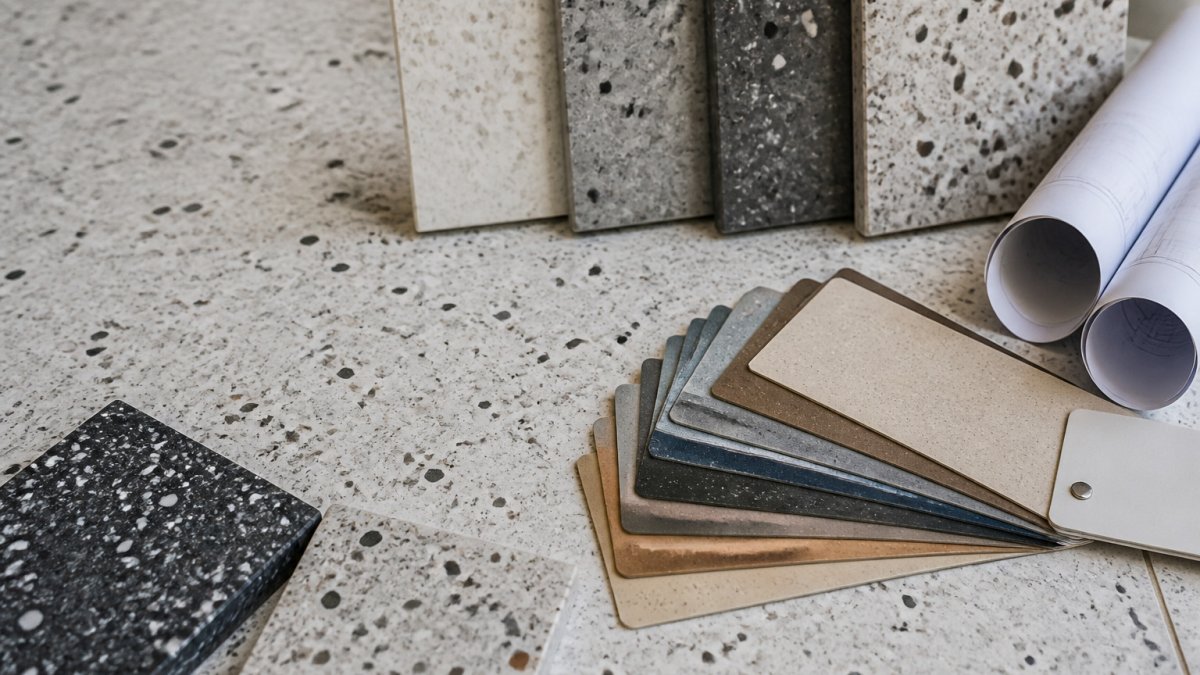
Terrazzo is one of the most durable floors you can specify for a commercial building. It is made from marble, quartz, or recycled glass chips set in cement or epoxy. Terrazzo can be customized with recycled materials and low-emission resin options, which lets you match sustainability targets to the project.
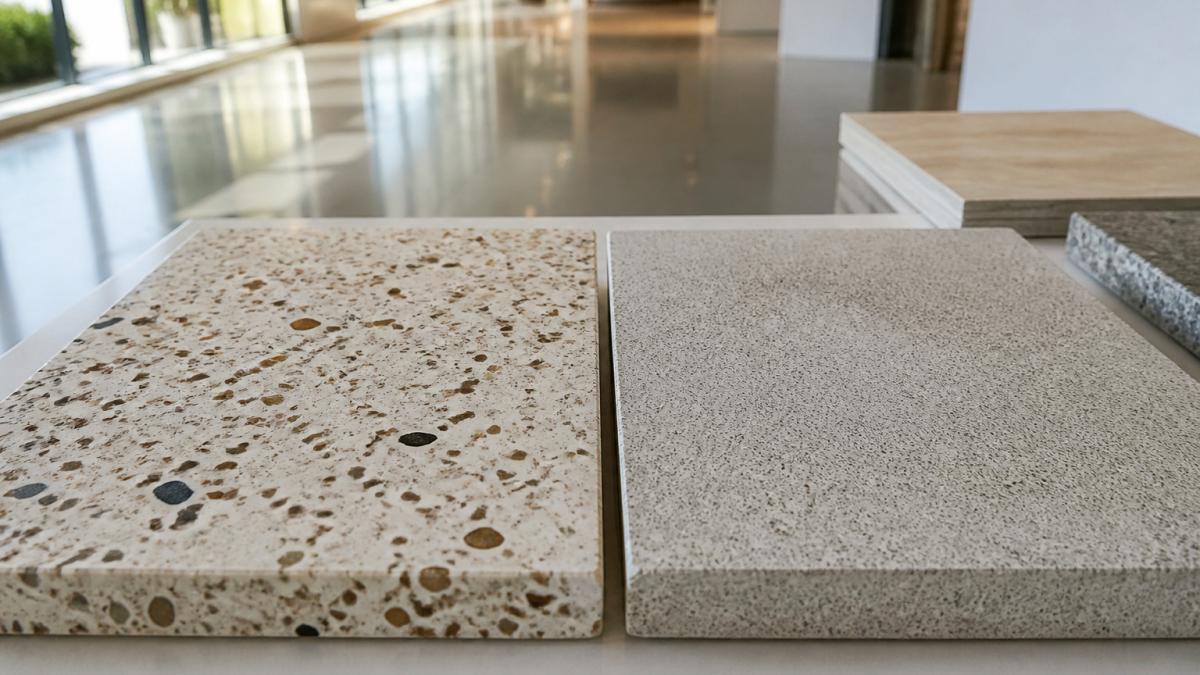
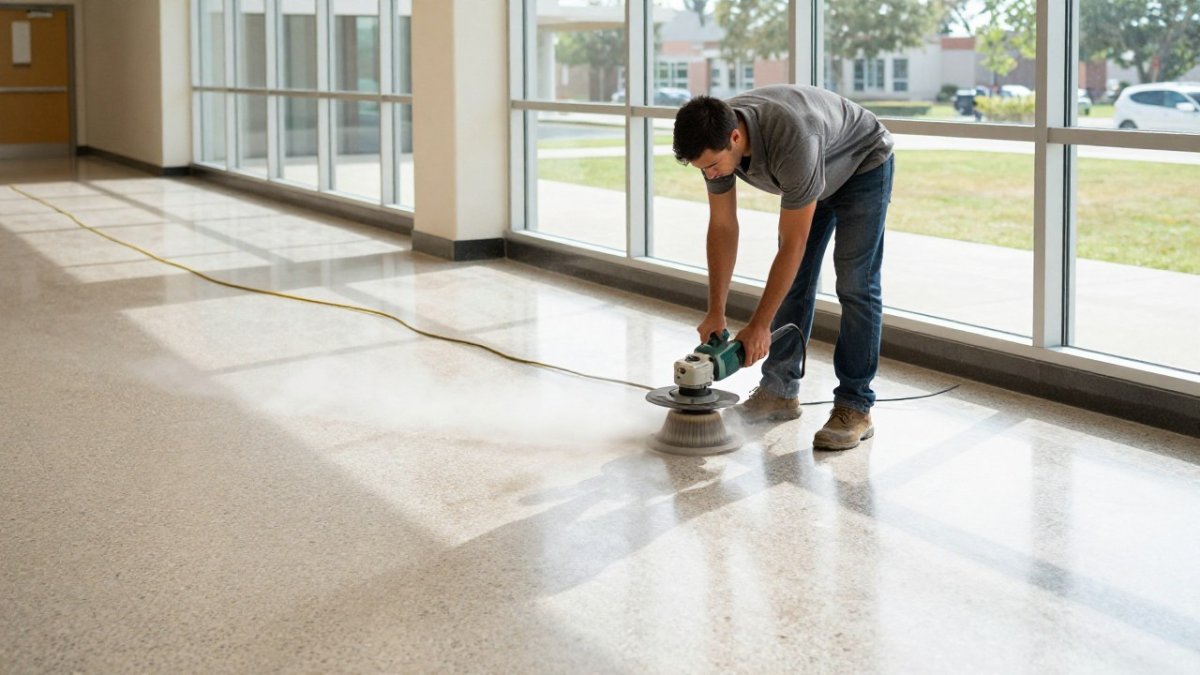
The main advantage is lifespan. A properly installed terrazzo floor can last for decades with routine care, and it can be ground and re-polished to restore its finish. Upfront cost and the need for skilled installation are the main considerations. We recommend requesting product data sheets that confirm recycled content and resin emissions before you approve a finish.
2. Polished Concrete and Tile for Moisture-Heavy Spaces
Polished concrete and tile are two options often specified for wet, humid, and high-sanitation commercial interiors. Both are inorganic surfaces that do not feed mold, and both can be detailed to shed water rather than absorb it. The failure modes are almost always in the substrate and the slip rating, not the surface itself.
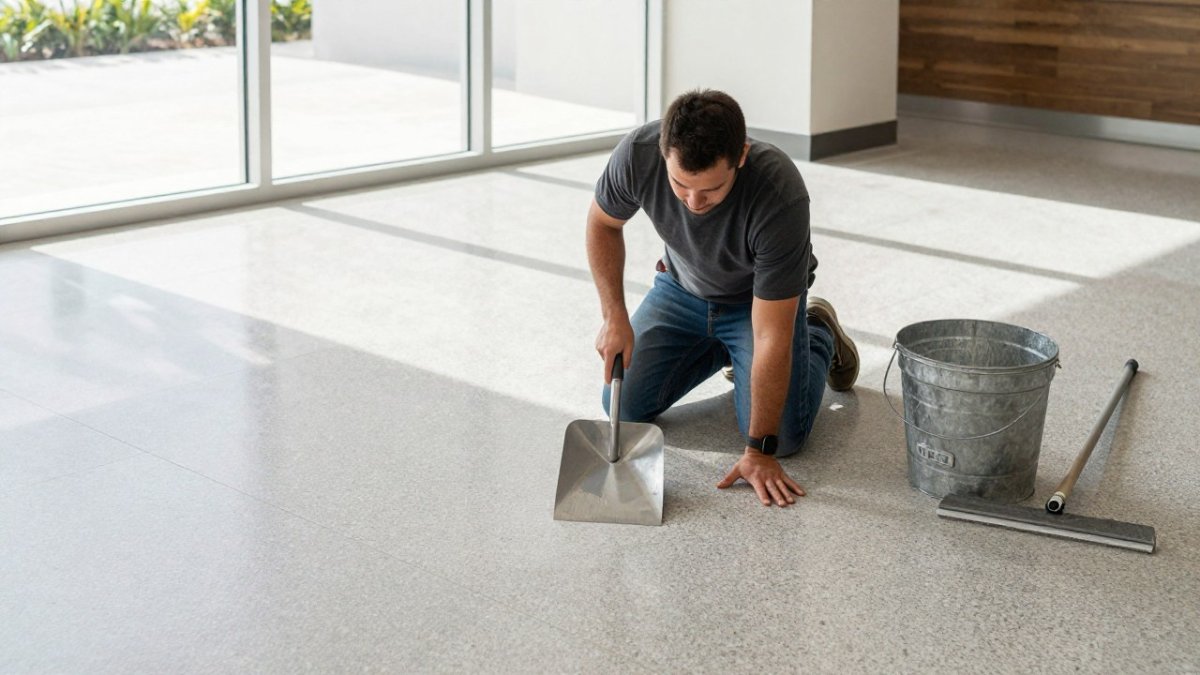
Polished concrete. Polished concrete reuses the existing slab, so it adds little or no new material to the building envelope. In a commercial setting the slab is ground with progressively finer diamond abrasives and then densified and sealed. The sustainability case is straightforward: you are finishing a structural element you already poured instead of layering a new wear surface over it. The performance case depends on two things. First, the slab must be dry enough, most practitioners want a vapor-emission test before grinding, because sealing a slab that is still releasing moisture can trap water and drive efflorescence or adhesive failure at adjacent finishes. Second, the sealer matters: a penetrating densifier behaves differently from a film-forming coating, and film-forming coatings can wear, peel, or become slippery when wet.
Porcelain and ceramic tile. Tile is the default for restrooms, commercial kitchens, food service, and locker rooms because it is dimensionally stable, cleanable, and resistant to standing water. The sustainability benefit is lifespan: a properly installed tile floor can outlast several cycles of carpet or resilient flooring, and the material itself is inert. The trade-offs are grout and slip. Cementitious grout is porous unless sealed, and in a Florida kitchen or restroom the grout line is where mold and staining show up first. Epoxy grout resists moisture and cleaning chemicals well in wet areas. Slip resistance is the other specification to pin down: tile is rated on a coefficient of friction scale, and a polished tile that is fine in a dry corridor can be hazardous at an entry vestibule during a summer thunderstorm.
Matching the floor to the building type. The practical rule is to match surface to sanitation and traffic pattern rather than to aesthetics alone. Healthcare corridors and exam rooms generally favor seamless or low-joint surfaces that can be cleaned with hospital-grade disinfectants, polished concrete, terrazzo, or sheet resilient, while patient rooms may need quieter, warmer surfaces. Food service and commercial kitchens need tile or another impervious surface with coved edges and epoxy grout. Retail and open offices can use polished concrete where the slab is sound, and tile in entries and restrooms. Education spaces often split the difference: tile in restrooms and cafeterias, resilient or carpet tile in classrooms, and polished concrete in corridors and commons.
Watch out: sealing or polishing a slab before confirming it is dry is one of the most common and most expensive mistakes in humid climates, moisture trapped under a sealer can lift the finish and damage adjacent flooring within a single season. Because trapped moisture can undermine even a well-finished slab, choosing flooring for humid climates starts with understanding how coastal conditions affect every layer beneath the surface.
3. Recycled Rubber, Cork and Bamboo for High-Traffic Areas
Recycled rubber flooring is made from recycled tires. It is water-resistant and durable, which suits gyms, healthcare corridors, and childcare areas where cushioning and easy cleaning matter. The design range is narrower than other options, so it is best where function comes first.
Cork is a renewable material harvested from tree bark. It offers natural comfort underfoot but can be damaged by standing water, which is a real concern in Florida buildings with frequent wet mopping. Bamboo is fast-growing and renewable. Ask suppliers for adhesive documentation before buying.
4. Hardwood, Hemp and Other Natural Materials
Hardwood can be a sustainable choice because it can be sanded and refinished several times, which extends its useful life. Look for wood with third-party forestry certification to confirm responsible sourcing. In Florida's humidity, though, hardwood needs careful moisture control and is a poor fit for ground-level or wet areas.
Hemp-based flooring is a newer plant-based option. Hemp-based flooring is marketed as a renewable material. Commercial performance data for hemp products is still limited compared with terrazzo or tile, so request independent test results for traffic rating and moisture resistance before specifying it for a high-use space.
Maintenance Planning: Keeping Sustainable Floors Performing
A sustainable floor only stays sustainable if it is maintained well, and maintenance is where the lifecycle cost of a commercial floor is actually decided. The upfront price is the smallest number in the equation. Over a 20- to 30-year horizon, cleaning labor, finish restoration, spot repair, and replacement cycles usually outweigh the installed cost, and the floor that is cheapest to buy is often the most expensive to own.
Build a cadence, not a cleaning list. Most commercial floors need three tiers of care: daily or shift-level cleaning (dust mopping, damp mopping, or vacuuming depending on surface), periodic deep cleaning or restoration, and annual inspection of seams, grout, seals, and transitions. Terrazzo generally responds well to regular dust mopping and periodic diamond polishing rather than frequent heavy stripping. Tile needs grout inspected and resealed on a schedule, because failed grout is the entry point for moisture and mold. Polished concrete needs its sealer checked, not just its surface cleaned. The cadence should be written into the facility plan from day one, because reactive maintenance almost always costs more than scheduled care.
Total cost of ownership, in plain terms. When comparing bids, ask each supplier for four numbers: installed cost per square foot, expected annual maintenance cost per square foot, expected repair and restoration cost over the first ten years, and expected replacement cycle. A floor with a higher installed cost and a 30-year life can beat a cheaper floor that must be replaced twice in the same window, especially when you factor in the labor, downtime, and disposal costs of a tear-out. Materials with longer service life, such as terrazzo, tile, and polished concrete, often compare favorably on total cost of ownership in high-traffic commercial settings.
End-of-life and local sourcing. Sustainability claims get stronger when the end of the floor's life is planned, not improvised. Ask suppliers about take-back programs, recyclability of the material, and whether the product is manufactured or aggregated regionally, since transport distance is part of the footprint. Terrazzo and concrete can often be ground and refinished in place rather than removed, which avoids landfill tonnage entirely. Tile and rubber may be recyclable through manufacturer programs, and carpet tile is increasingly accepted by take-back schemes. For a project pursuing green-building credits, documentation of recycled content, regional sourcing, and end-of-life pathways is often as important as the material itself.
Watch out: choosing a floor without asking who maintains it and how is the most common way a sustainable specification quietly becomes a landfill decision a decade later.
A1 Terrazzo offers professional maintenance services for commercial terrazzo across Florida if you want this handled by specialists.
Frequently Asked Questions
What type of flooring is best for Florida's climate?
Florida's humidity and heat favor flooring that resists moisture and does not swell or warp. Terrazzo, porcelain tile and polished concrete perform well because they are dense and dimensionally stable. Solid hardwood is a weaker choice in humid commercial spaces without climate control, since moisture can cause cupping and gaps. Before choosing, confirm the substrate moisture levels and the building's HVAC capacity, since both affect how any floor performs over time.
What is the most environmentally friendly flooring option for a commercial building?
No single option wins on every measure. Terrazzo can incorporate recycled glass and other recycled aggregates and can use low-emission resin systems, and its long service life reduces replacement waste. Polished concrete reuses an existing slab. Recycled rubber diverts tire waste. Environmental value depends on material content, emissions, durability and end-of-life options, so compare documented specifications for each product you consider.
Are low-VOC flooring options better for indoor air quality?
Yes, lower volatile organic compound emissions generally mean fewer chemicals released into the air during and after installation. This matters most in occupied buildings such as hospitals, schools and offices. Ask manufacturers for product data sheets showing VOC content and third-party emissions testing. Low-VOC adhesives and sealers matter as much as the flooring material itself.
What is the maintenance difference between bamboo and terrazzo flooring?
Terrazzo is a cementitious or resin-based surface that needs periodic cleaning with pH-neutral products, and it benefits from professional grinding and polishing to restore its finish. Bamboo is a wood-based product that needs protection from standing water and humidity swings, and it can be refinished only if its wear layer allows. Terrazzo generally tolerates heavier commercial traffic, while bamboo requires more attention to moisture control.