 Listicle
Slip Resistant Flooring Solutions: A Campus Selection Guide
Last Updated: November 8, 2026
Quick Summary
Specify slip resistant flooring by measured wet performance, not appearance: require a wet DCOF of 0.42 or higher and a SCOF of 0.60 or higher for level surfaces, with the test method named in the spec. Match materials to each campus area, since cafeterias, labs, entrances, and stairs need different traction and chemical resistance.
- Require third-party validation such as NFSI certification instead of relying on a supplier's own slip resistance claim.
- Sheet vinyl and LVT suit corridors and classrooms, while seamless resin systems fit laboratories and chemical spaces.
- Entrances need a walk-off zone long enough to shed water before the interior floor begins.
- Lock the approved cleaning chemical list to the floor spec, because wrong cleaners can strip traction.
- Compare bids on cost per square foot per year of service life, including cleaning, refinishing, and downtime.
Table of Contents
- Why Slip Resistant Flooring Decides Campus Safety and Budget Outcomes
- How Slip Resistance Is Actually Tested and Specified
- The Best Flooring for College Campuses, Area by Area
- Vinyl Slip-Resistant Flooring for Schools: Sheet Vinyl and LVT
- Slip-Resistant Flooring for Laboratories and Chemical Spaces
- Resin and Terrazzo Systems for High-Traffic Campus Buildings
- Flooring Maintenance for Educational Facilities: Protecting the Slip Rating
- Lifecycle Cost, Installation, and Accessibility Checks Before You Award
- Frequently Asked Questions
Why Slip Resistant Flooring Decides Campus Safety and Budget Outcomes
A slip resistant flooring solution is a floor system specified and installed so its surface keeps usable traction when wet, contaminated, or worn.
Higher education buildings carry a brutal mix of traffic: students move in bursts between classes, custodial crews mop during those bursts, and food service spills happen in the same corridors that serve lecture halls.
The Real Cost of a Fall on Campus
A fall on a hard floor produces medical costs, lost class time, staff injury claims, and legal exposure that outlasts the building's renovation cycle.
The real cost is the pattern, not the accident. Once a corridor or entrance produces repeated incidents, the institution spends on mats, signage, and stopgap coatings that never fix the underlying traction problem.
What Campus Decision-Makers Get Wrong First
The first mistake is choosing flooring for looks and asking about slip resistance afterward. The second is assuming a "non-slip" label means anything without a measured number attached.
Writing "slip resistant" into a spec and letting the installer interpret it is how campuses end up with a floor that meets the letter of the spec and fails in the hallway.
How Slip Resistance Is Actually Tested and Specified
Slip resistance is measured, not described. Two numbers do most of the work in a US specification: the coefficient of friction, and the test method used to produce it.
The coefficient of friction (COF) is a ratio describing how much resistance a surface offers to a sliding foot; higher means more traction. Static coefficient of friction (SCOF) measures the force to start a foot sliding, while dynamic coefficient of friction (DCOF) measures resistance while the foot is moving, the condition that matters on a wet floor.
Reading a SCOF and DCOF Number Correctly
A SCOF of 0.60 or higher is a benchmark many US specifiers reference for level surfaces, and DCOF is commonly reported through a wet test method, with 0.42 or higher a frequently cited threshold for level interior floors that may get wet.
Two cautions: a number means nothing without the test method beside it, and a polished tile can pass dry and fail wet. Always specify the wet condition.
Certifications Worth Requiring in a Spec
Require third-party validation rather than a supplier's own claim. The National Floor Safety Institute runs a certification program for high-traction hard-surface products, and manufacturers such as Mohawk Group's education flooring guidance point to NFSI certification as evidence of tested slip performance.
For the deeper university-specific breakdown of test methods and how to write them into a bid, see our guide to slip resistance standards for university flooring.
| Term | What It Measures | Typical Spec Target | Why It Matters |
|---|---|---|---|
| SCOF | Force to start a foot sliding | 0.60 or higher | Baseline for level walking surfaces |
| DCOF (wet) | Resistance while foot is moving, wet | 0.42 or higher | Predicts real wet-weather performance |
| Test method | How the number was produced | Named in the spec | A number without a method is meaningless |
| Third-party certification | Independent verification | NFSI or equivalent | Removes supplier self-assessment |
The Best Flooring for College Campuses, Area by Area
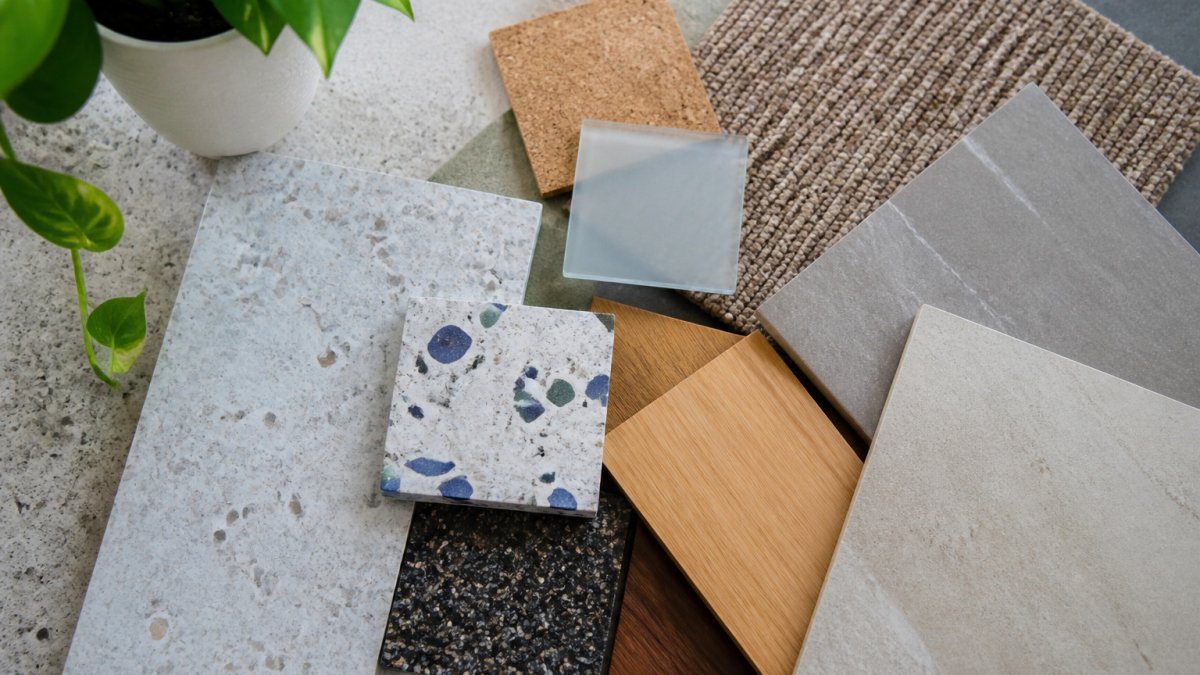
The best flooring for college campuses is not one material but a matched set chosen per space, because a chemistry lab, a cafeteria, and a lecture hall demand different things.

Cafeterias, Food-Service Areas, and Restrooms
Cafeterias and restrooms are wet zones and should be specified as such. Grease, water, and cleaning chemicals all reduce traction on a floor that was fine dry, so the spec should name the wet test method and the cleaner the floor is designed for, not just the material.
Seamless resin systems and safety sheet vinyl with a raised profile are the usual choices here. The priority is a floor with no seams for liquid to sit in and a wet DCOF that stays above threshold after cleaning.
Entrances, Vestibules, and Stairs
Entrances and stairs are where slip incidents cluster, yet most campus guides skip them. Entrances take rain, snow, and de-icing salt, so the floor is only part of the system: a walk-off zone long enough to shed water before the interior floor begins protects the interior rating.
Watch out: a beautiful interior floor specified without a matching entrance system will read as a slip failure even when the interior product met its wet DCOF target, because the water arrived from outside.
How to Use the Matrix in a Bid
Translate the matrix into the spec by naming, per area, the material family, the wet test method and threshold, the cleaning chemical list, and the transition detail where materials meet. That turns a generic "slip resistant" line into an enforceable requirement and gives facilities a basis for comparing bids.
Vinyl Slip-Resistant Flooring for Schools: Sheet Vinyl and LVT
Vinyl slip-resistant flooring for schools is the most common specification for a simple reason: it delivers tested traction at a lower material cost than rubber, and it installs fast across large areas.
Vinyl products are often positioned as a lower-cost option than rubber, which can matter when flooring multiple buildings on one budget.
Best for: corridors, classrooms, and large-area retrofits where budget and speed matter. Skip if: the space sees heavy chemical exposure or constant standing water.
Slip-Resistant Flooring for Laboratories and Chemical Spaces
Slip-resistant flooring for laboratories has to survive two threats at once: spills that make the floor slick, and chemicals that attack the floor itself.
Seamless resin systems are the standard answer. Because seamless resin makes spill control and cleaning part of the room’s design, it also connects to the broader work of customizing campus learning environments.
Specify chemical resistance against the actual reagents used in the building, not a generic list.
Watch out: a resin floor installed over a damp substrate will blister and delaminate, and the slip rating goes with it.
Resin and Terrazzo Systems for High-Traffic Campus Buildings
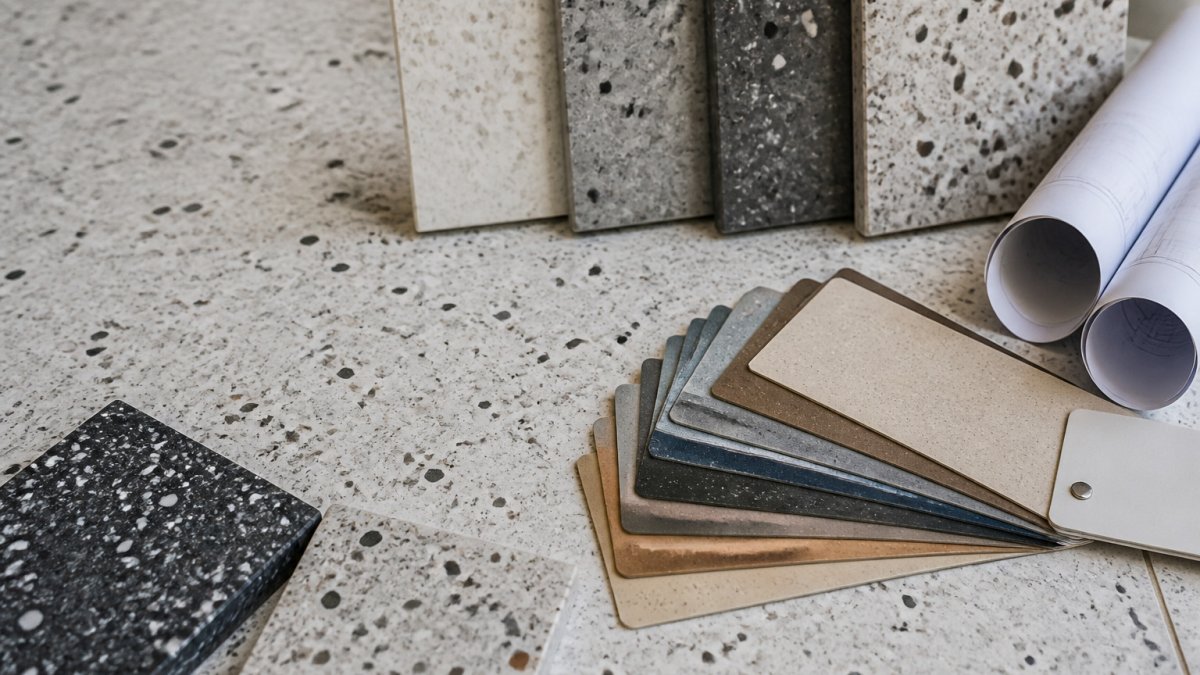
Terrazzo and poured resin are the long-life options for buildings a campus intends to keep for decades.
Terrazzo suits university concourses, libraries, and institutional entries expected to look intact after decades of traffic.
Weighing terrazzo against a poured concrete alternative? Our direct comparison of terrazzo versus polished concrete for campus flooring covers where each wins.
Best for: concourses, libraries, and buildings with a multi-decade horizon. Skip if: the project needs a fast turnaround on a tight budget.
Flooring Maintenance for Educational Facilities: Protecting the Slip Rating
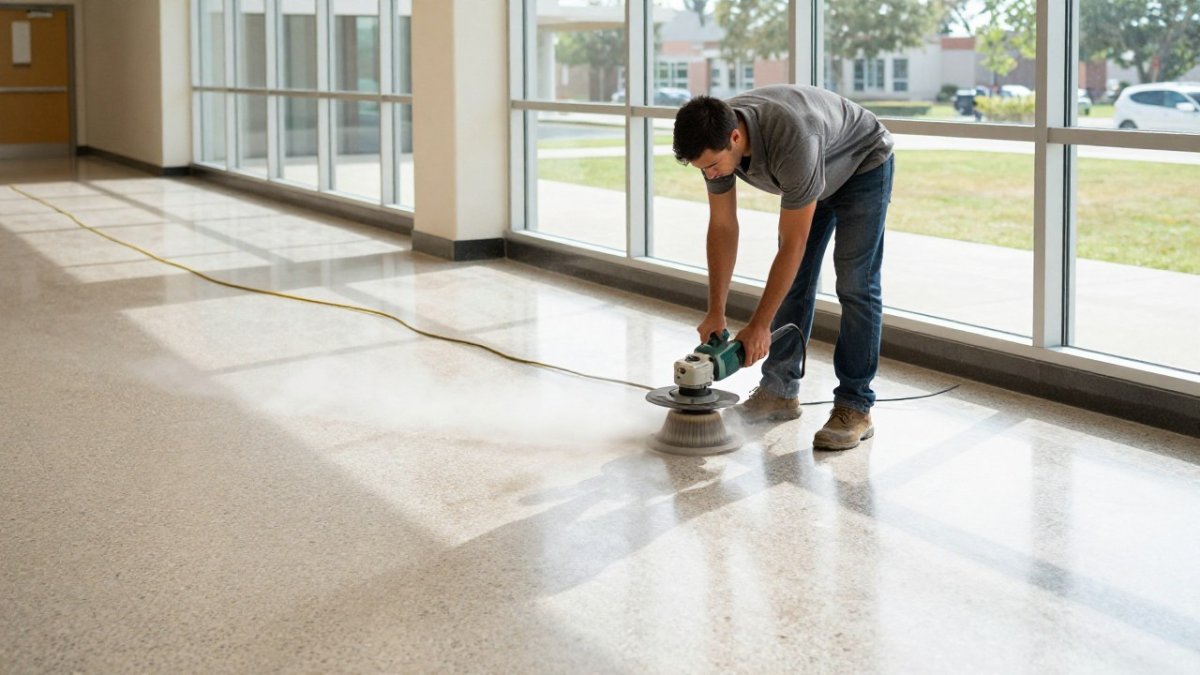
Flooring maintenance for educational facilities is where slip ratings are won or lost after installation.
Three habits protect the rating. Use the manufacturer's specified cleaner, because the wrong product strips finish or leaves a lubricating film. Keep the finish system intact on vinyl and resilient floors. And inspect high-traffic entries after every wet season, since wear concentrates at doorways and turns.
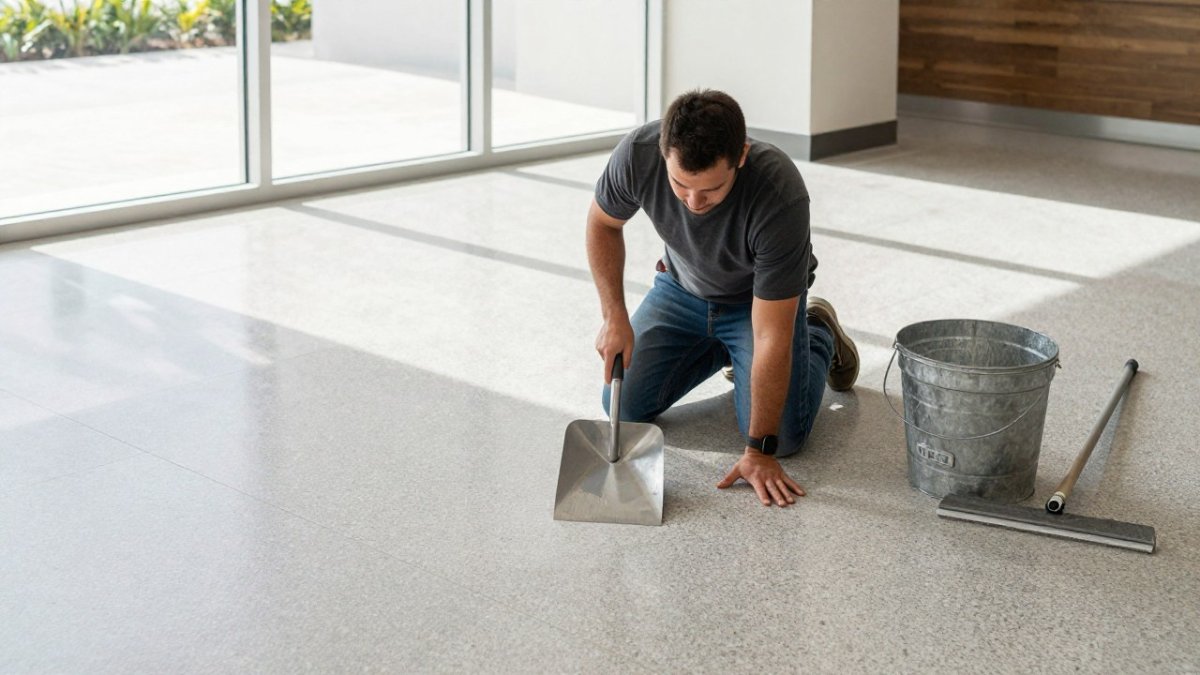
For terrazzo specifically, our guidance on preventing slip hazards on terrazzo floors covers the cleaning and refinishing routine that keeps the surface honest.
Watch out: a well-meaning custodian using a heavy-duty degreaser on a finished floor can dull the traction in one pass.
Lifecycle Cost, Installation, and Accessibility Checks Before You Award
The cheapest floor per square foot is rarely the cheapest floor over its life. Total cost of ownership combines material, installation, cleaning labor, refinishing, and replacement interval, and the ranking often flips once maintenance is counted.
Building a Total Cost of Ownership Comparison
A defensible comparison puts every candidate on the same basis: cost per square foot per year of service life, with maintenance broken out.
A higher material price often wins on total cost once cleaning labor and refinishing are counted, because the low-cost floor needs more frequent stripping and coating.
Downtime belongs in the comparison too.
Installation, Transitions, and Drainage
Installation matters as much as product.
Transitions are where installation quality shows up daily. A thick troweled system meeting a thin vinyl run creates a change in level that becomes a trip point and a wheelchair obstacle.
Cleaning residue is the quiet installation-adjacent risk.
If you are planning a campus renovation, our terrazzo installation timeline for campus renovations lays out the sequencing before you award a contract.
Ongoing Inspection and Re-Verification
A slip rating is a snapshot, not a permanent property. Wear, finish loss, and chemical damage all move the number, and entrances, turns, and food-service floors move first.
Where a floor was specified to a wet test threshold, periodic re-testing of high-risk zones gives facilities evidence the floor still performs and turns complaint-driven maintenance into a scheduled pattern.
Accessibility and Inclusive Design
Accessibility is the third check. Floor transitions between materials must stay within the allowable change in level under the ADA Standards for Accessible Design, and a thick troweled system meeting a thin vinyl run creates exactly the kind of lip that trips wheelchairs and triggers complaints.
Beyond level changes, inclusive design connects slip resistance to the whole route: accessible paths should stay clear and continuous, mobility-device users need firm and stable surfaces, and visual contrast at stairs and level changes helps everyone.
Watch out: specifying each material to its own standard without checking the transitions between them can produce a compliant floor system that still fails an accessibility review at the doorways and stair landings.
Campus flooring decisions fail when slip resistance is treated as a checkbox instead of a measured specification.
Frequently Asked Questions
What flooring is best for college campuses?
There is no single answer because campus buildings serve different purposes. Sheet vinyl and luxury vinyl tile suit classrooms and corridors where stain resistance and easy cleanup matter. Rubber works well in libraries and lecture halls because it absorbs noise and holds strong slip performance. Seamless resin and terrazzo systems fit concourses, cafeterias, and laboratories where hygiene and heavy foot traffic are the deciding factors. Match the material to the room's traffic, moisture, and cleaning routine rather than picking one product for the whole campus.
Which flooring materials are slip resistant for schools?
Rubber flooring, sheet vinyl, porcelain tile with a textured finish, epoxy and resin systems, and terrazzo all appear in education specifications with slip-resistant finishes. The material alone does not guarantee traction. What matters is the measured slip resistance of the finished surface, how it performs when wet, and whether the specified finish stays intact after cleaning. Ask suppliers for certification and test data on the exact product and finish you are buying, not the category in general.
Is vinyl flooring a good choice for higher education buildings?
Yes, for the right spaces. Vinyl slip-resistant flooring for schools works well in classrooms, hallways, and administrative areas because it resists stains, handles spills, and cleans up quickly. Sheet vinyl gives you fewer seams, which helps in hygiene-sensitive rooms. Luxury vinyl tile adds design flexibility for lobbies and common areas. The trade-off is that vinyl is softer underfoot than tile and can be damaged by heavy rolling loads, so specify it where foot traffic dominates rather than where equipment is dragged.
How do you choose flooring for a university laboratory?
Start with chemical resistance and seam count. Slip-resistant flooring for laboratories needs to handle spills of the solvents and reagents actually used in that room, so check the manufacturer's chemical resistance chart against your chemical inventory. Seamless resin systems reduce where liquids can pool and make decontamination easier. Confirm the wet slip rating, the cove base detail at the wall, and how the floor is cleaned between experiments. A floor that passes dry traction but fails wet traction is the wrong specification for a lab.
How can colleges reduce slip risks on campus floors without replacing everything?
Flooring maintenance for educational facilities does more for slip risk than most replacements. Stripping and resealing on the wrong schedule leaves polish buildup that turns slick when wet. Switch to neutral cleaners, add matting at every entrance, fix ponding near doors and drinking fountains, and inspect transitions and thresholds quarterly. Where a specific area keeps generating incidents, test the wet slip resistance of the finished surface before assuming the material has failed. Often the finish or the cleaning chemical is the problem, not the floor.