 ultimate-guide
Commercial Flooring Solutions Florida 2026
Table of Contents
- Why Commercial Flooring Choices Matter in 2026
- Types of Commercial Flooring Materials and Their Performance
- Flooring for High-Traffic Environments and Specific Industries
- Terrazzo Flooring Installation Price 2026
- Commercial Flooring Installation Timeline and Project Management
- Commercial Flooring Maintenance Tips for Long-Term Performance
- Sustainability, Compliance, and 2026 Flooring Trends
- Restoring Historic Terrazzo and Custom Solutions
- Frequently Asked Questions
Last Updated: August 28, 2026
Why Commercial Flooring Choices Matter in 2026
The right commercial flooring solution determines whether your facility runs smoothly for decades or becomes a maintenance nightmare within years. Commercial flooring solutions Florida 2026 have evolved dramatically, what worked five years ago no longer cuts it for modern facility demands.
Flooring is infrastructure, not just aesthetics. A hospital corridor needs antimicrobial properties and seamless surfaces to prevent contamination. An airport terminal requires slip-resistant finishes that survive millions of footsteps annually. A retail space needs durability that withstands constant traffic while reflecting your brand's image. At A1 Terrazzo, we've spent 35 years watching facility managers make flooring choices that either pay dividends or create budget headaches.
The core challenge: choosing between cost-cutting options that fail prematurely and premium solutions that seem overpriced until you calculate true lifecycle cost. Proper installation and material selection upfront saves dramatically on repairs, replacements, and downtime later.
Types of Commercial Flooring Materials and Their Performance
When evaluating commercial flooring materials, you're choosing between durability tiers. Each material performs differently under specific conditions, and the wrong choice creates visible problems within 12-24 months.
Terrazzo for Durability and Design
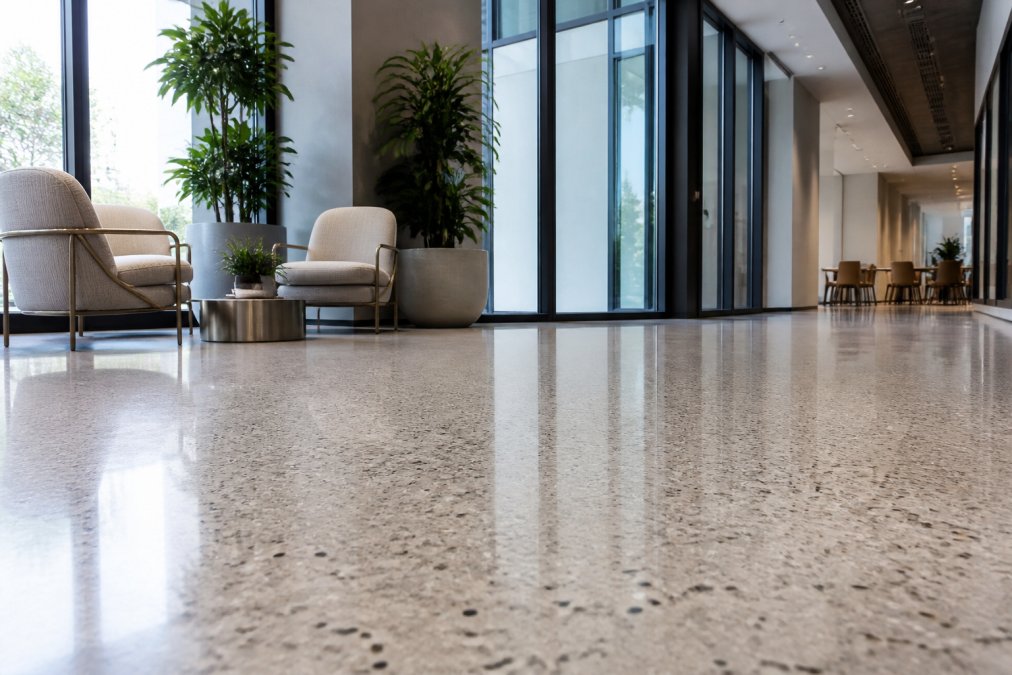
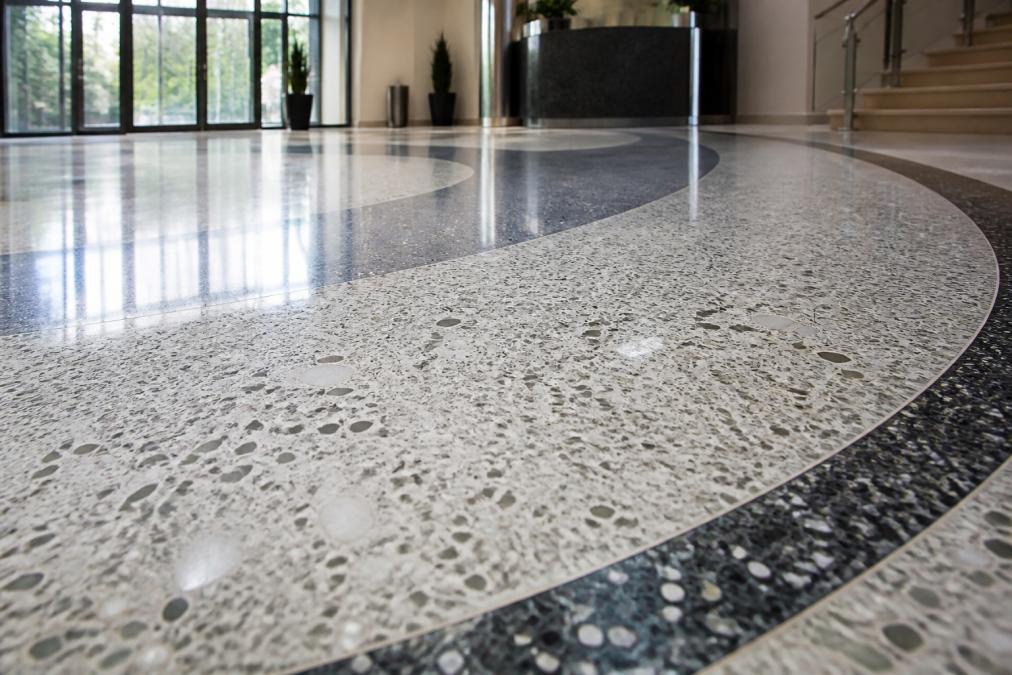
Terrazzo combines structural performance with aesthetic flexibility. The material consists of decorative aggregates (marble, glass, quartz) bound in cement or epoxy, creating a monolithic surface lasting 75 years or longer with proper maintenance (peer-reviewed research).
Terrazzo handles extreme traffic without visible wear patterns. Unlike carpet tiles that show footprints or vinyl that develops permanent indentations, terrazzo maintains its appearance across high-traffic zones. Healthcare facilities favor it because the seamless, nonporous surface eliminates grout lines where bacteria accumulate. Airports choose it because slip-resistant finishes meet safety codes while withstanding constant luggage wheels and foot traffic.
What distinguishes terrazzo: genuine customization. You choose specific aggregates, colors, and patterns. Want your university's logo embedded in the entryway? Terrazzo accommodates it. Need a specific color palette for corporate headquarters? Terrazzo delivers it. This design flexibility means your flooring becomes part of your facility's identity.
Installation requires precision. Proper substrate preparation, moisture management, subfloor leveling, and appropriate base layers determine whether terrazzo performs for decades or develops cracks within months. A1 Terrazzo's 35 years of experience reflects that terrazzo installation fundamentally depends on getting the foundation right.
Epoxy and Resilient Options
Epoxy terrazzo offers faster installation than traditional cement terrazzo, making it attractive for facilities that can't tolerate extended downtime. The resin-based system creates a seamless, nonporous surface with excellent chemical resistance, important for laboratories, pharmaceutical facilities, and manufacturing environments.
Resilient flooring options (luxury vinyl tile, LVT) occupy the mid-range. They're more affordable than terrazzo and easier to install, but don't match terrazzo's longevity. Most resilient options perform well for 10-15 years before showing significant wear. They're vulnerable to moisture if subfloor preparation isn't meticulous, a common failure point in humid climates.
The choice between epoxy terrazzo and resilient options depends on facility lifespan expectations. For 30+ year occupancy, terrazzo's longer lifecycle justifies upfront investment. For 10-year occupancy, resilient options may make financial sense.
Flooring for High-Traffic Environments and Specific Industries
Different facility types face distinct flooring challenges. A one-size-fits-all approach fails because demands vary dramatically.
Healthcare Facilities and Sanitation Requirements
Hospital and healthcare environments demand flooring that prioritizes sanitation above almost everything else. Seamless surfaces are non-negotiable in acute care facilities. Grout lines in tile flooring create crevices where bacteria accumulate despite cleaning. Healthcare facilities increasingly specify epoxy or cement terrazzo because the monolithic surface eliminates contamination vectors. The nonporous nature means cleaning protocols work effectively, with disinfectants contacting the entire surface.
Slip-resistance becomes critical in wet environments. Operating rooms, bathrooms, and patient care areas require flooring that maintains traction when wet. Terrazzo systems can be finished with slip-resistant properties meeting or exceeding ADA compliance standards (ada.gov).
Chemical exposure from cleaning agents, medications, and bodily fluids demands flooring that resists staining and degradation. Epoxy terrazzo handles this environment effectively. Cement terrazzo requires proper sealing to maintain performance under chemical exposure.
Airports, Retail, and Hospitality Spaces
Airport terminals represent the extreme end of high-traffic flooring demands. A major terminal experiences 50,000+ daily foot passages in certain corridors (transportation.gov). Luggage wheels, constant moisture, and rapid cleaning cycles create an unforgiving environment. Terrazzo excels because it handles this volume without visible wear, doesn't develop footprints or traffic patterns, resists wheel marks, and maintains slip-resistance in wet conditions.
Retail environments need aesthetics matching durability. A luxury retailer can't use industrial-looking flooring regardless of durability. Terrazzo solves this by offering design flexibility with industrial-grade performance. Custom colors and patterns create distinctive retail environments standard flooring can't achieve.
Hospitality spaces (hotels, restaurants, casinos) need flooring looking premium while handling constant use. Terrazzo's seamless, monolithic surfaces create the visual impact hospitality design requires while ensuring appearance remains pristine despite heavy use.
Terrazzo Flooring Installation Price 2026
Pricing for terrazzo flooring installation varies significantly based on material selection, design complexity, substrate condition, and project scale. Request a detailed quote from A1 Terrazzo that accounts for your specific project requirements rather than relying on generic ranges.
What affects pricing: Are you installing new terrazzo or restoring existing? New installations require substrate preparation, moisture mitigation systems, and proper base layers. Restoration projects involve assessment of existing conditions, potential repairs, and matching original finishes.
Design complexity matters substantially. Monolithic gray terrazzo costs less than custom patterns with multiple aggregate colors and inlays. Large open areas cost less per square foot than intricate designs with numerous color changes.
Material selection impacts cost. Epoxy systems typically install faster than cement terrazzo, potentially affecting labor costs. Aggregate selection, using premium marble versus standard stone, changes material costs directly.
Climate considerations in Florida add specific requirements. Moisture mitigation becomes essential given humidity and potential water exposure. Proper vapor barriers and moisture management systems prevent subfloor failures that plague poorly installed terrazzo in humid climates.
Contact A1 Terrazzo for a comprehensive quote reflecting your actual project scope.
Commercial Flooring Installation Timeline and Project Management
Installation timeline depends on material type, project scale, and substrate conditions. Understanding realistic timelines prevents underestimating disruption to facility operations.
Cement terrazzo installation typically requires 4-8 weeks for medium-sized projects, accounting for substrate preparation, installation, curing, and finishing. The material needs proper curing time; rushing this phase creates cracking and durability failures.
Epoxy terrazzo installations generally complete faster, often within 2-4 weeks for similar scope. Faster curing allows quicker return to service, but faster installation doesn't mean corners should be cut on substrate preparation. Moisture issues in Florida's climate can cause failures regardless of installation speed. commercial floor coating durability.
Subfloor preparation typically represents 30-40% of total project timeline. This step is where most failures originate. A1 Terrazzo's experience reflects that proper substrate assessment, moisture testing, and base layer preparation determine whether terrazzo performs for decades or develops problems within months.
Realistic project management accounts for weather delays (crucial in Florida during hurricane season), material delivery timelines, and cure time requirements. Compressed schedules that skip proper curing or moisture testing create false savings manifesting as expensive failures later.
Commercial Flooring Maintenance Tips for Long-Term Performance
Terrazzo maintenance is straightforward compared to other commercial flooring, but specific protocols matter. Improper cleaning or wrong product choices damage the surface despite the material's durability.
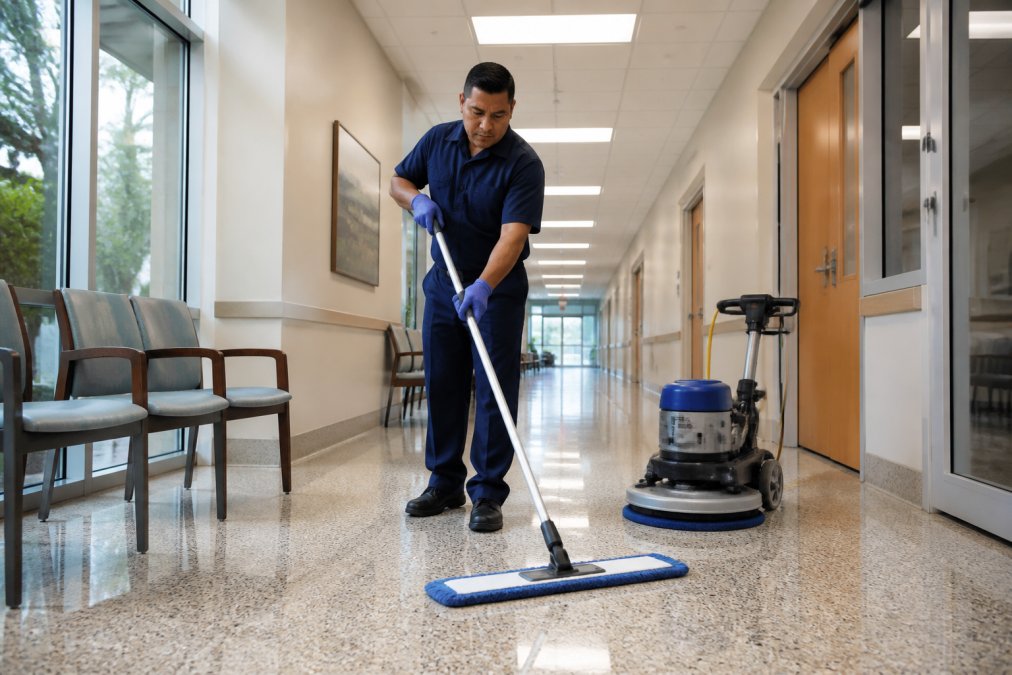
Daily maintenance requires regular sweeping and damp mopping with pH-neutral cleaners. Avoid acidic cleaners (vinegar-based products) and abrasive scrubbing compounds, which damage the sealer and polish.
Clean spills promptly, especially acidic substances like citrus or vinegar-based products. Terrazzo's nonporous surface means spills don't penetrate, but prolonged contact with damaging substances can etch the finish.
Professional maintenance typically involves periodic resealing and polishing. Frequency depends on traffic volume and wear patterns. High-traffic areas in airports or hospitals might need professional maintenance annually, while office spaces with moderate traffic need it every 2-3 years.
A1 Terrazzo provides maintenance guidance specific to your installation. Understanding what products work with your specific terrazzo system prevents damage from guessing about maintenance protocols. Preventive maintenance costs far less than restoration.
Sustainability, Compliance, and 2026 Flooring Trends
Commercial flooring choices increasingly reflect sustainability priorities and regulatory requirements. Facilities now evaluate flooring based on environmental impact alongside performance.
Eco-Friendly Materials and LEED Certification
Terrazzo qualifies for LEED certification when specified with recycled content aggregates and low-VOC epoxy systems. Using recycled glass and reclaimed marble reduces environmental impact while maintaining performance.
Terrazzo's 75+ year lifespan means fewer replacements over a building's lifetime compared to materials replaced every 10-15 years. This longevity provides genuine environmental benefit through reduced material consumption and waste.
Epoxy terrazzo systems using zero-VOC formulations contribute to indoor air quality. This matters for healthcare facilities, schools, and office environments where air quality affects occupant health.
ADA Compliance and Safety Standards
Flooring must meet ADA accessibility standards, including slip-resistance requirements, surface texture specifications, and transition details preventing trip hazards. Terrazzo finishes can be specified to meet or exceed ADA slip-resistance standards. The material's durability means slip-resistant finishes remain effective throughout the flooring's lifespan.
Building codes increasingly require specific flooring performance in commercial spaces. A1 Terrazzo's experience includes navigating code requirements and specifying systems meeting applicable standards.
Emerging Trends for Commercial Spaces
Biophilic design influences commercial flooring choices. Terrazzo accommodates this trend through aggregate selection and pattern design, incorporating natural stone colors and organic patterns creating spaces feeling connected to natural environments.
Flexible spaces drive flooring decisions. Seamless terrazzo provides flexibility because the continuous surface adapts to changing layouts without visible seams complicating reconfiguration.
Wellness-focused design prioritizes flooring supporting occupant health. Nonporous surfaces preventing bacterial accumulation, slip-resistant finishes reducing fall risk, and finishes minimizing glare all contribute to healthier commercial environments. Terrazzo addresses these wellness priorities directly.
Restoring Historic Terrazzo and Custom Solutions
Historic buildings often feature original terrazzo flooring representing significant architectural value. Restoration requires specialized knowledge because matching original patterns, colors, and finishes demands understanding both original installation and current restoration techniques.
The challenge: original terrazzo may use aggregates no longer readily available or colors mixed with formulations that don't exist in modern systems. A contractor unfamiliar with historic restoration can destroy architectural integrity.
Proper historic restoration involves careful assessment of original conditions, documentation of patterns and colors, and sourcing compatible materials. Sometimes restoration means preserving original terrazzo by repairing damage while maintaining authenticity.
A1 Terrazzo's experience includes historic terrazzo restoration in commercial buildings where original flooring represents part of the property's character and value. This work requires different expertise than standard commercial installation.
Custom solutions extend beyond historic restoration. Complex projects, airports requiring specific design elements, universities wanting campus identity reflected in flooring, healthcare facilities needing specialized functional requirements, benefit from contractors viewing each project as unique rather than applying standardized solutions.
Choosing commercial flooring solutions Florida 2026 requires balancing durability, aesthetics, regulatory compliance, and lifecycle costs. Terrazzo delivers performance justifying the investment through decades of reliable service. A1 Terrazzo's 35 years of experience in commercial terrazzo installation and maintenance means you're partnering with specialists understanding both technical requirements and real-world facility demands. Contact A1 Terrazzo to discuss your specific project requirements and discover how professional terrazzo installation creates lasting value for your facility.
| Material Type | Best For | Typical Lifespan | Maintenance Level |
|---|---|---|---|
| Cement Terrazzo | Durability, custom design, healthcare | 75+ years | Low |
| Epoxy Terrazzo | Fast installation, chemical resistance | 60+ years | Low |
| Luxury Vinyl Tile | Budget-conscious, moderate traffic | 10-15 years | Moderate |
| Commercial Carpet Tile | Comfort, sound dampening | 7-10 years | High |
Frequently Asked Questions
What makes terrazzo a better choice than other commercial flooring solutions for high-traffic areas?
Terrazzo combines durability with design flexibility, making it ideal for commercial flooring solutions in airports, hospitals, and retail spaces. The material withstands heavy foot traffic without cracking when properly installed with correct substrate preparation and moisture mitigation. Its seamless, nonporous surface resists staining and supports strict sanitation standards. Unlike some alternatives, terrazzo can last 75+ years with minimal maintenance, delivering long-term value for facility managers managing large-scale commercial spaces.
How much should we budget for terrazzo flooring installation price in 2026?
Terrazzo flooring installation price depends on several factors: the type of terrazzo (epoxy vs. cement), design complexity, substrate condition, and project scale. Pricing also varies based on aggregate selection, custom patterns, and site-specific challenges like moisture mitigation or subfloor preparation. Contact A1 Terrazzo for a detailed quote tailored to your specific project scope and requirements.
What's the typical commercial flooring installation timeline for a large campus or facility renovation?
Commercial flooring installation timeline varies based on project complexity, area size, and substrate conditions. Most commercial installations require site assessment, subfloor preparation, moisture testing, and curing time between phases. Scheduling depends on whether work occurs during operating hours (phased approach) or after hours (accelerated timeline). A1 Terrazzo coordinates with facility management to minimize operational disruption while ensuring quality workmanship.
How do I prevent the cracking and substrate issues that caused problems with our previous terrazzo installation?
Proper substrate preparation is critical to preventing terrazzo failure. Issues like cracking stem from inadequate subfloor preparation, improper moisture mitigation, or poor aggregate selection. Quality installation requires testing for moisture vapor transmission, installing appropriate moisture barriers, and ensuring the subfloor is clean, level, and properly cured before terrazzo application. A1 Terrazzo's 35 years of experience includes mastering these foundational steps. Choosing a contractor with proven expertise in healthcare facilities and high-traffic commercial spaces ensures your installation avoids the substrate problems that caused your previous floor to fail.
This article was written using GrandRanker
Frequently Asked Questions
What makes terrazzo a better choice than other commercial flooring solutions for high-traffic areas?
Terrazzo combines durability with design flexibility, making it ideal for commercial flooring solutions in airports, hospitals, and retail spaces. The material withstands heavy foot traffic without cracking when properly installed with correct substrate preparation and moisture mitigation. Its seamless, nonporous surface resists staining and supports strict sanitation standards. Unlike some alternatives, terrazzo can last 75+ years with minimal maintenance, delivering long-term value for facility managers managing large-scale commercial spaces.
How much should we budget for terrazzo flooring installation price in 2026?
Terrazzo flooring installation price depends on several factors: the type of terrazzo (epoxy vs. cement), design complexity, substrate condition, and project scale. Pricing also varies based on aggregate selection, custom patterns, and site-specific challenges like moisture mitigation or subfloor preparation. Contact A1 Terrazzo for a detailed quote tailored to your specific project scope and requirements.
What's the typical commercial flooring installation timeline for a large campus or facility renovation?
Commercial flooring installation timeline varies based on project complexity, area size, and substrate conditions. Most commercial installations require site assessment, subfloor preparation, moisture testing, and curing time between phases. Scheduling depends on whether work occurs during operating hours (phased approach) or after hours (accelerated timeline). A1 Terrazzo coordinates with facility management to minimize operational disruption while ensuring quality workmanship.
How do I prevent the cracking and substrate issues that caused problems with our previous terrazzo installation?
Proper substrate preparation is critical to preventing terrazzo failure. Issues like cracking stem from inadequate subfloor preparation, improper moisture mitigation, or poor aggregate selection. Quality installation requires testing for moisture vapor transmission, installing appropriate moisture barriers, and ensuring the subfloor is clean, level, and properly cured before terrazzo application. A1 Terrazzo's 35 years of experience includes mastering these foundational steps. Choosing a contractor with proven expertise in healthcare facilities and high-traffic commercial spaces ensures your installation avoids the substrate problems that caused your previous floor to fail.