 ultimate-guide
Antimicrobial Flooring for University Health Centers
Table of Contents
- How Antimicrobial Flooring Contributes to Infection Control
- Pathogen Growth and Antimicrobial Surface Protection
- Healthcare Flooring Options: Nonporous and Watertight Surfaces
- Healthcare Floor Cleaning and Maintenance Requirements
- Infection Control and Flooring: University Health Center Applications
- Commercial Terrazzo Flooring for Clinics: Durability and Performance
- Material Selection by Room and Use: Practical Campus Implementation
- Lifecycle Cost and Long-Term Outcomes
- Frequently Asked Questions
Last Updated: October 4, 2026
How Antimicrobial Flooring Contributes to Infection Control
Antimicrobial flooring is a specialized surface treatment designed to inhibit the growth of bacteria, viruses, and other harmful pathogens on floor surfaces. In university health centers, where patient safety and staff protection are paramount, the role of antimicrobial flooring extends beyond routine cleaning. It functions as an active defense mechanism that reduces the microbial load on high-traffic surfaces, areas where pathogen transmission risk is highest. Integrating these durable materials into a comprehensive infection control strategy complements the essential practice of sanitizing high-touch surfaces throughout shared clinical environments.
The connection between flooring and infection control isn't incidental. Patient rooms, clinical laboratories, and waiting areas in university health centers experience constant foot traffic, equipment movement, and potential contamination from bodily fluids and environmental sources. Traditional nonporous surfaces alone provide a cleanable foundation, but antimicrobial flooring adds a protective layer that suppresses microbial proliferation between cleaning cycles. This is particularly valuable in settings where infection prevention directly impacts patient outcomes and liability exposure.
The difference between a floor that simply resists staining and one that actively inhibits pathogen growth becomes apparent in facilities managing immunocompromised patients, surgical recovery areas, and diagnostic imaging suites.
Pathogen Growth and Antimicrobial Surface Protection
Pathogens survive and multiply on flooring surfaces through moisture, organic matter, and time. Standard flooring materials, even sealed ones, can harbor bacteria in microscopic imperfections and pores. Antimicrobial flooring disrupts this process by incorporating antimicrobial reagents directly into the surface material, creating an environment hostile to microbial colonization.
The mechanism works through contact. When bacteria or viruses come into contact with an antimicrobial-treated surface, the embedded agents disrupt cellular function and prevent replication. This reduces the infectious dose available for transfer to shoes, equipment wheels, or hands.
Nonporous surfaces alone prevent penetration of liquids and debris, but antimicrobial treatment goes further by actively suppressing germs on the surface itself. This distinction matters in clinical settings where standard cleaning schedules may not occur between every patient interaction. A floor treated with antimicrobial properties continues working during gaps in maintenance, reducing the risk window for cross-contamination.
The effectiveness of antimicrobial flooring varies based on the specific antimicrobial agent used, the concentration, and environmental conditions. Some university health centers report measurable reductions in surface contamination when using antimicrobial flooring compared to untreated alternatives, though results depend heavily on proper installation, material selection, and maintenance protocols.
Healthcare Flooring Options: Nonporous and Watertight Surfaces
University health centers require flooring that meets strict standards for cleanability, durability, and infection control. The primary options fall into categories defined by their surface characteristics and material composition.
Homogeneous flooring represents one approach, a single-layer material where the antimicrobial properties extend throughout the entire thickness. This eliminates the risk of surface degradation exposing untreated material beneath. Homogeneous options provide consistent performance over the flooring's lifespan.
Resinous flooring systems offer flexibility in customization. These include epoxy and polyurethane-based surfaces that can be formulated with antimicrobial additives. Resinous systems provide excellent chemical resistance, which is critical in university health centers where cleaning agents and disinfectants are used regularly.
Terrazzo flooring, particularly commercial terrazzo systems, combines durability with aesthetic options. When specified with antimicrobial components, terrazzo provides a seamless, nonporous surface that resists moisture penetration and supports rigorous cleaning protocols.
Access flooring systems in some university health center settings allow for infrastructure flexibility while maintaining antimicrobial surface properties. These are less common but valuable in facilities requiring frequent equipment upgrades or reconfiguration.
The choice among these options depends on the specific area of the health center. Patient rooms, surgical suites, and laboratory spaces have different requirements than administrative areas or waiting rooms.
Healthcare Floor Cleaning and Maintenance Requirements
Antimicrobial flooring doesn't eliminate the need for cleaning, it enhances the effectiveness of proper cleaning protocols. University health centers must establish maintenance schedules that align with the specific flooring material and antimicrobial treatment used.
Routine cleaning in healthcare environments typically involves daily wet cleaning with approved disinfectants. The flooring must withstand frequent exposure to these chemicals without degradation. Nonporous, watertight surfaces prevent moisture from penetrating to substrate layers, which protects structural integrity and prevents mold or bacterial growth beneath the surface.
Cleaning labor requirements vary by flooring type. Seamless flooring systems like commercial terrazzo require less intensive maintenance than materials with grout lines or seams, where pathogens can lodge and become difficult to disinfect. This labor efficiency directly impacts operational costs and infection prevention effectiveness.
Chemical compatibility is critical. Some antimicrobial treatments can be affected by harsh disinfectants if the wrong products are used. University health centers must work with flooring specialists to identify approved cleaning agents that maintain antimicrobial efficacy while thoroughly disinfecting the surface. Using incompatible products can reduce the flooring's protective properties and potentially damage the surface.
Stain resistance and odor control are secondary benefits that improve the overall environment. Healthcare facilities with effective antimicrobial flooring and proper cleaning protocols report fewer maintenance issues and better perceived hygiene standards among patients and staff.
Infection Control and Flooring: University Health Center Applications
University health centers operate differently from traditional hospitals. They serve student populations with diverse health needs, manage high-volume clinic schedules, and often occupy older campus buildings with infrastructure constraints. The flooring must accommodate these realities while maintaining infection control standards.
Patient rooms in university health centers benefit most directly from antimicrobial flooring. These spaces see frequent patient turnover, cleaning between visits, and potential exposure to communicable diseases. Antimicrobial flooring reduces the risk of pathogen survival between disinfection cycles, protecting subsequent patients and staff.
Urgent care and triage areas experience high traffic and unpredictable contamination. Antimicrobial flooring in these spaces reduces infection risk when cleaning schedules cannot always keep pace with patient volume.
Laboratory and diagnostic imaging suites require flooring that resists chemical exposure and moisture while maintaining antimicrobial properties. These areas often involve biological specimens and require rigorous infection control protocols.
Waiting areas and common spaces in university health centers see continuous foot traffic from potentially infected individuals.
The decision to install antimicrobial flooring should be based on infection risk assessment for each area. High-risk spaces, those serving immunocompromised patients, performing invasive procedures, or handling biological materials, justify the investment.
Commercial Terrazzo Flooring for Clinics: Durability and Performance
Commercial terrazzo flooring has a long history in healthcare settings, and for good reason. The material's durability, seamless construction, and aesthetic flexibility make it an excellent choice for university health centers seeking flooring that performs over decades while maintaining infection control standards.
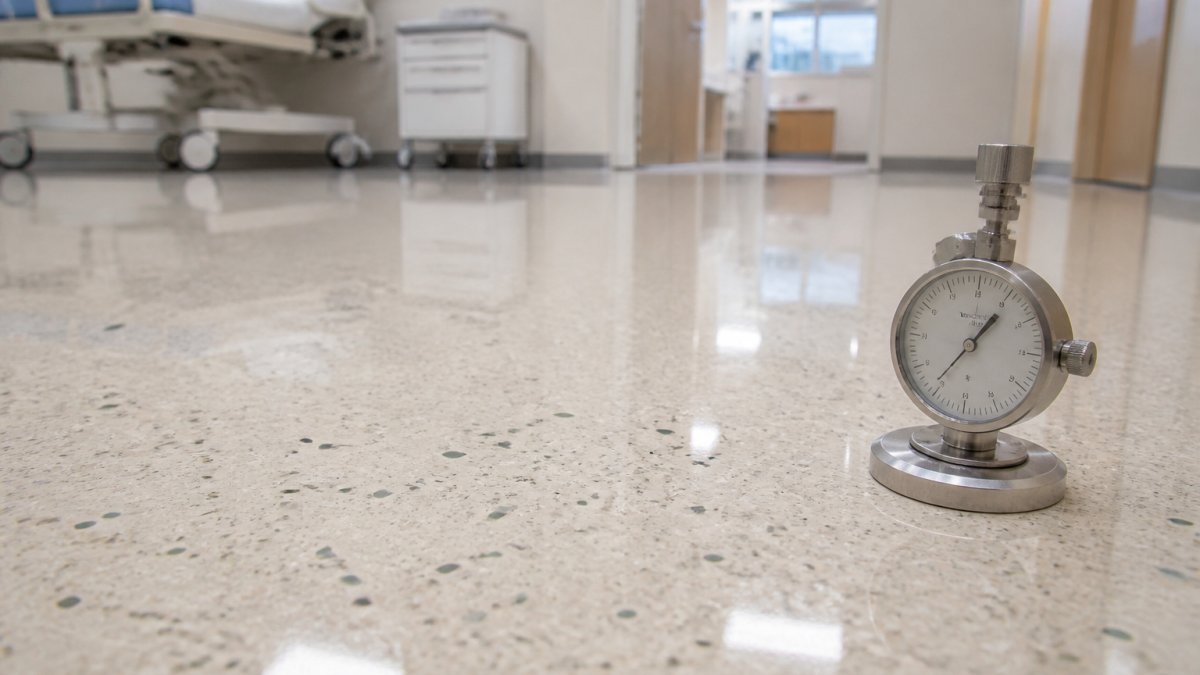
Terrazzo's composition, marble or stone chips bound in a resinous matrix, creates a nonporous, watertight surface that resists moisture penetration and chemical degradation. In high-traffic healthcare environments, this durability translates to long-term cost effectiveness.
The seamless nature of terrazzo eliminates grout lines where bacteria and viruses can harbor. This feature alone makes terrazzo superior to many alternative flooring systems for infection control applications.
Aesthetic flexibility is an often-overlooked benefit. University health centers can specify terrazzo in colors and finishes that create calming environments for patients while maintaining clinical functionality. This balance between form and function supports both patient outcomes and staff satisfaction.
Performance in high-traffic areas is where terrazzo excels. Patient rooms, hallways, and clinical spaces in university health centers experience constant movement of people, equipment, and supplies.
Material Selection by Room and Use: Practical Campus Implementation
Specifying antimicrobial flooring across a university health center campus requires room-by-room analysis. Not every space requires the same level of antimicrobial protection, and selecting the right material for each application optimizes both performance and budget allocation.
High-risk clinical areas, surgical suites, intensive care units, immunology clinics, require commercial terrazzo or homogeneous antimicrobial flooring with the most strong infection control properties.
Standard patient rooms and examination spaces benefit from antimicrobial flooring but may accommodate slightly less intensive specifications than surgical areas. Resinous antimicrobial systems or terrazzo with standard antimicrobial treatment provides adequate protection while reducing material costs.
Laboratory and diagnostic areas require flooring that resists chemical exposure in addition to supporting infection control. Terrazzo systems designed for chemical resistance with integrated antimicrobial properties are ideal for these spaces.
Administrative and waiting areas may use standard nonporous flooring without antimicrobial treatment, as infection risk is lower. However, some university health centers choose to extend antimicrobial flooring throughout for consistency and simplified maintenance protocols.
The implementation challenge in campus settings involves coordinating installation across multiple buildings with different construction types and occupancy patterns. This approach requires detailed planning, but it ensures the facility can maintain service delivery throughout the renovation process.
Budget committees often question whether antimicrobial flooring justifies its cost compared to standard nonporous alternatives.
Lifecycle Cost and Long-Term Outcomes
The decision to install antimicrobial flooring should be evaluated over the flooring's complete lifespan, not just initial installation costs.
Antimicrobial flooring typically costs more upfront than standard nonporous alternatives. However, the total cost of ownership includes installation, maintenance, replacement frequency, and the operational impact of flooring failures or infection control breaches.
Durability extends service life. Commercial terrazzo and high-quality antimicrobial systems maintain their protective properties for 20-30 years or longer. Standard flooring in high-traffic healthcare environments often requires replacement or refinishing within 10-15 years.
Maintenance costs vary by material. Seamless terrazzo requires less intensive maintenance than flooring with seams or grout lines.
Chemical resistance protects the investment. Flooring that withstands repeated exposure to disinfectants and cleaning chemicals without degradation maintains its antimicrobial properties throughout its lifespan.
University health center administrators should request lifecycle cost analyses from flooring contractors, comparing total cost of ownership over 25-30 years rather than focusing solely on installation pricing.
Antimicrobial flooring represents a practical investment in patient safety and operational efficiency for university health centers.
The challenge for facility managers is selecting the right material for each application while managing campus-wide implementation. A1 Terrazzo brings 35 years of experience installing and maintaining commercial terrazzo flooring in healthcare environments.
Frequently Asked Questions
Does antimicrobial flooring actually prevent the spread of infection in healthcare facilities?
Antimicrobial flooring reduces harmful pathogens and germs on surfaces, which supports infection prevention efforts. However, flooring alone does not eliminate infection risk. Antimicrobial flooring works as part of a broader infection control strategy that includes routine cleaning, disinfection protocols, and staff hygiene practices. The effectiveness depends on proper maintenance, compatible cleaning chemicals, and consistent cleaning labor. University health centers benefit most when antimicrobial surfaces are combined with established cleaning schedules and trained staff.
What type of flooring is best for a university health center?
Nonporous, watertight surfaces are ideal for university health centers because they resist moisture, prevent bacterial growth in seams, and withstand high-traffic areas. Terrazzo, homogeneous flooring, and resinous flooring systems offer stain resistance, odor control, and durability in clinical environments. These materials support patient safety and staff safety while minimizing maintenance costs. The best choice depends on the specific room, patient rooms, waiting areas, and clinical spaces have different requirements. Consult with experienced installers to match flooring systems to your campus facility's layout and usage patterns.
How should antimicrobial flooring in a healthcare facility be cleaned and maintained?
Routine cleaning with compatible cleaning chemicals is essential for maintaining antimicrobial flooring. Use pH-neutral disinfectants and avoid harsh chemicals that can damage the surface. Regular sweeping removes dust and debris, while damp mopping with approved solutions controls germs and maintains the nonporous surface. Stain resistance and moisture resistance are built into quality flooring, but consistent maintenance extends the flooring lifespan and preserves infection control benefits. Staff training on proper cleaning procedures prevents damage and ensures hygiene standards are met across your campus health center.
What is the actual cost difference between proper antimicrobial flooring installation now versus dealing with moisture and durability issues later?
Investing in quality antimicrobial flooring systems upfront reduces long-term operational costs by preventing moisture damage, bacterial growth, and surface deterioration. Proper installation with correct substrate preparation eliminates cracking and premature failure. While initial installation costs are higher than lower-grade alternatives, the extended flooring lifespan, reduced cleaning labor, and lower maintenance costs offset the investment over 10-15 years. University facilities managing multiple buildings benefit significantly from durable, long-term performance. Contact A1 Terrazzo for a detailed lifecycle cost analysis specific to your campus renovation or new construction project.