 ultimate-guide
What Happens If You Use Acid on Terrazzo
Table of Contents
- Why Acid Damages Terrazzo Floors
- The Chemical Reaction: Calcium Carbonate and Acid
- How to Identify Acid Etching on Terrazzo
- Common Terrazzo Cleaning Mistakes to Avoid
- Safe Terrazzo Floor Cleaner Options
- How to Remove Etch Marks from Terrazzo
- What to Do If You Accidentally Use Acid
- Preventing Acid Damage and Maintaining Surface Finish
- Frequently Asked Questions
Last Updated: September 26, 2026
Why Acid Damages Terrazzo Floors
Terrazzo is a composite flooring material made from marble chips, granite, or glass mixed with a cementitious binder. The marble component is calcium carbonate, which reacts chemically with acidic substances (How does acid precipitation affect marble and limestone buildings?). When acid contacts terrazzo, it dissolves the calcium carbonate, creating irreversible damage to the surface finish.
Unlike surface stains, acid etching penetrates the material itself, acidic liquids seep into the porous matrix, attacking the binder and aggregate at a molecular level. This damage is permanent.
Severity depends on acid strength and exposure time. Muriatic acid causes immediate, severe damage; even mild acids like vinegar or lemon juice etch terrazzo if left sitting on the surface.
The Chemical Reaction: Calcium Carbonate and Acid
The reaction between acid and calcium carbonate is straightforward chemistry with devastating results. When an acidic substance contacts the marble chips in terrazzo, it produces carbon dioxide gas and calcium salt. This chemical reaction literally eats away at the floor's surface, creating a dull, pitted appearance.
The acid donates hydrogen ions that break the chemical bonds holding the calcium carbonate together, dissolving the material and compromising the cementitious binder. Micro-pitting forms across the affected area.
The reaction happens quickly, visible damage begins within minutes, and etching becomes permanent within hours. The window to prevent damage is narrow.
Strong acids like muriatic acid cause severe etching; moderate acids like vinegar cause dullness and spotting. Strong alkaline cleaners can damage the sealant layer.
How to Identify Acid Etching on Terrazzo
Acid etching has distinct visual and tactile characteristics that separate it from staining, water marks, or wear. Correct identification is critical because repair approaches differ.
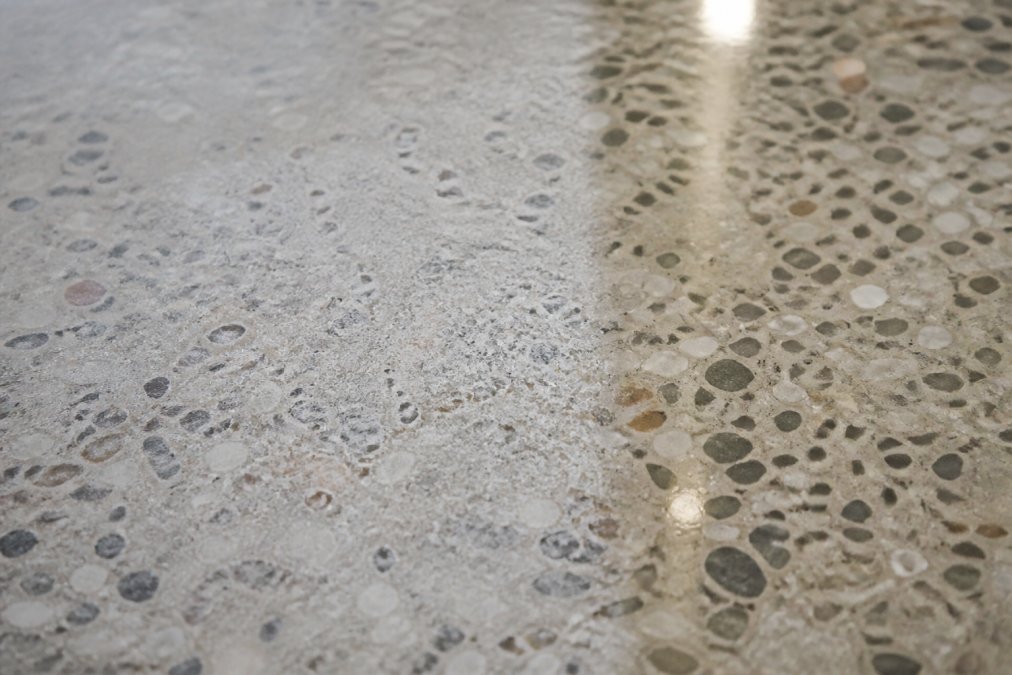
Visual signs of acid etching:
- Dullness in localized areas: The polished shine disappears, creating a flat, matte appearance. Unlike water spots that disappear when dry, etching remains permanently dull.
- Micro-pitting: Tiny pits or craters visible up close, like the surface has been lightly sandblasted. Run your fingernail gently across the area, you'll feel a slight roughness that polished terrazzo lacks.
- Whitish or cloudy spots: Calcium salt residue that appears as discoloration. This residue is the byproduct of the acid-calcium carbonate reaction and indicates active or recent etching.
- Rough texture: Running your hand across the area feels slightly rough compared to surrounding polished terrazzo. This texture change is permanent and distinguishes etching from surface dirt or film.
- Pattern matching spill shape: Etching follows the outline of whatever liquid was spilled, making the cause obvious. Stains, by contrast, often have irregular or diffused edges.
Acid etching vs. water stains: Water stains sit on the surface and disappear when dry; etching is permanent surface degradation.
Acid etching vs. wear dullness: Wear affects large areas uniformly; etching appears in isolated spots matching the spill pattern.
Acid etching vs. alkaline damage: Alkaline damage affects the sealant uniformly; acid etching creates localized pitting.
Etching is easiest to spot in bright, angled light. Use a flashlight held at a low angle to reveal micro-pitting that normal lighting obscures.
Shallow etching affects only the top layer and may be partially improved through professional honing. Deep etching penetrates the aggregate and binder, causing permanent damage. Run your fingernail across the area, if it catches in visible pits, damage is moderate to deep. Professional honing and polishing can improve appearance by leveling the surface and restoring shine, but deep etching cannot be fully restored.
Common Terrazzo Cleaning Mistakes to Avoid
Most terrazzo damage occurs from routine cleaning with wrong products. Terrazzo requires pH-neutral formulations.
The biggest mistakes include:
Using acidic cleaners: Bathroom cleaners with citric acid, vinegar-based products, and descaling solutions etch terrazzo despite seeming effective.
Applying strippers or harsh degreasers: These contain alkaline compounds that damage the sealant and expose terrazzo to further damage.
Mixing cleaning products: Combining ammonia-based cleaners with acidic products creates unpredictable reactions and hazardous fumes.
Using abrasive pads or scrubbing aggressively: Steel wool and abrasive pads scratch the surface and remove the protective sealant.
Allowing liquids to sit: Acidic beverages left for hours will etch noticeably; longer contact time means deeper damage.
Ignoring spills immediately: Prompt action prevents permanent damage. Leaving acidic substances on the floor while you attend to other tasks guarantees etching.
Safe Terrazzo Floor Cleaner Options
pH-neutral cleaners (pH 7-8) are the only safe choice for terrazzo. These clean effectively without attacking the calcium carbonate or sealant layer.
Safe options include neutral pH stone cleaners, mild dish soap and water, distilled water alone, and pH-neutral floor maintenance products labeled "safe for natural stone."
When selecting a cleaner, check the label for pH rating. Anything below 7 is acidic and should be avoided. Anything above 8 is alkaline and may damage the sealant. The safe zone is 7 to 8 pH.
Test any new cleaner on an inconspicuous area first, as some products contain additives that interact unexpectedly with specific terrazzo compositions.
How to Remove Etch Marks from Terrazzo
Professional honing uses progressively finer grinding stones to level the pitted surface, removing the damaged layer and exposing fresh terrazzo beneath. Polishing restores shine. Small, shallow etch marks respond best; larger or deep damage requires extensive work to blend repairs. Prevention is far more cost-effective than repair, a single professional restoration costs significantly more than years of proper maintenance.
What to Do If You Accidentally Use Acid
If acid spills on terrazzo, immediate action minimizes damage. The first few minutes are critical because the chemical reaction is still occurring.
Immediate emergency response:
-
Stop the reaction: Apply baking soda mixed with water as a paste over the affected area and let sit for 5-10 minutes to neutralize the acid.
-
Rinse thoroughly: Use distilled water (not tap water, which leaves mineral deposits) to rinse away the acid and paste. Rinse multiple times and use clean towels to absorb excess water.
-
Dry completely: Use clean towels to dry thoroughly and leave uncovered to air-dry fully before allowing foot traffic.
-
Assess the damage: Once dry, examine the area in good lighting. If dull or rough, etching has occurred and professional attention is needed.
-
Call a professional: Contact a terrazzo restoration specialist within 24 hours if visible etching appears.
The key is speed. Every minute the acid sits increases damage. Facilities with terrazzo floors should keep baking soda and distilled water readily available in a labeled emergency kit near terrazzo areas.
pH reference guide for common household products:
Many users don't realize which products are acidic.
| Product | pH Range | Risk Level | Notes |
|---|---|---|---|
| Distilled water | 5.5-6.5 | Low | Slightly acidic but safe for terrazzo; use for rinsing |
| Tap water | 6.5-8.5 | Low | Varies by location; may leave mineral deposits |
| Baking soda solution | 8.3 | Safe | Use for neutralizing acid spills |
| Mild dish soap + water | 7-8 | Safe | Effective for routine cleaning |
| Vinegar | 2.4-3.4 | High | Acetic acid; causes immediate etching |
| Lemon juice | 2.0-3.0 | High | Citric acid; causes rapid damage |
| Bathroom tile cleaner (typical) | 1.5-3.5 | High | Often contains hydrochloric or citric acid |
| Glass cleaner (ammonia-based) | 9.5-11 | Medium | Alkaline; can damage sealant |
| Oven cleaner | 13-14 | High | Extremely alkaline; severe damage |
| Muriatic acid (pool/grout cleaner) | 0-1 | Critical | Hydrochloric acid; causes severe, rapid damage |
| Bleach solution (typical household) | 11-13 | Medium | Alkaline; damages sealant and can etch |
| Citric acid descaler | 1.5-2.5 | High | Used for mineral removal; etches terrazzo |
| pH-neutral stone cleaner | 7-8 | Safe | Specifically formulated for natural stone |
For strong acid exposure (muriatic acid or pool chemicals):
-
Neutralize immediately: Apply baking soda paste generously and let sit for 10-15 minutes. Strong acids require longer neutralization time.
-
Rinse multiple times: Use distilled water and rinse at least 3-4 times to ensure all acid residue is removed. Residual acid will continue etching if not fully rinsed.
-
Dry thoroughly: Complete drying is critical with strong acid exposure.
-
Contact a professional the same day: Strong acids can penetrate deeply, requiring extensive professional restoration. Same-day professional assessment is essential, waiting even 24 hours can allow damage to set permanently.
Prevention through product awareness:
Preventing Acid Damage and Maintaining Surface Finish
Long-term terrazzo preservation requires consistent maintenance practices and staff education. Facility managers must ensure everyone who cleans or maintains the floors understands what happens if you use acid on terrazzo.
Establish clear cleaning protocols:
- Stock only pH-neutral cleaners approved for terrazzo
- Remove all acidic or alkaline products from cleaning supply areas
- Label terrazzo areas with cleaning instructions
- Train staff on proper cleaning techniques and approved products
- Create a checklist for routine maintenance
Maintain the protective sealant:
Implement immediate spill response:
Schedule professional maintenance:
Document your floor:
Frequently Asked Questions
What happens if you use acid on terrazzo floors?
Acid reacts with the calcium carbonate in terrazzo's binder and aggregate, causing immediate etching and dullness. The damage creates micro-pitting on the surface, removes the protective polish, and can become irreversible if not addressed quickly. Even diluted acids like vinegar or muriatic acid will etch terrazzo when applied directly, making it critical to neutralize and restore the surface immediately.
Will muriatic acid permanently etch terrazzo?
Muriatic acid causes severe, often permanent etching on terrazzo. The corrosive nature of this strong acid creates deep micro-pitting in the cementitious binder and marble chips. While minor etching can sometimes be repaired through honing and polishing, heavy muriatic acid damage may require professional restoration or complete floor resurfacing. Prevention is far more effective than attempting repair.
What is the best terrazzo floor cleaner to use safely?
Use only pH-neutral cleaners specifically formulated for terrazzo or natural stone. Look for products labeled as alkaline or neutral (pH 7-8) rather than acidic solutions. Mild soap and water, commercial terrazzo cleaners, or professional-grade pH-neutral products are safe options. Always test any cleaner on a hidden area first, and avoid bleach, ammonia, vinegar, and any product containing acids or harsh strippers.
How do I fix acid damage on a terrazzo floor?
Minor etching can be addressed through professional honing and polishing to restore the surface finish. For deeper damage, buffing or light grinding may be necessary to remove the affected layer. Severe acid damage may require sealing after repair to prevent future staining. Professional restoration is recommended for significant damage, as DIY attempts risk worsening the etching or creating uneven surfaces.