 ultimate-guide
Commercial Terrazzo Floor Maintenance Guide
Table of Contents
- Understanding Your Terrazzo Floor's Maintenance Needs
- Daily Maintenance Routines for Terrazzo Floors
- Choosing the Best pH-Neutral Cleaner for Terrazzo
- Deep Cleaning and Stain Removal Techniques
- Terrazzo Floor Sealing Frequency and Best Practices
- Professional Terrazzo Floor Polishing Services
- Preventative Maintenance Strategies for Long-Term Floor Health
- Frequently Asked Questions
Last Updated: August 20, 2026
Understanding Your Terrazzo Floor's Maintenance Needs
Terrazzo is a composite material made from marble, granite, glass, or other aggregates set in a cement or epoxy binder. It's durable and widely used in commercial spaces because it resists heavy foot traffic and maintains its appearance for decades when properly maintained. However, this durability depends entirely on how you care for it.
Most terrazzo surfaces are porous cementitious materials, meaning they absorb liquids and are susceptible to etching from acidic substances. A1 Terrazzo has spent 35 years working with facility managers across commercial spaces, and the pattern is clear: floors that follow structured maintenance protocols last significantly longer and maintain their aesthetic appeal far better than those managed reactively. The key challenge isn't just keeping terrazzo clean, it's preventing damage that happens between cleanings. Moisture in the substrate causes deterioration, acidic spills etch the surface, and high-traffic zones wear faster without preventative strategies.
Daily Maintenance Routines for Terrazzo Floors
Dust Mopping and Damp Mopping
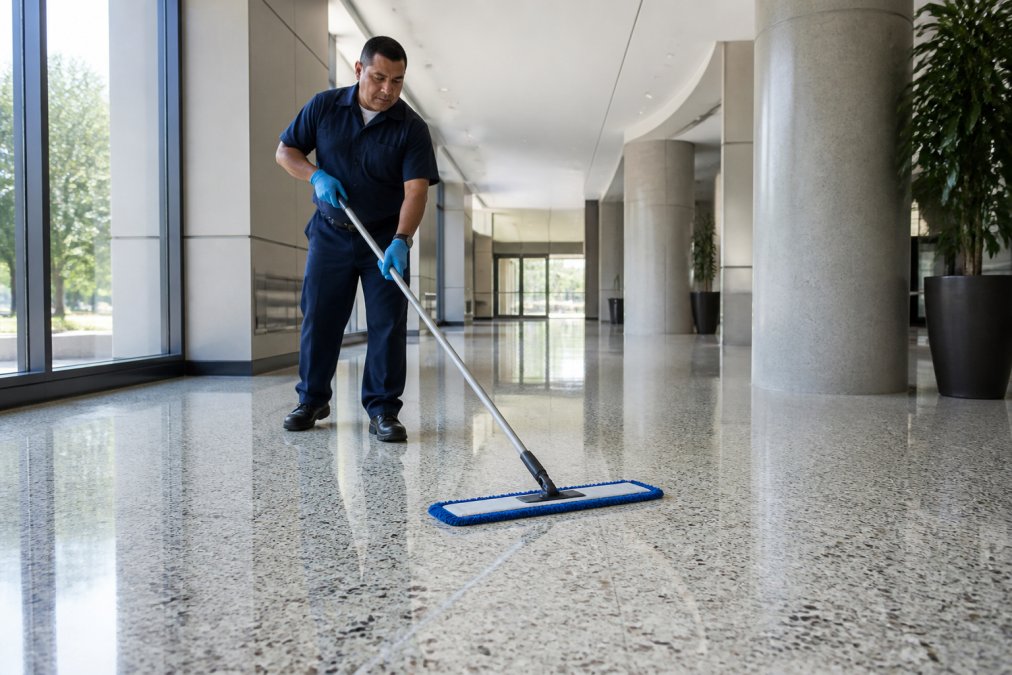
Daily cleaning prevents dirt and debris from scratching the surface and embedding in pores. Start with dust mopping using microfiber pads, which trap particles rather than spreading them around. After dust mopping, damp mopping with a neutral pH cleaner removes residual dirt and maintains the floor's appearance.
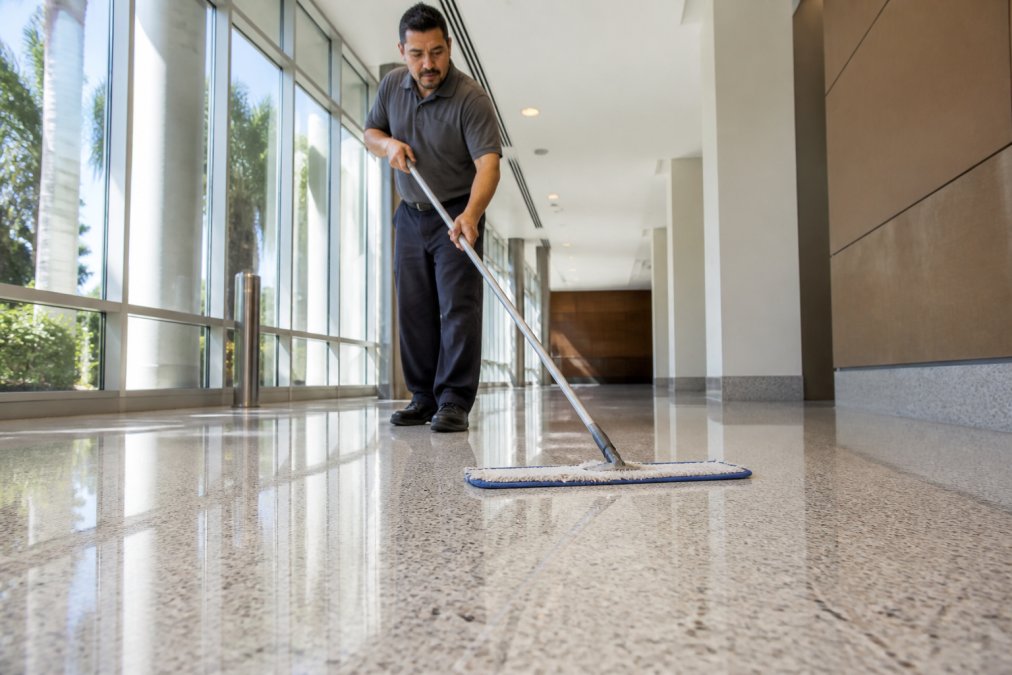
The emphasis on neutral pH cannot be overstated: alkaline cleaners strip sealers and damage the surface, while acidic products etch the terrazzo itself. A damp mop (not wet) prevents excess moisture from sitting on the surface, which is critical because water penetration into the substrate causes long-term deterioration. Wring your mop thoroughly so it's barely damp.
For commercial facilities, dust mopping should happen daily in main corridors and high-traffic zones, and at minimum three times weekly in lower-traffic areas. Damp mopping at the end of each business day removes accumulated dirt and leaves the floor ready for the next morning.
Immediate Spill Response
Speed matters with spills. The longer a liquid sits on terrazzo, the deeper it penetrates. Acidic substances like citrus juice, vinegar, or wine etch the surface within minutes. Your response protocol should be: blot immediately with a clean cloth, then wipe with a damp cloth using neutral pH water.
Never let a spill dry on terrazzo. Keep cleaning cloths and neutral pH cleaner accessible near high-risk areas like break rooms, restrooms, cafeterias, and reception areas. Train staff on this protocol because one person's quick cleanup with the wrong product can damage a large section of floor.
Choosing the Best pH-Neutral Cleaner for Terrazzo
Why Neutral pH Matters
A neutral pH cleaner sits at 7 on the pH scale, neither acidic nor alkaline. Acidic cleaners (pH below 7) dissolve the calcium carbonate in marble aggregates, creating a dull, etched appearance. Alkaline cleaners (pH above 7) break down the sealer and cause discoloration. Neutral pH products clean effectively without triggering these chemical reactions.
Many common commercial cleaners are not neutral pH. Check the product label for the pH value or explicit "neutral pH" or "pH-balanced" designation. According to the Tile Council of North America maintenance guidelines, using pH-neutral cleaners is a foundational requirement for protecting terrazzo surfaces.
Products to Avoid
Never use vinegar, lemon juice, bleach-based products, or generic "all-purpose" cleaners on terrazzo. Avoid oil-based cleaners or products with built-in wax, which create buildup and compromise slip resistance. Similarly, avoid products containing silicone or acrylic sealants marketed as "shine boosters."
The safest approach is to use a cleaner specifically formulated for terrazzo or marble. If your facility uses a general cleaning contractor, verify their product list before they start work. One application of the wrong cleaner can etch a large section of floor.
Deep Cleaning and Stain Removal Techniques
Addressing Common Stains
Organic stains from food, beverages, or biological matter respond well to neutral pH cleaners with slightly higher concentration. Apply the cleaner, let it sit for 5-10 minutes, then scrub gently with a soft brush and rinse thoroughly. For stubborn organic stains, a poultice of baking soda and water can draw out embedded material.
Oil and grease stains are more challenging and don't respond well to water-based cleaners. A neutral pH degreaser formulated for stone can help, but results depend on how long the stain has been present. For mineral stains from hard water deposits, a diluted neutral pH cleaner with soft scrubbing often works. Rust stains and ink or dye stains often require professional assessment because the appropriate treatment depends on the specific substance and penetration depth.
Equipment for Effective Cleaning
An auto scrubber is the most efficient tool for routine deep cleaning in large commercial spaces. Modern auto scrubbers use rotating brushes or pads to clean while simultaneously extracting dirty water. For terrazzo, use soft pads or brushes, never abrasive diamond pads on sealed surfaces. commercial cleaning services.
Soft-bristle brushes work for hand scrubbing problem areas. A wet vacuum extracts water after cleaning, which is important for preventing moisture from sitting on the surface. Avoid rotary floor machines with hard brushes, which can scratch terrazzo. If you're unsure about equipment, test it in an inconspicuous area first.
Terrazzo Floor Sealing Frequency and Best Practices
How Often to Seal
Sealing frequency depends on traffic volume, the type of sealer used, and your terrazzo's composition. A typical cementitious terrazzo floor in moderate commercial traffic should be resealed every 12-24 months. High-traffic environments like hospitals or airports may need sealing every 6-12 months. Epoxy terrazzo may need less frequent sealing, sometimes every 2-3 years.
The best way to determine if your floor needs resealing is the water drop test. Place a few drops of water on the floor. If the water beads up, the sealer is still effective. If the water soaks in quickly, resealing is needed. Resealing is preventative maintenance that costs far less than restoration.
Sealer Compatibility Considerations
Not all sealers are compatible with all terrazzo surfaces. Penetrating sealers soak into the pores of cementitious terrazzo without changing appearance. Film-forming sealers sit on top and create a protective layer with a subtle sheen. Before applying a new sealer, verify compatibility with your existing sealer. If you're unsure what was previously applied, a professional can test the surface or recommend a compatible option.
Water-based sealers are becoming more common due to environmental considerations and lower VOC emissions. They're effective on terrazzo but may require more frequent reapplication. Solvent-based sealers typically last longer between applications but have higher VOC content.
Professional Terrazzo Floor Polishing Services
When to Call Professionals
Professional terrazzo floor polishing services are essential when routine maintenance can't restore the surface. If your floor has lost its shine despite regular cleaning and sealing, or if there are visible scratches, dull spots, or etching, professional intervention is needed. Polishing and burnishing require specialized tools and expertise that most facilities don't have.
A professional can assess whether the issue is a failed sealer, surface scratches, or deeper damage, and recommend the appropriate level of restoration. A1 Terrazzo's 35 years of experience means our team understands terrazzo restoration at a depth that general cleaning contractors don't have.
Polishing and Burnishing Process
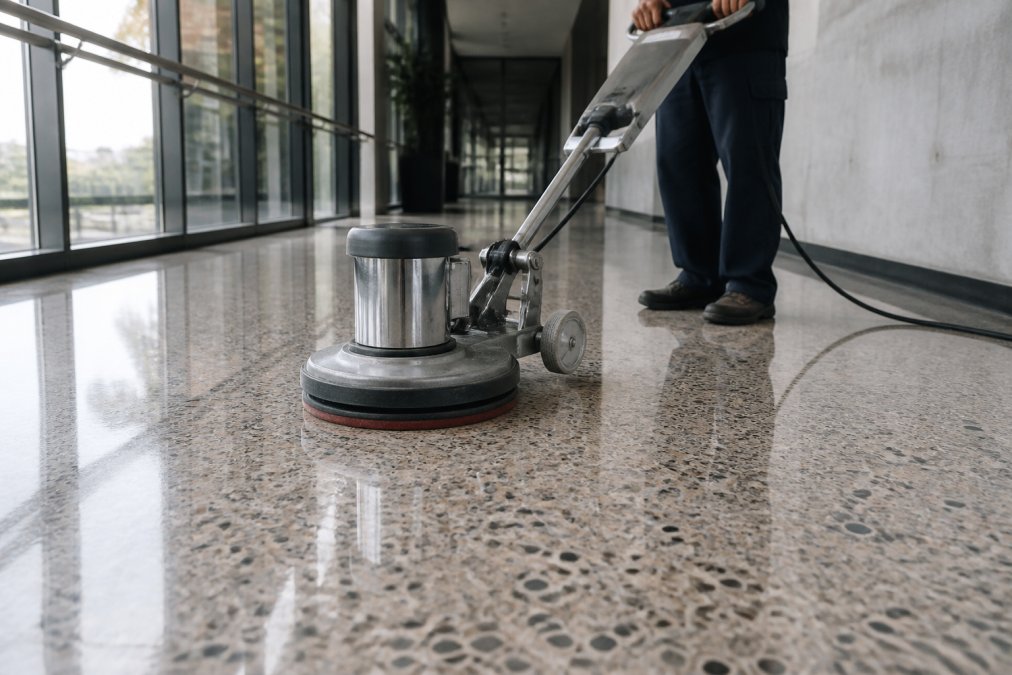
Polishing removes a thin layer of the surface to eliminate scratches, dull spots, and etching using progressively finer diamond abrasive pads. Burnishing is the final step, using a high-speed machine with soft pads to create a high-gloss finish and seal the newly exposed surface.
The timeline for professional polishing depends on the floor's condition and size. A 5,000-square-foot floor might take 2-3 days for full polishing and burnishing. After polishing, the floor should be sealed within 48 hours to protect the newly restored surface.
Preventative Maintenance Strategies for Long-Term Floor Health
High-Traffic Zone Management
High-traffic zones wear faster than low-traffic areas. Entry points, hallways, and areas near elevators or restrooms need more frequent damp mopping, sometimes daily, and earlier resealing. Use entrance mats in high-traffic zones to reduce dirt entering the facility, a quality entrance mat can capture 80% of the dirt that would otherwise be tracked onto the terrazzo.
Document which zones need what frequency of care in your maintenance log to ensure all areas receive attention while preventing the most-used zones from deteriorating prematurely.
Moisture Control and Substrate Protection
Moisture is terrazzo's primary enemy. Water that penetrates the substrate causes efflorescence, deterioration of the binder, and eventually structural failure. Preventing moisture from sitting on the surface is essential. This is why damp mopping (not wet mopping) is critical, and why water should be extracted promptly after cleaning.
Check for leaks around windows, doors, and plumbing fixtures. If you notice discoloration, soft spots, or unusual staining, investigate the source immediately. Maintaining consistent humidity levels (ideally 30-50%) reduces stress on the terrazzo from expansion and contraction.
Terrazzo floor maintenance requires consistency and the right approach. The difference between a floor that looks beautiful for 30 years and one that deteriorates within a decade comes down to daily habits, the right cleaning products, and timely professional care. A1 Terrazzo can help you develop a maintenance plan tailored to your facility's specific traffic patterns and terrazzo type. Contact us for a consultation and let's create a maintenance strategy that protects your investment.
| Maintenance Task | Frequency | Best Practice |
|---|---|---|
| Dust mopping | Daily in high-traffic zones | Use microfiber pads; do not spread debris |
| Damp mopping | Daily in high-traffic zones, 3x weekly elsewhere | Use neutral pH cleaner only; wring mop thoroughly |
| Spill response | Immediate | Blot first; never let liquid sit on surface |
| Deep cleaning | Monthly to quarterly | Use auto scrubber with soft pads or neutral pH cleaner |
| Sealing | Every 12-24 months (high-traffic: 6-12 months) | Perform water drop test to verify need |
| Professional polishing | As needed when surface loses shine or shows etching | Typically every 2-5 years depending on traffic |
According to the American Society for Testing and Materials standards for terrazzo, proper sealing and maintenance are critical factors in floor longevity and performance. For facility managers overseeing large campuses or multiple buildings, a centralized maintenance log ensures nothing falls through the cracks. Document sealing dates, cleaning frequency, any stains or damage, and professional service visits.
High-gloss finishes require more frequent maintenance than matte finishes because they show dust, footprints, and water spots more readily. Adjust your maintenance approach accordingly. The slip resistance of terrazzo changes with maintenance, a freshly polished and sealed floor may be slippery in wet conditions. If your facility is near water sources, ensure your sealer choice prioritizes slip resistance.
For facilities in healthcare settings, the sanitary properties of terrazzo are a significant advantage when properly sealed. However, this benefit only exists if the sealer is intact and the surface is clean. For historic buildings with original terrazzo, professional expertise is essential to match the original finish and preserve architectural integrity.
Budget planning for terrazzo maintenance should account for both routine costs and periodic professional services. Most facilities find that proactive maintenance costs 30-40% less annually than reactive repairs.
Frequently Asked Questions
How should I maintain my terrazzo floors daily?
Daily terrazzo floor maintenance starts with dust mopping using microfiber pads to remove debris without scratching the surface. Follow with damp mopping using only pH-neutral cleaners diluted according to manufacturer instructions. Wipe spills immediately to prevent staining. For high-traffic zones, increase frequency to prevent buildup. Never use acidic or alkaline cleaners, as they damage the terrazzo's resin-based matrix and can cause etching or alkaline damage over time.
How often should I seal my terrazzo floors?
Most commercial terrazzo floors require resealing every 3 to 5 years, depending on traffic volume and existing sealer compatibility. High-traffic areas like hospitals and airports may need more frequent sealing. Before resealing, verify that new sealer is compatible with the existing surface coating. Annual inspections help identify when the protective layer has worn thin. Professional assessment ensures you're not over-sealing or creating adhesion issues between old and new coatings.
What's the best pH-neutral cleaner for terrazzo floors?
The best pH-neutral cleaner for terrazzo has a pH between 6.5 and 8.5, avoiding both acidic etching and alkaline damage. Look for cleaners specifically formulated for terrazzo or natural stone. Avoid vinegar, bleach, and harsh alkaline degreasers. Always dilute according to directions and test on an inconspicuous area first. Professional terrazzo floor polishing services often recommend specific products that pair well with your floor's sealer type, ensuring long-term surface protection and maintaining slip resistance.
What should I never use on terrazzo floors?
Never use acidic cleaners (vinegar, lemon juice), bleach, ammonia-based products, or harsh alkaline degreasers on terrazzo. These damage the resin-based matrix and cause etching or discoloration. Avoid abrasive scrubbing pads that are too coarse (higher grit abrasive pads than recommended). Do not use oil-based polishes or wax products that interfere with sealer compatibility. Acidic etching is permanent; alkaline damage weakens the surface structure. Always verify product labels and consult your maintenance schedule before using any new cleaning agent.
How do I remove deep stains from commercial terrazzo?
Start by identifying the stain type: organic stains (food, algae) respond to neutral pH cleaners; mineral stains require different approaches. For stubborn stains, use a poultice (absorbent powder mixed with distilled water) applied for 24-48 hours to draw out embedded material. For scuff marks, try microfiber pads with neutral cleaner. Avoid high-grit diamond abrasive pads unless you're prepared for surface restoration. Professional terrazzo floor polishing services have specialized equipment and expertise to address deep stains without damaging the terrazzo's porosity or compromising sealer compatibility.
When should I hire professional terrazzo floor polishing services?
Hire professionals when your terrazzo shows signs of dull finish, persistent scuff marks, or stains that daily cleaning doesn't remove. If you notice surface pitting, alkaline damage, or areas where the sealer has failed, professional restoration is necessary. Large-scale facility projects, historic floor restoration, and high-traffic commercial spaces benefit from periodic professional maintenance every 12-24 months. Professional polishing restores the high-gloss finish, improves slip resistance, and extends floor longevity by addressing issues before they require costly repairs.
What's the difference between burnishing and polishing?
Burnishing is a routine maintenance process using floor pads and a burnisher to restore shine and maintain the high-gloss finish between deep cleanings. Polishing is a more intensive restoration process using diamond abrasive pads to remove surface imperfections, restore the original finish, and improve slip resistance. Polishing removes a thin layer of the terrazzo surface, so it's performed less frequently (typically every 3-5 years). Both processes protect the underlying terrazzo and maintain facility management standards for durability and aesthetics.
How do moisture and substrate issues affect terrazzo maintenance?
Moisture penetrating the substrate causes the terrazzo to crack, separate, and fail structurally. Proper substrate preparation during installation prevents these issues, but ongoing moisture control is essential. Ensure adequate drainage around the perimeter and fix any water intrusions immediately. High humidity environments require more frequent sealing and inspection. Substrate damage from prior installation mistakes (inadequate prep) causes accelerated wear. This is why choosing experienced contractors with proven substrate preparation expertise during initial installation prevents expensive repairs and extends your terrazzo's lifespan by decades.
This article was written using GrandRanker
Frequently Asked Questions
How should I maintain my terrazzo floors daily?
Daily terrazzo floor maintenance starts with dust mopping using microfiber pads to remove debris without scratching the surface. Follow with damp mopping using only pH-neutral cleaners diluted according to manufacturer instructions. Wipe spills immediately to prevent staining. For high-traffic zones, increase frequency to prevent buildup. Never use acidic or alkaline cleaners, as they damage the terrazzo's resin-based matrix and can cause etching or alkaline damage over time.
How often should I seal my terrazzo floors?
Most commercial terrazzo floors require resealing every 3 to 5 years, depending on traffic volume and existing sealer compatibility. High-traffic areas like hospitals and airports may need more frequent sealing. Before resealing, verify that new sealer is compatible with the existing surface coating. Annual inspections help identify when the protective layer has worn thin. Professional assessment ensures you're not over-sealing or creating adhesion issues between old and new coatings.
What's the best pH-neutral cleaner for terrazzo floors?
The best pH-neutral cleaner for terrazzo has a pH between 6.5 and 8.5, avoiding both acidic etching and alkaline damage. Look for cleaners specifically formulated for terrazzo or natural stone. Avoid vinegar, bleach, and harsh alkaline degreasers. Always dilute according to directions and test on an inconspicuous area first. Professional terrazzo floor polishing services often recommend specific products that pair well with your floor's sealer type, ensuring long-term surface protection and maintaining slip resistance.
What should I never use on terrazzo floors?
Never use acidic cleaners (vinegar, lemon juice), bleach, ammonia-based products, or harsh alkaline degreasers on terrazzo. These damage the resin-based matrix and cause etching or discoloration. Avoid abrasive scrubbing pads that are too coarse (higher grit abrasive pads than recommended). Do not use oil-based polishes or wax products that interfere with sealer compatibility. Acidic etching is permanent; alkaline damage weakens the surface structure. Always verify product labels and consult your maintenance schedule before using any new cleaning agent.
How do I remove deep stains from commercial terrazzo?
Start by identifying the stain type: organic stains (food, algae) respond to neutral pH cleaners; mineral stains require different approaches. For stubborn stains, use a poultice (absorbent powder mixed with distilled water) applied for 24-48 hours to draw out embedded material. For scuff marks, try microfiber pads with neutral cleaner. Avoid high-grit diamond abrasive pads unless you're prepared for surface restoration. Professional terrazzo floor polishing services have specialized equipment and expertise to address deep stains without damaging the terrazzo's porosity or compromising sealer compatibility.
When should I hire professional terrazzo floor polishing services?
Hire professionals when your terrazzo shows signs of dull finish, persistent scuff marks, or stains that daily cleaning doesn't remove. If you notice surface pitting, alkaline damage, or areas where the sealer has failed, professional restoration is necessary. Large-scale facility projects, historic floor restoration, and high-traffic commercial spaces benefit from periodic professional maintenance every 12-24 months. Professional polishing restores the high-gloss finish, improves slip resistance, and extends floor longevity by addressing issues before they require costly repairs.
What's the difference between burnishing and polishing?
Burnishing is a routine maintenance process using floor pads and a burnisher to restore shine and maintain the high-gloss finish between deep cleanings. Polishing is a more intensive restoration process using diamond abrasive pads to remove surface imperfections, restore the original finish, and improve slip resistance. Polishing removes a thin layer of the terrazzo surface, so it's performed less frequently (typically every 3-5 years). Both processes protect the underlying terrazzo and maintain facility management standards for durability and aesthetics.
How do moisture and substrate issues affect terrazzo maintenance?
Moisture penetrating the substrate causes the terrazzo to crack, separate, and fail structurally. Proper substrate preparation during installation prevents these issues, but ongoing moisture control is essential. Ensure adequate drainage around the perimeter and fix any water intrusions immediately. High humidity environments require more frequent sealing and inspection. Substrate damage from prior installation mistakes (inadequate prep) causes accelerated wear. This is why choosing experienced contractors with proven substrate preparation expertise during initial installation prevents expensive repairs and extends your terrazzo's lifespan by decades.