 how-to
How to Clean Terrazzo Floors Properly
Table of Contents
- Daily Dust Mopping and Debris Removal
- Weekly Cleaning Routines for Terrazzo Floors
- Best pH Neutral Cleaner for Terrazzo Surfaces
- How to Remove Stains from Terrazzo
- Deep Cleaning and Mechanical Buffing
- Commercial Terrazzo Floor Maintenance Schedule
- Troubleshooting Dull and Damaged Terrazzo
- What to Avoid: Chemicals and Practices That Damage Terrazzo
- Frequently Asked Questions
Last Updated: September 3, 2026
Terrazzo floors demand a specific maintenance approach that differs significantly from standard tile or concrete. Get it wrong, and you risk etching, dullness, and permanent damage. Get it right, and your terrazzo investment stays beautiful and sanitary for decades.
At A1 Terrazzo, we've maintained commercial terrazzo across hospitals, airports, and universities for over 35 years. This guide covers how to clean terrazzo floors properly, from daily dust mopping through professional restoration, so your facility stays protected.
Daily Dust Mopping and Debris Removal
The foundation of terrazzo care starts before any water touches the surface. Daily dust mopping removes abrasive particles that scratch and dull the finish.
Use a microfiber mop for this step, it captures dust without requiring liquid and won't leave residue on the porous surface. Push the mop in straight lines rather than circular motions, which can grind particles into the stone. Pay special attention to corners, entryways, and high-traffic zones where debris accumulates fastest.
For facilities with heavy foot traffic, dust mop twice daily: once in the morning and once before closing. Never use a dry mop with chemicals or oils, as these leave residue that builds up over time.
Weekly Cleaning Routines for Terrazzo Floors
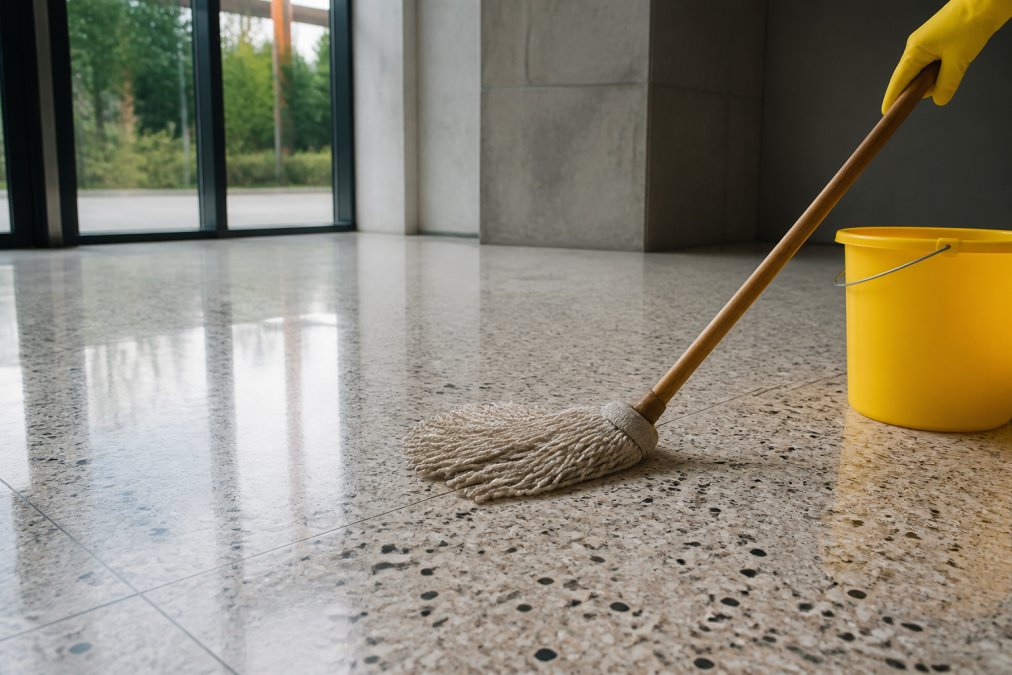
Weekly cleaning removes surface dirt and light spills before they set (the CDC). Start with a damp mop, not a wet one, excess water penetrates terrazzo's porous surface and can cause efflorescence (white mineral deposits) and substrate damage.
For weekly cleaning, use a neutral pH solution diluted with water. A neutral pH cleaner (typically 7.0 on the pH scale) won't etch the stone or strip protective sealers (nist.gov). Many facilities default to alkaline cleaners because they're cheap, but this is a critical error for terrazzo, alkaline products etch the stone surface, creating a dull, hazy appearance.
The cleaning process:
- Dust mop the entire floor first to remove loose debris
- Mix your neutral pH cleaner with water according to product instructions
- Mop in straight lines, using light pressure
- Rinse with a clean, damp mop using plain water
- Allow the floor to air-dry completely
The rinse step is non-negotiable. Cleaner residue left on the surface attracts dirt and builds up over time. Adjust frequency based on foot traffic, a hospital corridor might need twice-weekly cleaning, while an office building might get by with once weekly.
Best pH Neutral Cleaner for Terrazzo Surfaces
Choosing the right cleaner is where your maintenance strategy either succeeds or fails. A pH neutral cleaner maintains a balance that doesn't damage the stone's surface or strip sealers. The pH scale runs from 0 (highly acidic) to 14 (highly alkaline), with 7 being neutral. Terrazzo performs best between pH 6.5 and 8.0 (peer-reviewed research).
When evaluating a cleaner, check the product label for pH specification. If it doesn't list pH, don't use it.
Avoid these common mistakes:
- Vinegar-based cleaners (too acidic, etches terrazzo)
- Bleach solutions (alkaline, damages stone and sealers)
- General-purpose floor cleaners (often alkaline despite marketing claims)
- Dish soap diluted in water (leaves residue and is often alkaline)
A proper pH neutral cleaner for terrazzo surfaces typically costs slightly more than generic options, but the difference in floor longevity justifies the investment. For commercial facilities, ask your sealer manufacturer for compatible cleaner recommendations.
How to Remove Stains from Terrazzo
Stains on terrazzo require fast action and the right technique. The longer a spill sits, the deeper it penetrates the porous surface.
Blot spills with a clean, dry cloth immediately, don't wipe, which spreads the liquid. For organic stains (coffee, juice, blood), use a neutral pH cleaner applied to a cloth, not directly to the floor. Work in circular motions on the stain, then rinse with a damp cloth and dry immediately.
For mineral stains (hard water deposits, rust), use a slightly acidic solution at pH 4.0-5.0, but only for spot treatment. Apply to the stained area, let it sit for 2-3 minutes, scrub gently with a soft brush, and rinse thoroughly. Never use this on the entire floor.
Oil and grease stains require a degreaser formulated for stone surfaces, applied to a cloth rather than directly to the floor. For stubborn stains that don't respond to these methods, stop and seek professional restoration, aggressive scrubbing risks etching the stone.
Deep Cleaning and Mechanical Buffing
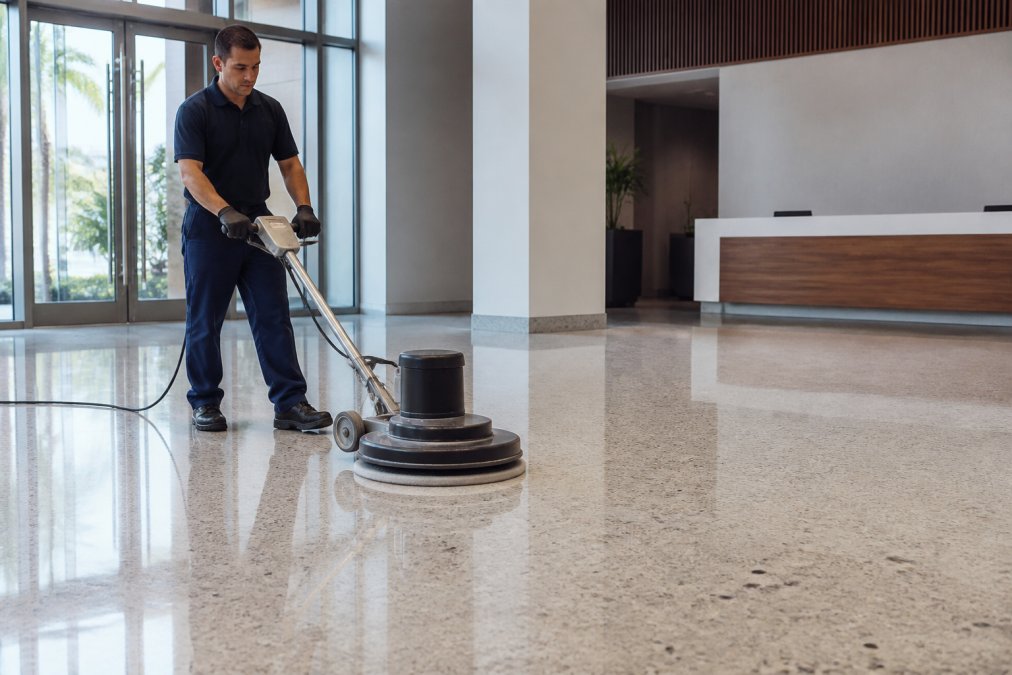
Deep cleaning goes beyond weekly maintenance and removes buildup that regular mopping can't address. It typically happens quarterly or semi-annually depending on foot traffic.
The process involves using a floor stripper to remove old sealer buildup and residue. After applying the stripper and allowing dwell time (typically 15-20 minutes), scrub with a synthetic pad and extract the liquid with a wet-vac. Use only synthetic pads (120-grit or lower), abrasive pads scratch and dull the surface permanently.
After stripping, rinse thoroughly multiple times to remove all stripper residue. Mechanical buffing with a soft pad then polishes the clean terrazzo surface, restoring shine. After buffing, apply a fresh coat of sealer to protect the stone from staining and moisture penetration.
Commercial Terrazzo Floor Maintenance Schedule
A structured maintenance schedule prevents reactive repairs and keeps your facility looking professional.
| Maintenance Task | Frequency | Duration |
|---|---|---|
| Dust mopping | Daily (2x in high-traffic areas) | 5-10 minutes per session |
| Weekly cleaning with neutral pH cleaner | Weekly | 20-30 minutes |
| Deep cleaning and stripping | Quarterly to semi-annually | 2-4 hours |
| Sealer reapplication | After deep cleaning | 1-2 hours (plus cure time) |
| Professional assessment | Annually | 30-60 minutes |
This schedule assumes standard commercial traffic. Healthcare facilities, airports, and universities typically operate at the higher end of these frequencies. The annual professional assessment is worth the investment, a trained eye can spot early signs of etching, sealer breakdown, or substrate issues before they become expensive problems.
Document your maintenance activity. Keep records of cleaning dates, products used, and any issues noted.
Troubleshooting Dull and Damaged Terrazzo
Dullness without etching typically results from sealer breakdown or buildup of cleaner residue. If the floor looks hazy but doesn't have visible scratches, deep cleaning and resealing usually restores the shine.
Etching, visible dull spots or light scratches in the stone, results from acidic or alkaline cleaners eating into the surface. Once etching occurs, buffing alone won't restore the finish. The affected areas require professional honing, which uses progressively finer grits to level the surface and restore the polish.
Pitting (small holes or divots in the surface) indicates substrate damage, usually from moisture penetration. Pitting cannot be repaired without professional restoration.
Cracks in terrazzo are a different issue. Small hairline cracks sometimes occur as the terrazzo cures, especially if substrate prep was inadequate. Large cracks or cracks that continue to spread indicate structural issues with the substrate and require professional assessment.
Staining that doesn't respond to standard cleaning methods suggests the stain has penetrated below the sealer into the stone itself. Professional restoration with poultice treatments or honing is necessary.
What to Avoid: Chemicals and Practices That Damage Terrazzo
Never use acidic cleaners on terrazzo. Vinegar, lemon juice, and acid-based bathroom cleaners etch the stone. The damage appears gradually but is cumulative and permanent.
Never use alkaline or high-pH cleaners. This includes most general-purpose floor cleaners, bleach solutions, and degreasers not formulated for stone. They break down sealers and etch the stone surface.
Never scrub with abrasive pads. 80-grit or higher pads scratch terrazzo. If you must scrub, use 120-grit synthetic pads and light pressure.
Never allow water to sit on terrazzo. Pooling water penetrates the porous surface and causes efflorescence and substrate damage. Always rinse and dry immediately after cleaning.
Never apply wax to terrazzo. Wax builds up, creates a slippery surface, and prevents proper sealer adhesion. Never use oil-based products either, these leave residue and can damage the sealer.
Never skip the rinse step. Cleaner residue left on the floor attracts dirt and builds up over time. Never assume all stone cleaners work on terrazzo, always verify the cleaner is rated for terrazzo before using it.
Proper terrazzo maintenance is an investment in floor longevity and facility appearance. The daily and weekly routines outlined here prevent most problems before they start. When issues do arise, etching, stubborn stains, or sealer breakdown, professional restoration is the appropriate response.
A1 Terrazzo has maintained commercial terrazzo across healthcare facilities, airports, and government buildings for over 35 years. If your facility has terrazzo flooring and you want to ensure it stays protected, contact A1 Terrazzo for a professional assessment and customized maintenance plan tailored to your specific traffic patterns and building use.
Frequently Asked Questions
Q: What is the best cleaner for terrazzo floors?
A: A pH-neutral cleaner is the safest choice for terrazzo floors. These cleaners protect the stone and sealer without causing etching or chemical damage. Avoid acidic cleaners like vinegar and alkaline cleaners that can strip the protective sealant and damage the porous surface. When selecting a pH-neutral product, verify it's specifically formulated for stone care and test it on a small, inconspicuous area first.
Q: How often should commercial terrazzo floors be deep cleaned?
A: Most commercial terrazzo floors benefit from deep cleaning every 3 to 6 months, depending on foot traffic volume and usage patterns. High-traffic areas like hospital corridors or airport terminals may need quarterly deep cleaning. A professional maintenance schedule should include daily dust mopping, weekly damp mopping with pH-neutral cleaner, and periodic mechanical buffing and polishing to restore shine and maintain surface integrity.
Q: What cleaning agents should be avoided on terrazzo floors?
A: Never use vinegar, bleach, acidic cleaners, or harsh alkaline strippers on terrazzo. These products cause etching, discoloration, and can damage the sealer and underlying stone. Avoid abrasive scrubbing pads that scratch the surface. Wax-based products can leave residue that dulls the floor. Stick to pH-neutral detergents formulated for stone, and always rinse thoroughly to prevent moisture damage to this porous surface.
Q: How do you restore shine to dull terrazzo floors?
A: Dull terrazzo usually results from residue buildup, loss of sealer, or minor surface wear. Start by deep cleaning with a pH-neutral cleaner to remove buildup. For stubborn dullness, mechanical buffing with appropriate synthetic pads can restore the finish. If the sealer has worn away, professional restoration may include floor stripper application followed by resealing. Regular preventative maintenance with proper cleaning agents and damp mopping helps maintain shine and avoid premature dullness.
This article was written using GrandRanker
Frequently Asked Questions
Q: What is the best cleaner for terrazzo floors?
A: A pH-neutral cleaner is the safest choice for terrazzo floors. These cleaners protect the stone and sealer without causing etching or chemical damage. Avoid acidic cleaners like vinegar and alkaline cleaners that can strip the protective sealant and damage the porous surface. When selecting a pH-neutral product, verify it's specifically formulated for stone care and test it on a small, inconspicuous area first.
Q: How often should commercial terrazzo floors be deep cleaned?
A: Most commercial terrazzo floors benefit from deep cleaning every 3 to 6 months, depending on foot traffic volume and usage patterns. High-traffic areas like hospital corridors or airport terminals may need quarterly deep cleaning. A professional maintenance schedule should include daily dust mopping, weekly damp mopping with pH-neutral cleaner, and periodic mechanical buffing and polishing to restore shine and maintain surface integrity.
Q: What cleaning agents should be avoided on terrazzo floors?
A: Never use vinegar, bleach, acidic cleaners, or harsh alkaline strippers on terrazzo. These products cause etching, discoloration, and can damage the sealer and underlying stone. Avoid abrasive scrubbing pads that scratch the surface. Wax-based products can leave residue that dulls the floor. Stick to pH-neutral detergents formulated for stone, and always rinse thoroughly to prevent moisture damage to this porous surface.
Q: How do you restore shine to dull terrazzo floors?
A: Dull terrazzo usually results from residue buildup, loss of sealer, or minor surface wear. Start by deep cleaning with a pH-neutral cleaner to remove buildup. For stubborn dullness, mechanical buffing with appropriate synthetic pads can restore the finish. If the sealer has worn away, professional restoration may include floor stripper application followed by resealing. Regular preventative maintenance with proper cleaning agents and damp mopping helps maintain shine and avoid premature dullness.