 ultimate-guide
Large Scale Terrazzo Installation: Florida Guide
Table of Contents
- Large Scale Terrazzo Installation: What You Need to Know
- Poured-in-Place vs Precast Terrazzo: Which Method Works for Your Project
- The Installation Process for Large Scale Projects
- Terrazzo Flooring Cost Per Square Foot: Budget Breakdown
- Terrazzo Floor Maintenance Guide for High-Traffic Spaces
- Florida Building Code Compliance and Project Logistics
- Why Substrate Preparation Determines Installation Success
- Frequently Asked Questions
Last Updated: August 13, 2026
Large Scale Terrazzo Installation: What You Need to Know
Large scale terrazzo installation represents one of the most durable and aesthetically sophisticated flooring solutions for commercial environments. Whether you're managing a hospital renovation, airport terminal upgrade, university campus project, or historic building restoration, understanding substrate preparation, moisture mitigation, and installation precision determines project success.
The difference between a terrazzo floor that lasts 30 years and one that cracks within months comes down to these fundamentals. At A1 Terrazzo, we've completed hundreds of large-scale commercial projects across Florida, and the pattern is consistent: facilities that invested in proper surface preparation and environmental controls see exceptional durability and minimal maintenance issues. Those that cut corners face cracking, spalling, and expensive repairs.
This guide walks you through every critical phase of large scale terrazzo installation, from choosing between poured-in-place and precast methods to understanding Florida-specific building code compliance and moisture management.
Poured-in-Place vs Precast Terrazzo: Which Method Works for Your Project
The choice between poured-in-place and precast terrazzo fundamentally shapes your project timeline, cost structure, and design flexibility.
Poured-in-Place Terrazzo
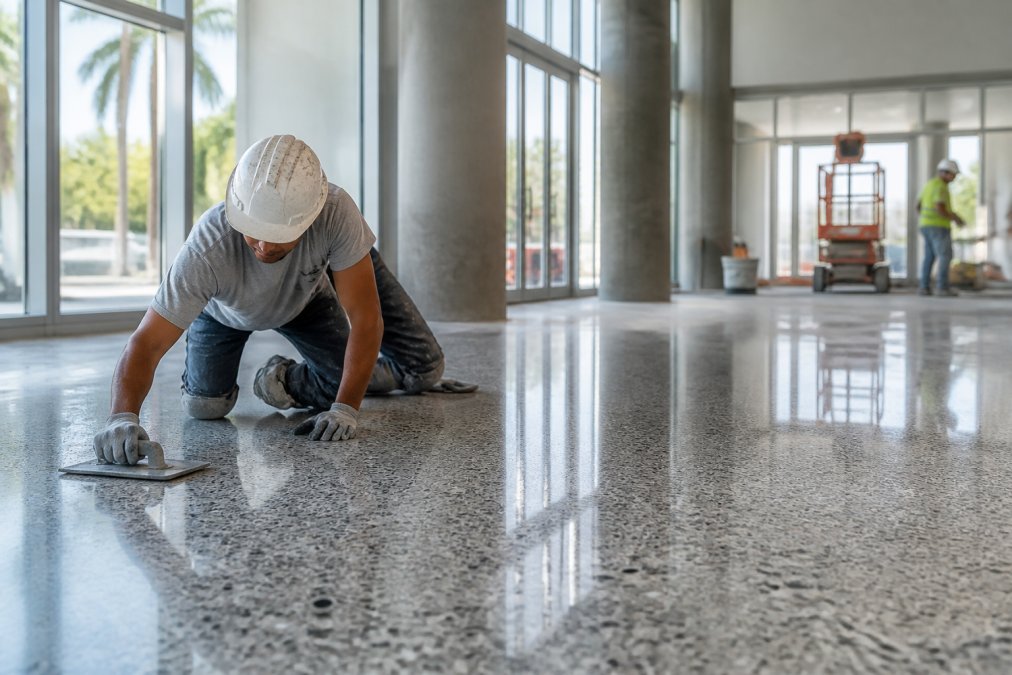
Poured-in-place terrazzo is cast directly on the prepared subfloor, creating a monolithic floor with no seams. This method involves spreading a cementitious matrix mixed with aggregate (marble chips, glass, or stone), then grinding and polishing the surface to reveal the full design.
The primary advantage is unlimited design flexibility. Custom aggregate selection, color blending, and pattern creation are possible because you're working with a liquid material before it cures. Large scale projects benefit from the seamless aesthetic, critical for healthcare facilities where infection control depends partly on eliminating crevices where bacteria can hide.
Poured-in-place requires careful moisture management, particularly in Florida where high water tables and humidity create vapor pressure problems. Proper moisture mitigation systems, including vapor barriers and moisture testing before installation, prevent the cracking and spalling that plagued earlier installations.
The installation timeline for poured-in-place runs 4-6 weeks from surface prep through final polishing, depending on project size and cure time.
Precast Terrazzo Tiles
Precast tiles are manufactured in controlled facility environments, then transported and installed on-site. This method offers consistency and faster on-site installation time, typically 2-3 weeks for large areas.
Precast tiles work well for projects where design patterns are standardized or where the schedule demands rapid installation. The trade-off is design limitation. Custom patterns and aggregate selections are restricted to what the manufacturer offers. Large format tiles reduce joint lines, but they still exist, creating potential maintenance challenges in high-traffic healthcare settings.
For most large scale commercial projects in Florida, poured-in-place terrazzo delivers superior performance because it eliminates seams entirely and allows complete customization of the aggregate and finish.
The Installation Process for Large Scale Projects
The terrazzo installation process for large scale commercial projects is a sequence of precision steps, each one critical to the final result.
Surface Preparation and Subfloor Requirements
Surface preparation determines installation success more than any other factor. The subfloor must be structurally sound, properly sloped for drainage, and free of contamination. For large scale projects, the surface is ground to remove old coatings, sealers, and contaminants that prevent proper adhesion.
The subfloor is tested for flatness using a 10-foot straightedge; large scale terrazzo requires a tolerance of 1/8 inch in 10 feet. Surfaces that exceed this tolerance must be leveled using self-leveling compounds or grinding.
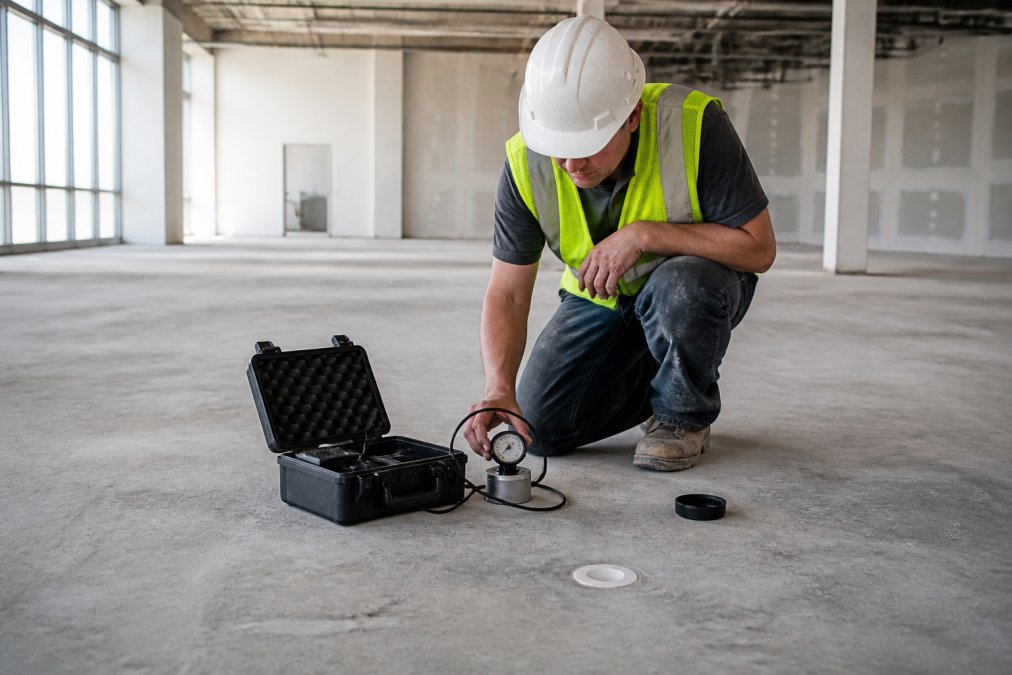
Concrete subfloors older than 90 days are acceptable, but moisture testing is non-negotiable. Calcium chloride testing or relative humidity testing determines whether the subfloor's moisture content is within acceptable limits before terrazzo installation begins. In Florida's humid climate, moisture vapor emission rates above 3 pounds per 1,000 square feet per 24 hours will cause adhesion failure and finish degradation.
Moisture Mitigation in Florida Slabs
Florida's high water table and persistent humidity create unique moisture challenges. Slabs built on sandy soil with poor drainage or slabs near water sources require aggressive moisture mitigation strategies.
The standard approach uses a moisture barrier system: a polyethylene or epoxy resin-based barrier applied to the prepared subfloor before the terrazzo base is installed. This barrier blocks moisture vapor from rising through the slab. For critical environments like hospitals, a two-part epoxy moisture barrier provides superior protection compared to basic polyethylene sheeting.
Testing after barrier installation confirms that moisture vapor emission rates have dropped to acceptable levels. This testing step is often skipped by contractors trying to maintain schedule, and it's exactly where problems begin. A1 Terrazzo's approach includes post-barrier moisture testing to verify that mitigation measures are effective before terrazzo installation proceeds.
Grinding, Polishing, and Finishing
Once the terrazzo base cures, typically 7-14 days, the grinding and polishing phase begins. This process exposes the aggregate and creates the finished surface.
The sequence uses progressively finer grinding stones, starting with coarse stones to level the surface, then progressing through medium and fine stones. The final polishing step uses specialized equipment to achieve the desired sheen level: high-gloss, satin, or matte finishes.
Large scale projects require significant dust control during grinding. Commercial-grade dust collection systems capture grinding debris, and the space must be isolated from occupied areas. For hospital installations, this containment is critical to prevent fine particles from entering HVAC systems.
After polishing, the floor is sealed with a penetrating sealer that protects the surface and enhances color, typically applied in 2-3 coats with drying time between applications.
Terrazzo Flooring Cost Per Square Foot: Budget Breakdown
Cost for large scale terrazzo installation depends on multiple variables: surface preparation scope, moisture mitigation requirements, aggregate selection, finish complexity, and project logistics.
Factors That Influence Installation Costs
Surface preparation complexity is the primary cost driver. A facility with a clean, flat, properly cured concrete slab requires minimal prep work. A facility with old adhesive, multiple coating layers, or uneven surfaces requires extensive grinding, leveling, and remediation.
Moisture mitigation adds cost but prevents exponentially more expensive repairs later. A basic moisture barrier system costs less than a comprehensive epoxy resin system, but the resin system provides superior protection in high-humidity environments.
Aggregate selection influences material costs. Standard marble chip selections cost less than specialty aggregates like recycled glass or semi-precious stones. Design complexity, custom patterns, or artistic finishes, requires additional labor and precision.
Project logistics and site access impact costs significantly. A ground-floor installation in an accessible facility costs less than work on upper floors requiring specialized equipment. Large scale projects in occupied facilities require phased installation, containment systems, and coordination with ongoing operations.
Lifecycle Cost Analysis and ROI
The true cost of terrazzo becomes clear when you analyze lifecycle expenses over 20-30 years. Initial installation represents only the first cost component. Maintenance, repairs, and eventual restoration determine total cost of ownership.
Terrazzo floors properly installed and maintained require minimal repair over decades. Unlike carpet that needs replacement every 5-7 years or vinyl that degrades in high-traffic areas, terrazzo maintains structural integrity and aesthetic quality with routine care.
Maintenance costs are predictable and low. Regular cleaning with appropriate products and periodic resealing (every 3-5 years) keep the floor performing. Restoration is possible on terrazzo floors that have been neglected or damaged. Unlike most flooring types where damage is permanent, terrazzo can be refinished by grinding and repolishing the surface, restoring the floor to near-original condition.
For large scale commercial projects, the lifecycle cost advantage of terrazzo becomes compelling. A hospital or airport that invests in quality terrazzo installation can expect 30+ years of service with minimal intervention.
Terrazzo Floor Maintenance Guide for High-Traffic Spaces
Proper maintenance determines whether your terrazzo investment delivers the promised durability or deteriorates prematurely.
Daily and Weekly Cleaning Protocols
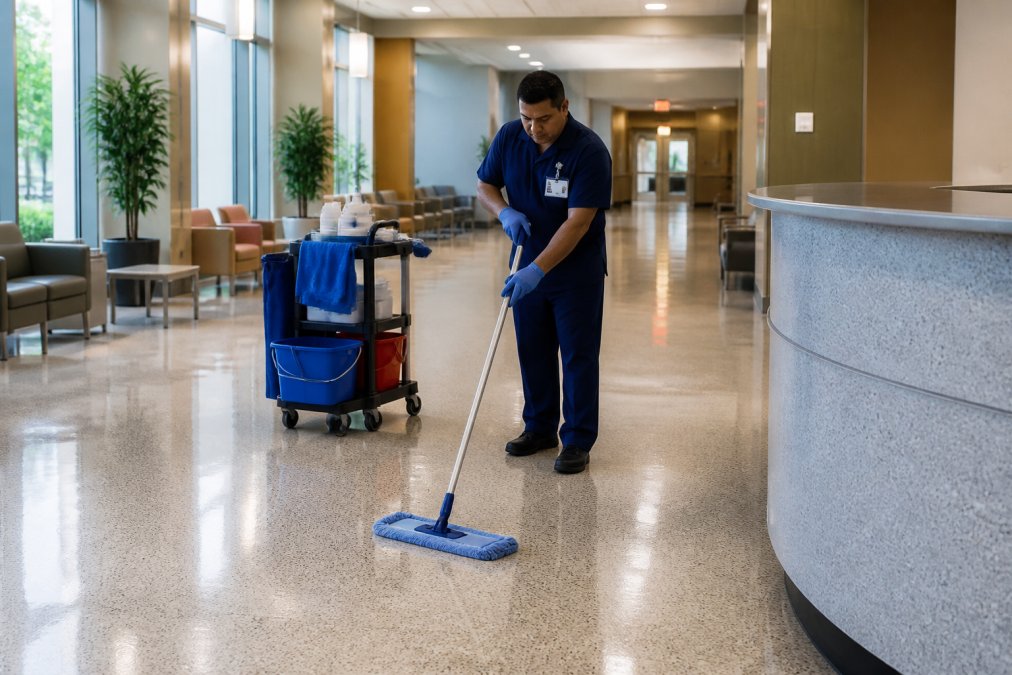
Daily cleaning should use a soft-bristle broom or microfiber dust mop to remove loose debris. This simple step prevents grit from being ground into the floor under foot traffic.
Weekly cleaning uses a pH-neutral cleaner diluted in water with a damp mop. The key word is damp, not wet. Excess water sitting on terrazzo can penetrate the sealer and reach the cementitious base, causing discoloration and potential moisture problems.
Never use acidic cleaners (vinegar, lemon juice) or alkaline cleaners (ammonia, bleach) on terrazzo. These products attack the sealer and the marble aggregate, creating etching and discoloration. Acidic products are particularly damaging; they dissolve the marble chips and create permanent pitting.
High-traffic areas in hospitals, airports, and universities benefit from more frequent damp mopping, daily if possible, to prevent soil accumulation that dulls the finish.
Sealing and Long-Term Care
The sealer is your terrazzo floor's primary protection. It prevents moisture penetration, resists staining, and maintains the finish appearance.
Sealer typically lasts 3-5 years in normal traffic areas, with higher-traffic spaces requiring resealing every 2-3 years. A simple test determines whether resealing is needed: place a few drops of water on the floor. If the water beads and sits on the surface, the sealer is intact. If the water absorbs into the floor, resealing is necessary.
Resealing doesn't require grinding or major disruption. The floor is cleaned thoroughly, allowed to dry completely, and new sealer is applied in thin coats. The process takes 1-2 days including drying time.
Periodic deep cleaning, every 12-18 months in high-traffic areas, removes accumulated soil and residue that dulls the finish. Spill response is immediate and simple: acidic substances should be neutralized with baking soda before cleaning, and oil-based spills should be absorbed with absorbent material, then cleaned with pH-neutral cleaner.
Florida Building Code Compliance and Project Logistics
Large scale terrazzo installation in Florida must comply with state building codes and accessibility standards.
ADA Compliance and Accessibility Standards
The Americans with Disabilities Act requires that flooring surfaces be slip-resistant and meet specific specifications for texture and finish. Terrazzo finishes must have a slip resistance rating (COF, coefficient of friction) of at least 0.6 on the wet surface to meet ADA standards.
Standard polished terrazzo finishes typically achieve COF ratings of 0.5-0.6, which meets the minimum threshold. Facilities with high moisture exposure benefit from textured finishes that achieve higher slip resistance ratings of 0.7-0.8. The texture is created during the finishing process by using specific polishing techniques or by leaving the surface slightly less polished than a standard finish.
For healthcare facilities, airports, and educational institutions, ADA compliance is non-negotiable. The floor design must accommodate wheelchair users, include appropriate slope for drainage without creating trip hazards, and maintain consistent surface texture throughout.
Managing Large-Scale Site Logistics
Large scale terrazzo projects in occupied facilities require careful logistics planning. Phased installation breaks the project into manageable sections that can be completed while the facility remains operational.
Containment systems isolate the work area from occupied spaces. Temporary walls, negative air pressure systems, and dust collection prevent construction debris from entering adjacent areas. In healthcare facilities, this containment is critical to prevent dust and contaminants from reaching sterile areas.
Equipment access and material delivery require coordination with facility operations. Clear communication protocols prevent misunderstandings and schedule conflicts.
Why Substrate Preparation Determines Installation Success
The most expensive terrazzo failures originate in substrate preparation shortcuts. Substrate preparation isn't glamorous, but it's the foundation work that determines whether the beautiful, durable floor you're paying for actually delivers on those promises.
Contractors that cut corners on prep work do so to accelerate the schedule and reduce costs, shifting the risk entirely to the facility owner. A facility manager at a major hospital shared a cautionary example: the previous contractor rushed surface preparation to stay on schedule, skipped moisture testing, and installed terrazzo directly on a concrete slab with elevated moisture. Within 18 months, the floor began cracking and spalling. The repair required removing the failed terrazzo, addressing the moisture problem, and reinstalling, a process that cost three times more than proper installation would have cost initially.
A1 Terrazzo's approach includes comprehensive surface assessment before any work begins. We test moisture levels, evaluate subfloor condition, identify contamination, and develop a prep strategy specific to each facility's conditions.
Large scale terrazzo installation in Florida represents a significant investment that, when executed correctly, delivers exceptional durability and aesthetic value for 30+ years. The difference between success and costly failure hinges on substrate preparation, moisture mitigation, and installation precision.
If you're planning a large scale terrazzo project for a hospital, airport, university, or commercial facility, prioritize substrate preparation and moisture management in your planning and contractor selection. Contact A1 Terrazzo to discuss your project requirements. With 35 years of specialized experience in commercial terrazzo installation and professional maintenance services, we provide the expertise to deliver a floor that performs as promised. Our team conducts thorough site assessment, implements proven moisture mitigation strategies, and executes installation with precision that protects your investment.
Frequently Asked Questions
What causes terrazzo floors to crack, and how does proper substrate preparation prevent it?
Cracks typically develop from inadequate subfloor preparation, moisture vapor emission, or improper curing. A1 Terrazzo's substrate assessment identifies existing damage, moisture issues, and floor leveling needs before installation begins. Proper surface preparation, moisture mitigation barriers, and correct cementitious base application create a stable foundation. This prevents the shifting and settling that causes cracks. The difference between a cracked floor installed within a year and a durable one comes down to subfloor work done before the terrazzo is poured.
What's the actual cost difference between installing terrazzo correctly now versus dealing with repairs later from moisture issues?
Moisture damage repair costs 3-5 times more than moisture mitigation during installation. A proper site assessment and moisture vapor emission testing upfront costs a fraction of replacing sections, addressing mold remediation, or structural damage later. Lifecycle cost analysis shows that investing in correct installation, including moisture barriers and proper curing time, delivers better ROI over 20+ years. Budget committees typically approve the higher initial cost once they see the long-term savings from avoiding emergency repairs.
Can A1 Terrazzo handle large-scale projects across multiple buildings or campus facilities?
Yes. A1 Terrazzo has 35 years of experience managing large-scale commercial installations in hospitals, airports, universities, and government buildings. The company coordinates complex multi-building projects by conducting comprehensive site assessments, managing project capacity planning, and scheduling installations to minimize operational disruption. Large-scale projects require specialized logistics, curing time management, and coordination with facility operations, capabilities A1 Terrazzo has refined across decades of institutional and commercial work.
What's the difference between poured-in-place and precast terrazzo for large commercial installations?
Poured-in-place terrazzo is mixed and applied on-site, offering unlimited design flexibility, seamless joints, and custom aggregate patterns tailored to your space. Precast tiles are manufactured off-site and installed like large format tile, offering faster installation and consistent factory quality but limited customization and visible grout lines. For large-scale commercial projects, poured-in-place typically provides superior durability, aesthetic continuity, and performance in high-traffic areas, though installation takes longer and requires precise curing conditions.
This article was written using GrandRanker
Frequently Asked Questions
What causes terrazzo floors to crack, and how does proper substrate preparation prevent it?
Cracks typically develop from inadequate subfloor preparation, moisture vapor emission, or improper curing. A1 Terrazzo's substrate assessment identifies existing damage, moisture issues, and floor leveling needs before installation begins. Proper surface preparation, moisture mitigation barriers, and correct cementitious base application create a stable foundation. This prevents the shifting and settling that causes cracks. The difference between a cracked floor installed within a year and a durable one comes down to subfloor work done before the terrazzo is poured.
What's the actual cost difference between installing terrazzo correctly now versus dealing with repairs later from moisture issues?
Moisture damage repair costs 3-5 times more than moisture mitigation during installation. A proper site assessment and moisture vapor emission testing upfront costs a fraction of replacing sections, addressing mold remediation, or structural damage later. Lifecycle cost analysis shows that investing in correct installation—including moisture barriers and proper curing time—delivers better ROI over 20+ years. Budget committees typically approve the higher initial cost once they see the long-term savings from avoiding emergency repairs.
Can A1 Terrazzo handle large-scale projects across multiple buildings or campus facilities?
Yes. A1 Terrazzo has 35 years of experience managing large-scale commercial installations in hospitals, airports, universities, and government buildings. The company coordinates complex multi-building projects by conducting comprehensive site assessments, managing project capacity planning, and scheduling installations to minimize operational disruption. Large-scale projects require specialized logistics, curing time management, and coordination with facility operations—capabilities A1 Terrazzo has refined across decades of institutional and commercial work.
What's the difference between poured-in-place and precast terrazzo for large commercial installations?
Poured-in-place terrazzo is mixed and applied on-site, offering unlimited design flexibility, seamless joints, and custom aggregate patterns tailored to your space. Precast tiles are manufactured off-site and installed like large format tile, offering faster installation and consistent factory quality but limited customization and visible grout lines. For large-scale commercial projects, poured-in-place typically provides superior durability, aesthetic continuity, and performance in high-traffic areas, though installation takes longer and requires precise curing conditions.