 ultimate-guide
Low Maintenance Flooring for Airports: A 2026 Guide
Table of Contents
- Why Low Maintenance Flooring Matters in Airport Terminals
- Terrazzo Flooring Lifecycle Costs and Long-Term Value
- Airport Flooring Maintenance Best Practices
- ADA Compliance for Airport Flooring and Safety Standards
- Material Comparison: Terrazzo vs. LVT vs. Resin Flooring
- Sub-Floor Preparation and Moisture Mitigation
- Environmental Impact and LEED Certification Opportunities
- Repairability, Modular Replacement, and Long-Term Maintenance Planning
- Frequently Asked Questions
Why Low Maintenance Flooring Matters in Airport Terminals
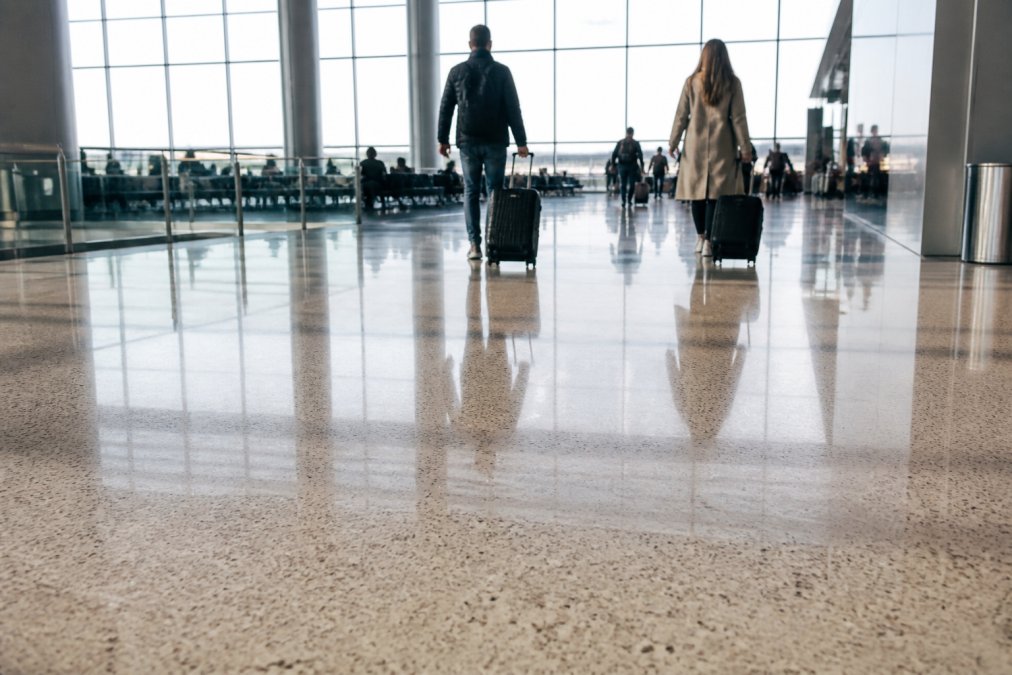
Airport terminals face relentless demands: thousands of daily passengers, luggage wheels, spilled beverages, tracked contaminants, and persistent moisture. The flooring bears the full weight of this traffic, and a facility manager's material choice directly determines labor costs, repair frequency, and lifecycle expenses over 10 to 50 years.
Low maintenance flooring isn't a luxury, it's a financial necessity. Wrong material choices lead to years of deep scrubbing, chemical damage, frequent repairs, and mounting costs that exceed installation by multiples. This guide covers flooring options that genuinely deliver low maintenance performance, examining terrazzo lifecycle costs, comparing materials head-to-head, addressing sub-floor preparation, and explaining maintenance protocols that sustain durability for decades.
Terrazzo Flooring Lifecycle Costs and Long-Term Value
Terrazzo dominates institutional flooring because it solves airports' fundamental problem: durability without deterioration. Unlike materials that wear visibly, terrazzo improves with age when maintained properly, the surface hardens, the finish deepens, and aesthetic appeal increases.
A properly installed terrazzo floor performs reliably for 30 to 50 years with minimal structural intervention (peer-reviewed research). Luxury vinyl tile (LVT) typically requires replacement every 10 to 15 years in high-traffic environments; resin systems need recoating every 5 to 7 years. Total cost of ownership reveals terrazzo's advantage: while initial material and labor costs are higher, extended service life, predictable maintenance, and minimal replacement cycles create substantial savings across decades.
Terrazzo resists chemical and mechanical challenges that destroy other materials. De-icing chemicals, jet fuel spills, cleaning compounds, and constant abrasion from luggage wheels don't compromise structural integrity. The material's aggregate composition and sealed surface create a barrier that weathers these assaults without degradation, directly reducing maintenance labor and extending intervals between deep cleaning or resealing.
Airport Flooring Maintenance Best Practices
The difference between a terrazzo floor lasting 30 years versus 10 comes down to maintenance protocol. Most airports damage their flooring through aggressive cleaning: deep scrubbing with harsh chemicals, high-pressure water systems, and abrasive pads that harm terrazzo by stripping its protective sealant.
Correct maintenance follows a tiered system. Daily cleaning uses pH-neutral cleaners and microfiber mops to remove dust and debris. Weekly cleaning introduces mild detergents formulated for the flooring type, applied with soft-bristle equipment. Monthly or quarterly deep cleaning uses pH-neutral alkaline cleaners, never acidic products that etch the surface, with soft-pad floor machines, never high-pressure systems that force water into seams.
Preventative maintenance matters more than reactive repairs. Periodic sealant reapplication every 2 to 5 years, regular inspection for wear or moisture, and immediate attention to spills prevent costly damage before it occurs.
ADA Compliance for Airport Flooring and Safety Standards
Airport flooring must meet slip-resistance standards established by the Americans with Disabilities Act (ADA). These requirements exist because wet floors create genuine hazards for passengers with luggage and reduced balance.
The ADA specifies that ground and floor surfaces must be stable, firm, and slip-resistant (ada.gov). For airport terminals, this translates to a coefficient of friction measurement typically around 0.5 for dry surfaces and higher for wet areas. Terrazzo can achieve these requirements through proper finishing: the aggregate composition, finish texture, and sealant selection influence coefficient of friction. A textured finish or specialized sealant brings polished terrazzo into compliance.
LVT and resin systems typically meet slip-resistance standards more easily through manufacturing texture, but slip-resistance degrades over time as surfaces wear. Terrazzo's slip-resistance actually improves as traffic creates subtle texture.
Safety standards also address impact resistance and sound absorption. Flooring that absorbs acoustic energy reduces ambient noise levels, improving passenger experience and reducing staff fatigue. Terrazzo provides acoustic absorption through aggregate composition; resin systems can be engineered for enhanced noise reduction. LVT offers minimal acoustic benefit.
Material Comparison: Terrazzo vs. LVT vs. Resin Flooring
Terrazzo: Durability and Aesthetic Appeal
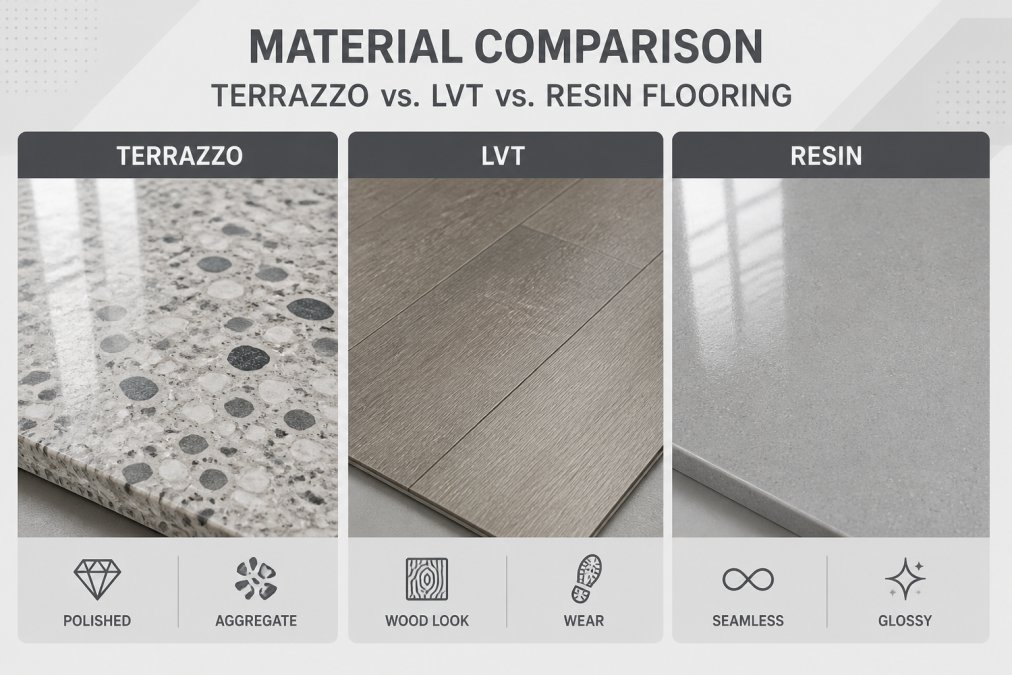
Terrazzo combines exceptional durability with design flexibility. The material consists of marble, granite, or glass aggregate bound in cement or resin matrix, then polished to create a seamless surface. This composition creates a floor literally harder and more resistant to wear than competing materials.
Terrazzo's appearance improves with time as polish deepens and aggregate patterns become more defined through selective wear. Airports can specify custom aggregate blends, colors, and patterns reflecting brand identity. The material resists abrasion from luggage wheels, foot traffic, and mechanical stress. It doesn't dent, gouge, or chip under normal airport conditions. Maintenance requirements are lower than competing materials when installed correctly and maintained according to protocol.
Terrazzo's primary limitation is upfront cost. Material and installation labor exceed LVT and basic resin systems substantially. For facility managers on tight capital budgets, this initial expense creates resistance despite long-term financial advantage.
Luxury Vinyl Tile (LVT): Cost-Effective Alternative
Luxury vinyl tile offers the most accessible entry point for airport flooring renovation. The material is significantly less expensive than terrazzo, and installation is faster. For facility managers under capital budget constraints, LVT represents a practical compromise.
LVT's performance in airport terminals deteriorates noticeably in high-traffic zones. Luggage wheels create visible wear patterns; scratches and scuffs appear after 3 to 5 years; the material becomes slippery when wet despite slip-resistant specifications. In terminals exceeding 10,000 daily passenger movements, LVT typically requires replacement within 10 to 15 years.
Maintenance burden for LVT is higher than terrazzo despite lower upfront cost. The material is susceptible to moisture infiltration at seams, causing swelling and separation. Repair typically means replacing entire planks or sections, which is visible and disruptive. The lifecycle cost of LVT over 30 years substantially exceeds terrazzo when accounting for two or three replacement cycles and ongoing maintenance labor. airport facility maintenance.
Resin Flooring: Seamless Protection
Epoxy and polyurethane resin systems create seamless, monolithic surfaces ideal for specific airport applications. The material bonds directly to the sub-floor, eliminating seams where moisture infiltrates. This seamless characteristic makes resin systems ideal for areas requiring maximum sanitation or moisture control.
Resin flooring offers excellent chemical resistance and can be engineered to withstand specific contaminants like jet fuel spills or de-icing chemicals. Durability in high-traffic areas is moderate. The material typically requires recoating every 5 to 7 years in high-traffic terminals, adding ongoing maintenance costs terrazzo doesn't incur.
Resin systems require precise environmental conditions during installation, controlled temperature, humidity, and air quality, which can limit installation windows and increase labor costs. Curing time requires extended facility closure, which may not be practical for operating terminals.
| Material | Lifespan | Maintenance Frequency | Slip Resistance | Repair Difficulty |
|---|---|---|---|---|
| Terrazzo | 30-50 years | Quarterly deep cleaning | Excellent with proper finish | Moderate (localized repair possible) |
| LVT | 10-15 years | Monthly maintenance | Good (degrades over time) | Difficult (plank replacement visible) |
| Resin | 15-20 years | Recoating every 5-7 years | Very good | Moderate (full area recoating required) |
Sub-Floor Preparation and Moisture Mitigation
The most common failure point in airport flooring installations is inadequate sub-floor preparation. A facility manager can select the best material available, but improper sub-floor preparation causes failure regardless of material quality.
Moisture is the primary enemy of flooring systems in airport terminals. Persistent moisture exposure from people, luggage, and cleaning water infiltrates improperly sealed sub-floors, causing adhesive failure, material swelling, mold growth, and accelerated deterioration.
Proper sub-floor preparation begins with moisture testing using standardized methods measuring moisture vapor transmission. For airport terminals, acceptable moisture levels are typically below 3 pounds per 1,000 square feet per 24 hours (astm.org). Higher levels require treatment before flooring installation.
Moisture mitigation typically involves applying a moisture barrier or vapor retarder to the concrete surface, preventing moisture vapor from migrating upward into the flooring material. The sub-floor surface must be mechanically prepared: cleaned of dust, debris, and contaminants; high spots ground down; low spots filled. The surface should be relatively smooth and level with no significant variations creating stress points.
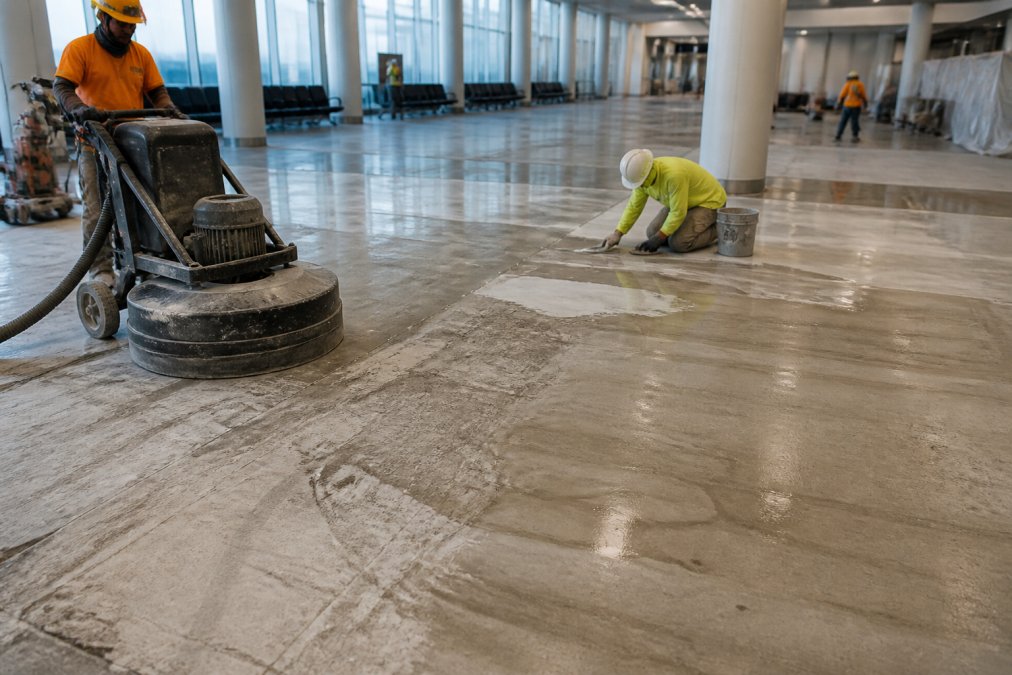
Proper sub-floor preparation costs typically 10 to 15 percent of total flooring installation cost, the single best investment in long-term flooring performance. Skipping this step to save money creates hidden costs emerging as repairs, replacements, and facility downtime years later.
Environmental Impact and LEED Certification Opportunities
Airport terminals increasingly pursue LEED certification and sustainability standards. Flooring material selection contributes through manufacturing impact, end-of-life disposal, and operational efficiency.
Terrazzo offers significant environmental advantages. The material is manufactured from natural stone aggregate and cement or resin binders with minimal processing. Terrazzo's longevity creates substantial environmental benefit: a floor lasting 50 years requires one installation over that period, while LVT might require three replacements. Each replacement cycle involves material waste, transportation emissions, and installation labor.
Terrazzo is fully recyclable at end of life. The material can be crushed and reused as aggregate in new terrazzo installations or concrete applications. LVT and resin systems are more difficult to recycle and often end up in landfills.
LEED certification programs recognize terrazzo's environmental advantages. The material qualifies for credits related to durability, recycled content (when specified with recycled aggregate), and regional sourcing. Operational efficiency also contributes: terrazzo requires less intensive maintenance, reducing water consumption for cleaning and chemical usage. This operational advantage compounds over decades, creating environmental benefit beyond manufacturing and installation phases.
Repairability, Modular Replacement, and Long-Term Maintenance Planning
The ability to repair flooring without complete replacement distinguishes materials in long-term facility planning. Airports need flooring that can be restored when damage occurs, not materials requiring complete removal and reinstallation.
Terrazzo excels in repairability. Localized damage, cracks, chips, or worn areas can be repaired without affecting surrounding sections. A skilled terrazzo technician can remove damaged areas, prepare the sub-surface, and install new terrazzo matching the existing floor. This repairability extends effective lifespan and reduces replacement needs.
LVT presents significant repair challenges. Damaged planks must be replaced, and replacements are typically visible because surrounding material has aged. Complete section replacement is often more practical than repairs, increasing costs.
Resin systems present moderate repair challenges. Localized damage typically requires refinishing the entire affected area, creating visible demarcation lines and requiring facility downtime.
Modular replacement strategies allow facility managers to address flooring issues without complete facility closure. Terrazzo installations can be planned with modular sections replaceable independently if needed. Terrazzo floors 20 or 30 years old can be restored to like-new condition through professional refinishing, which removes the worn surface layer and repolishes the aggregate. This restoration is substantially less expensive than replacement and extends the floor's lifespan another 20 to 30 years. This restoration option isn't available for LVT or resin systems.
Low maintenance flooring for airports requires balancing upfront cost against decades of operational reality. The material you select today determines maintenance burden, replacement cycles, and total cost your facility experiences for the next 20 to 50 years. Terrazzo's proven performance in high-traffic terminals, combined with its repairability and aesthetic durability, makes it optimal for facility managers prioritizing long-term value. A1 Terrazzo's 35 years of experience with commercial terrazzo installation and maintenance services means your airport terminal receives expert guidance on material selection, proper sub-floor preparation, and maintenance protocols protecting your investment. Contact A1 Terrazzo to discuss how professional terrazzo installation and maintenance planning can reduce your facility's operational costs while delivering the durability that airport terminals demand.
Frequently Asked Questions
What type of flooring requires the least maintenance in high-traffic airport environments?
Terrazzo and resin flooring systems require minimal maintenance in high-traffic areas because they form seamless, non-porous surfaces that resist staining and don't trap dirt in grout lines. Both materials handle heavy foot traffic and wheeled luggage without degradation. LVT offers a lower-cost alternative but requires more frequent deep scrubbing to maintain appearance. The key is choosing a material with proven slip resistance and chemical resistance to airport-specific contaminants like jet fuel residue and de-icing chemicals.
How do terrazzo flooring lifecycle costs compare to other airport flooring options?
Terrazzo typically has higher upfront installation costs due to sub-floor preparation and skilled labor requirements, but lifecycle costs favor terrazzo when calculated over 20-30 years. Terrazzo resists abrasion, chemical damage, and moisture intrusion better than LVT, reducing replacement frequency and repair expenses. Resin flooring offers lower initial costs but may require resealing every 5-7 years. LVT is cheapest initially but degrades faster in high-traffic terminals. Total cost of ownership analysis should include maintenance labor, cleaning product expenses, and downtime for repairs or replacement.
What safety standards must airport flooring meet for ADA compliance?
Airport flooring must meet ADA slip-resistance requirements (ASTM D2047 or higher) and provide accessible pathways for passengers with mobility devices. Floors must have a coefficient of friction suitable for both dry and wet conditions. ADA standards also require consistent surface texture to prevent tripping hazards and adequate contrast for visually impaired passengers. Terrazzo, LVT, and resin flooring can all meet these standards when properly finished and maintained with appropriate floor sealing and preventative maintenance protocols.
What preparation steps are critical to prevent moisture and cracking issues in airport flooring?
Proper sub-floor preparation is essential to prevent premature failure. The concrete base must be tested for moisture content and treated with appropriate moisture mitigation barriers before installation. Any existing moisture intrusion or plasticiser migration issues must be addressed before laying new flooring. Substrate must be level, clean, and free of contaminants. Inadequate sub-floor preparation is the leading cause of cracking, seam failure, and floor separation. Professional installation includes moisture testing, proper sealing, and documentation to ensure warranty coverage and long-term durability.
This article was written using GrandRanker
Frequently Asked Questions
What type of flooring requires the least maintenance in high-traffic airport environments?
Terrazzo and resin flooring systems require minimal maintenance in high-traffic areas because they form seamless, non-porous surfaces that resist staining and don't trap dirt in grout lines. Both materials handle heavy foot traffic and wheeled luggage without degradation. LVT offers a lower-cost alternative but requires more frequent deep scrubbing to maintain appearance. The key is choosing a material with proven slip resistance and chemical resistance to airport-specific contaminants like jet fuel residue and de-icing chemicals.
How do terrazzo flooring lifecycle costs compare to other airport flooring options?
Terrazzo typically has higher upfront installation costs due to sub-floor preparation and skilled labor requirements, but lifecycle costs favor terrazzo when calculated over 20-30 years. Terrazzo resists abrasion, chemical damage, and moisture intrusion better than LVT, reducing replacement frequency and repair expenses. Resin flooring offers lower initial costs but may require resealing every 5-7 years. LVT is cheapest initially but degrades faster in high-traffic terminals. Total cost of ownership analysis should include maintenance labor, cleaning product expenses, and downtime for repairs or replacement.
What safety standards must airport flooring meet for ADA compliance?
Airport flooring must meet ADA slip-resistance requirements (ASTM D2047 or higher) and provide accessible pathways for passengers with mobility devices. Floors must have a coefficient of friction suitable for both dry and wet conditions. ADA standards also require consistent surface texture to prevent tripping hazards and adequate contrast for visually impaired passengers. Terrazzo, LVT, and resin flooring can all meet these standards when properly finished and maintained with appropriate floor sealing and preventative maintenance protocols.
What preparation steps are critical to prevent moisture and cracking issues in airport flooring?
Proper sub-floor preparation is essential to prevent premature failure. The concrete base must be tested for moisture content and treated with appropriate moisture mitigation barriers before installation. Any existing moisture intrusion or plasticiser migration issues must be addressed before laying new flooring. Substrate must be level, clean, and free of contaminants. Inadequate sub-floor preparation is the leading cause of cracking, seam failure, and floor separation. Professional installation includes moisture testing, proper sealing, and documentation to ensure warranty coverage and long-term durability.