 how-to
Prevent Slip Hazards on Terrazzo Floors
Table of Contents
- Understand the Causes of Slippery Terrazzo Floors
- Step 1: Test Slip Resistance Testing for Commercial Floors
- Step 2: Choose the Right Anti-Slip Treatment for Terrazzo
- Step 3: Select a Terrazzo Floor Cleaner and Maintenance Protocol
- Step 4: Install Mats, Transitions, and Drainage Systems
- Step 5: Conduct a Floor Safety Audit and Document Results
- Retrofitting vs. New Installation: Which Approach Works Best
- Conclusion
- Frequently Asked Questions
Last Updated: September 27, 2026
Understand the Causes of Slippery Terrazzo Floors
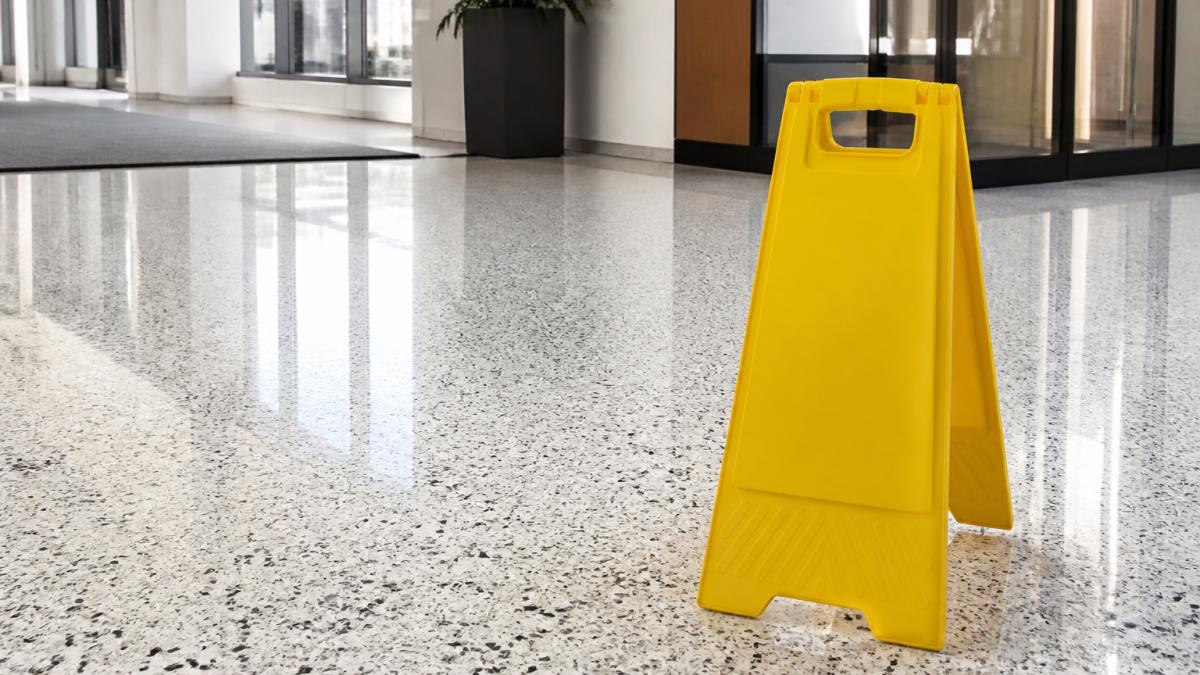
Terrazzo floors look stunning in hospitals, airports, and schools, but their polished surface creates a serious slip hazard, one you can prevent slip hazards terrazzo with the right approach. The issue isn't the material itself, it's the finish and how you maintain it.
Polished terrazzo becomes slippery when moisture, dust, or cleaning residue sits on top. The smooth surface offers nothing for shoes to grip, creating a liability risk in high-traffic spaces.
Common causes include:
- Polished finishes with no texture
- Improper sealing that leaves the surface too smooth
- Using the wrong cleaning products
- Moisture buildup from humidity or wet entry areas
- Dust and debris creating a slick layer
- Worn traffic lanes where the finish has degraded
Step 1: Test Slip Resistance Testing for Commercial Floors
Before fixing a slip hazard, measure it. Slip resistance testing uses standardized methods to rate surface slipperiness and is essential for any defensible slip-prevention program.
Understanding Coefficient of Friction (COF)
The key metric is Coefficient of Friction (COF), expressed as a decimal between 0 and 1. A terrazzo floor with a COF of 0.80 grips much better than one with 0.40, the difference between a safe facility and a liability risk.
Static COF vs. Dynamic COF
Two main testing standards exist, and they measure different real-world conditions:
Static COF (SCOF) measures grip when standing still. The ADA requires a minimum of 0.50 for level floors and 0.60 for ramps. Many facility managers target 0.60+ on terrazzo for a safety margin.
Dynamic COF (DCOF) measures grip while walking, typically 10-20% lower than Static COF on the same surface.
Testing Methods and Standards
ASTM D2047 (static friction using a weighted sled) is the most common standard for terrazzo and is widely accepted by building inspectors and insurance carriers.
How to Commission Testing
- Identify your baseline. Contact a certified testing lab to run initial COF tests on multiple areas (high-traffic zones, wet areas, low-traffic zones).
- Document the numbers. Record Static and Dynamic COF, test method, and photos.
- Identify problem areas. Mark areas below 0.50 Static or 0.42 Dynamic for treatment.
- Test after treatment. Retest to verify improvement of 0.10-0.30 COF.
- Establish a testing schedule. Retest annually to confirm anti-slip treatment effectiveness.
Interpreting Results for Terrazzo
This testing data becomes your liability protection. If a slip and fall occurs, you have documented evidence that you measured the hazard, took corrective action, and verified the improvement. Facilities without testing records face much higher legal exposure. Proactive maintenance protocols serve as the primary defense against slip and fall liability, though understanding the subsequent procedural requirements remains essential for managing potential claims.
Step 2: Choose the Right Anti-Slip Treatment for Terrazzo
Once you know your COF numbers, you can select an appropriate treatment to prevent slip hazards terrazzo. The right choice depends on your finish type and maintenance capacity.
Textured vs. Polished Finishes
Polished finishes look professional but are inherently slippery and require anti-slip coatings. Honed finishes are duller, easier to maintain, and reduce slip risk naturally. Textured finishes grip well but are harder to clean and hide dirt. The trade-off is appearance versus safety.
Anti-Slip Additives and Top Coats
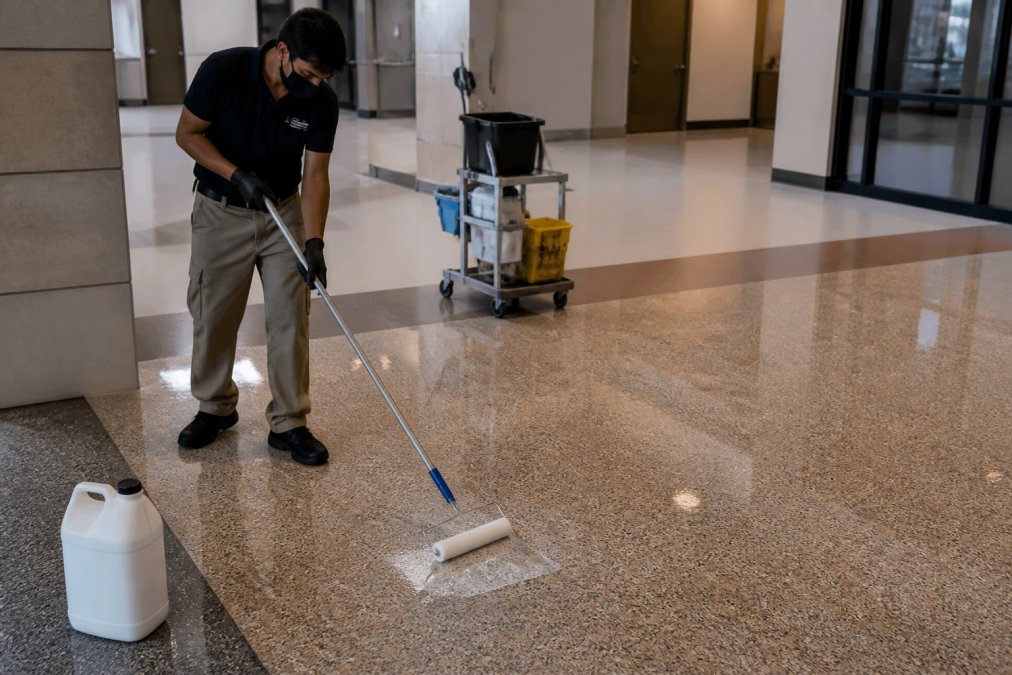
Anti-slip additives are gritty particles mixed into a clear sealer. Common types include aluminum oxide (most effective), silicon carbide (very durable), and aggregate-based additives. Professional application is essential, too much grit makes the floor rough and hard to clean; too little doesn't improve grip enough.
Step 3: Select a Terrazzo Floor Cleaner and Maintenance Protocol
Your cleaner makes or breaks slip safety. The wrong product leaves residue that becomes slippery. The right one removes dirt without creating a slick film. This section provides the specific product criteria and maintenance schedule most facility managers lack.
Why Standard Cleaners Fail on Terrazzo
Terrazzo is a composite material, marble or granite chips bound in cement or epoxy. Most commercial cleaners are designed for tile or vinyl, not terrazzo. Common mistakes that worsen slip hazards include using wax, applying excess water, leaving residue, using oil-based or acidic cleaners, and skipping the drying step.
Selecting the Right Terrazzo Cleaner
Use a pH-neutral, stone-safe cleaner with pH between 6.5 and 8.5. Look for mild surfactants, no wax or shine enhancers, and stone-specific formulation. Avoid acidic cleaners (below 6.5 pH) that etch terrazzo. Follow the exact dilution ratio specified on the product.
Testing Before Full Application
Test on a small area first. Apply cleaner at recommended dilution, let sit 2-3 minutes, mop with clean water, and dry completely. After 24 hours, inspect for streaks, film, slickness, discoloration, or etching. Proceed facility-wide only if the test passes.
Maintenance Schedule and Frequency
Consistency is critical. Here's an actionable maintenance schedule:
| Task | Frequency | Method | Why It Matters |
|---|---|---|---|
| Dry sweep or vacuum | Daily (or twice daily in high-traffic areas) | Use a soft-bristle broom or HEPA-filter vacuum | Removes dust and debris that mix with humidity to create slickness |
| Damp mop with pH-neutral cleaner | 2-3 times weekly (daily in hospitals, kitchens, or entry areas) | Mop with cleaner at recommended dilution; wring out excess water so mop is damp, not wet | Removes dirt and grime without leaving water or residue |
| Spot clean spills immediately | As needed | Wipe spill with damp cloth; dry immediately | Prevents slip hazards from wet spots |
| Deep clean with stone cleaner | Monthly | Use a low-speed floor machine with a soft pad, or hand-scrub high-traffic areas | Removes embedded grime and buildup that daily mopping misses |
| Reapply sealer or top coat | Annually or every 12-18 months (depending on traffic) | Professional application; facility manager inspects for wear | Refreshes anti-slip protection and extends terrazzo life |
Drying Protocol
Air drying: Allow 15-30 minutes for natural evaporation in low-traffic areas. Not practical for busy facilities.
High-Traffic Area Protocol
High-traffic zones (entry lobbies, hallways, kitchen prep areas) need dry sweeping 3-4 times daily, damp mopping daily or twice daily, deep cleaning twice monthly, and sealer reapplication every 9-12 months.
Wet Area Protocol (Bathrooms, Kitchens, Showers)
Wet areas (bathrooms, kitchens) need dry sweeping every 2 hours, damp mopping 3-4 times daily, weekly deep cleaning, daily drainage checks, and sealer reapplication every 6-9 months. Install absorbent mats to reduce moisture.
Documentation and Staff Training
Create a written maintenance log recording date, time, cleaner product, dilution ratio, staff member, issues observed, and drying method. Train all staff on why the specific cleaner is required, why drying is essential, and when to escalate to management.
Step 4: Install Mats, Transitions, and Drainage Systems
Entry points, bathrooms, and kitchens collect moisture where most slip and falls occur. Walk-off mats at every entrance absorb water and dirt before reaching terrazzo, use beveled edges to prevent trip hazards. Floor transitions should be beveled to avoid catching shoes. Drainage and slope are critical: terrazzo should slope 1-2% toward drains to prevent pooling.
Step 5: Conduct a Floor Safety Audit and Document Results
Document your slip-prevention program with baseline and post-treatment COF measurements, photos, maintenance records, cleaning products used, repairs, and staff training records. Conduct quarterly audits to catch problems before injuries occur. This documentation protects your facility legally if a slip and fall occurs.
Retrofitting vs. New Installation: Which Approach Works Best
Retrofitting existing terrazzo is faster and cheaper than replacement. It works when terrazzo is structurally sound and you need a quick solution with minimal downtime. New installation gives complete control over finishes, drainage, and sealer selection. It works best when terrazzo is damaged, you're doing a major renovation, or you want long-term reliability.
Conclusion
Slip hazards on terrazzo floors are serious, but they're preventable. Test your slip resistance, choose the right anti-slip treatment, maintain the floor properly, and design your space with drainage and transitions in mind. Document everything.
Frequently Asked Questions
What not to use on terrazzo floors to maintain slip resistance?
Avoid acidic cleaners, oil-based products, and wax-based polishes, as these create slippery residue and degrade sealers. Never use bleach or ammonia-based solutions, they damage the stone and reduce traction. Abrasive scrubbing pads can scratch the surface and alter its slip-resistance properties. Stick to pH-neutral cleaners specifically formulated for terrazzo, and always test new products in an inconspicuous area first.
How do you test the slip resistance of commercial flooring?
The standard method is the Dynamic Coefficient of Friction (DCOF) test, which measures traction using a weighted sled on a wet surface. A DCOF rating of 0.42 or higher meets OSHA guidelines for slip-resistant flooring in wet areas. You can also use the Pendulum Test (British Pendulum Number) or Ramp Test for additional data. Professional testing labs or your flooring contractor can conduct these tests to verify your terrazzo meets safety standards before occupancy.
Can anti-slip coatings be applied to existing terrazzo?
Yes, anti-slip treatments can be retrofitted to existing terrazzo floors. Options include applying anti-slip additives to top coats, sandblasting to create texture, or installing slip-resistant sealers. The surface must be cleaned and prepared thoroughly before application. Retrofitting is often more cost-effective than complete replacement, though results depend on the floor's current condition. A professional assessment determines whether your terrazzo is suitable for retrofitting or requires other interventions.
How often should terrazzo floors be professionally cleaned to prevent hazards?
High-traffic commercial terrazzo floors should be professionally cleaned every 3-6 months, depending on foot traffic volume and environmental conditions. Healthcare facilities, airports, and schools may need quarterly cleaning to maintain slip resistance and sanitation. Daily housekeeping with approved terrazzo floor cleaners removes debris and spills that increase slip risk. A maintenance schedule ensures consistent safety and extends floor life.