 how-to
Preventing Terrazzo Floor Cracking: A 2026 Guide
Table of Contents
- What Causes Terrazzo Floor Cracking
- Substrate Preparation: The Foundation of Crack Prevention
- Installing Terrazzo Crack Suppression Membranes
- Expansion Joints and Divider Strips
- Professional Installation Best Practices
- Terrazzo Floor Maintenance Best Practices
- Repairing Stress Cracks in Terrazzo
- Climate and Environmental Considerations
- Frequently Asked Questions
Last Updated: August 12, 2026
What Causes Terrazzo Floor Cracking
Terrazzo floor cracking rarely happens by accident. Most cracks trace back to one of three root causes: substrate movement, deflection loads, and moisture vapor transmission. Each creates stress that the terrazzo system cannot absorb without fracturing. The good news: every one of these causes is preventable with the right approach during installation and maintenance.
Substrate Movement and Settlement
Concrete slabs shift in response to temperature swings, humidity changes, and structural settling. Settlement occurs when the ground beneath the slab compresses or when the building's structural frame shifts under load. In commercial buildings, hospitals, and airports, heavy foot traffic and equipment loads accelerate this movement. A terrazzo floor installed over an unstable substrate is essentially a failure waiting to happen.
The substrate must be assessed before terrazzo installation begins. A1 Terrazzo's 35 years of experience in commercial installations has shown repeatedly that substrate assessment separates jobs that last from jobs that crack within months.
Deflection Loads and Structural Stress
Deflection is the amount a structural floor system bends under load. In hospitals, the weight of heavy equipment and constant foot traffic creates continuous deflection. In airports, concentrated loads from luggage carts flex the floor. Terrazzo is rigid; when the concrete slab deflects more than the terrazzo can tolerate, the terrazzo cracks.
Structural engineers specify maximum deflection limits for floor systems. For terrazzo, the limit is typically L/360 (where L is the span length). A 30-foot span should deflect no more than 1 inch under live load. If your building's floor system exceeds this, terrazzo will crack regardless of installation quality.
Moisture Vapor Transmission
Concrete wicks moisture from the ground. Even if the slab feels dry to the touch, moisture vapor continues rising through the concrete at the molecular level. This moisture vapor gets trapped between the concrete and the terrazzo system, creating hydrostatic pressure that breaks the bond between terrazzo and substrate.
Moisture testing before installation is non-negotiable. The calcium chloride test or relative humidity test determines whether the slab is dry enough for terrazzo. Most systems require below 3 lbs/1000 sq ft/24 hours for calcium chloride testing.
Substrate Preparation: The Foundation of Crack Prevention
No terrazzo system is better than the substrate it sits on. A1 Terrazzo treats substrate preparation as the single most critical phase of the entire installation.
Concrete Slab Integrity Assessment
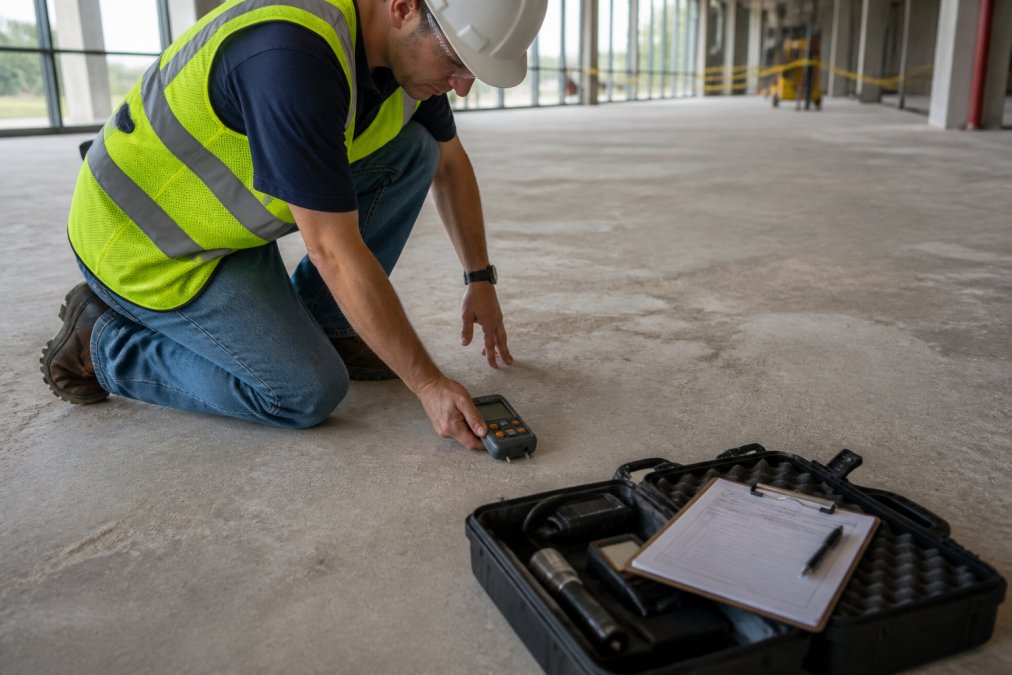
Before any terrazzo touches the floor, the concrete slab must be evaluated for structural soundness. This assessment includes checking for existing cracks, spalling, soft spots, and delamination from the subgrade. The slab must also be tested for flatness, typically within 1/8 inch over 10 feet. High spots and low spots create stress points where cracking initiates.
Listen to the concrete when you walk across it. A hollow sound indicates voids beneath the surface that will eventually collapse under load. Any slab showing signs of structural distress should be repaired or replaced before terrazzo installation proceeds.
Floor Leveling and Moisture Testing
Once structural integrity is confirmed, moisture testing becomes the next critical step. Calcium chloride testing or in-situ relative humidity testing reveals whether the slab has dried sufficiently for terrazzo bonding. If moisture levels are too high, the concrete must be allowed to cure longer, or moisture mitigation techniques must be applied.
Floor leveling corrects minor surface irregularities using self-leveling compounds, creating a uniform substrate that distributes loads evenly across the terrazzo system. Uneven substrates create stress concentrations where cracks initiate first.
Installing Terrazzo Crack Suppression Membranes
A crack suppression membrane is your insurance policy against substrate-induced cracking. It doesn't prevent the substrate from moving; it allows the substrate to move without transferring that stress to the terrazzo.
How Crack Suppression Membranes Work
The terrazzo crack suppression membrane is a thin, flexible layer applied directly to the prepared concrete slab. It absorbs the movement and stress that would otherwise crack the terrazzo above it. A polyamide mesh membrane, for example, distributes loads and allows controlled crack propagation below the terrazzo surface rather than through it.
Think of the membrane as a shock absorber. The concrete moves, the membrane flexes, and the terrazzo stays intact. Without it, the terrazzo bears the full stress of substrate movement and fails. Modern crack suppression membranes are engineered to work with both cementitious and resin-based terrazzo systems.
Placement and Installation Standards
The membrane is applied to the entire floor area with no shortcuts. Seams must overlap by at least 6 inches and be sealed to prevent moisture migration at the joints. Edges must extend up walls or to the perimeter to create a continuous system.
The membrane must be fully adhered to the concrete substrate with no voids or wrinkles. After the membrane cures per manufacturer specifications, the terrazzo installation proceeds directly over it.
Expansion Joints and Divider Strips
Expansion joints and divider strips are the terrazzo system's built-in flexibility. They accommodate the inevitable movement that occurs in any large floor installation. Without them, the terrazzo tries to move but can't, creating stress that results in cracking.
The spacing of divider strips depends on the terrazzo type, floor dimensions, and environmental conditions. Cementitious terrazzo typically requires divider strips every 12 feet. Resin-based terrazzo can span further, sometimes 20 feet or more. The strips must align with structural joints in the concrete slab below, a principle called joint honoring.
Divider strips are typically made of brass, plastic, or other materials that provide a clean visual break while allowing movement. They must be installed perfectly straight and at the correct height (flush with the finished terrazzo surface) to function properly.
Professional Installation Best Practices
Installation quality determines whether preventing terrazzo cracking succeeds or fails. Poor installation negates every precaution taken during substrate preparation.
Curing Process and Timing
Terrazzo cures through a chemical process that takes time. Cementitious terrazzo typically requires 7-14 days of curing before the floor can bear normal foot traffic. Resin-based terrazzo cures faster, sometimes in 24-48 hours, but full strength development takes longer.
During the curing period, the floor must be protected from moisture, temperature extremes, and foot traffic. Temperature control during curing is critical. Rapid temperature swings cause the terrazzo to expand and contract unevenly, creating internal stress. The curing environment should be maintained between 60°F and 85°F with relative humidity between 40% and 60%.
Joint Honoring and Surface Restoration
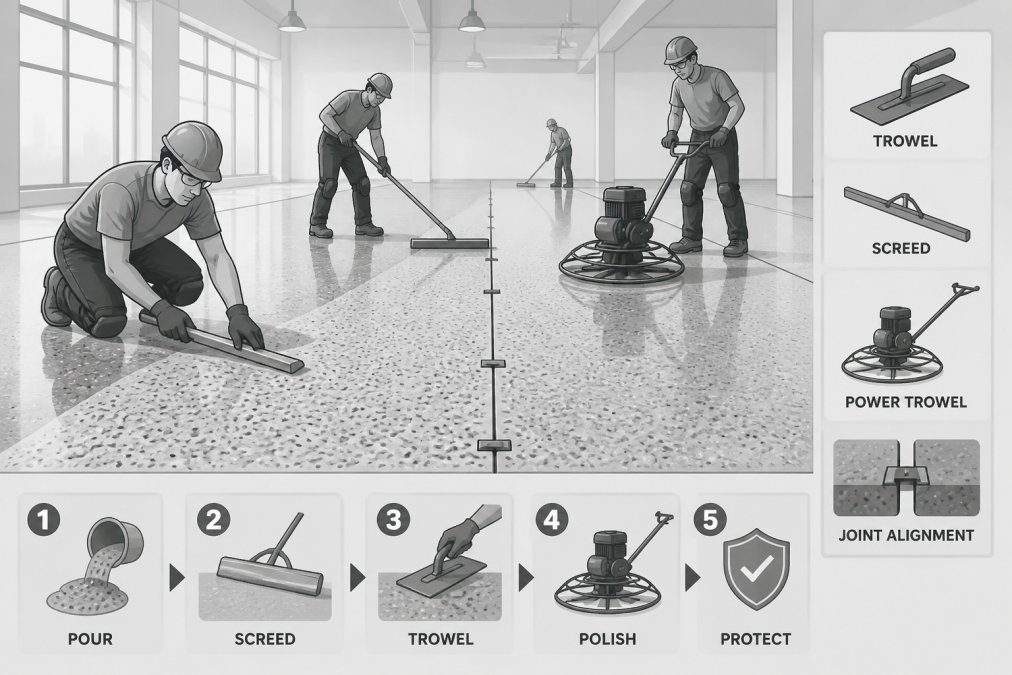
Joint honoring means the divider strips and control joints in the terrazzo align exactly with the structural joints in the concrete slab below. This is structural, not aesthetic. When the concrete moves at a joint, the terrazzo must be free to move there too. Many installations fail because installers ignore the concrete joints below and place terrazzo joints wherever they think looks best.
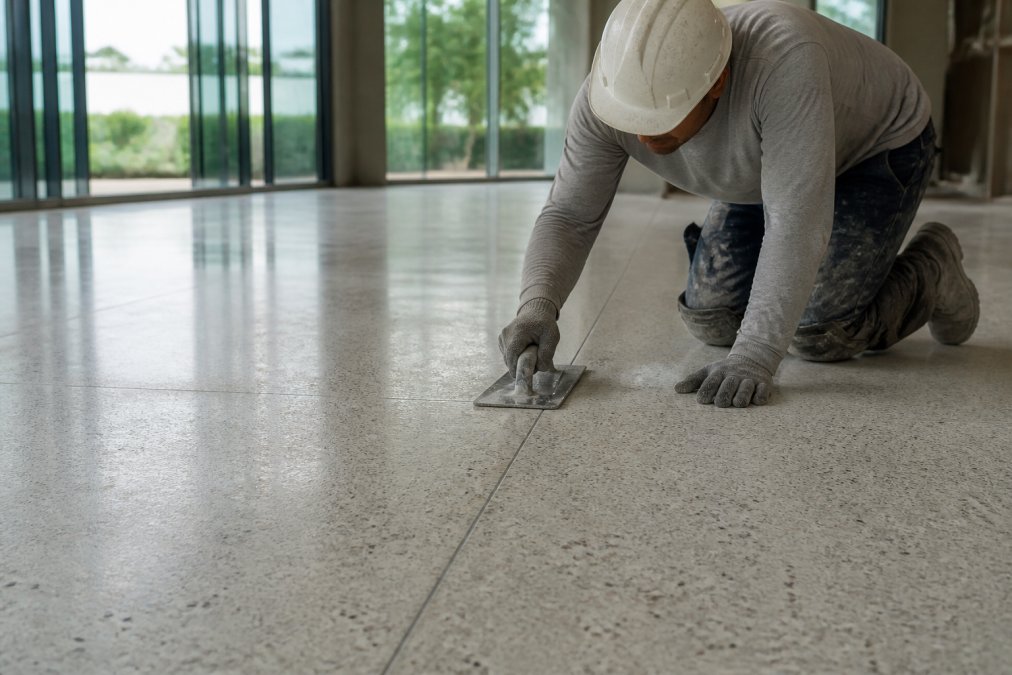
Surface restoration after terrazzo installation includes grinding and polishing to expose the aggregate and create the finished appearance. This process must not create stress in the newly cured terrazzo.
Terrazzo Floor Maintenance Best Practices
Maintenance is where preventing terrazzo cracking continues long after installation ends. The right maintenance practices preserve the terrazzo crack suppression membrane and protect the bond between terrazzo and substrate.
Cleaning Protocols and Approved Products
Water is terrazzo's enemy during the first months after installation. Cleaning should use pH-neutral products specifically approved for terrazzo. Acidic or alkaline cleaners etch the surface and can penetrate to the substrate, reactivating moisture issues. High-pressure washing is forbidden; the pressure can force moisture through the terrazzo into the substrate.
Damp mopping with approved terrazzo cleaners is the standard maintenance approach. Spills should be cleaned immediately to prevent moisture from sitting on the surface. Wet areas should be dried promptly.
Sealing and Long-Term Durability
Terrazzo surfaces are typically sealed to protect against staining and moisture penetration. Sealing should be performed after the terrazzo has fully cured and before the floor is put into service. The sealant must be compatible with the terrazzo type and reapplied according to manufacturer specifications, typically every 2-3 years depending on traffic levels.
The sealant protects the terrazzo crack suppression membrane by keeping moisture at the surface rather than allowing it to migrate downward. A sealed, properly maintained terrazzo floor can last 30 years or more without significant cracking.
| Maintenance Task | Frequency | Purpose | Impact |
|---|---|---|---|
| pH-neutral cleaning | Weekly to monthly | Remove surface contaminants | Prevents staining and moisture absorption |
| Damp mopping | After cleaning | Remove residual moisture | Protects substrate bond |
| Sealant reapplication | Every 2-3 years | Refresh moisture barrier | Extends terrazzo lifespan |
| Spill cleanup | Immediate | Prevent moisture penetration | Stops bond failure at source |
| Floor inspection | Quarterly | Identify emerging issues | Catches problems before they spread |
Repairing Stress Cracks in Terrazzo
Existing cracks require different approaches depending on their nature and severity. Not all cracks demand professional repair, but some do, and knowing the difference saves money and prevents further damage.
Hairline Cracks vs. Structural Damage
Hairline cracks are surface-level fractures less than 1/8 inch wide that don't extend through the full depth of the terrazzo. They often result from minor substrate movement or curing stress and can be sealed cosmetically without addressing deeper issues.
Structural cracks are wider (typically 1/8 inch or more), extend through the terrazzo depth, and indicate that the terrazzo is responding to ongoing substrate stress or movement. These cracks signal a problem that will worsen if left unaddressed.
DIY vs. Professional Assessment
Hairline cracks can be filled with terrazzo-colored epoxy or polyester resin and polished flush with the surface. This is a cosmetic repair that facility managers can sometimes perform with proper materials.
Structural cracks demand professional assessment. A contractor experienced in terrazzo repair must determine whether the crack is caused by substrate movement, moisture issues, deflection, or other factors. Professional repair may involve injecting epoxy resin into the crack to restore bond and strength, or removing and replacing the damaged section if damage is extensive.
Climate and Environmental Considerations
Regional climate and building environment directly influence preventing terrazzo cracking. A terrazzo floor installed in a humid coastal area faces different challenges than one in a dry inland location.
High humidity environments accelerate moisture vapor transmission through concrete. In humid climates, moisture testing becomes even more critical because the concrete takes longer to dry to acceptable levels. Extended drying times or moisture barriers become necessary before terrazzo installation can proceed.
Temperature swings stress terrazzo systems. Regions with large seasonal temperature variations create expansion and contraction cycles that stress the terrazzo. Divider strips must be spaced closer together in these climates to accommodate the movement.
Interior climate control in commercial buildings moderates these effects. Hospitals and universities maintain consistent temperature and humidity year-round, which reduces environmental stress on terrazzo. Coastal environments introduce salt spray and moisture-laden air that accelerates corrosion of brass divider strips and requires shortened sealing intervals.
Preventing terrazzo floor cracking requires a systematic approach that begins during substrate preparation and continues through maintenance. The three root causes, substrate movement, deflection loads, and moisture, are all preventable when addressed with proper installation standards and ongoing care.
A1 Terrazzo's 35 years of experience in commercial terrazzo installation across hospitals, airports, universities, and government buildings has demonstrated that the cost of prevention is far lower than the cost of repair. Proper substrate assessment, crack suppression membranes, professional installation, and disciplined maintenance create terrazzo floors that perform reliably for decades.
Contact A1 Terrazzo to discuss your facility's specific needs. Our team evaluates your substrate, recommends the appropriate crack prevention strategy, and installs terrazzo systems engineered for long-term durability in your building's unique environment. With A1 Terrazzo, you're investing in a floor system designed to prevent the problems that plague poorly installed terrazzo.
Frequently Asked Questions
What causes cracks in terrazzo flooring?
Terrazzo cracks typically result from substrate movement, moisture vapor transmission through the concrete slab, deflection loads exceeding the floor system's design capacity, or improper curing during installation. Inadequate substrate preparation is the most common preventable cause. High-traffic areas in hospitals, airports, and schools experience greater stress that can accelerate crack formation if the underlying concrete lacks proper integrity or if expansion joints are not properly honored during installation.
How do crack suppression membranes work for terrazzo?
A terrazzo crack suppression membrane acts as a buffer layer between the concrete substrate and the terrazzo finish, isolating the floor system from substrate movement and stress. These polyamide mesh or resin-based products absorb deflection loads and minor substrate shifts before they transfer to the terrazzo surface. They also reduce moisture vapor transmission and bond failure risk. Proper installation of the membrane at the right placement is critical, it must fully adhere to the substrate and remain intact throughout the curing process to be effective.
Can you prevent terrazzo cracking during the installation process?
Yes. The installation phase is where most crack prevention occurs. This requires thorough substrate preparation including concrete slab integrity assessment, moisture testing, and floor leveling. Installing divider strips and expansion joints at proper intervals, using a crack suppression membrane, and following strict installation standards all prevent cracking. Professional assessment before installation identifies structural issues. Proper curing time and temperature control during the resin-based terrazzo curing process are equally important. Rushing installation or skipping these steps significantly increases crack risk.
What is the best way to maintain terrazzo to avoid stress cracks?
Maintenance-based prevention focuses on protecting the sealed surface and avoiding damage that accelerates stress crack formation. Use only approved cleaning products, harsh chemicals or acidic cleaners degrade the protective seal and expose the terrazzo to moisture damage. Reseal terrazzo regularly per manufacturer recommendations, typically every 1-3 years depending on traffic. In high-traffic commercial environments like hospitals and airports, maintain sealing schedules strictly. Address spills immediately to prevent moisture ingress. Avoid impact damage by using protective mats in high-stress zones. Regular maintenance extends long-term durability and delays crack appearance.
This article was written using GrandRanker
Frequently Asked Questions
What causes cracks in terrazzo flooring?
Terrazzo cracks typically result from substrate movement, moisture vapor transmission through the concrete slab, deflection loads exceeding the floor system's design capacity, or improper curing during installation. Inadequate substrate preparation is the most common preventable cause. High-traffic areas in hospitals, airports, and schools experience greater stress that can accelerate crack formation if the underlying concrete lacks proper integrity or if expansion joints are not properly honored during installation.
How do crack suppression membranes work for terrazzo?
A terrazzo crack suppression membrane acts as a buffer layer between the concrete substrate and the terrazzo finish, isolating the floor system from substrate movement and stress. These polyamide mesh or resin-based products absorb deflection loads and minor substrate shifts before they transfer to the terrazzo surface. They also reduce moisture vapor transmission and bond failure risk. Proper installation of the membrane at the right placement is critical—it must fully adhere to the substrate and remain intact throughout the curing process to be effective.
Can you prevent terrazzo cracking during the installation process?
Yes. The installation phase is where most crack prevention occurs. This requires thorough substrate preparation including concrete slab integrity assessment, moisture testing, and floor leveling. Installing divider strips and expansion joints at proper intervals, using a crack suppression membrane, and following strict installation standards all prevent cracking. Professional assessment before installation identifies structural issues. Proper curing time and temperature control during the resin-based terrazzo curing process are equally important. Rushing installation or skipping these steps significantly increases crack risk.
What is the best way to maintain terrazzo to avoid stress cracks?
Maintenance-based prevention focuses on protecting the sealed surface and avoiding damage that accelerates stress crack formation. Use only approved cleaning products—harsh chemicals or acidic cleaners degrade the protective seal and expose the terrazzo to moisture damage. Reseal terrazzo regularly per manufacturer recommendations, typically every 1-3 years depending on traffic. In high-traffic commercial environments like hospitals and airports, maintain sealing schedules strictly. Address spills immediately to prevent moisture ingress. Avoid impact damage by using protective mats in high-stress zones. Regular maintenance extends long-term durability and delays crack appearance.