 ultimate-guide
Sanitary Flooring for Healthcare: A Facility Manager's Guide
Table of Contents
- Why Sanitary Flooring Matters in Healthcare Facilities
- Types of Healthcare Flooring and Their Sanitary Properties
- Best Terrazzo Flooring for Hospitals
- FGI Guidelines for Healthcare Flooring Compliance
- Healthcare Flooring Maintenance Best Practices
- Infection Control, Durability, and Long-Term Cost Considerations
- Subfloor Preparation and Installation for Sanitary Performance
- Frequently Asked Questions
Last Updated: August 23, 2026
Why Sanitary Flooring Matters in Healthcare Facilities
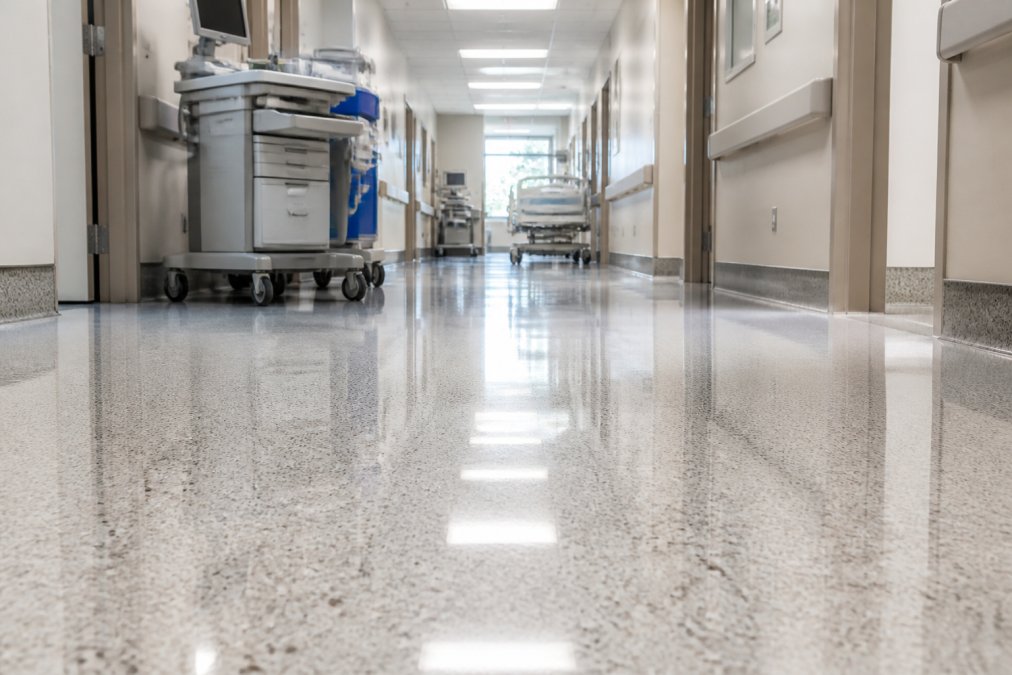
Sanitary flooring for healthcare facilities is critical infrastructure that directly impacts patient safety, staff efficiency, and long-term facility costs. Healthcare environments demand flooring that actively supports infection control, withstands harsh chemical disinfectants, resists heavy equipment and foot traffic, and maintains integrity for decades.
A compromised floor can harbor pathogens in seams, cracks, or porous surfaces. It can fail under moisture exposure and deteriorate rapidly when exposed to wrong maintenance products, forcing expensive repairs or replacement. At A1 Terrazzo, we've worked with healthcare facilities across Florida for over 35 years. The difference comes down to three core factors: the material's inherent properties, installation quality, and maintenance protocols.
Types of Healthcare Flooring and Their Sanitary Properties
Healthcare facilities have several flooring options, each with distinct sanitary advantages and trade-offs.
Homogeneous Resilient Flooring
Homogeneous resilient sheet vinyl is widely specified in healthcare settings. This material is manufactured as a solid, uniform composition throughout, with color and properties extending all the way through the material.
When properly installed with welded seams, homogeneous vinyl creates a continuous, non-porous surface that prevents liquids, blood, and biological contaminants from seeping into subfloor gaps. The material resists moisture absorption, making it naturally resistant to mold and bacterial colonization in operating rooms, surgical suites, and patient bathrooms.
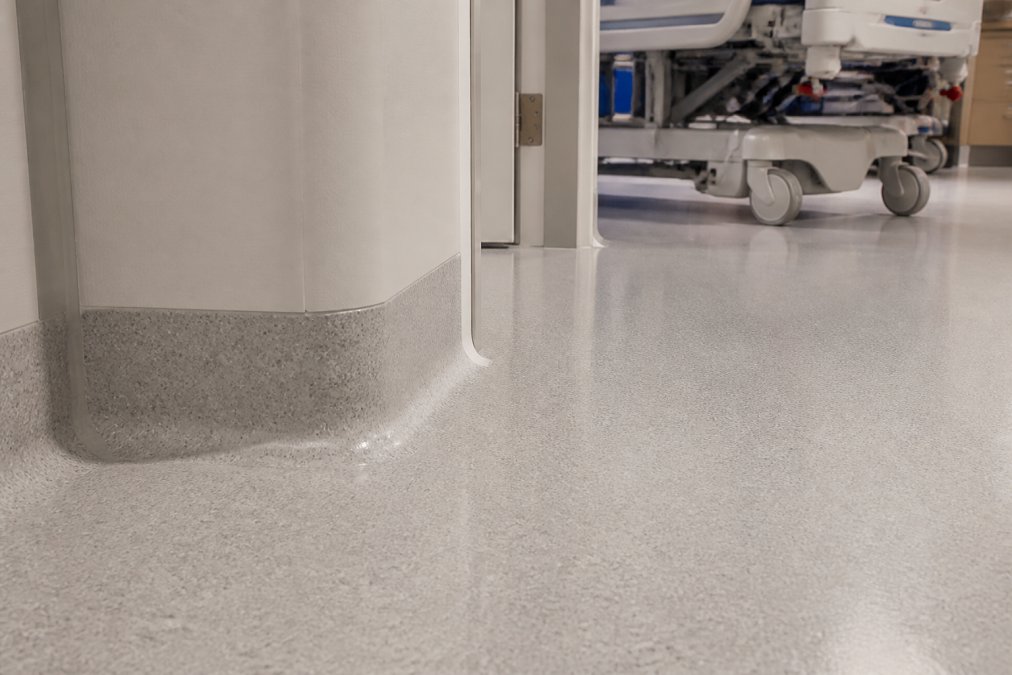
Homogeneous vinyl is highly resistant to chemical disinfectants commonly used in healthcare, bleach solutions, quaternary ammonium compounds, and alcohol-based cleaners. The material doesn't degrade under repeated exposure to these agents, essential for maintaining clinical sanitation standards.
Installation quality is critical. Poorly welded seams or gaps at the coved base create pathways for contamination. Verify the installer's track record with hospital and surgical suite projects before signing a contract.
Epoxy Resinous Systems
Epoxy and polyurethane resinous systems represent the highest-performance option for infection control. These liquid-applied coatings cure to form a completely seamless, monolithic surface with zero joints or seams.
The sanitary advantage is absolute: true seamless installation means no seams to trap debris, no cracks to harbor pathogens. The surface is dense, non-porous, and completely impervious to moisture. For operating rooms, intensive care units, and sterile processing areas, epoxy systems deliver the highest level of infection control.
Chemical resistance is exceptional. Epoxy stands up to aggressive disinfectants, caustic cleaning agents, and pharmaceutical residues without degradation. The material is also highly impact-resistant, handling dropped instruments and equipment wheels.
The trade-off is cost and installation complexity. Epoxy systems require specialized applicators, precise environmental conditions, and longer cure times before the space can be occupied.
Terrazzo with Antimicrobial Finishes
Terrazzo flooring, a composite of marble or granite chips bound in a cement or epoxy matrix, has been a staple in healthcare facilities for generations. When properly installed with sealed surfaces and antimicrobial topcoats, terrazzo delivers both sanitary performance and architectural longevity.
The key is the sealing and finish system. Unsealed terrazzo is porous and unsuitable for healthcare. However, when sealed with epoxy or polyurethane topcoats and treated with antimicrobial additives, terrazzo becomes highly sanitary. The antimicrobial properties inhibit bacterial growth on the floor surface itself.
Terrazzo's advantage lies in durability and restoration potential. Terrazzo floors can last 50+ years with proper maintenance and can be refinished and resealed multiple times throughout their lifespan.
Best Terrazzo Flooring for Hospitals
When terrazzo is chosen for sanitary flooring in healthcare environments, specific composition and finish specifications matter enormously. Hospital-grade terrazzo typically uses an epoxy matrix rather than cement. Epoxy-bound terrazzo is denser, less porous, and more resistant to moisture than traditional cement-based terrazzo.
The chip composition should prioritize non-absorbent aggregate, granite and marble chips are ideal because they don't absorb moisture or disinfectants. The finish system is where sanitary performance is truly achieved. A high-quality epoxy or polyurethane topcoat, applied in multiple layers, creates a sealed, non-porous surface. Some hospital-grade terrazzo systems incorporate antimicrobial additives directly into the topcoat. The coved base prevents dirt accumulation and simplifies cleaning.
For healthcare facilities, A1 Terrazzo specifies terrazzo systems that meet or exceed FGI (Facility Guidelines Institute) standards for healthcare flooring, prioritizing infection control, durability, and maintainability. cleanroom compliance standards.
FGI Guidelines for Healthcare Flooring Compliance
The Facility Guidelines Institute (FGI) publishes the Guidelines for Design and Construction of Hospitals and Outpatient Facilities, the most widely adopted standard for healthcare facility design in the United States (fgiguidelines.org). FGI guidelines mandate that flooring in patient care areas, operating rooms, and clinical spaces must be non-porous, seamless where possible, and resistant to moisture and chemicals (fgiguidelines.org).
For specific clinical areas, FGI provides detailed requirements:
- Operating Rooms and Surgical Suites: Require seamless, non-porous flooring with static dissipative properties. Epoxy resinous systems or sealed terrazzo with conductive topcoats meet this requirement.
- Intensive Care Units (ICUs): Require non-porous, chemically resistant flooring that withstands frequent disinfection with bleach and other agents.
- Patient Bathrooms and Wet Areas: Require moisture-resistant flooring with slip resistance. Sealed terrazzo or homogeneous vinyl with textured finishes are appropriate.
- Sterile Processing Areas: Require seamless, non-porous flooring supporting aseptic protocols. Epoxy systems are the standard.
FGI guidelines also address maintenance access, recommending flooring systems that allow easy cleaning and disinfection without harboring contamination. Coved bases, sealed seams, and smooth finishes support this requirement.
Compliance with FGI guidelines ensures your flooring actually supports the infection control protocols your facility needs to maintain.
Healthcare Flooring Maintenance Best Practices
The best sanitary flooring will fail if maintenance protocols are wrong. Daily cleaning in healthcare settings requires specific products and techniques. The wrong cleaner can degrade even the most durable flooring. Acidic cleaners can etch sealed surfaces and compromise protective topcoats. Abrasive scrubbing can scratch finishes and create micro-damage where contaminants accumulate.
Use pH-neutral cleaners specifically formulated for the flooring type. For terrazzo, use terrazzo-safe cleaners that won't etch the surface. For vinyl, use cleaners that won't soften or degrade the material. For epoxy systems, use cleaners that maintain the surface without leaving residue buildup.
Disinfection protocols should be matched to the flooring. Always dilute disinfectants according to manufacturer specifications and rinse thoroughly after application to prevent chemical buildup that can degrade the floor finish.
High-traffic clinical areas like operating rooms and ICUs require multiple cleaning cycles per day. Regular, frequent cleaning prevents buildup of biological material that creates sanitation risks and degrades the floor over time.
Preventive maintenance extends flooring lifespan. Regular seal reapplication, typically every 12-24 months depending on traffic and cleaning intensity, maintains the protective barrier (peer-reviewed research). The cost of preventive resealing is a fraction of the cost of dealing with moisture damage or contamination issues later.
Infection Control, Durability, and Long-Term Cost Considerations
Choosing sanitary flooring requires balancing three competing factors: infection control performance, durability under heavy use, and total cost of ownership over the floor's lifespan.
Infection control is the primary driver. A floor that fails to prevent pathogen migration defeats the purpose of having a sanitary surface. Prioritize seamless or welded-seam installation, non-porous materials, and finishes that resist disinfectants used in your facility.
Durability is the second factor. Healthcare facilities operate 24/7 with constant foot traffic, equipment movement, and exposure to moisture and chemicals. Specify materials and installation methods designed for 15-20+ years of heavy use.
Long-term cost is where many facility managers make mistakes by focusing on installed cost per square foot. A cheaper flooring system that requires replacement in 10 years costs far more than a premium system lasting 25 years. Consider lifecycle cost analysis (LCCA) accounting for initial costs, annual maintenance, seal reapplication, expected lifespan, and facility downtime during repairs.
For healthcare facilities, durability and infection control performance should drive the decision more than initial cost. The floor is infrastructure supporting patient safety and facility operations.
Subfloor Preparation and Installation for Sanitary Performance
The flooring you see is only as good as the foundation beneath it. Subfloor preparation is where many healthcare flooring projects fail.
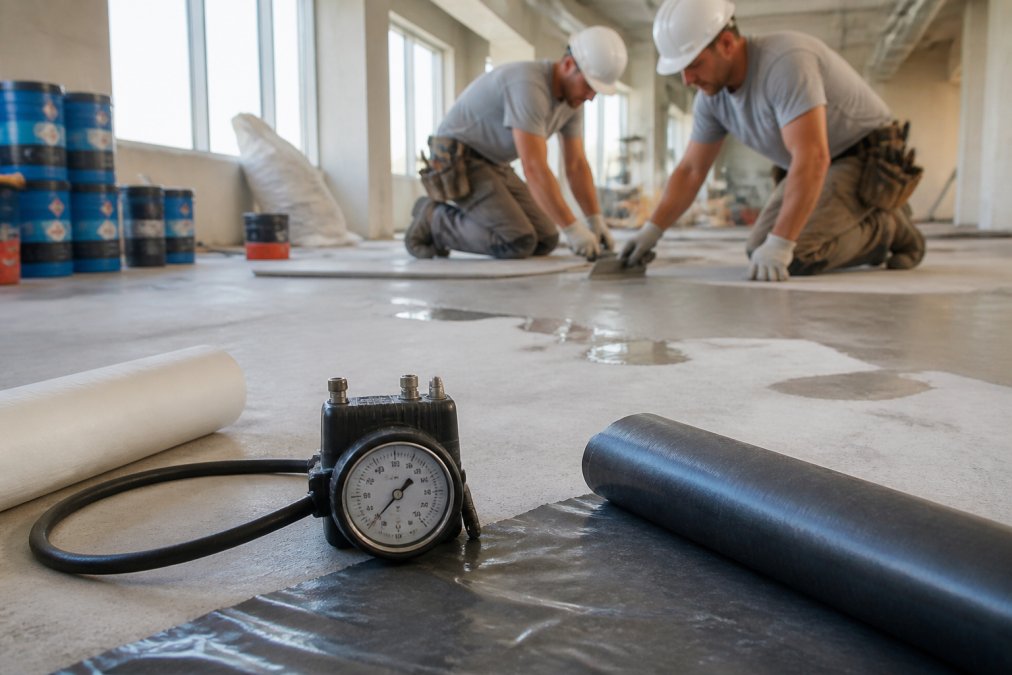
Moisture is the primary enemy of healthcare flooring. Hospitals have high moisture environments from cleaning procedures, humidity, and spills. If moisture gets trapped beneath the flooring, it can cause material failure, create conditions for mold growth, and compromise sanitary integrity.
Proper subfloor preparation begins with moisture testing. A professional installer will conduct calcium chloride or relative humidity testing to determine moisture levels before installation. If levels are too high, the subfloor must be treated with moisture mitigation systems, vapor barriers, or moisture-blocking primers.
For seamless or welded-seam flooring systems, the subfloor must be smooth, clean, and properly prepared. Any bumps, depressions, or debris can create weak points where seams don't bond properly. The coved base must be properly formed and sealed to prevent dirt and contaminant accumulation.
Installation timing matters too. Flooring should be installed after mechanical systems are in place and operating normally. For healthcare facilities, specify an installer with documented experience in hospital and clinical environments. A contractor experienced in healthcare flooring understands moisture management, infection control requirements, and installation protocols that ensure sanitary performance.
Sanitary flooring for healthcare facilities is a strategic decision. The right flooring system supports infection control, resists chemical and physical stresses, and delivers decades of reliable performance.
When you're ready to evaluate flooring options for your healthcare facility, A1 Terrazzo brings over 35 years of experience installing durable, sanitary flooring systems in hospitals, surgical centers, and clinical facilities across Florida. We understand FGI compliance, moisture management, and maintenance protocols. Contact A1 Terrazzo for a consultation on your facility's flooring needs and discover how professional terrazzo installation can deliver the sanitary performance, durability, and long-term value your facility requires.
Frequently Asked Questions
Q: What are the flooring requirements for healthcare facilities according to FGI guidelines?
A: FGI (Facility Guidelines Institute) guidelines require healthcare flooring to support infection control through non-porous surfaces, seamless installation with welded seams, and coved bases that eliminate dirt-trapping corners. Flooring must resist moisture, chemicals, and frequent cleaning protocols. Slip resistance is mandatory in all areas, with enhanced requirements in patient rooms and surgical suites. Antimicrobial properties and low VOC emissions are strongly recommended to maintain aseptic environments and indoor air quality.
Q: What makes terrazzo the best terrazzo flooring for hospitals?
A: Terrazzo excels in healthcare settings because it delivers a seamless, non-porous surface that prevents bio-contamination and supports infection control. Its homogeneous composition resists indentation from heavy equipment and foot traffic, maintaining appearance over decades. Terrazzo accepts antimicrobial additives, provides excellent slip resistance, and tolerates aggressive cleaning chemicals without degradation. With proper subfloor preparation and welded seam installation, terrazzo meets clinical-grade durability standards while offering design flexibility for healthcare facility aesthetics.
Q: What are the best healthcare flooring maintenance practices?
A: Healthcare flooring maintenance best practices begin with daily cleaning using pH-neutral, hospital-approved products that don't degrade the floor finish. Avoid acidic or abrasive cleaners that can damage epoxy or terrazzo surfaces. Establish scheduled deep cleaning protocols using appropriate disinfectants and allow proper drying to prevent slip hazards. Address spills immediately to prevent staining or moisture penetration into subfloors. Document maintenance activities and inspect regularly for cracks or seal deterioration. High-traffic areas require more frequent attention to maintain antimicrobial properties and slip resistance over time.
Q: How does subfloor preparation affect sanitary flooring performance in healthcare?
A: Proper subfloor preparation is critical to prevent moisture infiltration, which compromises infection control and causes premature floor failure. Healthcare facilities require moisture mitigation testing and treatment before flooring installation to ensure the subfloor meets industry standards. Substrate must be clean, flat, and free of contaminants that could affect adhesion or create voids beneath seamless installations. Inadequate preparation leads to moisture-related degradation, bio-contamination risk, and costly repairs. Professional subfloor assessment and preparation protect your long-term investment and ensure the flooring maintains its sanitary properties throughout its lifecycle.
This article was written using GrandRanker
Frequently Asked Questions
Q: What are the flooring requirements for healthcare facilities according to FGI guidelines?
A: FGI (Facility Guidelines Institute) guidelines require healthcare flooring to support infection control through non-porous surfaces, seamless installation with welded seams, and coved bases that eliminate dirt-trapping corners. Flooring must resist moisture, chemicals, and frequent cleaning protocols. Slip resistance is mandatory in all areas, with enhanced requirements in patient rooms and surgical suites. Antimicrobial properties and low VOC emissions are strongly recommended to maintain aseptic environments and indoor air quality.
Q: What makes terrazzo the best terrazzo flooring for hospitals?
A: Terrazzo excels in healthcare settings because it delivers a seamless, non-porous surface that prevents bio-contamination and supports infection control. Its homogeneous composition resists indentation from heavy equipment and foot traffic, maintaining appearance over decades. Terrazzo accepts antimicrobial additives, provides excellent slip resistance, and tolerates aggressive cleaning chemicals without degradation. With proper subfloor preparation and welded seam installation, terrazzo meets clinical-grade durability standards while offering design flexibility for healthcare facility aesthetics.
Q: What are the best healthcare flooring maintenance practices?
A: Healthcare flooring maintenance best practices begin with daily cleaning using pH-neutral, hospital-approved products that don't degrade the floor finish. Avoid acidic or abrasive cleaners that can damage epoxy or terrazzo surfaces. Establish scheduled deep cleaning protocols using appropriate disinfectants and allow proper drying to prevent slip hazards. Address spills immediately to prevent staining or moisture penetration into subfloors. Document maintenance activities and inspect regularly for cracks or seal deterioration. High-traffic areas require more frequent attention to maintain antimicrobial properties and slip resistance over time.
Q: How does subfloor preparation affect sanitary flooring performance in healthcare?
A: Proper subfloor preparation is critical to prevent moisture infiltration, which compromises infection control and causes premature floor failure. Healthcare facilities require moisture mitigation testing and treatment before flooring installation to ensure the subfloor meets industry standards. Substrate must be clean, flat, and free of contaminants that could affect adhesion or create voids beneath seamless installations. Inadequate preparation leads to moisture-related degradation, bio-contamination risk, and costly repairs. Professional subfloor assessment and preparation protect your long-term investment and ensure the flooring maintains its sanitary properties throughout its lifecycle.