 ultimate-guide
Terrazzo Floor Restoration for Businesses: A Complete Guide
Table of Contents
- Why Terrazzo Floor Restoration Matters for Commercial Spaces
- The Terrazzo Restoration Process: Diamond Grinding and Polishing
- Professional Terrazzo Floor Polishing Services: What to Expect
- Crack Repair, Stain Removal, and Deep Cleaning
- Commercial Terrazzo Floor Repair Cost and Budget Planning
- Terrazzo Floor Maintenance Schedule for Long-Term Protection
- Slip Resistance, Compliance, and Durability Standards
- Downtime Management and Operational Continuity
- Frequently Asked Questions
Last Updated: August 30, 2026
Why Terrazzo Floor Restoration Matters for Commercial Spaces
Terrazzo flooring is prized for its durability and aesthetic appeal, yet many facility managers overlook professional restoration until problems become expensive. Terrazzo requires strategic maintenance and timely restoration to preserve both appearance and functionality in high-demand environments.
At A1 Terrazzo, we've worked with hospitals, airports, universities, and commercial properties across the region for over 35 years. The difference between a floor lasting 20 years and one failing in five comes down to understanding when restoration is necessary and executing it properly.
Commercial terrazzo faces unique pressures: hospitals see thousands of daily foot passes, airports must maintain slip resistance while handling continuous cleaning, universities balance durability with historic aesthetic expectations. Each environment demands a different restoration approach.
Neglecting terrazzo restoration compounds costs quickly. Small cracks allow moisture infiltration, weakening the substrate and leading to larger failures. Unaddressed stains become permanent. Floors losing protective sealer become vulnerable to chemical damage. Professional terrazzo restoration extends your investment's life, maintains safety compliance, minimizes operational disruption, and ensures your space meets visitor expectations.
The Terrazzo Restoration Process: Diamond Grinding and Polishing
Terrazzo floor restoration follows a systematic process: assessment and preparation, diamond grinding and honing, and polishing and sealing.
Surface Preparation and Assessment
A thorough assessment determines the best restoration approach and identifies underlying issues. The technician examines the floor for cracks, delamination, moisture problems, staining, and sealer loss. They check substrate soundness and evaluate aggregate exposure and finish condition. This information guides decisions about grinding depth, honing approaches, and sealing strategy.
Surface preparation removes debris, old sealant residue, and loose material. For floors with heavy buildup or old wax coatings, light grinding may be necessary. Proper preparation prevents damage during grinding and ensures sealing products bond correctly.
Diamond Grinding and Honing Steps
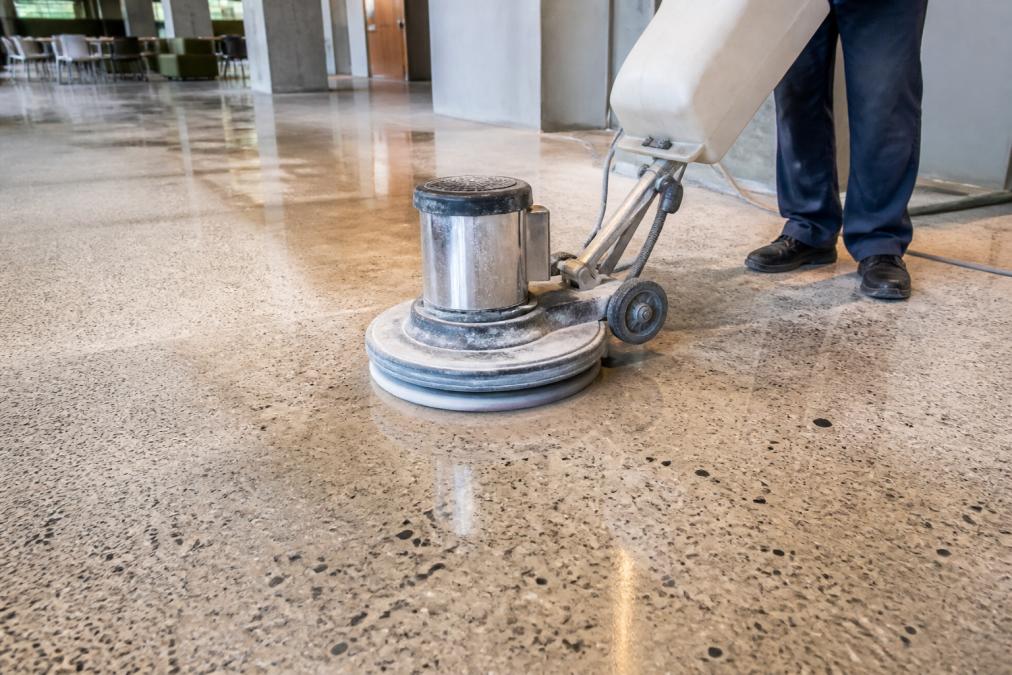
Diamond grinding uses progressively finer diamond abrasives to remove the top layer, expose fresh terrazzo, fill small voids, and create a uniform surface. The sequence typically moves from coarse diamonds (30-40 grit) to remove old sealer and stains, through medium grits (80-120 grit) for refinement, to fine grits (200+ grit) for final surface preparation.
Each pass removes a thin layer and fills small voids with slurry created by grinding the aggregate and binder together. Grinding depth depends on floor condition; a floor with deep stains may require 1/8 inch removal, while one needing only refreshing might need just 1/16 inch.
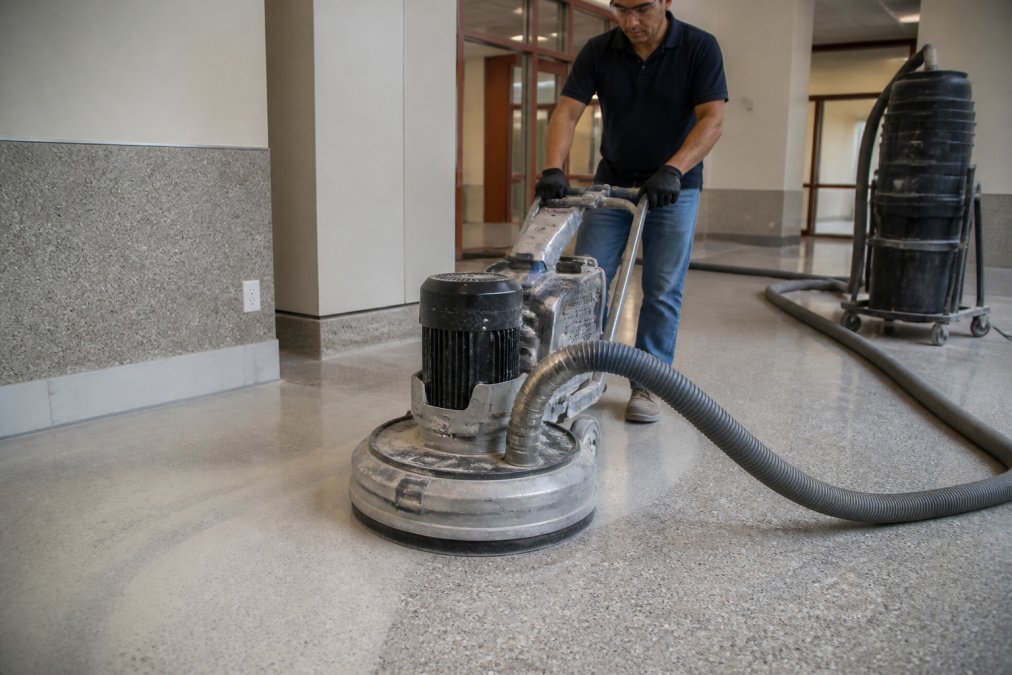
Dust containment during grinding is critical. Professional equipment uses wet grinding or dust collection systems to prevent silica dust issues and produce better results by allowing clear visibility of the floor.
Honing follows grinding using finer abrasives (typically 400-600 grit) to smooth the surface further and develop the desired finish. The floor transitions from a dull, ground appearance to one showing terrazzo's true colors and patterns.
Polishing to Your Desired Finish
Polishing determines the aesthetic outcome. High-gloss polishing creates a reflective, lustrous surface that showcases terrazzo beautifully but can be slippery. Matte finishes provide better slip resistance while still showcasing the terrazzo and hiding dust and footprints better than gloss. Satin finishes offer sheen and visual appeal while maintaining reasonable slip resistance.
Professional polishing equipment applies consistent pressure and motion, ensuring even results across the entire floor.
Professional Terrazzo Floor Polishing Services: What to Expect
A professional service begins with a detailed site visit and assessment, discussing desired outcomes and providing timeline and scope of work. During restoration, work is staged sequentially so at least part of the facility remains operational. For hospitals, universities, and large facilities, this staging minimizes disruption.
Quality professional services include dust containment, proper waste disposal, surface protection, and final cleanup. The best providers use wet grinding or advanced dust collection to maintain air quality.
Professional services include final inspection and touch-up. Once polishing is complete, the technician inspects the entire floor for consistency and ensures the finish meets expectations before sealing.
A1 Terrazzo brings over 35 years of experience to every terrazzo floor restoration project. Our team understands the specific demands of commercial spaces, hospitals requiring sanitary finishes, airports needing slip-resistant floors, universities preserving historic architecture. We manage timelines carefully to minimize operational disruption and deliver finishes meeting both aesthetic and functional requirements.
Crack Repair, Stain Removal, and Deep Cleaning
Cracks and stains are the most visible signs that a terrazzo floor needs restoration. Understanding how to address these issues prevents small problems from becoming catastrophic failures.
Addressing Cracks and Holes
Cracks fall into two categories: surface cracks affecting only the top layer, and structural cracks extending into the substrate. Surface cracks are cosmetic and addressed during polishing. Structural cracks indicate substrate movement, moisture, or installation failure.
Before restoring a floor with structural cracks, the underlying cause must be identified and corrected. If moisture causes the crack, that problem must be resolved first, or the crack will reappear. If substrate movement or poor installation caused it, the substrate may need stabilization.
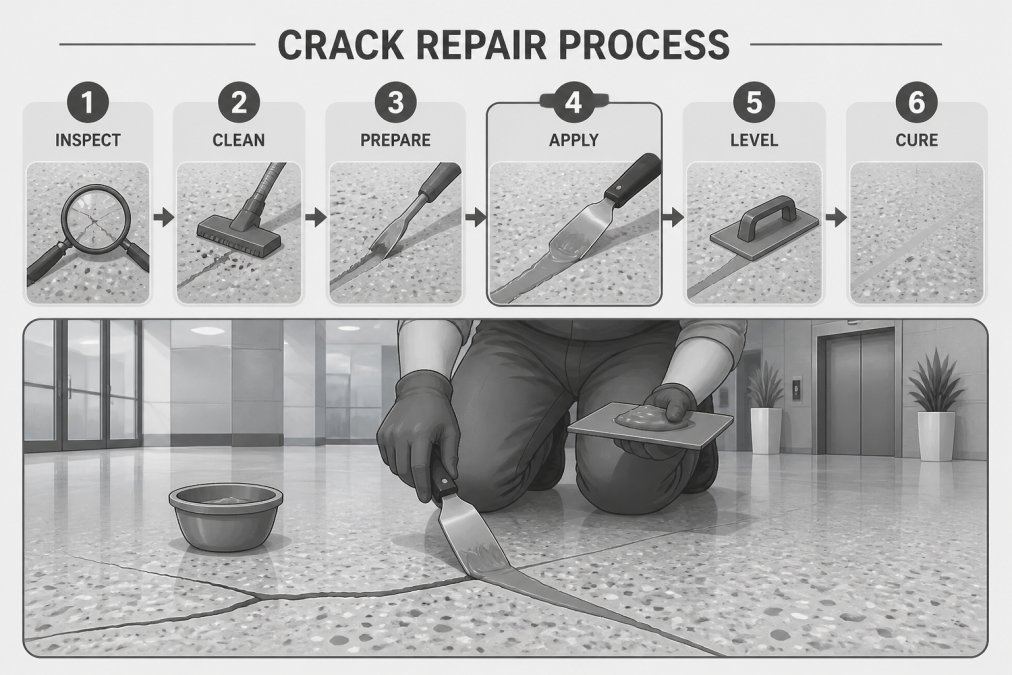
Crack repair involves cleaning out loose material and debris, then filling with epoxy or polyester terrazzo patching compound matched to the floor's color and aggregate. Once cured, the patched area is ground and polished to blend seamlessly with surrounding floor.
Holes and voids are addressed similarly. Small voids are often filled during grinding as slurry naturally fills them. Larger holes require patching with terrazzo material before final polishing.
Stain Removal and Restoration
Stains can be organic (food, blood, biological material), chemical (rust, ink, paint), or mineral (water deposits, salt). Each type requires a different removal approach.
Organic stains are addressed through deep cleaning and oxidizing treatments. Professional deep cleaning uses appropriate detergents and sometimes enzymatic treatments to break down organic matter.
Chemical stains like rust or ink may require specialized solvents or poulticing treatments. A poultice is a paste applied to the stain that draws the staining agent out of the terrazzo.
Mineral stains from hard water or salt deposits can often be removed with mild acids or specialized stone cleaners. However, acid treatments must be used carefully on terrazzo.
Some stains penetrated too deeply to be completely removed. In these cases, grinding away the stained surface layer is the most effective solution. Early intervention with stain removal prevents stains from becoming permanent. commercial cleaning services.
Commercial Terrazzo Floor Repair Cost and Budget Planning
The scope of restoration work determines cost more than any other factor. A floor needing only polishing and resealing costs significantly less than one requiring extensive crack repair, deep stain removal, or substrate work.
The size of the area being restored affects per-unit cost. Larger projects often achieve better efficiency and lower per-square-foot costs than small jobs. A 5,000-square-foot hospital corridor typically costs less per square foot than a 1,000-square-foot retail space.
Downtime and operational considerations influence cost. Projects completed in phases during off-hours cost more than those done in a single continuous effort. Facilities requiring operational continuity during restoration need more careful planning and dust containment, adding to project cost.
Material costs for patching, epoxy repair, and sealing vary based on products selected and repair extent. Eco-friendly or premium sealants cost more than standard options but may offer better performance or environmental benefits.
For accurate budgeting, obtain detailed quotes from professional terrazzo restoration providers. A1 Terrazzo provides comprehensive assessments and detailed quotes accounting for your facility's specific needs and operational constraints.
Terrazzo Floor Maintenance Schedule for Long-Term Protection
Once professionally restored, a maintenance schedule protects your investment and extends the time between major restoration projects.
Sealing and Protective Treatments
Sealing protects terrazzo from staining, moisture infiltration, and chemical damage. Penetrating sealers absorb into the terrazzo and protect from within, don't change appearance significantly, and allow natural terrazzo to show through. They require reapplication every 1-2 years depending on traffic and cleaning protocols (peer-reviewed research).
Topical sealers sit on the surface and create a protective layer, enhancing gloss and color while providing longer-lasting protection, typically 2-3 years between applications (peer-reviewed research). They're more durable against heavy traffic and chemical exposure, making them popular in hospitals and airports.
The choice depends on the floor's finish, facility's aesthetic preferences, and protection level needed. A healthcare facility with strict sanitation requirements might choose a topical sealer for maximum protection. A historic building preserving original terrazzo might choose a penetrating sealer to maintain authentic appearance.
Regular Maintenance Intervals
Daily maintenance keeps terrazzo clean and prevents buildup. Dry sweeping or vacuuming removes dust and debris. Damp mopping with pH-neutral cleaners removes soil without damaging sealer.
Weekly or bi-weekly deep cleaning, depending on traffic levels, removes buildup and maintains appearance. This is particularly important in healthcare facilities and food service areas.
Monthly inspections identify emerging issues, new cracks, sealer loss in high-traffic areas, or staining, so they can be addressed promptly before becoming serious problems.
Quarterly maintenance might include stripping and resealing high-traffic areas or addressing stains that daily cleaning hasn't removed. Annual or biennial full resealing renews the protective layer and maintains appearance and durability.
Maintenance schedules should adjust based on traffic volume and facility type. A hospital corridor requires more frequent maintenance than a university administrative office. Facilities with heavy equipment or chemical exposure need more aggressive sealing and cleaning protocols.
Slip Resistance, Compliance, and Durability Standards
Commercial terrazzo flooring must meet safety and durability standards varying by facility type and jurisdiction. Understanding these requirements ensures restoration work complies with regulations and protects your facility from liability.
Slip resistance is measured by the coefficient of friction (COF). The Americans with Disabilities Act (ADA) and OSHA guidelines recommend a COF of at least 0.60 for walking surfaces in commercial facilities (ada.gov). Wet areas and high-traffic zones may require higher values. High-gloss finishes have lower COF values (typically 0.40-0.50), while matte finishes are more slip-resistant (typically 0.60-0.75).
Healthcare facilities, airports, and other high-liability environments often require slip-resistant finishes or anti-slip treatments to meet regulatory standards. Matte terrazzo finishes provide inherent slip resistance. If a facility requires a glossy finish for aesthetic reasons, anti-slip coatings or textured sealers can increase COF to compliant levels.
Terrazzo, when properly installed and maintained, exceeds durability requirements for most commercial applications. The key is ensuring the substrate is sound, installation meets industry standards, and maintenance prevents premature wear.
For healthcare facilities, sanitation standards are critical. Terrazzo's seamless, non-porous finish (when properly sealed) makes it ideal for environments where bacteria and contaminants must be minimized. The ADA Accessibility Guidelines specify that floor surfaces must be stable, firm, and slip-resistant, all of which properly finished terrazzo achieves.
Compliance verification should be part of restoration planning. Professional restoration providers understand these standards and ensure the finished floor meets all applicable requirements for your facility type and jurisdiction.
Downtime Management and Operational Continuity
For many commercial facilities, the biggest concern about terrazzo floor restoration is operational disruption. A hospital can't close a corridor. An airport terminal can't shut down a gate area. A university can't lose classroom space during the academic year.
Professional restoration services address downtime through phased project planning. Rather than attempting entire floor restoration in one project, work is staged in sections. A hospital might restore one corridor at a time, keeping others operational. An airport might work during off-peak hours. A university might schedule restoration during summer break.
Staging requires careful planning and coordination with facility management. The restoration provider must understand your facility's operational requirements and schedule work accordingly. A1 Terrazzo has managed restoration projects in hospitals, airports, and universities where operational continuity is non-negotiable.
Dust and noise management is critical. Wet grinding and advanced dust containment systems prevent dust from spreading to adjacent areas, allowing nearby operations to continue. Noise reduction measures minimize disruption to staff and visitors.
Timeline for restoration varies based on scope and staging. A straightforward polishing and sealing project on a 5,000-square-foot floor might take 3-5 days. A project involving extensive crack repair, deep cleaning, and multiple phases might extend over several weeks. Professional providers provide realistic timelines upfront and manage schedules to minimize disruption.
Planning for downtime also means planning for post-restoration transition. Once a section is complete and sealed, it needs time to cure before full traffic resumes. Professional services coordinate this transition carefully, ensuring newly restored areas aren't damaged by premature use.
Terrazzo floor restoration is an investment in your facility's durability, safety, and aesthetic appeal. Professional restoration protects long-term operational efficiency and extends flooring investment life. A1 Terrazzo brings over 35 years of commercial terrazzo expertise to every project. We manage timelines to minimize operational disruption, apply proven restoration techniques ensuring lasting results, and provide maintenance guidance protecting your investment for years to come. Contact A1 Terrazzo to discuss your facility's restoration needs and receive a comprehensive assessment from professionals who understand the unique demands of commercial spaces.
Frequently Asked Questions
How often should commercial terrazzo floors be polished to maintain their appearance and durability?
Commercial terrazzo floors in high-traffic areas typically need professional polishing every 12 to 24 months, depending on foot traffic volume and maintenance practices. Hospitals, airports, and retail spaces with heavy use may require annual polishing to maintain slip resistance and aesthetic appeal. Regular maintenance between professional services, daily sweeping and weekly wet cleaning, extends the time between polishing cycles and protects your investment.
What is the difference between epoxy terrazzo and cementitious terrazzo restoration?
Cementitious terrazzo uses a cement binder and is more common in older commercial buildings; it's porous and requires sealing to prevent staining. Epoxy terrazzo uses an epoxy resin binder, is non-porous, more durable in wet environments, and ideal for healthcare facilities and food service areas. Restoration techniques differ: cementitious floors benefit from penetrating sealers, while epoxy terrazzo requires topical sealers. Your restoration contractor should assess which type you have before recommending a maintenance plan.
Can terrazzo floors be restored if they have deep cracks or significant damage?
Yes, terrazzo floors can be restored even with cracks and damage through professional repair methods. Shallow cracks are filled with color-matched epoxy or grout repair, while deeper structural cracks may require patching with new terrazzo aggregate. The restoration process includes surface preparation, crack assessment, repair, diamond grinding, honing, and polishing to blend repaired areas with the original floor. Success depends on the extent of damage and the quality of substrate preparation to prevent future cracking.
What maintenance steps should we take between professional terrazzo floor polishing services?
Between professional services, sweep daily to remove dirt and debris that can scratch the surface. Wet mop weekly with pH-neutral cleaners designed for terrazzo, avoid acidic or alkaline products that damage the aggregate and sealer. Wipe spills immediately to prevent staining, especially on cementitious terrazzo. Use walk-off mats at entrances to reduce dirt tracking. Avoid harsh chemicals and abrasive scrubbing pads. For high-traffic areas, consider monthly buffing with soft pads to maintain the finish and extend the polishing cycle.
This article was written using GrandRanker
Frequently Asked Questions
How often should commercial terrazzo floors be polished to maintain their appearance and durability?
Commercial terrazzo floors in high-traffic areas typically need professional polishing every 12 to 24 months, depending on foot traffic volume and maintenance practices. Hospitals, airports, and retail spaces with heavy use may require annual polishing to maintain slip resistance and aesthetic appeal. Regular maintenance between professional services—daily sweeping and weekly wet cleaning—extends the time between polishing cycles and protects your investment.
What is the difference between epoxy terrazzo and cementitious terrazzo restoration?
Cementitious terrazzo uses a cement binder and is more common in older commercial buildings; it's porous and requires sealing to prevent staining. Epoxy terrazzo uses an epoxy resin binder, is non-porous, more durable in wet environments, and ideal for healthcare facilities and food service areas. Restoration techniques differ: cementitious floors benefit from penetrating sealers, while epoxy terrazzo requires topical sealers. Your restoration contractor should assess which type you have before recommending a maintenance plan.
Can terrazzo floors be restored if they have deep cracks or significant damage?
Yes, terrazzo floors can be restored even with cracks and damage through professional repair methods. Shallow cracks are filled with color-matched epoxy or grout repair, while deeper structural cracks may require patching with new terrazzo aggregate. The restoration process includes surface preparation, crack assessment, repair, diamond grinding, honing, and polishing to blend repaired areas with the original floor. Success depends on the extent of damage and the quality of substrate preparation to prevent future cracking.
What maintenance steps should we take between professional terrazzo floor polishing services?
Between professional services, sweep daily to remove dirt and debris that can scratch the surface. Wet mop weekly with pH-neutral cleaners designed for terrazzo—avoid acidic or alkaline products that damage the aggregate and sealer. Wipe spills immediately to prevent staining, especially on cementitious terrazzo. Use walk-off mats at entrances to reduce dirt tracking. Avoid harsh chemicals and abrasive scrubbing pads. For high-traffic areas, consider monthly buffing with soft pads to maintain the finish and extend the polishing cycle.