 comparison
Artistic Terrazzo Alternatives for Schools: 2026 Guide
Table of Contents
- Why Schools Look Beyond Artistic Terrazzo
- School Flooring Options at a Glance: Comparison Table
- Epoxy Flooring: Seamless and Chemical-Resistant
- Polished Concrete vs. Terrazzo: Durability and Cost Compared
- Rubber Flooring: Cushioning and Slip Resistance for High-Traffic Zones
- VCT and Commercial Flooring for Schools: The Budget Option
- Low-Maintenance School Flooring: Cleaning, Repair, and Downtime
- Choosing Terrazzo Alternatives by School Space
- Frequently Asked Questions
Last Updated: October 17, 2026
Why Schools Look Beyond Artistic Terrazzo
Artistic terrazzo remains one of the most durable floor finishes ever made, but it is no longer the automatic choice for every school building.
Terrazzo alternatives are flooring systems that deliver comparable durability or performance without the cost and cure time of a full terrazzo installation. The main options are epoxy, polished concrete, rubber, and vinyl composition tile.
Below, we compare each option and show which spaces it suits best.
School Flooring Options at a Glance: Comparison Table
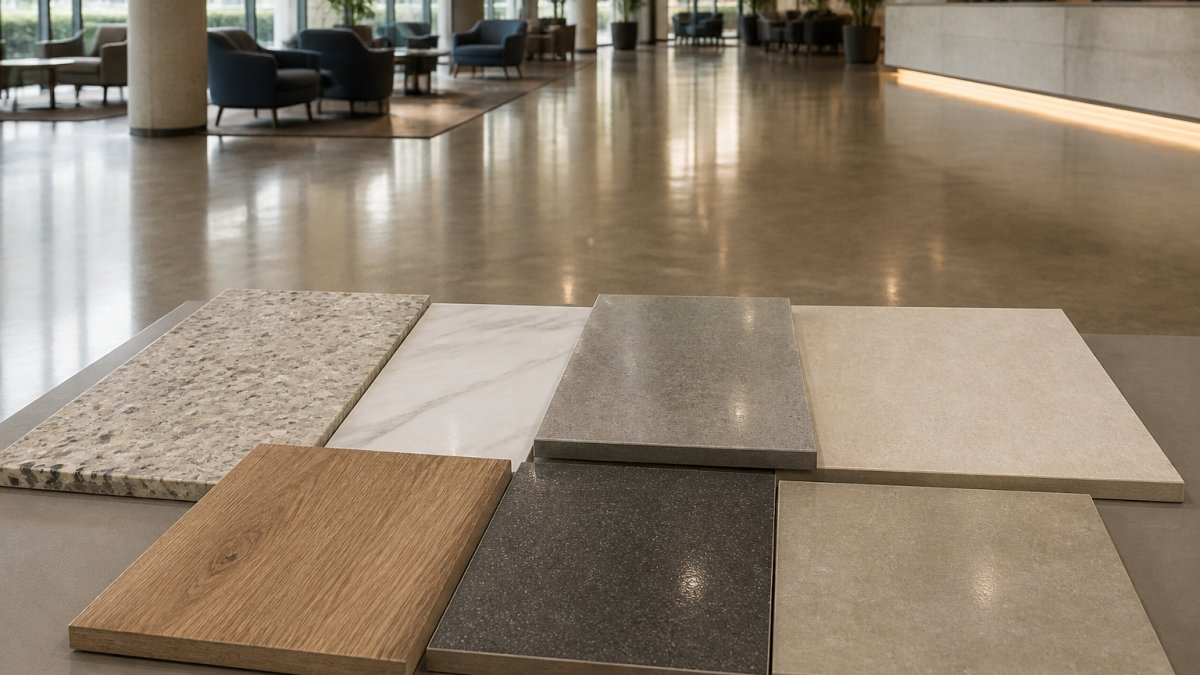
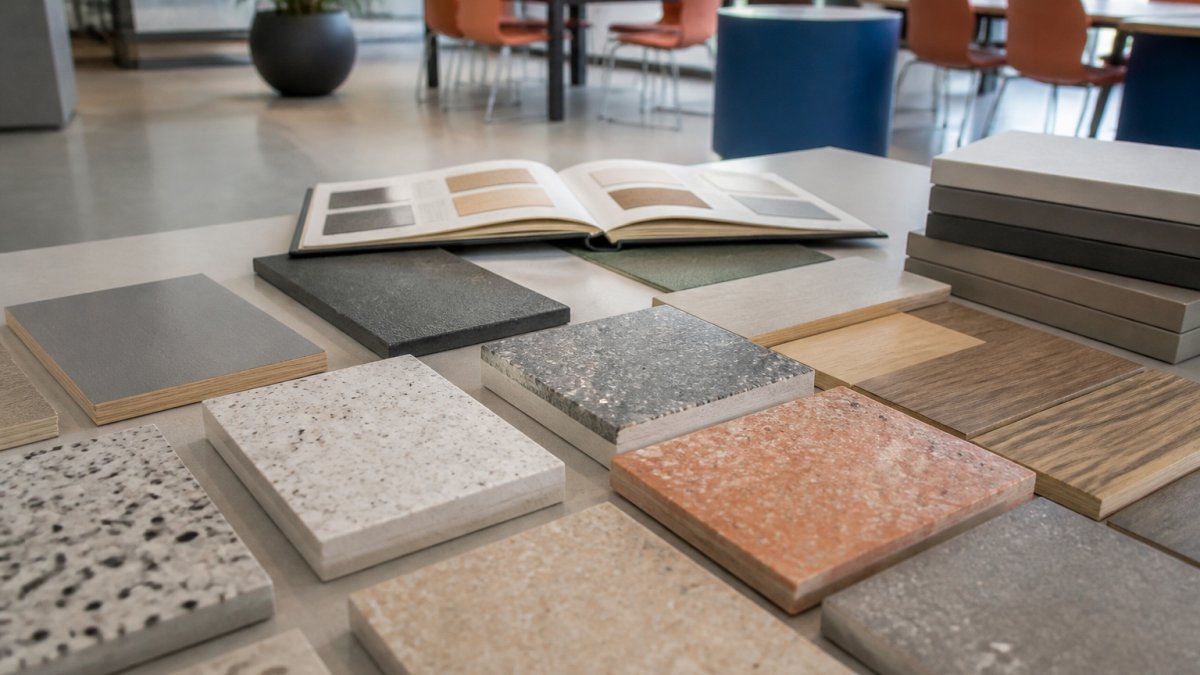
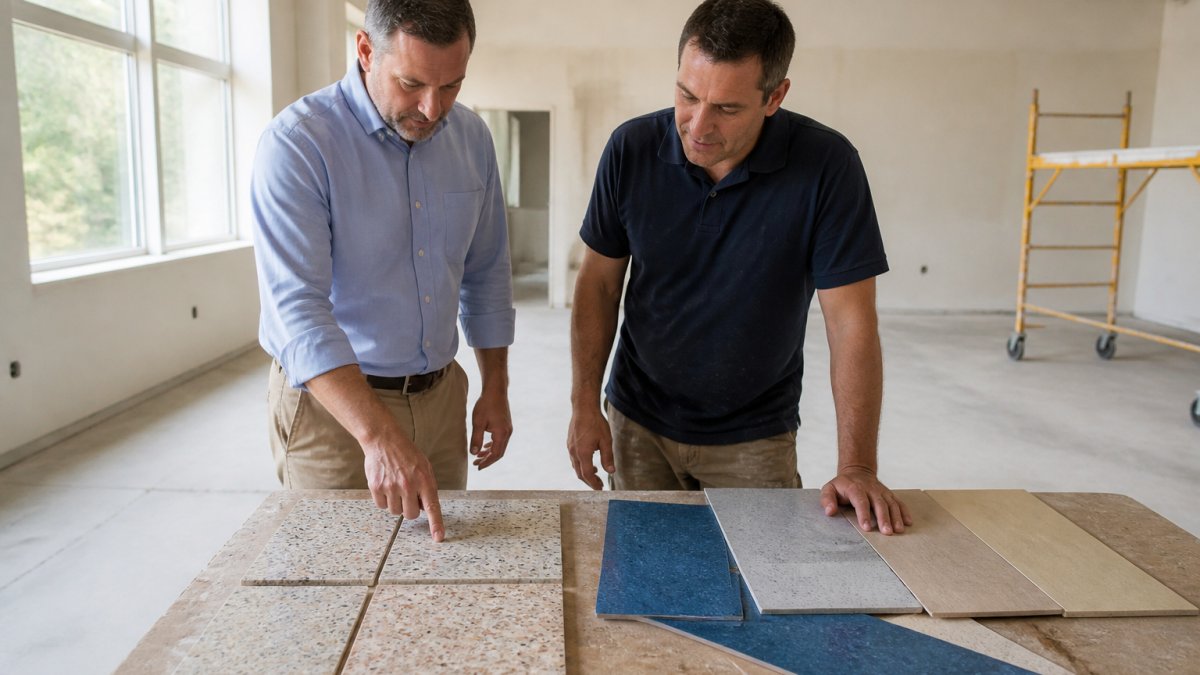
The table below compares the main school flooring options on the criteria that actually drive school decisions: upfront cost profile, service life, maintenance load, and best-fit spaces.
| Option | Typical Installed Cost per Sq Ft (Planning Range) | Expected Service Life | Annual Maintenance Profile | Best-Fit School Spaces |
|---|---|---|---|---|
| Artistic terrazzo | $18-$35+ | 40+ years | Low; neutral cleaner and periodic polish | Corridors, lobbies, cafeterias, signature spaces |
| Epoxy | $4-$12 | 10-20 years | Low; damp mopping, no wax | Science labs, art rooms, kitchens, washrooms |
| Polished concrete | $3-$8 | 20-30+ years | Low; dust mopping and occasional burnishing | Commons, corridors, multipurpose halls |
| Rubber | $6-$12 | 15-20 years | Low; damp mopping, occasional recoating | Gymnasiums, play areas, stairwells, early-childhood rooms |
| VCT | $1.50-$4 | 5-10 years | High; strip and wax 2-4 times per year | Classrooms, back-of-house, storage |
How to Read These Ranges
Installed cost includes material, substrate preparation, and labor, but not asbestos abatement, moisture mitigation, or after-hours scheduling premiums, all common in occupied school renovations. Moisture mitigation alone can add several dollars per square foot to any system, so substrate testing belongs in the budget before flooring is selected.
The Lifecycle Math Schools Should Run
The upfront number is only half the decision. Compare total cost of ownership over 20 years using three inputs: installed cost, replacement cycles, and annual maintenance labor.
Run this math space by space rather than campus-wide. A district may find terrazzo in the main lobby and polished concrete in the commons deliver better 20-year value than VCT throughout, even when the upfront budget favors VCT.
Epoxy Flooring: Seamless and Chemical-Resistant
Epoxy flooring is a resin-based coating applied over a prepared concrete slab, and it earns its place wherever spills and hygiene matter more than decoration.
Epoxy performance lives or dies on substrate preparation. A slab with moisture vapor issues or poor surface profile will delaminate an epoxy coating, sometimes within a single school year.
Pros: seamless surface, strong chemical and stain resistance, fast turnaround compared with terrazzo. Cons: can be slippery when wet unless aggregate is added, and it will not match terrazzo's decorative range.
Polished Concrete vs. Terrazzo: Durability and Cost Compared
Polished concrete is a mechanically ground and densified concrete slab, and it is the closest functional cousin to terrazzo on this list. Both are hard, long-lived, and unforgiving of a bad substrate. The polished concrete vs. terrazzo comparison usually comes down to budget, aesthetics, and design flexibility.
Where Polished Concrete Wins
Polished concrete typically costs less upfront because it uses the existing slab rather than adding a topping system. It suits large, open, utilitarian spaces: commons areas, corridors, multipurpose halls, and bus drop-off zones that need a hard, low-maintenance surface without a decorative finish.
Where Terrazzo Still Leads
Artistic terrazzo wins on design. Aggregate selection, color, and pattern give a school a floor that functions as architecture, and the material's wear resistance under heavy foot traffic remains the benchmark. For lobbies and main corridors where a building's identity matters, terrazzo still sets the standard. Schools comparing the two should read the National Terrazzo and Mosaic Association guidance on terrazzo systems before deciding.
Rubber Flooring: Cushioning and Slip Resistance for High-Traffic Zones
Rubber flooring is the option schools choose when safety and acoustics outrank hardness.
Slip resistance deserves particular attention. The ADA Standards for Accessible Design set the accessibility framework schools must meet, and floor surfaces in accessible routes must be stable, firm, and slip resistant.
The trade-off is service life and repairability. Rubber is softer, so it wears faster in the highest-traffic corridors, and damaged tiles are replaced rather than refinished.
VCT and Commercial Flooring for Schools: The Budget Option
Vinyl composition tile is the cost-effective workhorse of commercial flooring for schools, and usually the first option a budget committee asks about. VCT is inexpensive to buy and install, comes in many colors, and can be replaced tile by tile when damaged.
The catch is maintenance. VCT needs stripping and waxing on a recurring cycle, and that labor adds up over a floor's life.
For a broader view of how school flooring systems are specified, the U.S. Department of Education facilities guidance is a useful starting reference for planning teams.
Low-Maintenance School Flooring: Cleaning, Repair, and Downtime
Low-maintenance school flooring is defined less by how often it is cleaned and more by how forgiving it is when something goes wrong. Every hard floor on this list cleans similarly day to day. The real difference shows up in repair and downtime.
Repairability and Phased Installation
- Terrazzo: repairable and refinishable, but repairs are a specialist job and matching aggregate takes care.
- Polished concrete: refinishing restores the surface without replacement.
- Epoxy: patching is possible, but a full recoat means closing the room.
- Rubber: damaged tiles are swapped individually.
- VCT: the easiest to patch, tile by tile.
Phased installation matters for occupied buildings. Epoxy and VCT cure fast and allow room-by-room scheduling. Terrazzo and polished concrete need more cure and finishing time, so we plan those around school breaks.
Choosing Terrazzo Alternatives by School Space
The right terrazzo alternatives for schools depend on the room, not the catalog. Traffic volume, cleaning chemistry, moisture exposure, acoustic needs, and repair downtime vary from space to space, and a single system rarely serves an entire campus well. Here is how we would specify each zone.
Main Lobbies and Signature Corridors
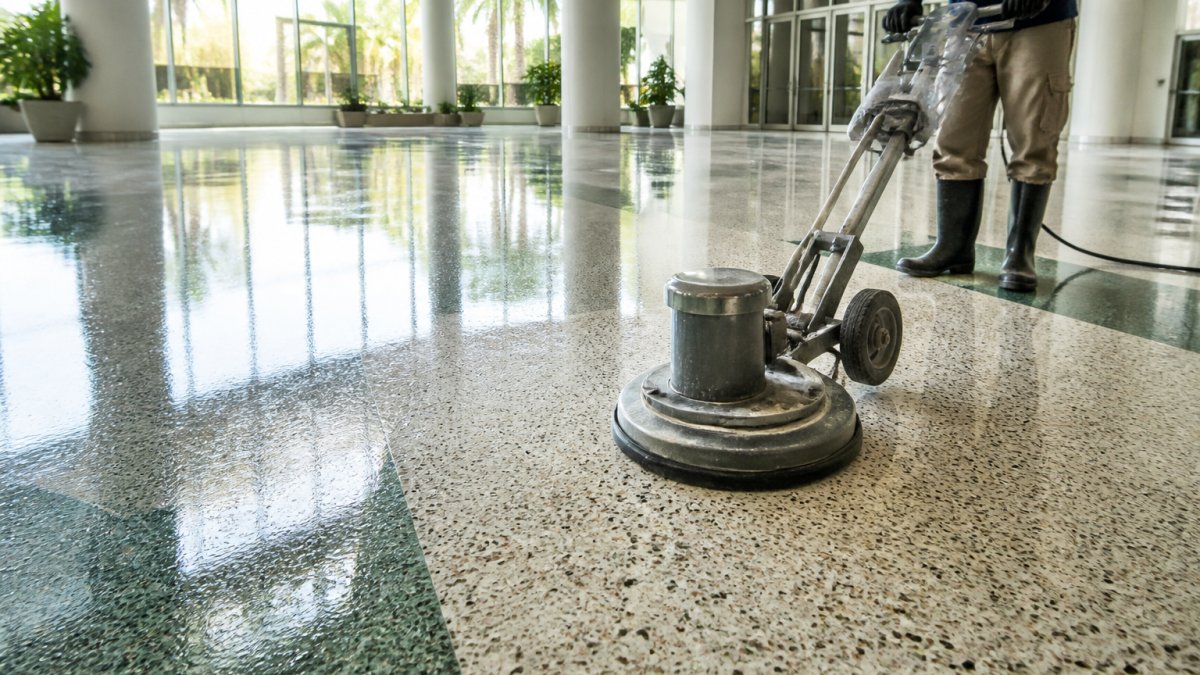
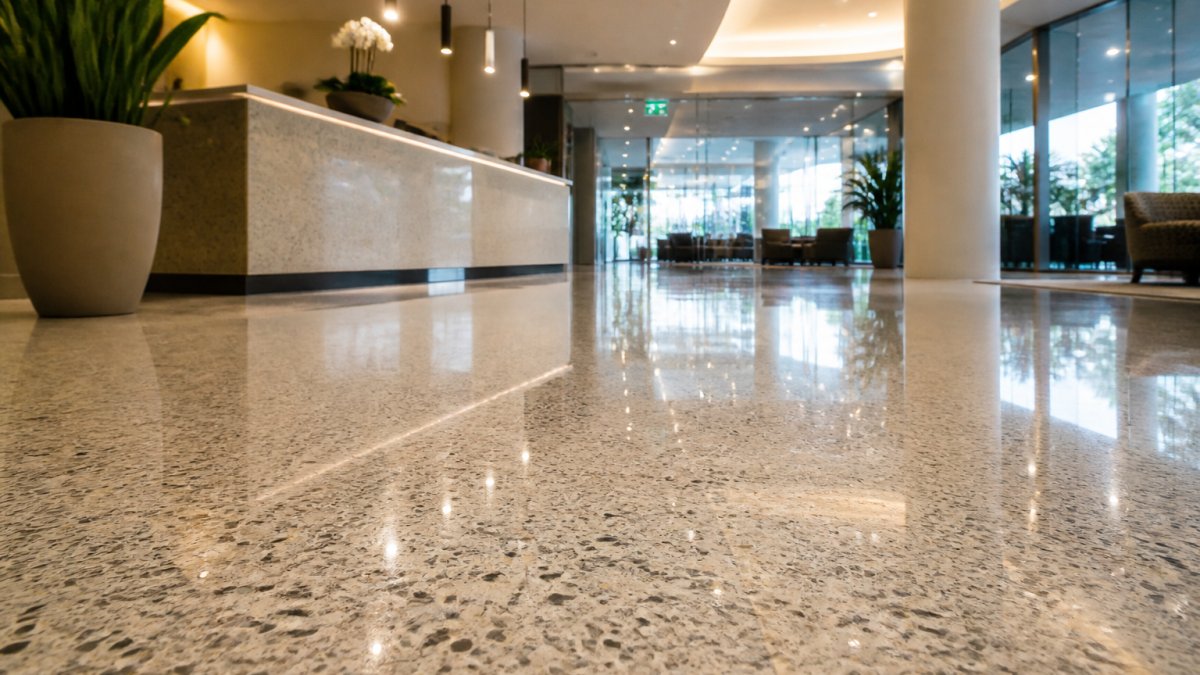
These are the highest-visibility, highest-traffic spaces in the building, and where artistic terrazzo earns its premium. Terrazzo resists wear under concentrated foot traffic, holds a pattern indefinitely, and can be refinished rather than replaced. Where budget does not allow terrazzo throughout, polished concrete is the closest functional substitute: hard, long-lived, and low-maintenance, though far less flexible in design. Avoid VCT here; the strip-and-wax cycle shows wear quickly in lobby traffic and undermines the building's first impression.
Science Labs, Art Rooms, and Commercial Kitchens
These spaces share a need for chemical resistance, seamless cleaning, and stain protection. Epoxy flooring is the standard choice because it forms a seamless surface that resists spills, paints, and laboratory chemicals, and mops clean without joints that trap residue. The critical specification is substrate preparation: epoxy delaminates over slabs with moisture vapor issues or poor surface profile, so moisture testing and surface profiling are non-negotiable. Specify an aggregate broadcast or textured topcoat in wet areas rather than a glossy finish.
Cafeterias and Commons
Cafeterias combine food and beverage spills, heavy movable furniture, and high foot traffic. Polished concrete performs well because it is hard, easy to clean, tolerant of heavy use, and can be refinished if it dulls. Terrazzo is also an excellent fit where the budget allows, particularly in dining areas that double as event space. The main caution is acoustics: hard floors in large dining rooms amplify noise, so plan sound-absorbing ceiling and wall treatments alongside the floor choice.
Gymnasiums, Play Areas, and Stairwells
Safety and acoustics outrank hardness in these zones. Rubber flooring offers cushioning, strong slip resistance, and sound absorption, which makes it the preferred choice for gymnasiums, play areas, stairwells, and early-childhood rooms where falls are a real risk. Specify a rubber product with a published slip-resistance rating and confirm it meets the accessibility framework for routes that must be stable, firm, and slip resistant under the ADA Standards for Accessible Design.
Classrooms and Back-of-House Areas
Classrooms, storage rooms, and administrative back-of-house areas are where budget pressure is strongest and the floor is least on display. VCT is the conventional choice because it is inexpensive to install and can be patched tile by tile. The catch is maintenance: VCT needs stripping and waxing on a recurring cycle, and that labor adds up over the floor's life. Where the budget allows, rubber or polished concrete in classrooms reduces the long-term maintenance load.
Wet Areas and Entrances
Washrooms, locker rooms, and building entrances need slip-resistant surfaces that tolerate moisture and tracked-in grit. Epoxy with an aggregate broadcast works well in washrooms and locker rooms; entrance matting systems should supplement any hard floor to capture grit before it reaches the finish. Confirm slip resistance with the manufacturer's published test data rather than relying on product descriptions.
A Space-by-Space Specification Approach
A practical way to plan a renovation is to map each space against three questions: How heavy is the traffic? What is the cleaning chemistry and spill risk? How disruptive would a repair be during the school year? Spaces with heavy traffic, harsh spills, and high repair disruption justify the higher upfront cost of terrazzo, epoxy, or polished concrete. That is where our 35 years of commercial terrazzo work pays off: we help administrators evaluate their options.
Frequently Asked Questions
What are the best alternatives to terrazzo flooring for schools?
The main terrazzo alternatives for schools are epoxy, polished concrete, rubber, and vinyl composite tile (VCT). Each trades off differently: epoxy offers seamless chemical resistance for labs and cafeterias, polished concrete delivers long service life in corridors and commons, rubber provides cushioning and slip resistance in gyms and play areas, and VCT keeps upfront cost low for classrooms and offices. The right pick depends on the space, traffic level, and maintenance budget rather than one universal winner.
Is polished concrete cheaper than terrazzo for a school?
Polished concrete usually carries a lower upfront cost than terrazzo because it works with the existing slab and skips the aggregate and divider-strip installation. Over a full lifecycle the gap narrows: both are hard, long-lasting surfaces, but concrete can show cracks and stains that need patching, while terrazzo holds color and pattern through its full depth. Get project-specific quotes for both before committing, since substrate condition drives much of the real cost.
Which school flooring is easiest to maintain?
Polished concrete and terrazzo are the easiest to maintain day to day: both need only dust mopping and a neutral cleaner, with occasional burnishing. Epoxy wipes clean but can scuff under heavy furniture. VCT requires stripping and waxing on a recurring schedule, which adds labor hours and chemical use. Rubber needs damp mopping and periodic deep cleaning. For low-maintenance school flooring, specify a surface that resists stains without a sacrificial coating.
Can terrazzo alternatives handle heavy foot traffic in hallways and cafeterias?
Yes, with the right match. Polished concrete and epoxy handle heavy foot traffic well in corridors and commons. Cafeterias need stain and chemical resistance, which favors epoxy or a sealed terrazzo. Rubber suits gyms and play areas where cushioning and slip resistance matter more than abrasion resistance. VCT wears faster in high-traffic zones but works in lower-traffic classrooms. Match the material to the traffic pattern rather than applying one product across the whole campus.
Do terrazzo alternatives meet sustainability and indoor air quality goals for schools?
It varies by product. Polished concrete uses the existing slab and can earn credit under LEED standards for reduced materials. Some VCT and rubber products carry recycled content, but adhesives and sealers affect indoor air quality, so ask for low-VOC documentation. Terrazzo itself can include recycled glass or aggregate. Request material disclosures and confirm VOC levels before specifying, since sustainability claims differ widely between manufacturers and installation methods.