 blog
blog
Compare Commercial Flooring Durability Ratings: A Guide
Table of Contents
- Understanding Commercial Flooring Durability Ratings
- AC Ratings Explained: Laminate AC4 vs AC5 Rating Standards
- PEI Ratings and Other Durability Scales Across Flooring Types
- Finding the Most Durable Commercial Flooring for Your Facility
- Commercial Flooring for High-Traffic Areas: Matching Ratings to Your Space
- Commercial Flooring Maintenance Requirements and Long-Term Performance
- Practical Comparison Framework: From Ratings to Selection
- Frequently Asked Questions
Last Updated: October 9, 2026
Understanding Commercial Flooring Durability Ratings
Commercial flooring durability ratings are standardized measures of how well a floor withstands wear, traffic, and environmental stress in business settings, translating real-world performance into comparable numbers that help facility managers choose materials for their specific use cases.
The cost of failure makes this critical: a floor that cracks, scratches, or deteriorates from moisture creates safety hazards, disrupts operations, and forces expensive replacements.
At A1 Terrazzo, we've spent 35 years installing commercial flooring in hospitals, airports, schools, and retail spaces across Florida. We've seen what happens when facilities choose flooring on appearance alone: premature wear, maintenance headaches, and budget overruns.
Why Durability Ratings Matter for Commercial Spaces
Ratings predict how a material performs under your facility's exact conditions, a hospital corridor faces different stresses than a retail showroom, and an airport terminal sees traffic that would destroy light-commercial materials.
These standards exist because the industry needed a common language: an AC4 rating means the same thing across brands, and a PEI 4 tile performs consistently across suppliers.
The practical benefit: ratings eliminate unsuitable options immediately.
The Role of Standards and Test Methods
Standards bodies develop tests that simulate real-world wear, foot traffic, scratching, moisture, impact, and show how many cycles a material survives before visible degradation.
Understanding the test behind a rating makes you a smarter buyer. A material scoring well on abrasion might fail under moisture stress; a scratch-resistant surface could be vulnerable to impact. Laminate uses AC ratings, tile uses PEI, and vinyl has its own standards, comparing ratings across incompatible systems is a common mistake.
AC Ratings Explained: Laminate AC4 vs AC5 Rating Standards
The AC system classifies laminate from AC1 (least durable) to AC5 (most durable), reflecting how many abrasion cycles a surface survives before visible wear appears.
What AC Ratings Measure
AC ratings measure surface abrasion resistance: a rotating abrasive wheel passes over the laminate until wear becomes visible. AC1 laminates fail after roughly 1,000 cycles; AC5 materials survive 6,000 or more. This predicts real-world durability well because foot traffic and furniture movement generate consistent abrasion wear.
The test doesn't measure scratch resistance from sharp objects, impact resistance, or moisture performance. A laminate can score high on abrasion while failing catastrophically when exposed to water, so AC ratings must be combined with other durability factors.
AC1 Through AC5: Traffic Classifications
AC1 suits residential bedrooms and low-traffic areas. AC2 handles residential living areas. AC3 works for light commercial spaces: small offices, boutiques, low-traffic retail.
AC4 is the minimum for most commercial applications, office buildings, schools, and retail stores with consistent customer flow. AC5 represents heavy commercial use: airports, hospitals, malls, restaurants, where traffic is constant and intense.
The difference matters. An AC4 laminate in an airport terminal shows visible wear within 2-3 years; AC5 material remains acceptable for 5-7 years or longer.
PEI Ratings and Other Durability Scales Across Flooring Types
Tile and stone use the PEI (Porcelain Enamel Institute) scale, measuring surface hardness and scratch resistance rather than abrasion wear. Ratings range from 1 to 5.
PEI Scale for Tile and Stone
PEI 1 and PEI 2 tiles suit residential bathrooms and bedrooms. PEI 3 handles residential kitchens and light commercial spaces. PEI 4 works for commercial kitchens, retail, and moderate-traffic areas.
The PEI test uses a rotating wheel with abrasive particles to scratch the tile surface; the number of rotations before visible scratching determines the rating.
Porcelain generally scores higher than ceramic because it's denser and harder.
Comparing AC Ratings to PEI and Other Standards
Comparing AC ratings directly to PEI ratings is tempting but problematic. AC measures abrasion wear; PEI measures scratch resistance and surface hardness.
Laminate typically pairs high AC ratings with moderate scratch resistance. Tile offers excellent scratch resistance but may not handle heavy abrasion as well. Vinyl uses its own classifications based on wear layer thickness.
The practical approach: evaluate each flooring type against all relevant durability factors, not just its primary rating. An AC5 laminate is durable under foot traffic but vulnerable to water.
Finding the Most Durable Commercial Flooring for Your Facility
Durability alone doesn't determine the best choice. The most durable floor for your facility is the one that resists all the stresses your space will impose.
Wear and Scratch Resistance Across Materials
Laminate excels at resisting abrasion from foot traffic and furniture movement; AC4 and AC5 directly measure this, making laminate exceptional where traffic and furniture movement dominate.
Tile offers superior scratch resistance through PEI ratings.
Vinyl provides balanced performance. LVT and LVP products include wear layers that resist both abrasion and scratching; thickness correlates directly to durability.
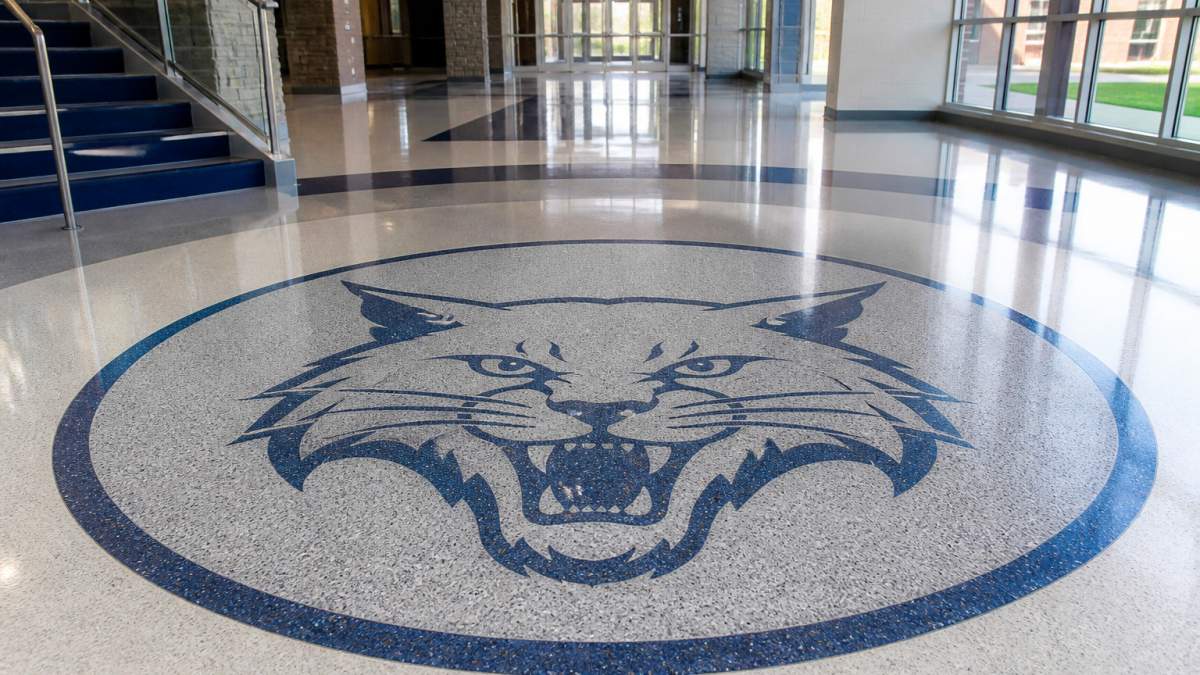
Terrazzo, properly installed and maintained, often exceeds 50 years in commercial settings. It doesn't rely on a rating system because performance is measured through real-world installation history.
Moisture and Water Resistance Performance
Moisture resistance separates durable flooring from flooring that fails prematurely in wet environments. Laminate is inherently vulnerable, even AC5 laminate swells and delaminates under standing water or high humidity.
Tile excels in wet environments.
Vinyl offers excellent moisture resistance.
Terrazzo's moisture performance depends on sealer type and maintenance discipline. This is where many terrazzo floors fail: not because terrazzo is moisture-vulnerable, but because maintenance protocols weren't followed.
Commercial Flooring for High-Traffic Areas: Matching Ratings to Your Space
High-traffic environments demand flooring rated for the punishment they deliver. Matching ratings to traffic levels prevents premature failure and ensures years of reliable performance.
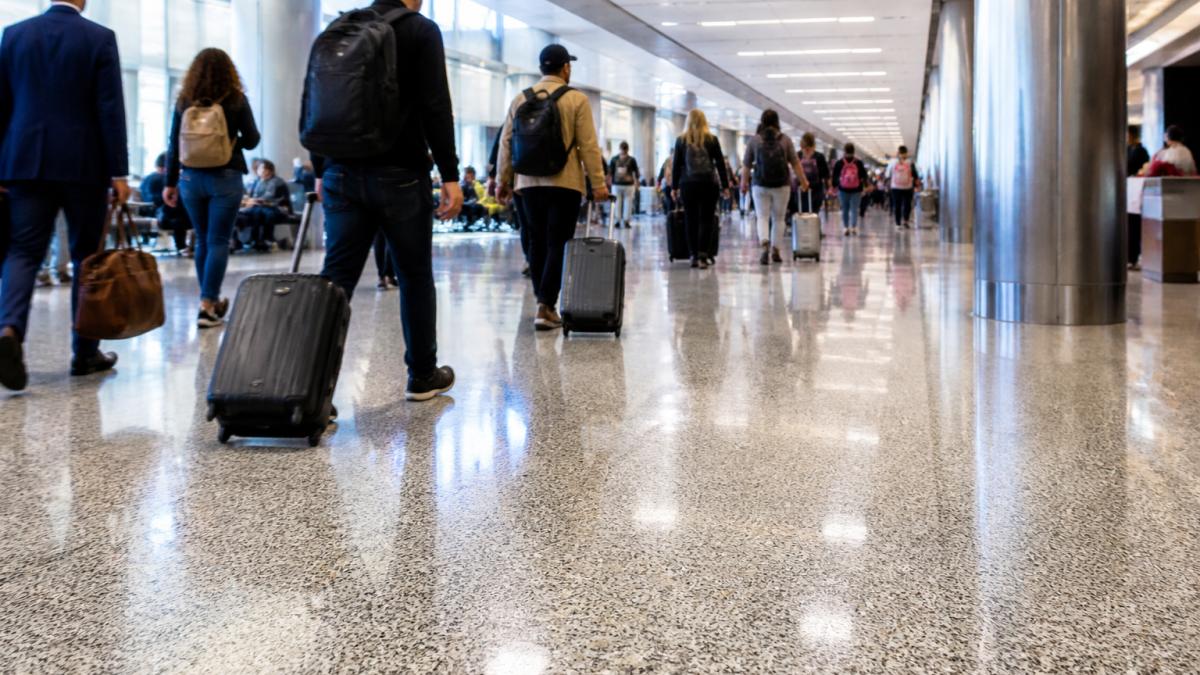
Heavy Commercial Use and Traffic Level Assessment
Heavy commercial traffic is constant, intense foot traffic combined with wheeled equipment, frequent cleaning, and environmental stresses.
AC5 laminate is the minimum here; AC4 shows visible wear within 2-3 years. Similarly, PEI 4 tile is insufficient, PEI 5 is required. Vinyl wear layers should exceed 30 mil.
Assessing your traffic level requires honest evaluation. Count peak-hour foot traffic. Observe equipment movement: how many wheelchairs, carts, and equipment passes cross daily? Document wet cleaning frequency and methods. Identify environmental stresses: humidity, temperature fluctuations, chemical exposure.
Applications: Hospitals, Airports, Schools, and Retail Environments
Hospitals endure intense traffic, frequent wet cleaning with strong disinfectants, and wheeled equipment. Tile and vinyl excel because they resist moisture and withstand aggressive cleaning.
Airport terminals demand flooring that survives thousands of travelers daily plus luggage carts, wheelchairs, and cleaning equipment. AC5 laminate works in dry areas.
Schools see moderate to heavy traffic concentrated at arrival, dismissal, and class transitions.
Retail varies dramatically. A boutique might suit AC3 or AC4 laminate; a high-traffic mall needs AC5 or PEI 5 tile.
Commercial Flooring Maintenance Requirements and Long-Term Performance
The most durable flooring fails prematurely without proper maintenance. Conversely, moderately rated materials can exceed expected service life when maintained well. Maintenance isn't optional, it's a core component of durability.
Installation and Substrate Preparation Impact
Installation quality directly determines how long flooring survives. A material rated for heavy commercial use fails within years if the substrate isn't properly prepared; proper preparation lets materials perform beyond rated expectations.
Substrate preparation includes moisture testing, leveling, and sealing. Moisture migrates upward, causing laminate to swell and delaminate, vinyl to bubble, and tile adhesive to fail. Uneven substrates cause stress concentration at high points, accelerating wear.
Maintenance Protocols and Warranty Considerations
Laminate requires regular dry cleaning and immediate spill cleanup, water is the enemy, and even small spills left unattended cause permanent damage.
Tile requires regular sweeping and wet cleaning with pH-neutral cleaners. Grout lines accumulate dirt and need periodic scrubbing.
Vinyl requires regular sweeping and damp mopping with pH-neutral cleaners. It's more forgiving than laminate regarding moisture but still shouldn't be soaked.
Terrazzo requires regular sweeping and damp mopping, plus periodic sealer reapplication, every 1-2 years in commercial spaces, depending on traffic and cleaning protocols.
| Flooring Type | Minimum AC/PEI Rating | Maintenance Frequency | Moisture Vulnerability | Best For |
|---|---|---|---|---|
| Laminate | AC4 (moderate), AC5 (heavy) | Daily vacuuming, immediate spill cleanup | High, water causes failure | Dry commercial offices, retail |
| Tile | PEI 4 (moderate), PEI 5 (heavy) | Daily sweeping, weekly wet cleaning | Low surface, moderate grout | Kitchens, bathrooms, hospitals |
| Vinyl | 20-30 mil wear layer | Daily sweeping, damp mopping | Very low | Wet environments, commercial kitchens |
| Terrazzo | Installed correctly, sealed properly | Daily sweeping, damp mopping, resealing every 1-2 years | Low when sealed, high when unsealed | High-end commercial, hospitals, airports |
Practical Comparison Framework: From Ratings to Selection
Selecting commercial flooring requires moving beyond ratings to evaluate how materials perform in your specific environment. A systematic approach prevents costly mistakes.
Step 1: Define Your Traffic Level and Application Type
Assess your facility's traffic intensity honestly. Light commercial means fewer than 500 people daily with minimal equipment movement. Moderate involves 500-2,000 people daily with regular equipment use.
Document environmental stresses: moisture, temperature fluctuations, chemical contact, UV exposure. Identify zones with different traffic levels, your facility likely has high-traffic corridors, moderate offices, and low-traffic storage, each potentially requiring different flooring.
Consider aesthetics. Laminate offers design variety at lower cost but limits durability options. Tile provides design flexibility with high durability. Vinyl balances aesthetics and performance.
Step 2: Cross-Reference Durability Ratings and Test Methods
For laminate, AC4 suits light to moderate commercial spaces; AC5 is required for heavy traffic.
For tile, PEI 4 handles moderate commercial traffic; PEI 5 is necessary for heavy traffic. Verify tile is glazed or porcelain (ceramic is more porous).
For vinyl, specify commercial-grade products with 20+ mil wear layers, thicker layers mean longer service life.
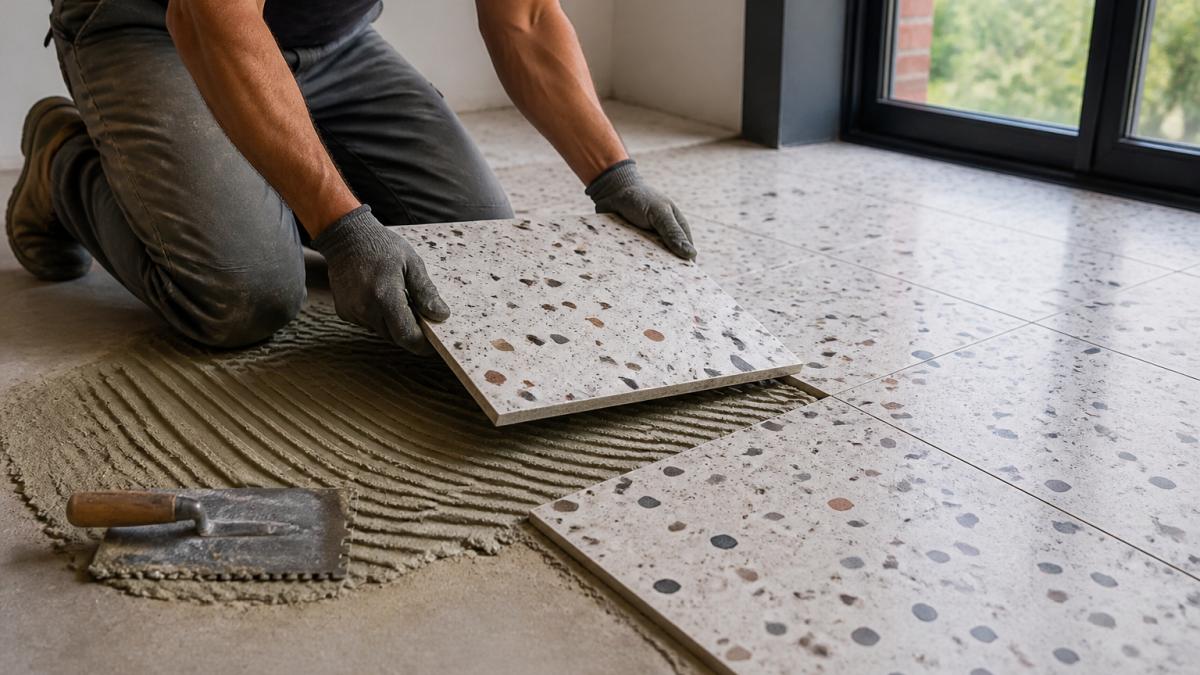
For terrazzo, durability depends on proper installation and maintenance. Verify contractors understand substrate preparation, sealing, and maintenance protocols.
Step 3: Evaluate Installation, Maintenance, and Total Cost of Ownership
The cheapest option often becomes the most expensive once maintenance and premature replacement are factored in.
Installation quality affects durability as much as material selection.
Maintenance protocols determine whether flooring delivers its rated durability.
Choosing commercial flooring durability ratings correctly prevents costly failures and ensures your floors perform reliably for years.
At A1 Terrazzo, we help facility managers navigate these decisions with 35 years of experience installing and maintaining commercial flooring across Florida.
Frequently Asked Questions
What is the most durable commercial flooring for hospitals and healthcare facilities?
Terrazzo, polished concrete, and porcelain tile rank among the most durable commercial flooring options for healthcare. Terrazzo excels in sanitary environments because it's seamless, non-porous, and resists moisture and bacteria growth. Its durability depends heavily on proper substrate preparation and professional installation. Facilities like hospitals benefit from terrazzo's ability to withstand frequent cleaning with harsh disinfectants and constant foot traffic without degrading. Warranty and maintenance protocols matter as much as the material itself.
Is AC4 or AC5 better for commercial flooring?
AC5 laminate is rated for heavier commercial traffic than AC4. AC4 suits shops and offices with moderate foot traffic, while AC5 handles multi-use spaces and high-traffic areas like airports and retail environments. However, AC ratings apply only to laminate; they don't directly compare to terrazzo, tile, or vinyl durability. For the heaviest commercial applications (hospitals, airports, schools), terrazzo often outperforms both AC4 and AC5 laminate in wear resistance and moisture performance.
How do you compare durability ratings across different flooring materials?
Durability ratings vary by material: laminate uses AC scales (AC1-AC5), tile uses PEI ratings (0-5), and vinyl uses its own wear classifications. To compare fairly, examine the underlying test methods and traffic classifications, not just the numbers. Match the rating to your specific application (hospital, airport, school, retail) and traffic level. Also evaluate moisture resistance, scratch resistance, and maintenance requirements together with durability ratings. Substrate preparation and professional installation significantly affect real-world durability regardless of the rating.
What flooring is best for high-traffic commercial areas like airports and universities?
Terrazzo and commercial-grade porcelain tile perform best in high-traffic spaces. These materials resist heavy foot traffic, wheeled equipment, and frequent cleaning without wearing quickly. Terrazzo is seamless and non-porous, making it ideal for sanitary environments and easy maintenance. Proper substrate preparation and professional installation are critical, poor installation causes cracking and moisture damage regardless of material durability. For large-scale projects across multiple buildings, choosing a contractor with proven experience in high-traffic commercial environments ensures long-term performance and reduces repair costs.