 blog
How to Choose a Polished Concrete Alternative for Offices
Last Updated: October 29, 2026
Quick Summary
The main polished concrete alternatives for offices are terrazzo, epoxy coatings, luxury vinyl tile, carpet tile and engineered wood. Terrazzo suits durable, refinishable lobbies, epoxy suits cost-conscious seamless surfaces, and carpet tile suits open offices that need sound absorption.
- Terrazzo is a durable, refinishable option that can be ground and re-polished rather than replaced.
- Epoxy offers a seamless, easy-to-clean surface but can scratch or chip under heavy rolling traffic.
- Carpet tile absorbs sound more effectively than any hard surface, making it popular in open offices.
- Compare 10 to 20 year lifecycle costs, including cleaning, restoration, repairs and replacement, not just installation prices.
- Get written quotes from several installers using the same scope before deciding.
Table of Contents
- Why Offices Look Beyond Polished Concrete
- Terrazzo vs Polished Concrete: Durability and Appearance
- Epoxy Flooring for Offices: Strengths and Limits
- Vinyl, Wood and Other Office Flooring Options
- Office Flooring Cost Comparison and Lifecycle Costs
- Low-Maintenance Commercial Flooring for High-Traffic Areas
- Choosing the Right Floor for Your Office and Next Steps
- Frequently Asked Questions
Polished concrete has become the default floor for many office renovations: affordable, durable, and easy to keep clean.
Polished concrete is a good floor, but it is a hard, reflective surface. It transmits sound, feels unforgiving underfoot, and can look industrial in spaces meant to feel welcoming. Those limits push many office owners to explore polished concrete alternatives that better match how the space is actually used.
Why Offices Look Beyond Polished Concrete
Most offices choose polished concrete for low upfront cost, a clean modern look, and simple upkeep. Those reasons still hold; the problem appears after move-in, when the building reveals the trade-offs.
Common complaints include:
- Noise: Hard surfaces bounce footsteps, rolling chairs, and conversation, which hurts concentration in open-plan areas.
- Comfort: Standing and walking on concrete for long hours can be tiring, especially in reception areas and break rooms.
- Appearance: The finish can look stark or unfinished in client-facing spaces like lobbies and boardrooms.
Many office owners are not choosing against polished concrete but for a specific goal, such as a quieter workplace or a more upscale lobby. Starting from the goal makes the decision much clearer.
Terrazzo vs Polished Concrete: Durability and Appearance
Terrazzo is an alternative to consider.
For a current quote tailored to your project, contact A1 Terrazzo directly.
Epoxy Flooring for Offices: Strengths and Limits
Epoxy is a resin coating applied over concrete or another substrate, creating a seamless, glossy, easy-to-clean surface in many colors and finishes. That makes it appealing in corridors, break rooms, and areas that need a clean, uniform look.
Epoxy's strengths include:
- A seamless surface with no grout lines to collect dirt
- Good chemical resistance, useful near kitchens and restrooms
- Wide color options and decorative flake or metallic finishes
Its limits matter just as much:
- Wear over time: Epoxy can scratch, chip, or dull under heavy rolling traffic and furniture movement.
- Heat and UV sensitivity: Some epoxy systems yellow or soften in direct sunlight or high heat.
- Repairs: A damaged epoxy section can be hard to match seamlessly.
Epoxy works well as a cost-conscious option for many office interiors but is less suited to high-traffic lobbies or spaces needing decades of wear without refinishing. You can compare epoxy and cement terrazzo head to head to see which holds up better over time.
Vinyl, Wood and Other Office Flooring Options
Beyond terrazzo and epoxy, several other materials regularly appear on office shortlists.
- Luxury vinyl tile (LVT) and vinyl composition tile: These resilient options are quieter underfoot than concrete, come in many designs, and install over a range of subfloors. They are common in offices that want comfort and a warm look on a modest budget. They can dent under heavy furniture and need replacing rather than refinishing.
- Carpet tile: Carpet absorbs sound more effectively than any hard surface, which makes it popular in open offices. It requires regular vacuuming and periodic replacement of worn tiles, and it can trap allergens if not maintained.
- Engineered wood: Wood brings warmth to conference rooms and executive suites. It is less suited to high-moisture areas and heavy commercial traffic unless the product is specifically rated for it.
- Bamboo: Often marketed as sustainable, bamboo behaves much like hardwood for hardness and moisture sensitivity. Product quality varies widely, so check ratings carefully.
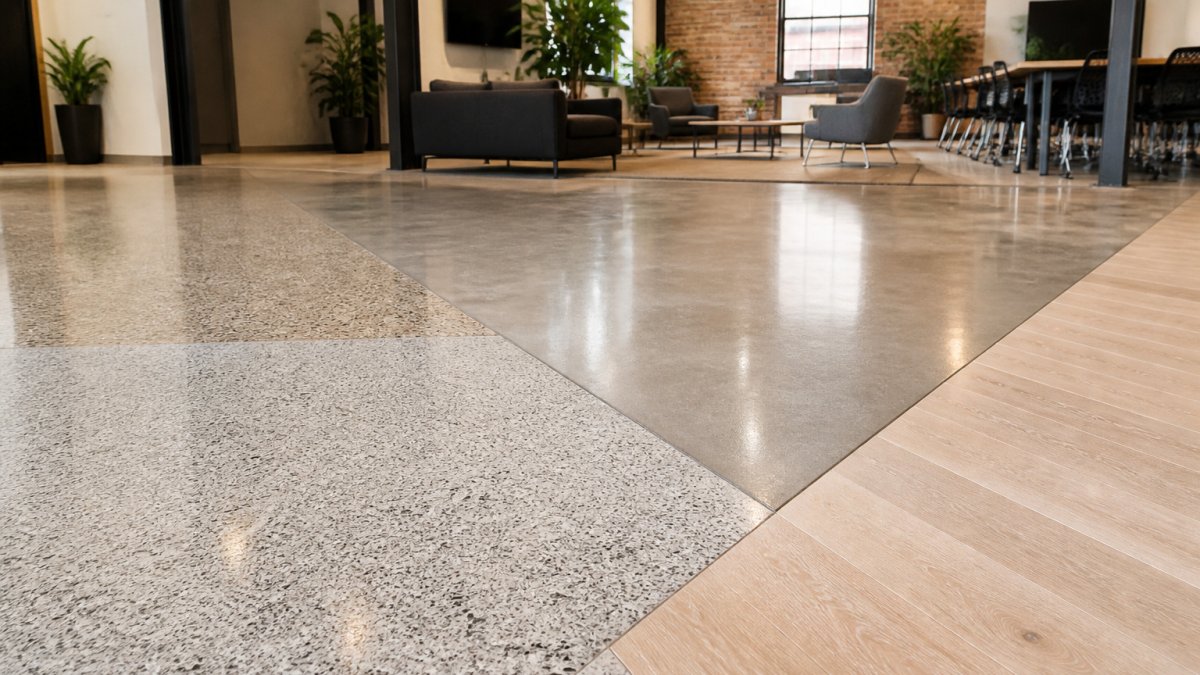
No single material wins everywhere. A typical office may use one floor in the lobby, another in workstations, and a third in restrooms and kitchens; matching each area to its real demands produces the best result.
Office Flooring Cost Comparison and Lifecycle Costs
Upfront cost is only part of the picture; teams that compare only installation prices often underestimate long-term cleaning, refinishing, and replacement spending. The table below gives planning-level installed-cost ranges for common office flooring options, followed by the lifecycle factors that change the ranking over 10 to 20 years.
| Flooring option | Typical installed cost per sq ft (materials + labor) | Expected service life in an office | Refinish or restore? | Typical ongoing cost drivers |
|---|---|---|---|---|
| Polished concrete | $3-$8 | 20+ years | Yes, re-polish and re-seal periodically | Sealer reapplication, stain removal, dust mopping |
| Terrazzo (cement or epoxy matrix) | $15-$35 | 30-40+ years | Yes, grind and re-polish | Periodic re-polish, neutral-pH cleaning, minimal replacement |
| Epoxy coating | $3-$7 | 5-10 years | No, recoat or replace | Recoating every few years, chip repair, UV yellowing in sunlit areas |
| Luxury vinyl tile (LVT) | $3-$7 | 10-15 years | No, replace tiles | Cleaning, plank/tile replacement, subfloor flatness upkeep |
| Vinyl composition tile (VCT) | $2-$5 | 10-20 years | Yes, strip and wax | Stripping and waxing 2-4 times per year, tile replacement |
| Carpet tile | $3-$7 | 7-12 years | No, replace tiles | Vacuuming, spot cleaning, periodic tile replacement |
| Engineered wood | $6-$12 | 15-25 years | Yes, sand and refinish | Refinishing every 7-10 years, humidity control, dent repair |
| Bamboo | $5-$11 | 10-20 years | Yes, sand and refinish | Refinishing, moisture control, product-quality variance |
Ranges are planning-level and vary with region, substrate condition, square footage, and specification; always confirm with written bids on the same scope.
Total cost of ownership over 10 to 20 years
A simple TCO model adds four cost streams to the installed price:
- Routine cleaning, labor hours and consumables per square foot per year. Hard surfaces generally need dust mopping and damp mopping; carpet needs vacuuming; VCT adds strip-and-wax cycles.
- Periodic restoration, re-polishing terrazzo or concrete, recoating epoxy, refinishing wood, or stripping and waxing VCT. These are the costs most often left out of initial budgets.
- Repairs, patching a chipped epoxy floor, replacing stained carpet tiles, or swapping cracked LVT planks. Repairability matters more in high-turnover tenant spaces.
- Replacement and downtime, the year the floor must be replaced, plus the lost productivity or rent while the space is out of service.
A common pattern: a $4/sq ft epoxy floor recoated every 5 years and replaced at year 10 can cost more over 20 years than a $20/sq ft terrazzo floor re-polished periodically and lasting 40 years. The crossover point depends on cleaning labor rates and how long the tenant intends to hold the space.
Office-specific cost drivers
- Subfloor preparation: Moisture mitigation, grinding, and self-leveling can add $1-$4/sq ft and affect every option differently.
- Phasing and after-hours work: Occupied offices often require night and weekend installation, which raises labor cost.
- Square footage: Larger continuous pours and installations lower the per-square-foot price; small rooms and complex layouts raise it.
- Accessibility and transitions: Reducing floor height differences at doorways and between materials may require transition strips or substrate work.
Because prices vary with project size, site conditions, and material selection, request written quotes from several qualified installers and compare them on the same scope. A guide to how commercial flooring durability ratings translate into long-term value can help you read those lifecycle numbers.
Low-Maintenance Commercial Flooring for High-Traffic Areas
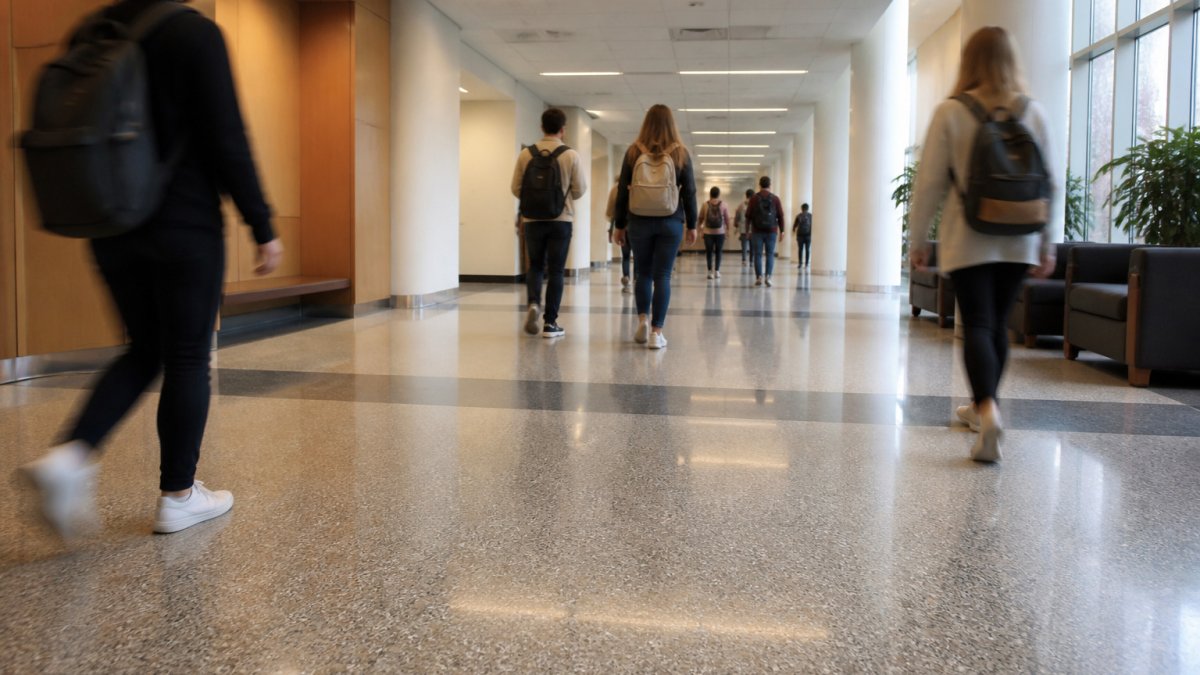
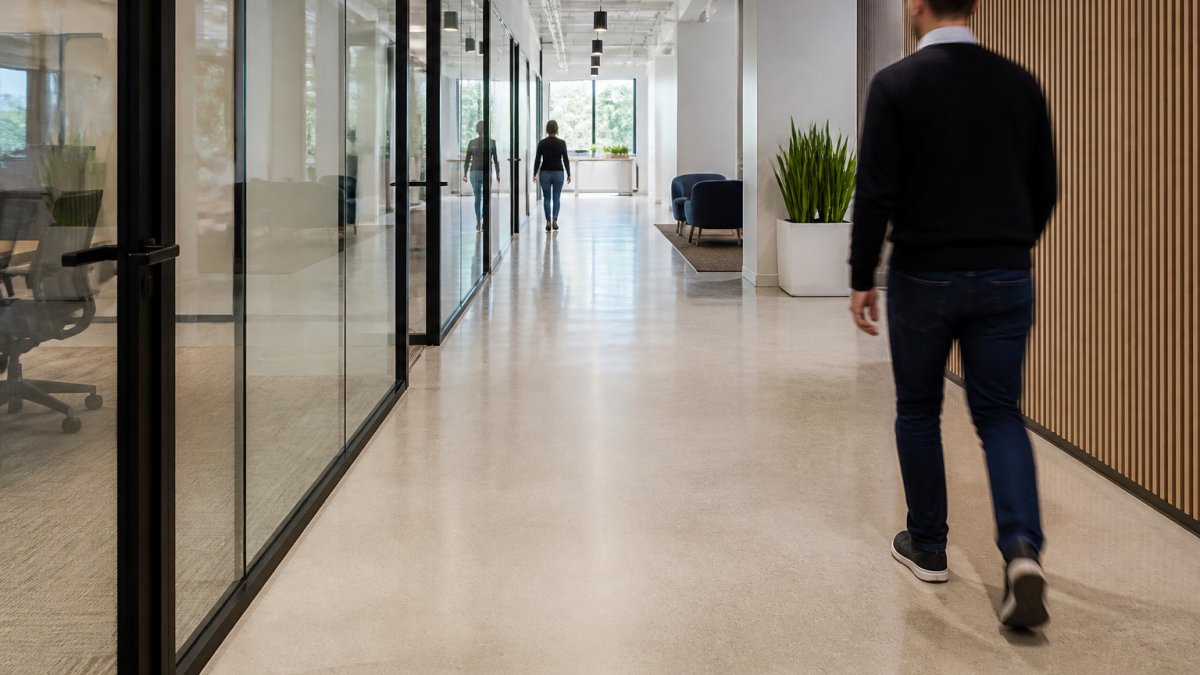
High-traffic zones such as lobbies, corridors, and entrances place the greatest demands on any floor: abrasion resistance, grit handling, and presentability with routine cleaning. In offices they must also perform on acoustics, comfort, slip resistance, accessibility, and indoor air quality. Most comparisons stop at durability; this section covers the workplace factors that determine whether a floor actually works in an office.
Durability and abrasion in office traffic
- Terrazzo: Dense, abrasion-resistant, and refinishable. The cement or epoxy matrix holds aggregate firmly, so grit does not easily gouge the surface, and the floor can be ground and re-polished to restore gloss rather than replaced.
- Polished concrete: A solid performer, though sealed surfaces may need more frequent re-treatment in heavy-use areas, and unsealed or poorly finished slabs can dust.
- Commercial-grade LVT: Good comfort and easy replacement of damaged planks or tiles, but heavy point loads from furniture legs can dent the wear layer.
- Epoxy: Seamless and easy to clean, but chips and scratches under rolling loads and can yellow in sunlit entries.
Acoustics and employee comfort
Hard surfaces reflect sound; in open offices, footfall and rolling chairs on concrete or terrazzo raise background noise and make conversation harder. Carpet tile absorbs sound most effectively, resilient floors such as LVT and rubber reduce impact noise versus bare concrete, and terrazzo and polished concrete are the most reflective, benefiting most from acoustic ceiling treatment, area rugs, and furniture layout planning.
Slip resistance and accessibility
Slip resistance is measured by the coefficient of friction (COF); a common industry reference is a minimum COF of 0.60 for level walking surfaces, and many specifiers ask for a tested value rather than a verbal assurance. Terrazzo and polished concrete can be finished matte or honed, with aggregate or additives to improve traction; LVT and VCT come with textured wear layers; carpet provides high traction but can impede wheelchair rolling if the pile is too deep.
Indoor air quality and sustainability
- VOC emissions: Look for low-VOC adhesives, sealers, and finishes; many resilient and carpet products carry third-party indoor air quality certifications.
- Recycled content and repairability: Terrazzo can incorporate recycled glass and post-industrial aggregate; carpet tile and LVT allow tile-by-tile replacement, which extends the floor's life. Current per-square-foot pricing for commercial terrazzo helps you set it against the other options.
- End-of-life: Terrazzo and concrete are long-lived and can be restored rather than landfilled; carpet and vinyl products vary widely in recyclability.
Matching the floor to the space
| Space | Priority | Strong options |
|---|---|---|
| Reception and lobby | Appearance, durability, slip resistance | Terrazzo, polished concrete with matte finish |
| Open office | Acoustics, comfort | Carpet tile, LVT with acoustic underlayment |
| Meeting rooms | Acoustics, appearance | Carpet tile, engineered wood |
| Corridors | Abrasion resistance, cleanability | Terrazzo, commercial LVT |
| Break rooms and kitchens | Moisture, stain resistance, cleanability | Epoxy, LVT, terrazzo |
Low maintenance is not no maintenance. For a ranked list of the best commercial flooring for high-traffic spaces, start with the options that suit your busiest areas. Every floor needs a cleaning schedule, appropriate products, and entrance protection such as walk-off mats; wrong cleaning chemicals are one of the most common causes of premature floor damage, regardless of material. Ask the installer for written care instructions before you sign off.
Choosing the Right Floor for Your Office and Next Steps
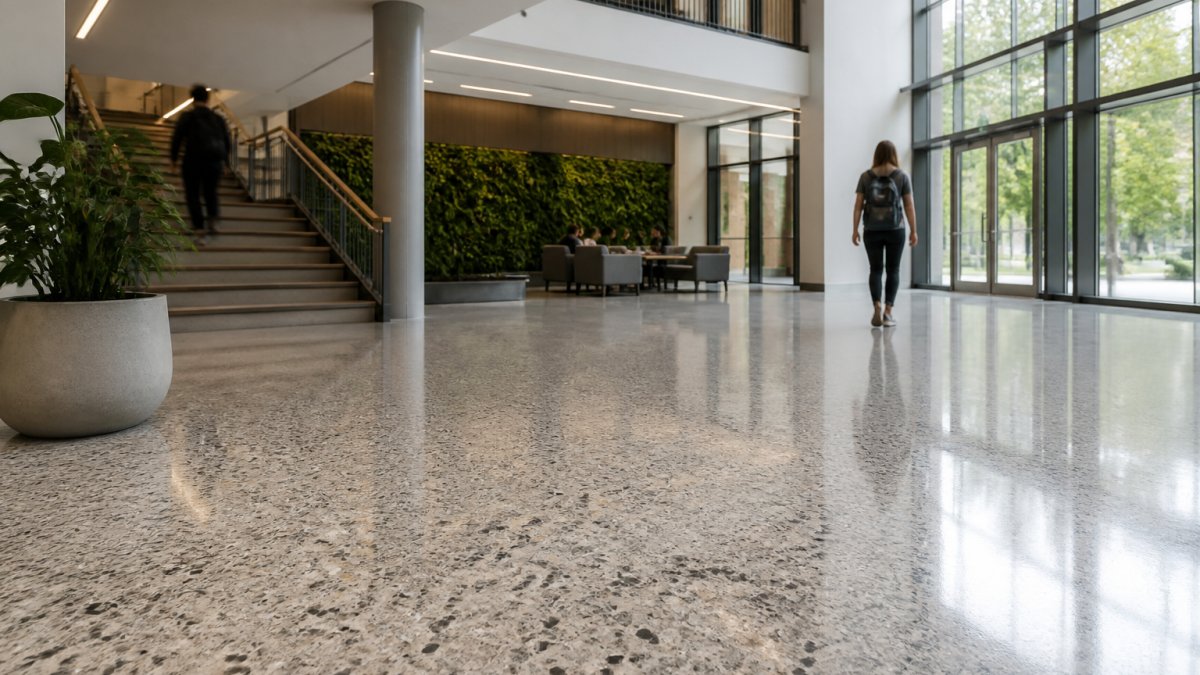
Start with your priorities. If sound control and comfort matter most, look at resilient flooring or carpet tile. For a durable, refinishable floor with a premium look in lobbies and public areas, terrazzo is a strong choice.
A practical decision process looks like this:
- Define the main goal for each space: acoustics, appearance, durability, or budget
- Estimate traffic levels and how long the floor needs to last
- Compare lifecycle costs, not just installation prices
- Get written quotes from several installers using the same scope
- Confirm the substrate condition and moisture levels before installation
For facilities across Florida, A1 Terrazzo offers commercial terrazzo installation and professional maintenance, backed by more than 35 years of experience. Contact A1 Terrazzo to start the conversation about your next flooring project.
Frequently Asked Questions
What is the best flooring alternative to polished concrete for an office?
There is no single best option, because the right choice depends on traffic levels, budget, acoustics and how often the floor will be cleaned or refinished. Compare each option against your traffic patterns, maintenance capacity and total lifecycle cost before deciding.
Is terrazzo a good alternative to polished concrete in commercial spaces?
Terrazzo is an alternative to consider in commercial spaces. For offices where appearance matters, it is worth evaluating against your budget.
How does epoxy flooring compare with polished concrete for offices?
Epoxy flooring is a resinous coating applied over concrete, offering a seamless, easy-to-clean surface in many colors. Polished concrete is a mechanically ground and densified slab with a glossy finish. Epoxy can be less disruptive to install in some cases and handles chemical spills well, but it can wear or chip under heavy rolling loads and may need recoating over time. Polished concrete typically has a longer lifespan with periodic maintenance. Contact A1 Terrazzo for current pricing and guidance on which system fits your facility.
What office flooring is durable, low-maintenance, and easy to clean?
Choose based on expected foot traffic, cleaning routines and how often you can schedule maintenance.