 blog
Sustainable Flooring for Modern Campus Architecture
Last Updated: October 22, 2026
Quick Summary
Sustainable flooring campus options include bamboo, cork, reclaimed wood, natural linoleum, recycled tile and rubber, and terrazzo. The best choice depends on specific space requirements, traffic patterns, and total cost of ownership across the material's service life. Terrazzo stands out for high-traffic areas, offering durability lasting 30-50+ years with minimal maintenance.
- Bamboo reaches harvest maturity in 3-5 years, while cork oak trees regenerate bark after harvesting without replanting.
- Natural linoleum is biodegradable, made from linseed oil, cork flour, wood dust, and mineral fillers on jute backing.
- Terrazzo floors last 30, 40, or even 50+ years with appropriate maintenance when properly installed.
- Recycled rubber flooring diverts millions of tires from landfills annually and excels in athletic facilities and fitness centers.
- Life-cycle assessment evaluates environmental impact from material extraction through installation, use, maintenance, and eventual disposal.
Table of Contents
- Why Sustainable Flooring Matters for Campus Facilities
- Sustainable Flooring for Higher Education Institutions
- Commercial Terrazzo Flooring as a Sustainable Solution
- Flooring Life-Cycle Assessment and Total Cost of Ownership
- Performance and Accessibility Across Campus Spaces
- Installation Planning and Phased Renovation Strategies
- Frequently Asked Questions
Why Sustainable Flooring Matters for Campus Facilities
Campus facilities face a unique challenge: they must balance durability, maintenance efficiency, and environmental responsibility across high-traffic areas that serve thousands of students, faculty, and staff daily, making sustainable flooring campus decisions critical to long-term success. The flooring you choose today affects operational costs, indoor air quality, and institutional sustainability commitments for decades.
Sustainable flooring for modern campus architecture goes beyond aesthetics. It addresses real facility management concerns. When a university renovates a dormitory, classroom building, or athletic center, the flooring decision ripples across maintenance budgets, cleaning protocols, and long-term replacement cycles.
The stakes are higher in campus settings than in typical commercial spaces. Dormitories handle constant foot traffic. Dining facilities require sanitary, chemical-resistant surfaces. Libraries demand low-noise flooring that doesn't amplify footsteps. Athletic facilities need impact-resistant materials that support both performance and safety. One flooring type doesn't solve all these problems, which is why understanding your options matters.
Sustainable Flooring for Higher Education Institutions
Educational institutions increasingly recognize that sustainable flooring for higher education serves both operational and mission-driven goals. A university committed to carbon neutrality cannot ignore the embodied carbon in building materials. Simultaneously, facility managers need flooring that withstands the wear patterns unique to campus life without requiring constant maintenance.
Sustainable flooring options for modern campus architecture fall into distinct categories based on material source, durability profile, and maintenance requirements. Some materials prioritize renewable resources. Others focus on recycled content or extended service life. The best choice depends on the specific campus space, traffic intensity, moisture exposure, and long-term facility strategy.
Many institutions approach this decision reactively, replacing flooring only when existing material fails. A more strategic approach involves auditing existing flooring, assessing lifecycle costs across different material options, and planning phased renovations that align with building schedules and budget cycles.
Bamboo and Cork: Renewable Options
Bamboo and cork represent the renewable material category in sustainable flooring for campus environments. Both come from rapidly replenishing plant sources, making them attractive from a resource standpoint.
Bamboo grows significantly faster than hardwood trees, reaching harvest maturity in 3-5 years compared to decades for traditional timber. Cork comes from the bark of cork oak trees, which regenerate bark after harvesting without requiring replanting. Both materials offer warm aesthetics that appeal to campus design goals emphasizing natural elements.
The practical reality is more complex. Bamboo flooring performs well in moderate-traffic areas with stable moisture conditions. Dormitory hallways, faculty offices, and administrative buildings suit bamboo well. It resists denting better than softwoods but remains vulnerable to moisture and standing water.
Cork flooring provides natural sound absorption and cushioning underfoot, making it excellent for libraries, study lounges, and spaces where noise reduction matters. It's inherently antimicrobial, which appeals to health-conscious facility managers. However, cork requires careful maintenance. Moisture infiltration damages cork quickly.
Both materials demand consistent maintenance protocols. Staff must use appropriate cleaning products and avoid excessive water. This works in controlled institutional settings but requires training and enforcement. When maintenance falls short, these renewable materials deteriorate faster than alternatives designed for institutional abuse.
Reclaimed and Responsibly Sourced Wood
Reclaimed wood flooring carries authentic appeal for historic campus buildings and restoration projects. Using original materials preserves architectural integrity when renovating century-old structures. Reclaimed wood also eliminates the environmental cost of new timber harvesting.
The challenge is availability and cost. Genuine reclaimed wood from authentic sources remains limited and expensive.
Responsibly sourced hardwood performs identically to conventional hardwood but carries lower environmental impact. It works well in offices, conference rooms, and moderate-traffic academic spaces. High-traffic corridors and public gathering areas stress hardwood beyond its practical limits, leading to visible wear and expensive refinishing.
For campus facilities, reclaimed wood makes sense in specific contexts: historic building restoration, administrative offices, and spaces where authenticity matters. Mixing reclaimed elements with other sustainable materials in a single renovation project often delivers better overall results than attempting to use reclaimed wood throughout an entire building.
Natural Linoleum and Recycled-Content Alternatives
Natural linoleum, often called Marmoleum when referring to specific commercial products, represents a misunderstood sustainable option. Despite the name, linoleum contains no plastic. It's made from linseed oil, cork flour, wood dust, and mineral fillers on a jute backing.
Natural linoleum performs exceptionally well in institutional settings. It resists moisture better than wood, handles rolling loads without damage, and cleans easily with standard protocols. Hospitals and healthcare facilities have used linoleum for decades specifically because it's sanitary and durable.
The aesthetic range is broader than many realize. Modern linoleum comes in diverse colors and patterns, moving beyond the dated institutional look. Recycled-content linoleum alternatives incorporate post-consumer or post-industrial materials while maintaining performance characteristics.
Installation and maintenance require specific attention. Linoleum needs proper substrate preparation and professional installation to prevent seams from separating. Once installed correctly, it demands minimal maintenance beyond regular sweeping and damp mopping.
Recycled Tile, Glass, and Rubber Options
Recycled content flooring materials have matured significantly. Modern recycled tile incorporates post-consumer glass, ceramic waste, and porcelain scraps into durable finished products. These tiles perform identically to virgin ceramic but divert waste from landfills.
Recycled glass tile combines crushed post-consumer glass with resin or concrete binders. The visual effect is striking: light reflects through glass fragments, creating depth and visual interest. Performance is excellent in wet areas.
Recycled rubber flooring comes from waste tires processed into resilient mats or tiles. It provides excellent cushioning, sound absorption, and impact resistance. Athletic facilities, fitness centers, and outdoor covered areas suit recycled rubber well.
The environmental story is compelling: recycled rubber diverts millions of tires from landfills annually. However, rubber flooring works best in specific applications. General-purpose campus corridors and offices don't require the cushioning properties, making rubber an unnecessary expense in those contexts.
Commercial Terrazzo Flooring as a Sustainable Solution
Terrazzo represents one of the most underestimated sustainable flooring options for campus environments. The material consists of marble, granite, or glass chips bound in a cement or epoxy matrix, then polished to a high sheen.
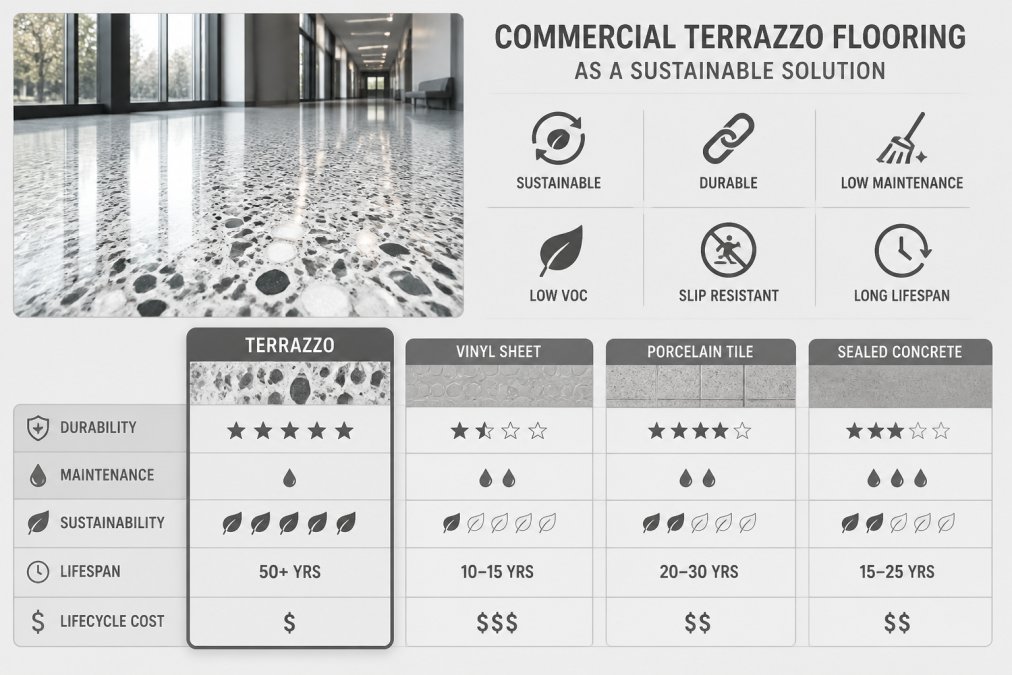
Terrazzo's durability is legendary. Properly installed terrazzo floors last 30, 40, or even 50+ years with appropriate maintenance. Many historic buildings on university campuses feature original terrazzo from the 1950s and 1960s still performing flawlessly.
The material's composition increasingly incorporates recycled content. Terrazzo installers can use recycled glass, reclaimed marble, and waste stone fragments, reducing dependence on virgin quarried materials.
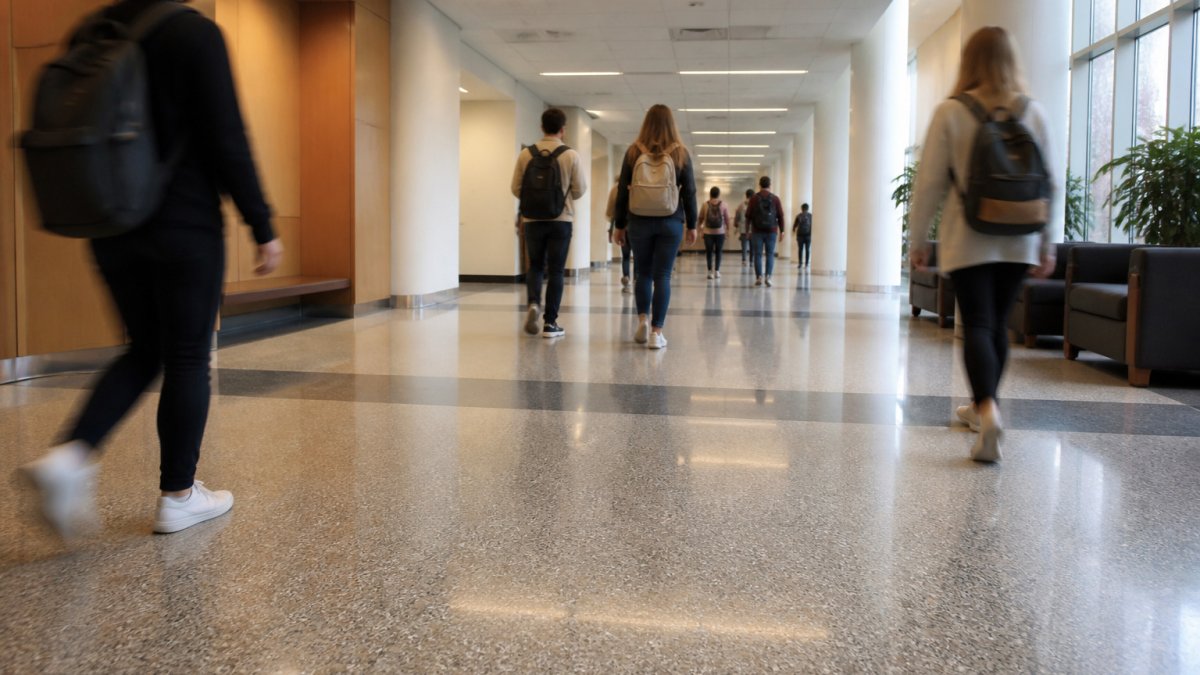
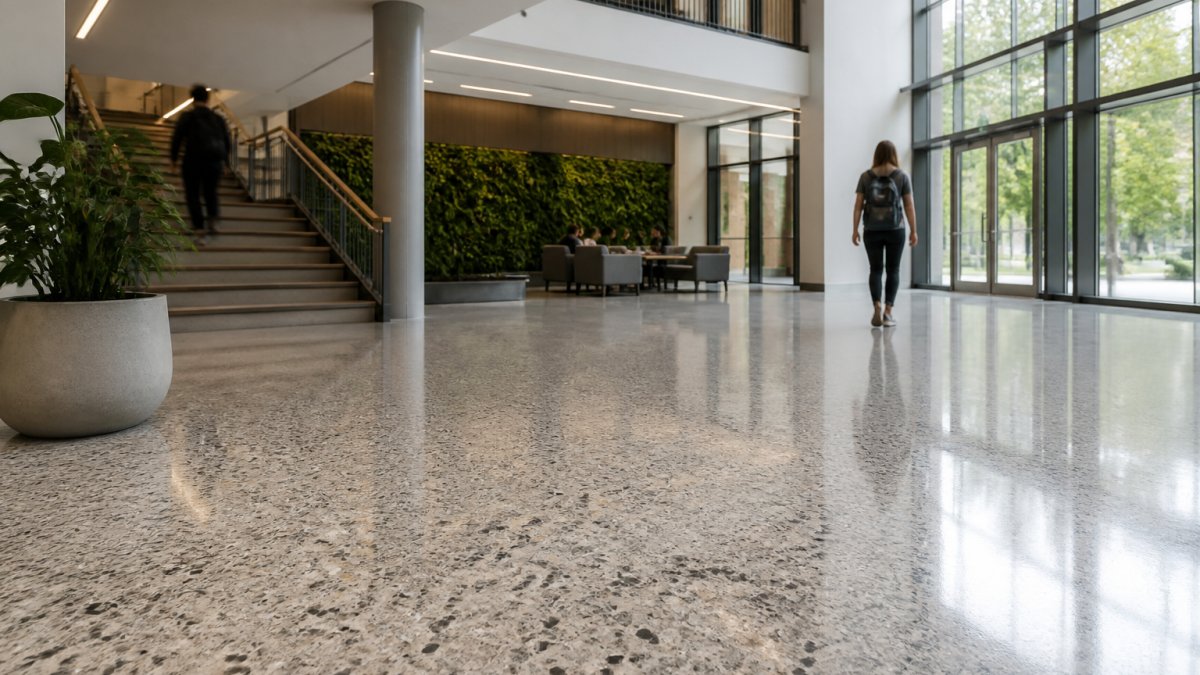
Terrazzo excels in high-traffic campus spaces. Lobbies, corridors, dining facilities, and gathering areas endure constant foot traffic without visible wear.
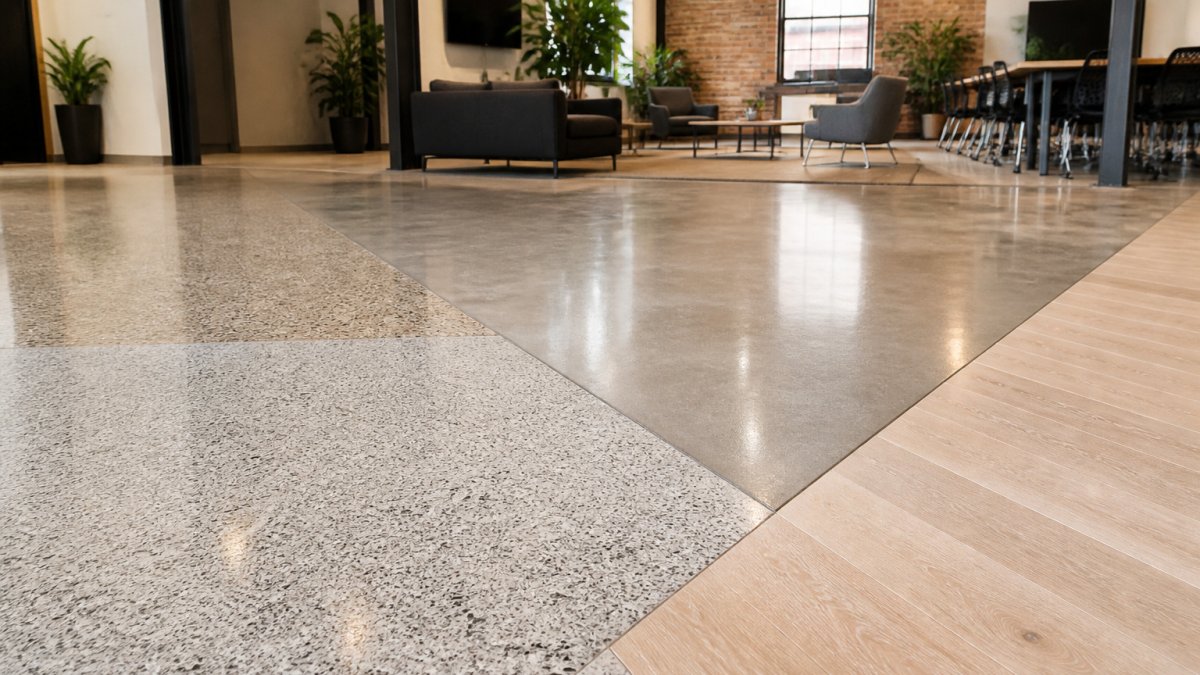
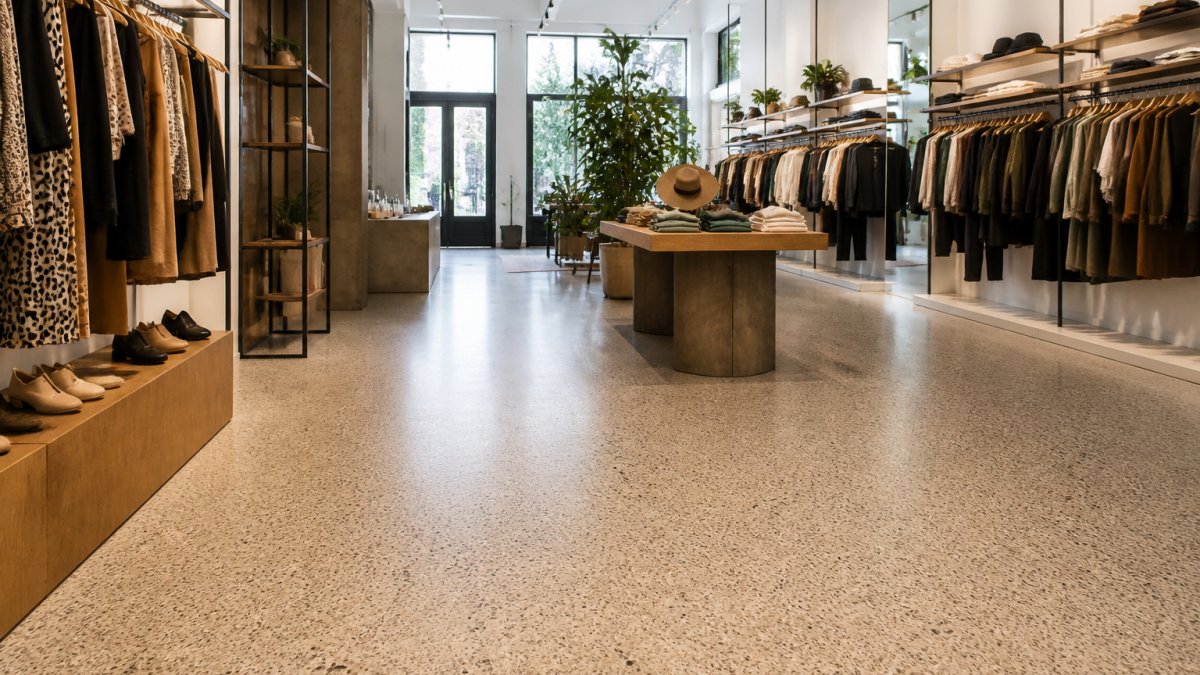
The aesthetic flexibility is substantial. Terrazzo can be custom-designed with specific color palettes, aggregate sizes, and patterns that reinforce campus identity. Historic terrazzo can be restored and refinished rather than replaced, preserving both material and institutional character.
Flooring Life-Cycle Assessment and Total Cost of Ownership
Understanding sustainable flooring campus decisions requires looking beyond purchase price to total cost of ownership across the material's entire service life. A cheaper initial installation that requires replacement in 10 years costs significantly more than a higher-priced option lasting 30 years.
Life-cycle assessment evaluates environmental impact from material extraction through installation, use, maintenance, and eventual disposal. A material requiring intensive cleaning protocols and frequent chemical applications carries hidden environmental costs that don't appear on purchase invoices.
Campus facility managers should request lifecycle cost analyses from installers. This analysis includes material cost, installation labor, expected service life, annual maintenance costs, and estimated replacement timeline.
Different spaces demand different analysis frameworks. A dormitory bedroom might justify less expensive flooring with shorter service life because residential spaces experience moderate traffic. A main campus corridor serving thousands of daily foot passages justifies investment in premium materials with extended durability.
Performance and Accessibility Across Campus Spaces
Sustainable flooring selections must address specific performance requirements by campus location. A material excellent for one application may be entirely inappropriate for another.
High-traffic corridors and gathering spaces need slip-resistant, impact-resistant materials that maintain appearance despite heavy use. Terrazzo, polished concrete, and commercial-grade recycled tile excel in these applications.
Wet areas including bathrooms, locker rooms, and kitchen spaces demand moisture-resistant, sanitary materials. Recycled glass tile, commercial terrazzo, and sealed linoleum handle moisture exposure without degradation.
Accessibility requirements under the Americans with Disabilities Act (ADA) specify slip resistance, surface consistency, and edge treatment standards. Polished terrazzo can meet ADA slip-resistance requirements through proper finishing techniques.
Acoustics matter in specific campus spaces. Libraries and study areas benefit from sound-absorbing materials like cork or recycled rubber. Dining facilities and gathering spaces can tolerate harder, more reflective surfaces.
Temperature stability and thermal comfort influence material selection. Materials with high thermal conductivity feel cold underfoot in winter, affecting occupant comfort.
Installation Planning and Phased Renovation Strategies
Large-scale campus facility renovations rarely happen all at once. Most institutions must phase projects across multiple years due to budget constraints and operational continuity requirements.
Existing-flooring audits document current material type, condition, installation date, and remaining service life in each building and space. This audit reveals which areas require immediate replacement and which can defer renovation for several years.
Phased renovation allows institutions to test material performance in pilot spaces before committing to campus-wide implementation.
Installation timing matters significantly. Coordinating flooring replacement with other facility improvements like HVAC upgrades or electrical work consolidates disruption and reduces total project costs.
Substrate preparation is critical and often overlooked. Improper substrate preparation causes premature failure regardless of material quality.
Choosing sustainable flooring for modern campus architecture requires balancing environmental responsibility, durability, maintenance practicality, and total cost of ownership. The best material depends entirely on specific space requirements, traffic patterns, and institutional priorities.
Terrazzo remains the optimal choice for high-traffic campus spaces where durability, sanitary performance, and aesthetic flexibility matter most. A1 Terrazzo brings 35 years of specialized experience in commercial terrazzo installation, understanding the unique demands of institutional environments and the importance of proper substrate preparation that prevents future problems.
Frequently Asked Questions
What is the most sustainable flooring option for a college campus?
No single material wins across all criteria. Terrazzo excels in lifecycle impact, it lasts 30+ years with minimal replacement, reducing embodied carbon over time. Bamboo offers renewable sourcing but shorter service life. Cork balances renewability with durability. The best choice depends on your campus space: high-traffic corridors benefit from terrazzo's wear resistance, while offices may suit cork or linoleum. Conduct a flooring life-cycle assessment comparing your specific use case, climate, and maintenance capacity.
How do sustainable flooring materials compare in high-traffic campus spaces?
Terrazzo and natural linoleum (Marmoleum) lead in durability for high-traffic areas. Terrazzo resists wear, moisture, and chemicals with minimal maintenance, critical for hallways, lobbies, and dining facilities. Recycled rubber performs well in gyms and athletic facilities. Bamboo and cork wear faster in heavy-use zones and require more frequent refinishing. Recycled tile and glass work in moderate-traffic spaces. Match material durability to foot traffic intensity and cleaning frequency to minimize replacement cycles and reduce long-term environmental impact.
What does a flooring life-cycle assessment include for campus facilities?
A lifecycle assessment evaluates raw material extraction, manufacturing emissions, transportation, installation disruption, in-use performance (durability, maintenance, cleaning chemicals), and end-of-life disposal or recycling. For campus flooring, this means comparing embodied carbon, service life (how long before replacement), water and energy use during maintenance, and waste generation. Materials with longer service lives and lower maintenance demands often have lower total environmental impact despite higher upfront emissions. This assessment justifies initial investment in durable options like terrazzo over cheaper alternatives requiring frequent replacement.
Can terrazzo flooring meet accessibility and sanitation standards for campus buildings?
Yes. Terrazzo is ADA-compliant when installed with proper slip resistance ratings and meets accessibility requirements for level surfaces and wheelchair maneuverability. Its seamless, non-porous finish makes it highly sanitary, critical for healthcare facilities, dining areas, and laboratories. It resists bacteria, viruses, and chemical disinfectants without degradation, unlike porous materials that harbor contaminants. The durability means fewer repairs that disrupt campus operations. Professional installation and maintenance protocols ensure it meets both accessibility and sanitation standards required by institutional facilities.