 how-to
How Long Does Terrazzo Crack Repair Take
Table of Contents
- Understanding Terrazzo Crack Repair Timelines
- Causes of Terrazzo Cracking and Damage Assessment
- Terrazzo Patching Step by Step
- Curing Time for Terrazzo Epoxy and When Foot Traffic Resumes
- Crack Suppression Membranes and Structural Integrity
- Professional Repair vs. DIY: Time and Visibility Expectations
- Post-Repair Maintenance with Terrazzo Floor Cleaner
- When to Repair vs. Replace Your Terrazzo Floor
- Frequently Asked Questions
Last Updated: September 22, 2026
Understanding Terrazzo Crack Repair Timelines
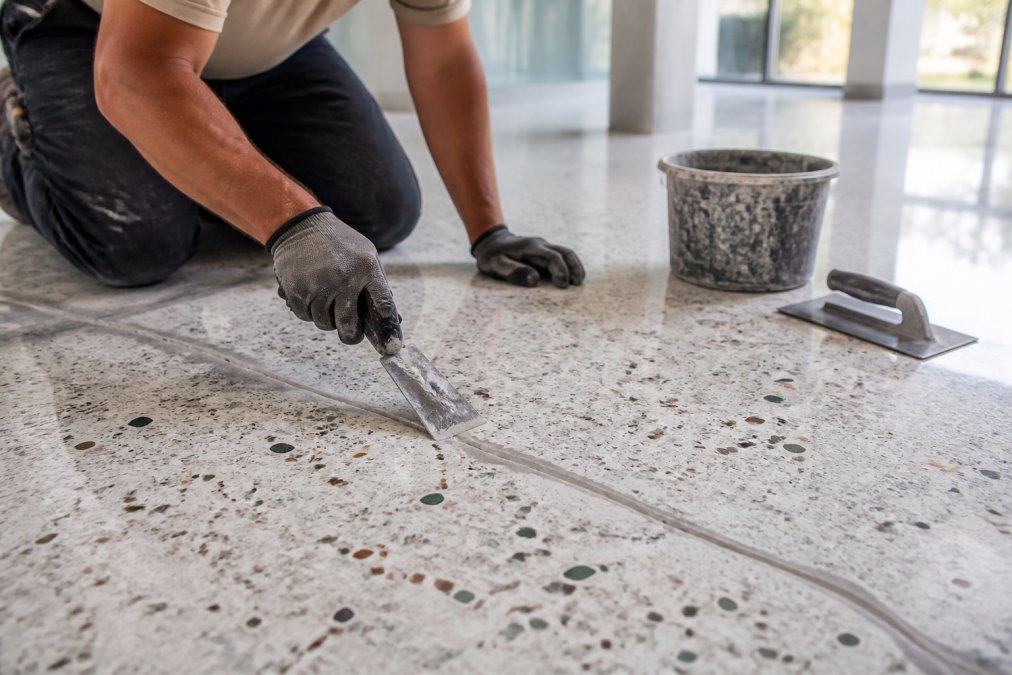
How long does terrazzo crack repair take? The answer depends on crack severity, repair method, and curing conditions. A simple hairline crack repair typically takes 24 to 48 hours from start to finish, including surface prep and curing time. Structural cracks requiring deeper patching and reinforcement can take 3 to 7 days. Understanding these timelines helps facility managers plan maintenance without disrupting operations.
A1 Terrazzo has extensive experience in commercial terrazzo flooring installation and professional maintenance services across Florida, leveraging over 35 years of specialized experience to deliver durable and beautiful flooring solutions. The process requires matching aggregate, managing curing time, and ensuring the repair is invisible to foot traffic.
The timeline for terrazzo crack repair involves multiple stages:
- Surface assessment and cleaning (2-4 hours)
- Crack preparation and primer application (2-4 hours)
- Patching compound application (1-2 hours)
- Curing time before foot traffic (24-72 hours depending on product)
- Honing and polishing (2-8 hours)
- Final sealing (1-2 hours plus cure time)
Causes of Terrazzo Cracking and Damage Assessment
Substrate movement is the most common cause of terrazzo cracks. When concrete underneath shifts due to settling, moisture, or temperature changes, the brittle terrazzo surface cracks.
Spalling occurs when moisture penetrates beneath the terrazzo or bonding agent application was inadequate. Hairline cracks are cosmetic but signal stress buildup, while structural cracks indicate substrate problems.
Before you repair, assess the damage:
- Hairline cracks: Surface only, no depth. Cosmetic concern, quick fix.
- Shallow cracks: Visible depth, typically under 1/8 inch. Patching compound works.
- Deep structural cracks: Wider than 1/8 inch, possibly extending to substrate. Requires reinforcement.
- Spalling areas: Surface lifting or chunks missing. Needs substrate evaluation.
A1 Terrazzo evaluates structural conditions before recommending repair scope.
Terrazzo Patching Step by Step
The actual patching process follows a proven sequence. Each step matters for visibility and longevity.
Surface Preparation and Cleaning
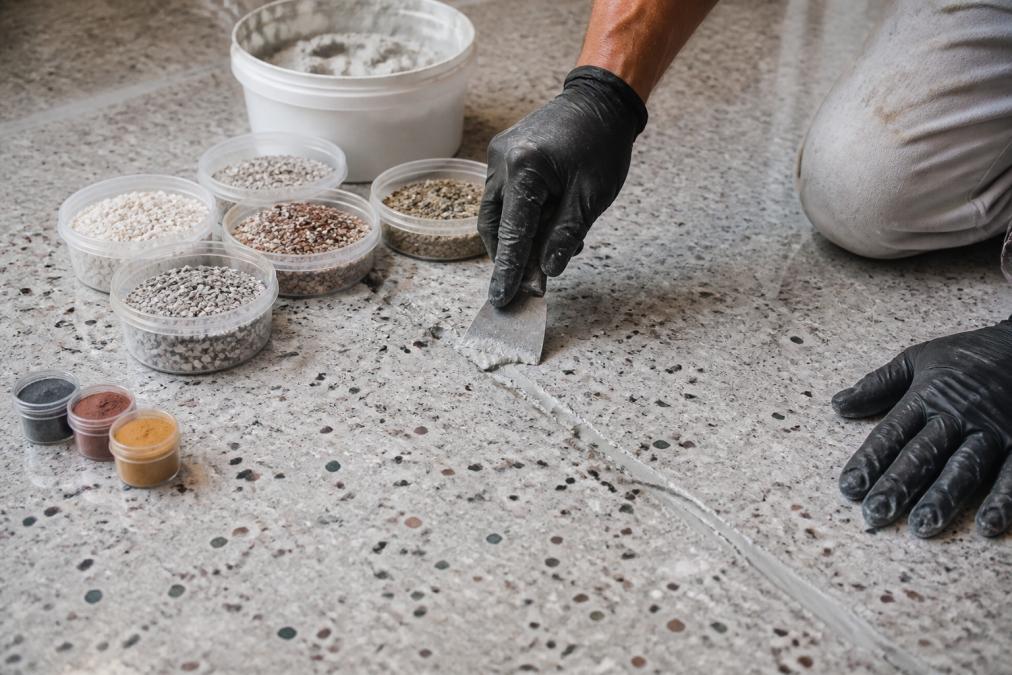
Clean the crack thoroughly with a wire brush and vacuum. For deeper cracks, grind out edges slightly wider than the crack to create a mechanical key. Wipe with a damp cloth and allow 2-4 hours drying time depending on humidity.
Applying Patching Compound and Aggregate Matching
Match the color and aggregate size of the original terrazzo. Mix patching compound and add color pigment, testing on a hidden area first. Source matching aggregate (marble chips, granite, or glass). Fill the crack slightly overfilled and pack firmly with a putty knife, eliminating air pockets. For wide cracks, apply in layers for faster, more secure bonding.
Curing Time for Terrazzo Epoxy and When Foot Traffic Resumes
Curing time is the single most important factor in planning terrazzo repair downtime. The distinction between "surface dry," "walkable," and "fully cured" determines when your facility can resume normal operations, and getting this wrong leads to patch failure or operational disruption.
Curing Stages and Timelines
Stage 1: Initial Set (0-4 hours) The patching compound hardens but remains vulnerable. Do not allow foot traffic, vibration, or equipment movement. Keep the area cordoned off. Temperature matters: below 60°F extends initial set time.
Environmental Factors That Extend Curing Time
Temperature is the dominant variable. Below 50°F adds 50-100% to curing times. 50-60°F adds 25-50%. 60-75°F applies standard times. Above 85°F risks internal stress and micro-cracking.
Real-World Curing Timeline Examples
Scenario 1: Hospital hallway, epoxy patch, normal conditions (72°F, 50% humidity) Total downtime: 48 hours (full operations at 48+ hours)
Managing Curing in High-Traffic Facilities
Accelerated-cure products: Some epoxy formulations are engineered for fast cure (12-24 hours to full strength). These cost 15-25% more but reduce downtime significantly. They're ideal for critical facilities.
The Cost of Rushing Curing Time
Attempting to resume full operations before the patch is fully cured leads to:
- Micro-fractures: Invisible cracks form inside the patch under load, weakening the repair.
- Patch separation: The patch pulls away from the surrounding terrazzo as it continues to cure under stress.
- Color changes: Patches that cure under load sometimes develop a slightly different appearance.
- Repeat failures: A patch that fails within 6-12 months often requires complete removal and re-repair, doubling labor costs and extending downtime.
Crack Suppression Membranes and Structural Integrity
For recurring cracks or active substrate movement, a crack suppression membrane prevents the same problem from happening again. These membranes are flexible, rubberized layers applied over the repaired crack before final honing and sealing.
- Installing expansion joints to accommodate movement
- Addressing moisture infiltration with proper waterproofing
- Reinforcing weak concrete with epoxy injection
- Adding support where settling is occurring
Professional Repair vs. DIY: Time and Visibility Expectations
Visibility is the hidden cost of DIY terrazzo repair. Most facility managers underestimate how noticeable a patch becomes once the floor is in use. Understanding what "invisible" actually means, and why professionals achieve it, is critical to choosing the right repair path.
Why DIY Patches Are Visible
Terrazzo is unforgiving. The surface is a composite of cement, aggregate (marble chips, granite, glass, or stone), and pigment. A successful repair requires matching three elements simultaneously: the base color, the aggregate size and type, and the surface finish. Miss any one, and the patch stands out.
What Professional Invisibility Looks Like
A professional terrazzo repair is truly invisible. You can stand 3 feet away and not see where the crack was. This is not luck, it's the result of specific techniques and materials.
Time Investment: DIY vs. Professional
DIY repairs appear faster upfront but often require rework:
| Repair Type | Active Work Time | Curing Time | Rework Risk | Total Calendar Time |
|---|---|---|---|---|
| DIY hairline crack | 4-6 hours | 24-48 hours | 40-60% (color/finish issues) | 2-7 days (often requires re-repair) |
| Professional hairline repair | 8-16 hours | 24-72 hours | <5% (rare) | 3-5 days |
| DIY structural crack | 12+ hours | 72+ hours | 60-80% (failure common) | 7-21 days (often fails and requires re-repair) |
| Professional structural repair | 20-40 hours | 72+ hours | <2% | 5-10 days |
The hidden cost of DIY is rework. A patch that looks wrong after curing must be ground out and re-done. This doubles the labor time and extends downtime. In commercial facilities, this is expensive.
Facility Impact: Why Visible Patches Matter
In hospitals, airports, universities, and corporate offices, a visible patch reflects on facility management. Patients in hospitals notice visible floor repairs and may question cleanliness or maintenance standards. Travelers in airports notice visible patches and form impressions about facility upkeep. Students and parents touring universities notice visible repairs and factor them into their perception of the institution.
Cost-Benefit Analysis
DIY repairs cost 30-50% less in materials but often fail or require rework. Professional repairs cost more upfront but eliminate rework, reduce downtime, and deliver results that last 5-10 years without visible degradation.
When DIY Might Be Acceptable
DIY terrazzo patching is only reasonable for:
- Hairline cracks in private residential spaces where visibility is not a concern
- Temporary repairs in areas scheduled for replacement within 1-2 years
- Test patches where you're experimenting before committing to professional work
For any crack in a commercial facility, public space, or high-traffic area, professional repair is the only option that delivers the invisibility and durability your facility requires.
Post-Repair Maintenance with Terrazzo Floor Cleaner
After repair, proper maintenance extends the life of both the patch and surrounding terrazzo. The right terrazzo floor cleaner protects the repair and keeps the floor looking new.
Daily maintenance keeps repairs looking fresh:
- Dust mop or vacuum daily to remove grit
- Damp mop with diluted terrazzo floor cleaner 2-3 times weekly
- Spot-clean spills immediately
- Avoid acidic or abrasive cleaners
- Buff with microfiber pads to maintain shine
When to Repair vs. Replace Your Terrazzo Floor
Not every crack warrants repair. Sometimes replacement is the smarter investment. The decision depends on crack extent, substrate condition, and long-term plans for the space.
Repair makes sense when:
- Cracks are isolated (fewer than 5 per 1,000 square feet)
- Substrate is stable and not actively settling
- Terrazzo is less than 20 years old
- The aesthetic and functional value justify the cost
- Active cracks can be stabilized with membranes
Replace when:
- Widespread cracking (more than 10 cracks per 1,000 square feet)
- Substrate is severely damaged or actively settling
- Spalling is extensive
- Multiple repairs have failed
- Terrazzo is more than 40 years old and deteriorating
- Moisture damage is systemic
Frequently Asked Questions
How long does it typically take for terrazzo epoxy filler to cure?
Curing time for terrazzo epoxy varies by product and environmental conditions. Most epoxy-based patching compounds require 24 to 72 hours for initial set, though full cure can take 7 to 14 days. Temperature, humidity, and the depth of the repair all affect curing speed. During the initial cure period, foot traffic must be restricted to prevent disrupting the repair. Always follow the manufacturer's instructions for your specific curing agent, as some formulations cure faster than others.
Can you walk on terrazzo floors immediately after crack repair?
No. Walking on newly repaired terrazzo before adequate curing compromises the repair's durability and structural integrity. Light foot traffic may be possible after 24 to 48 hours for shallow hairline cracks, but full-weight use should wait 7 days minimum. For deeper structural cracks or repairs involving crack suppression membranes, wait the full 14-day cure window. Professional contractors typically restrict access and post signage during this period to protect the repair investment.
What's the difference between repair visibility on hairline cracks versus structural cracks?
Hairline cracks, typically less than 1/16 inch wide, are easier to blend and often become nearly invisible after honing and polishing when aggregate and color pigment are matched correctly. Structural cracks wider than 1/8 inch require deeper patching and are more visible even after professional repair, though skilled technicians can minimize the appearance through careful color blending and surface density control. The repair's final visibility depends on matching the original aggregate composition and ensuring the patching compound's hue matches the surrounding floor.
Should I repair small cracks myself or hire a professional?
Small hairline cracks can sometimes be managed with DIY surface-level patching, but professional repair is strongly recommended for most situations. Professionals understand substrate movement, expansion joint placement, and proper bonding agent application, mistakes in these areas lead to repeat cracking within months. DIY repairs often lack proper dust control during grinding and honing, and color matching is difficult without industry experience. For commercial spaces like hospitals or airports where sanitation and durability are critical, professional restoration ensures the repair meets facility standards and lasts years rather than months.