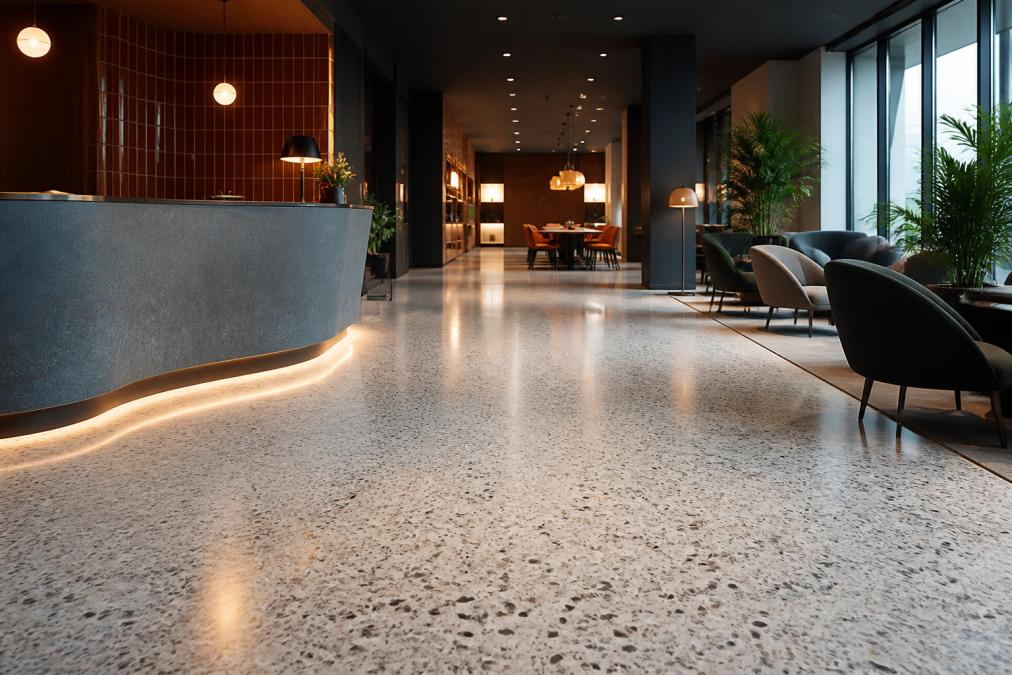
 ultimate-guide
Why Choose Terrazzo for Hospitality Flooring
Table of Contents
- Terrazzo Flooring for Hospitality Industry Spaces
- Durability and Performance Under Heavy Foot Traffic
- Aesthetic Versatility and Design Flexibility
- Commercial Terrazzo Installation Process and Timeline
- Terrazzo Flooring Maintenance Costs and Long-Term Savings
- Terrazzo vs Epoxy Flooring for Hospitality Applications
- Hygiene, Sustainability, and Operational Benefits
- Frequently Asked Questions
Last Updated: September 19, 2026
Terrazzo Flooring for Hospitality Industry Spaces
Terrazzo hospitality flooring has become the gold standard for hotels, restaurants, airports, and healthcare facilities managing high-traffic commercial spaces. This durable, seamless flooring solution combines aesthetic appeal with performance characteristics that justify long-term investment. At A1 Terrazzo, we leverage over 35 years of specialized experience in commercial terrazzo flooring installation and maintenance, understanding why this material is a preferred choice when durability, hygiene, and design flexibility are paramount.
Durability and Performance Under Heavy Foot Traffic
Terrazzo flooring bonds aggregate particles, marble chips, glass, stone, or recycled content, into a seamless matrix that resists constant foot traffic. Unlike tile or vinyl that develops visible seams and degradation zones, terrazzo maintains structural integrity across the entire surface.
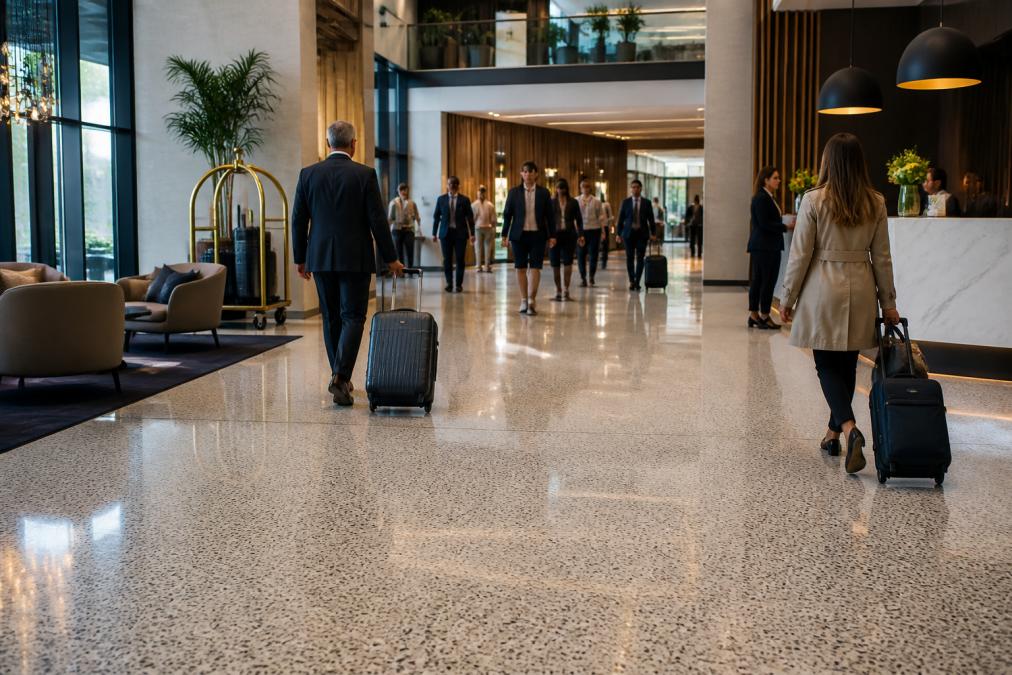
Terrazzo hospitality flooring resists degradation from heavy foot traffic because seamless construction eliminates weak points where grout lines or seams fail. The material's compressive strength handles rolling luggage, equipment carts, and constant foot traffic without developing cracks or surface spalling.
Durability advantages:
- Seamless construction eliminates weak points where damage typically begins
- Withstands heavy rolling luggage and equipment carts without surface degradation
Key consideration: Improper substrate preparation can lead to cracking; proper installation is critical.
Aesthetic Versatility and Design Flexibility
Terrazzo hospitality flooring offers virtually unlimited color combinations, aggregate sizes, and finish options, from marble chips in warm tones for luxury hotels to recycled glass for sustainability messaging to custom patterns reflecting design identity. Unlike vinyl or laminate with fixed patterns, terrazzo is customizable at the material level.
Seamless terrazzo creates visual continuity and enhances perceived space through reflective qualities that amplify natural and artificial lighting.
Design advantages: Unlimited color and aggregate combinations, custom patterns and logos, seamless visual continuity, and finish options (polished, honed, matte) that adapt to different aesthetics. Limitation: Significant design changes require complete re-finishing or replacement.
Commercial Terrazzo Installation Process and Timeline
For hospitality properties where downtime directly affects revenue, installation timeline and phasing strategy determine operational impact.
Standard installation phases:
-
Substrate assessment and preparation (3-7 days), The subfloor must be structurally sound, properly sloped for drainage, and free from moisture issues. Proper preparation prevents substrate failures, the root cause of terrazzo cracking.
-
Base layer installation and leveling (3-5 days), The terrazzo base layer is poured and leveled, requiring 5-7 days for initial set before proceeding.
-
Grinding and polishing sequence (4-7 days), Grinding uses progressively finer grits to expose aggregate and create the desired finish. Each pass requires 24-48 hours of curing.
-
Sealing application and final curing (2-3 days), The surface is sealed to protect against stains and chemical damage, then must cure fully before foot traffic.
Phasing strategies to minimize operational disruption:
Full-closure phasing, The entire affected area closes during installation (4-6 weeks total). This works when the property can absorb revenue loss or installation occurs during a slow season.
Sectional phasing, Installation areas are divided into sections completed sequentially while other areas remain operational. This extends the timeline to 8-12 weeks but maintains partial operations and revenue.
Night and weekend phasing, Installation occurs during closed hours, minimizing disruption but extending active work to 6-8 weeks and requiring contractor availability outside standard hours.
Downtime impact by facility type:
Planning recommendations: Schedule during low-occupancy periods, coordinate phasing strategy before signing, plan for 4-6 weeks total duration, and confirm your contractor has hospitality phasing experience.
Terrazzo Flooring Maintenance Costs and Long-Term Savings
Terrazzo is low-maintenance compared to alternatives. The sealed surface resists stains and chemical damage, reducing intensive cleaning frequency and improving housekeeping efficiency.
While initial installation may require a greater investment than vinyl or basic tile, terrazzo offers long-term value compared to conventional flooring. Lifecycle costs can favor terrazzo when accounting for labor, disruption, and material costs across multiple replacement cycles.
Maintenance: Regular cleaning with pH-neutral products, resealing every 1-3 years depending on traffic, and periodic polishing to restore finish.
Long-term financial advantages:
- 20-30 year lifespan reduces replacement frequency
- Potentially lower lifecycle costs compared to alternatives requiring more frequent replacement
- Reduced emergency repairs due to chemical resistance and durability
- Operational efficiency gains from reduced stain remediation time
Terrazzo vs Epoxy Flooring for Hospitality Applications
Facility managers often compare epoxy against terrazzo hospitality flooring. Understanding key differences, acoustic performance, thermal compatibility, and durability, helps align decisions with your property's needs.
Material composition and structural differences:
Epoxy is a thin resin-based coating (2-4 mm) that bonds chemically to the substrate. Terrazzo is a thicker aggregate-based composite (2-3 inches) with marble chips, glass, stone, or recycled content suspended in a cementitious or epoxy matrix. This structural difference creates performance divergences in hospitality settings.
Acoustic performance, a critical hospitality advantage:
Hospitality spaces prioritize acoustic comfort. Hotel lobbies, corridors, and dining areas benefit from sound dampening that reduces noise transmission and creates a quieter guest environment.
Terrazzo's dense aggregate matrix absorbs and dampens sound frequencies in the 500-2000 Hz range (conversation and footstep noise).
Epoxy provides minimal acoustic benefit. Sound reflects off the surface, resulting in the hard, echoing quality typical of industrial epoxy floors. Hospitality properties using epoxy often add acoustic panels or suspended ceilings to compensate, adding cost and complexity.
Thermal compatibility with radiant heating systems:
Luxury hotels, high-end restaurants, and wellness facilities increasingly use radiant floor heating (also called hydronic heating) to provide comfort and energy efficiency. Radiant heating systems circulate warm water through tubing embedded in the floor substrate, warming the space from below. Floor material selection directly affects the efficiency and performance of these systems.
Terrazzo's high thermal conductivity and thermal mass make it ideal for radiant heating. It absorbs heat from tubing and distributes it evenly, creating consistent warmth and reducing hot spots. Thermal mass moderates temperature fluctuations, reducing heating system cycling and improving energy efficiency.
For properties planning radiant heating systems, terrazzo's thermal compatibility can offer long-term benefits.
Durability and wear patterns in high-traffic hospitality zones:
Terrazzo's aggregate-based construction withstands hospitality wear patterns, wheeled luggage, equipment carts, and constant foot traffic, without indentation or surface degradation. Epoxy is susceptible to permanent indentation from rolling luggage, particularly in warm conditions when the resin softens.
Terrazzo offers significant longevity with proper maintenance; epoxy typically has a shorter lifespan in high-traffic hospitality environments. Lifecycle costs can favor terrazzo when accounting for replacement cycles and operational downtime.
Design flexibility and aesthetic standards:
Terrazzo offers extensive design flexibility with aggregate choices, color palettes, and finish options that create warmth and sophistication. Custom patterns, logos, and inlaid designs express brand identity.
Chemical resistance and cleaning compatibility:
Terrazzo's sealed surface resists standard hospitality disinfectants and cleaners without degradation.
Repair and restoration:
Terrazzo can be patched and re-finished locally with repairs often invisible after re-finishing.
Comparative summary table:
| Characteristic | Terrazzo | Epoxy |
|---|---|---|
| Durability in high traffic | Superior | Good |
| Moisture resistance | Excellent with proper sealing | Moderate, prone to peeling |
| Design flexibility | Extensive color and aggregate options | Limited aesthetic range |
| Acoustic performance | Superior sound dampening | Minimal acoustic benefit |
| Thermal conductivity | High; ideal for radiant heating | Low |
| Repair capability | Can be patched and re-finished locally | Requires full section replacement |
| Wheeled luggage impact | Withstands rolling carts and luggage | Susceptible to indentation |
| Cleaning compatibility | Compatible with standard hospitality disinfectants | Compatibility may vary with certain alkaline cleaners |
| Lifecycle cost (30 years) | Potentially lower due to longevity and minimal replacement | Potentially higher due to more frequent replacement |
Decision framework for hospitality properties:
Choose terrazzo if your property prioritizes acoustic comfort, plans radiant heating, requires design customization, or operates in high-moisture environments. Terrazzo suits luxury hotels, fine dining, spas, and properties prioritizing guest experience and long-term cost control.
Epoxy may suit certain casual dining or quick-service restaurants. However, its acoustic and thermal properties may make it less optimal for some hospitality applications.
Hygiene, Sustainability, and Operational Benefits
Hospitality facilities prioritize hygiene standards that terrazzo hospitality flooring supports naturally. The seamless surface eliminates grout lines and mortar joints where bacteria, viruses, and contaminants accumulate.
Terrazzo's chemical resistance enables standard hospitality disinfectants and cleaning protocols without surface damage, supporting infection control, biosecurity, and food safety requirements.
Terrazzo can incorporate recycled content, recycled glass, or reclaimed marble, reducing environmental footprint. Properties pursuing LEED certification or sustainability goals can specify terrazzo with recycled content.
Terrazzo's longevity can reduce material waste compared to flooring requiring more frequent replacement.
Hygiene and operational benefits:
- Seamless surface eliminates contamination zones in grout lines
- Compatible with standard hospitality disinfectants and cleaning protocols
- Infection control standards can be maintained without surface compromise
- Regular cleaning is straightforward for hospitality housekeeping staff
Sustainability advantages:
- Recycled content options support LEED and environmental goals
- Longer lifespan reduces replacement frequency and material waste
- Potentially lower lifecycle environmental impact compared to shorter-lived alternatives
- Durability reduces disruption and operational carbon costs of replacement
Frequently Asked Questions
What makes terrazzo a superior choice for high-traffic hospitality areas?
Terrazzo's seamless, non-porous surface resists wear from constant foot traffic, wheeled luggage, and equipment movement. Unlike flooring with mortar joints, terrazzo eliminates gaps where dirt and bacteria accumulate. Its polished aggregate finish provides slip resistance while maintaining durability through years of heavy use in hotels, restaurants, and airports without requiring frequent replacement or major repairs.
What are the primary maintenance requirements for commercial terrazzo?
Commercial terrazzo requires regular sweeping and damp mopping with pH-neutral cleaners to maintain its finish. Avoid acidic or abrasive products that damage the resin-based surface. Professional sealing helps protect against stains and chemical damage. Proper maintenance can help prevent costly repairs and extend floor longevity, making professional terrazzo flooring maintenance services a valuable consideration for hospitality operators managing high-traffic spaces.
How does terrazzo compare to other flooring options in terms of longevity?
Terrazzo typically outlasts epoxy, vinyl, and tile flooring in hospitality settings. With proper installation and maintenance, terrazzo floors offer significant longevity, often surpassing the lifespan of epoxy and vinyl. This longevity can contribute to reduced lifecycle costs compared to alternatives, making terrazzo a long-term consideration for facilities planning extended operations.
Can terrazzo flooring be customized for hotel branding and design?
Yes, terrazzo offers extensive design flexibility through custom aggregate colors, patterns, and finishes. Hospitality operators can incorporate brand colors, logos, or thematic designs into seamless flooring installations. This aesthetic appeal enhances guest experience while creating durable, branded spaces. The versatility of terrazzo allows architects and designers to match any interior design vision while maintaining the durability and low-maintenance benefits that hospitality facilities require.