 Comparison
7 Alternatives to Traditional Cementitious Terrazzo
Last Updated: November 3, 2026
Quick Summary
The main alternatives to traditional cementitious terrazzo are epoxy terrazzo, polished concrete, microcement, seamless epoxy systems, and terrazzo-look tile. Epoxy terrazzo is more crack resistant and easier to clean, while polished concrete often costs less but its cracks can show through the finish.
- Epoxy terrazzo is described as more crack resistant than cement terrazzo, with a less porous, easier-to-clean finish.
- Polished concrete cracks can show through the finish, and repairs remain visible.
- Microcement is thin and lightweight, avoiding much of the added floor height that terrazzo requires.
- Terrazzo-look tile is easy to replace piece by piece, but grout lines need ongoing cleaning.
- Verify moisture testing and surface preparation before approving any terrazzo alternative scope.
Table of Contents
- Why Facility Teams Look Beyond Cementitious Terrazzo
- Epoxy Terrazzo Flooring: Crack Resistance and Finish Trade-Offs
- Polished Concrete vs Terrazzo: Lower Cost, Different Risks
- Microcement, Seamless Epoxy Systems and Terrazzo-Look Tile Compared
- Comparing Alternatives: Cost, Durability, Maintenance and Appearance
- Terrazzo Installation Lifespan and Total Cost of Ownership
- Choosing the Right Floor for Your Facility's Priorities
- Frequently Asked Questions
Why Facility Teams Look Beyond Cementitious Terrazzo
Facility managers often ask whether there is a better option than traditional cementitious terrazzo. The answer depends on the building, the traffic, and the budget. For hospitals, airports, courthouses, schools, and historic buildings, cementitious terrazzo remains a strong choice, but it is not the only one, and many teams now weigh alternatives to traditional cementitious terrazzo before committing to a scope.
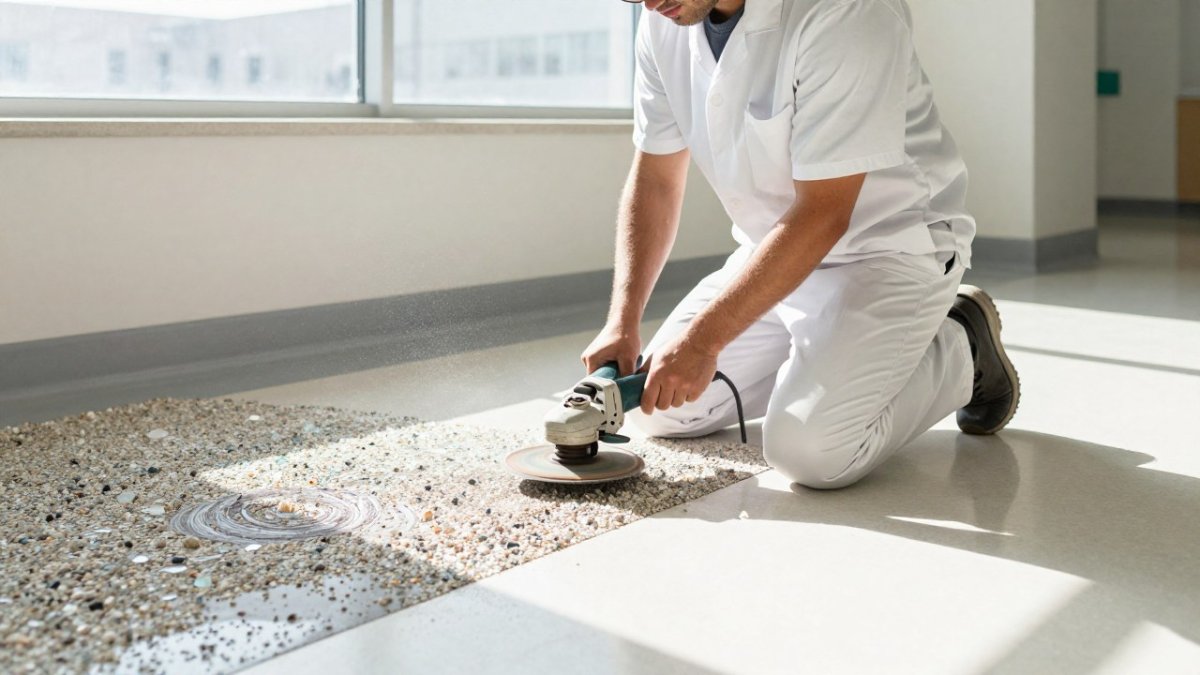
Cementitious terrazzo is a cement-based system with marble or stone chips set in the matrix. It is durable and long-lived, but it takes time to cure, adds floor thickness, and can crack if the substrate moves. Facility teams often look at alternatives when they face a tight schedule, a thin floor assembly, moisture concerns, or a need for a seamless finish.
This guide compares the main alternatives to traditional cementitious terrazzo so you can match a floor to your facility's priorities. We cover seven options, including epoxy terrazzo, polished concrete, microcement, seamless epoxy systems, and terrazzo-look tile, along with the trade-offs in cost, durability, maintenance, and appearance.
Epoxy Terrazzo Flooring: Crack Resistance and Finish Trade-Offs
Epoxy terrazzo uses a resin binder instead of cement. Comparisons of thin-set epoxy and cement terrazzo generally note that epoxy terrazzo is more crack resistant than cement terrazzo, and that its resin binder and sealer create a less porous finish that can be easier to clean and maintain. For other options suited to commercial lobbies, see alternatives to epoxy terrazzo for commercial lobbies.
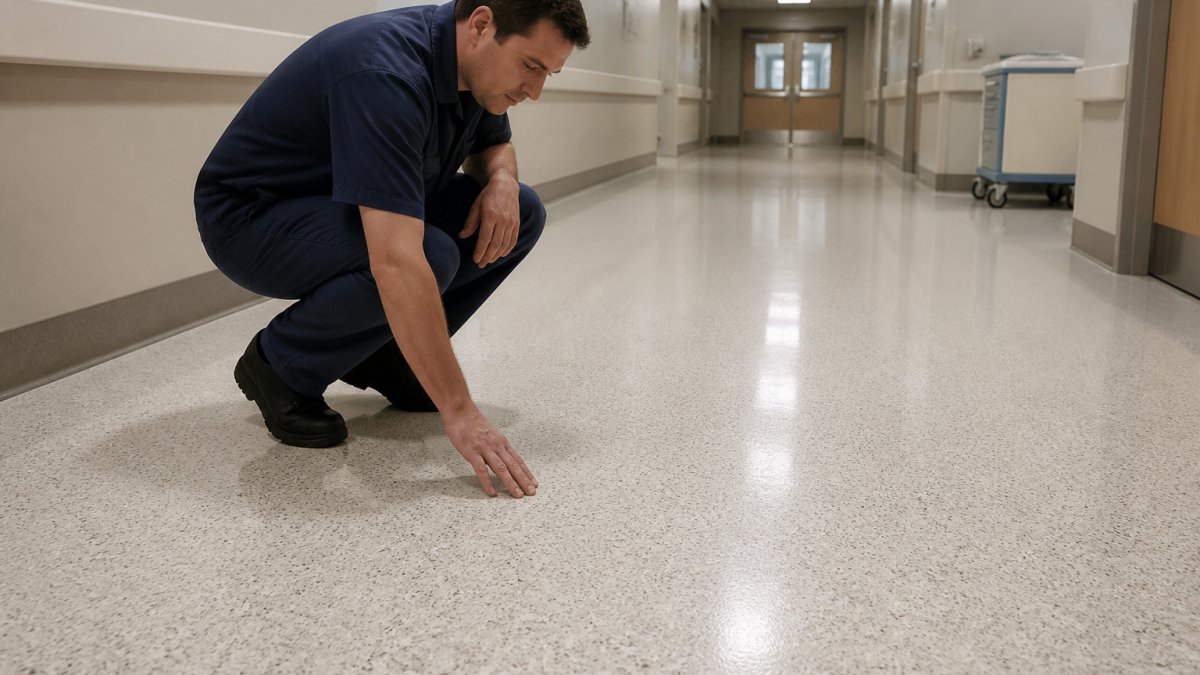
The trade-off is cost and material behavior. Epoxy terrazzo can carry higher labor and material costs, although overall installation cost is sometimes described as comparable. Resin systems also respond differently to heat and UV exposure than cement, so the finish needs to match the environment. Pricing depends on project size, schedule, and site conditions, so request a quote from A1 Terrazzo for current figures.
Watch out: a resin system installed over a damp or poorly prepared slab can delaminate. Confirm moisture testing and surface preparation before approving the scope.
Polished Concrete vs Terrazzo: Lower Cost, Different Risks
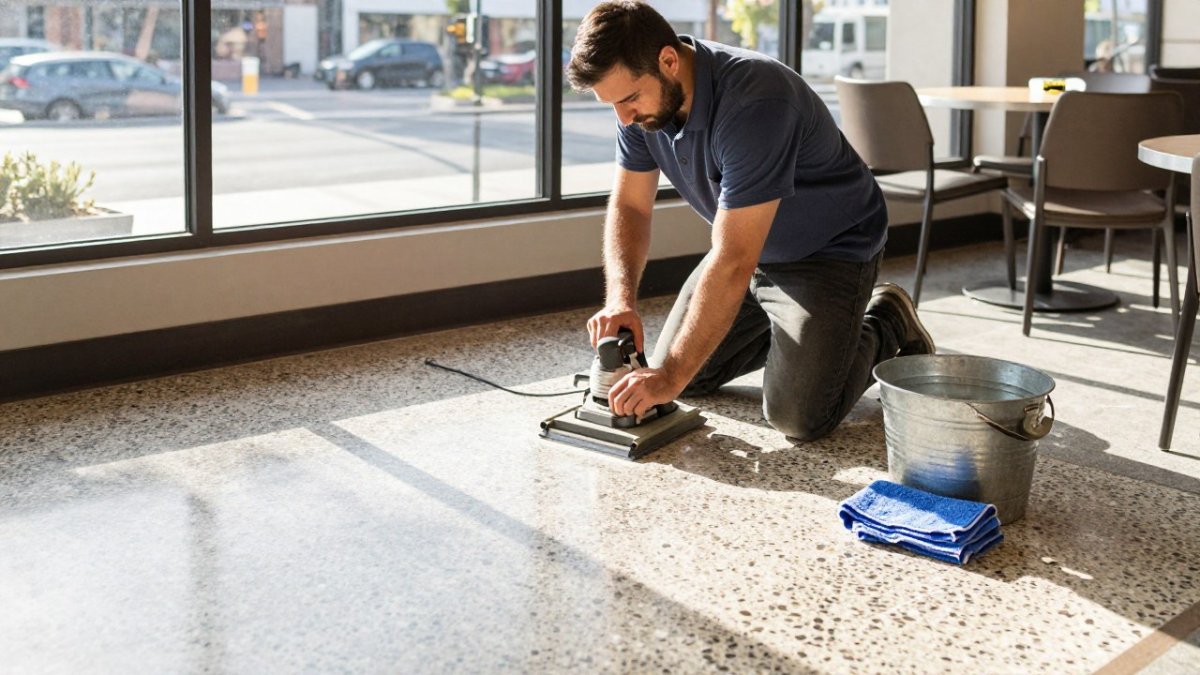
Polished concrete is often presented as a lower-cost substitute for terrazzo. It starts with a standard concrete slab that is ground and polished to a finish. Its appeal is a cleaner, less disruptive installation and a floor that can be maintained with routine polishing.
Comparisons of terrazzo and polished concrete generally caution that cracking in polished concrete can be underestimated. For a direct side-by-side comparison of terrazzo and polished concrete in commercial buildings, see the detailed breakdown. Cracks in the slab tend to show through the finish, and repairs are visible. Terrazzo is typically laid in panels with control joints, which helps it manage movement, though it can still crack under heavy stress.
For offices or light commercial space, polished concrete can be a reasonable choice. For high-traffic lobbies or spaces where appearance across decades matters, compare both options carefully and ask about the expected lifespan of each.
Microcement, Seamless Epoxy Systems and Terrazzo-Look Tile Compared
Several products aim to recreate the look of terrazzo without a full cementitious build. Microcement is a thin, lightweight floor finish that can be applied over existing floors without a structural base. Because it is so thin, it avoids much of the added floor height and weight that terrazzo requires, which matters in renovations.
Seamless epoxy systems such as decorative epoxy mortars offer a continuous surface with no grout lines. Some decorative epoxy mortar systems are described as cost-effective alternatives to terrazzo tile, and seamless systems generally avoid the grout maintenance that tile requires.
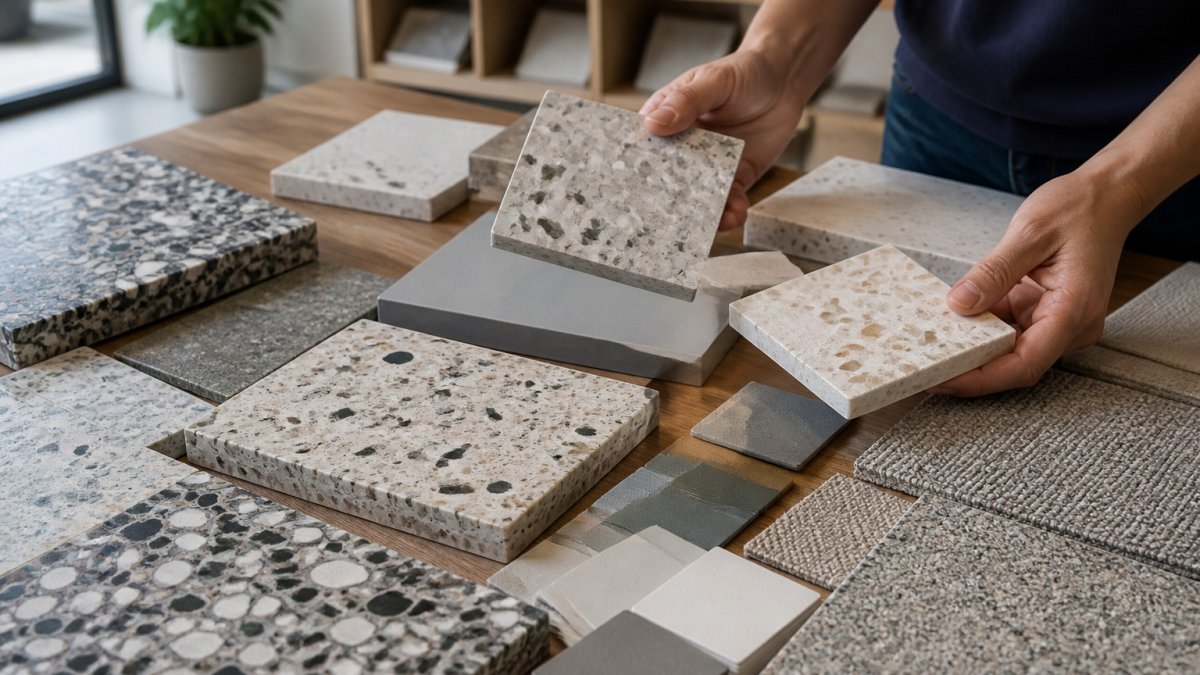
Terrazzo-look tile, including porcelain and ceramic products that mimic the chip pattern, is widely available and easy to replace one piece at a time. The downside is grout. Grout lines collect dirt and need periodic cleaning, which adds maintenance in hospitals and other sanitation-sensitive settings.
Many decorative and resin products are not published with verifiable durability or installed-cost figures in the sources we reviewed. Ask each manufacturer for test data and project references before you commit.
Comparing Alternatives: Cost, Durability, Maintenance and Appearance
The table below summarizes how the main alternatives compare. Pricing is project-based for all options, so use it as a framework rather than a budget.
| Option | Relative Cost | Crack Resistance | Maintenance | Best For |
|---|---|---|---|---|
| Cementitious terrazzo | Baseline | Good with proper joints | Periodic polishing and sealing | Long-life, traditional look |
| Epoxy terrazzo | Higher labor and materials | Better than cement | Low, non-porous finish | Crack-prone or resin-suited spaces |
| Polished concrete | Often lower | Cracks can show | Routine polishing | Offices, light commercial |
| Microcement | Project-based | Depends on substrate | Low | Renovations, thin profiles |
| Decorative epoxy mortar | Project-based | Good, seamless | Low, no grout | Seamless, decorative floors |
| Terrazzo-look tile | Project-based | Good per tile | Grout cleaning | Replaceable sections |
For pros and cons, here is a quick breakdown:
- Epoxy terrazzo: Pros include crack resistance and easy cleaning. Cons include higher material and labor costs.
- Polished concrete: Pros include lower cost and a simple build. Cons include visible cracking risk.
- Microcement: Pros include thin, light installation. Cons include limited published durability data.
- Seamless epoxy: Pros include no grout and a continuous surface. Cons include resin sensitivity to heat and UV.
- Terrazzo-look tile: Pros include easy spot replacement. Cons include grout maintenance.
Application suitability and substrate constraints. The table above compares products; the matrix below compares fit. Use it to narrow the field before you request quotes.
| Priority | Strongest fit | Weakest fit | Why |
|---|---|---|---|
| Heavy cart and foot traffic | Cementitious terrazzo, epoxy terrazzo | Microcement, thin coatings | Wear layer thickness and repairability |
| Tight renovation height | Microcement, terrazzo-look tile | Cementitious terrazzo | Added assembly thickness and weight |
| Moisture-sensitive slab | Systems specified with moisture mitigation | Any system installed over an untested slab | Bond failure risk |
| Sanitation-sensitive spaces | Epoxy terrazzo, seamless epoxy mortar | Tile with grout | Grout harbors soil and moisture |
| Fast return to service | Epoxy terrazzo, tile in phases | Cementitious terrazzo | Cure time |
| Historic or traditional appearance | Cementitious terrazzo | Polished concrete, microcement | Chip blend and finish authenticity |
| Outdoor or UV-exposed areas | Confirm UV-stable binder with manufacturer | Standard epoxy systems | Resin yellowing and heat response |
| Underfloor heating | Confirm system compatibility and cure schedule | Thick assemblies with slow cure | Heat affects cure and movement |
| Budget-driven office | Polished concrete, tile | Cementitious terrazzo | Installed cost |
Substrate condition. Every option in this guide depends on the slab beneath it. A sound, dry, flat substrate supports any of them; a slab with active cracks, high moisture vapor emission, or poor flatness narrows the field quickly. Confirm moisture testing and surface preparation before approving any scope.
Indoor versus outdoor. Resin systems respond to UV and heat differently than cement, so an epoxy terrazzo or decorative epoxy mortar specified for an interior lobby may not be the right choice for a sun-exposed entry. Ask the manufacturer for UV stability and temperature-range data before specifying any resin system outdoors.
Underfloor heating. Thin systems and tile generally pair well with underfloor heating because they respond quickly; thick cementitious assemblies respond more slowly. Confirm the system's cure schedule and movement accommodation with the manufacturer, since heat changes both. Because heat can influence material choices beyond the floor, the same attention to movement and finish can inform bespoke wall finishes.
Repairability and renovation disruption. Tile is generally the easiest to spot-replace but can be hard to blend invisibly because grout ages. Epoxy terrazzo patches typically cure quickly and can be feathered in. Cementitious terrazzo repairs can blend well but take time to cure. Microcement and thin coatings are generally harder to patch invisibly.
Decision framework by priority. If longevity and traditional appearance lead, cementitious terrazzo remains the benchmark. If crack resistance and a non-porous finish lead, epoxy terrazzo is the closest match. If budget and simplicity lead, compare polished concrete carefully against terrazzo. If renovation height and weight are constrained, microcement or a thin seamless system fits.
Terrazzo Installation Lifespan and Total Cost of Ownership
The sticker price is only part of the decision. Total cost of ownership combines four cost streams: initial installation, routine maintenance, spot repairs, and eventual restoration or replacement.
Installation cost drivers. For any troweled or poured system, cementitious terrazzo, epoxy terrazzo, microcement, decorative epoxy mortar, the installed cost is dominated by labor, not material. Substrate preparation (grinding, patching, moisture mitigation), chip blending, grinding and polishing passes, and cure or return-to-service time all scale with square footage and site conditions.
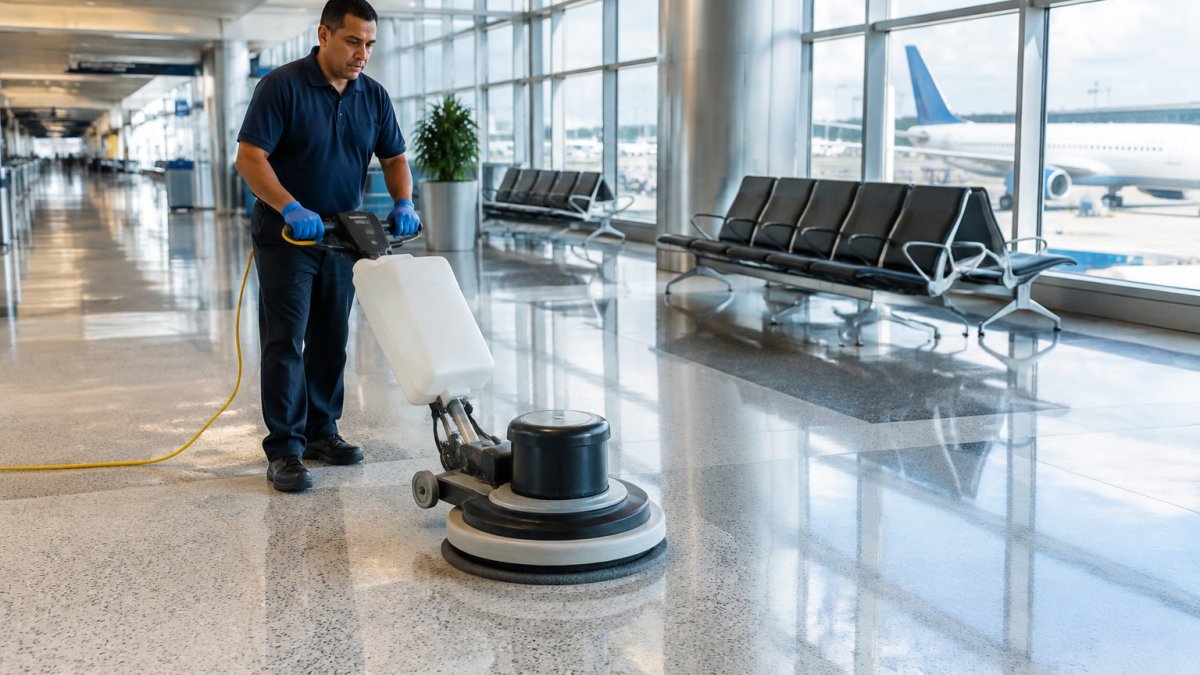
Maintenance cost drivers. Cementitious terrazzo typically needs periodic polishing and resealing to keep the finish and stain resistance; the interval depends on traffic and cleaning chemistry. Epoxy terrazzo's non-porous finish generally needs less frequent sealing but can require recoating in high-wear zones.
Repair and repairability. This is where options diverge most and where most comparisons stop short.
Lifespan and replacement. Cementitious terrazzo, installed over a sound substrate with proper joints, is generally associated with a long service life, with thin coatings and microcement typically shorter-lived because they depend on a thin bond layer.
Downtime as a cost. Return-to-service time is a real cost in hospitals, airports, and occupied buildings. Resin systems generally cure faster than cementitious terrazzo; tile can be installed in phases and opened section by section; microcement requires multiple thin coats with dry time between them.
Moisture is the hidden cost multiplier. Trapped moisture beneath a resin or cement system causes bond failure, and remediation after the fact is far more expensive than testing before installation.
To compare true cost over time, ask each contractor for four numbers: installed cost per square foot, expected maintenance interval and cost, expected repair interval and method, and expected service life before restoration. A cheaper floor that needs repair every few years can cost more than a higher-priced system that lasts decades.
Choosing the Right Floor for Your Facility's Priorities
Start by ranking your priorities: traffic load, sanitation, schedule, budget, renovation constraints, and appearance. A hospital corridor with heavy cart traffic and strict cleaning protocols has different needs than a historic lobby where the original terrazzo look matters most.
For facilities that need a long-life, traditional terrazzo finish, cementitious terrazzo is still the benchmark. For crack-prone slabs or spaces that need a non-porous finish, epoxy terrazzo deserves a close look. For tight renovation heights, microcement or a thin seamless system may fit. For budget-driven offices, polished concrete is worth comparing carefully against terrazzo.
A1 Terrazzo can help you evaluate these options for your specific facility. Contact A1 Terrazzo for a site assessment and a quote tailored to your project.
Frequently Asked Questions
What are the key differences between epoxy terrazzo and cementitious terrazzo?
Cementitious terrazzo uses a cement binder and is typically thicker and more porous, while epoxy terrazzo uses a resin binder that creates a less porous, more crack-resistant surface. Epoxy terrazzo is generally described as more crack resistant than cement terrazzo, and its sealed finish can be easier to clean and maintain. Installed cost is described as comparable in some comparisons, but labor and material costs may be higher. Exact pricing depends on project size, substrate condition and schedule, so request a written quote from A1 Terrazzo for current figures.
What is a cheaper alternative to terrazzo?
Polished concrete is commonly presented as a lower-cost substitute for terrazzo, and some seamless epoxy mortar systems are also described as cost-effective compared with terrazzo tile. Cost varies with project scope, floor condition and finish level. Facilities should weigh the lower initial cost against cracking risk, which one comparison notes is often underestimated. Contact A1 Terrazzo for a site-specific quote that accounts for your substrate and use requirements.
What are the maintenance requirements for terrazzo alternatives?
Maintenance depends on the system. Epoxy and resin-based floors with a sealed, less porous surface are often easier to clean, which matters in healthcare and food-service settings where sanitation is a priority. Polished concrete needs periodic polishing and sealing to keep its appearance. Microcement and seamless systems require protective topcoats to resist wear. Ask any installer for a written maintenance schedule and the cleaning products they recommend, since the wrong chemicals can damage some finishes. A1 Terrazzo offers professional maintenance services for terrazzo installed in commercial facilities.