 Comparison
Terrazzo Finishes for Restaurant Floors That Hold Up
Last Updated: November 12, 2026
Quick Summary
Terrazzo finishes for restaurant floors come in three options: polished, honed, and satin. Polished gives high gloss for dining rooms, honed offers the best wet grip for kitchens, and satin balances both for bars and transitional areas. Most restaurants need different finishes by zone rather than one finish throughout.
- Polished terrazzo has the lowest slip resistance when wet and suits dining rooms and host stands.
- Honed terrazzo holds grease in its surface texture, which is why back of house almost always calls for it.
- Epoxy terrazzo cures faster and usually wins on downtime; cementitious terrazzo earns its place for maximum service life.
- White terrazzo shows every crumb, so larger chips and a satin or honed finish hide daily wear better.
- Renew sealer on schedule, because once it thins, stains reach the aggregate and repairs cost more.
Table of Contents
- Why Restaurant Floors Demand More Than Good Looks
- Terrazzo Finishes Compared: Polished, Honed, and Satin
- Terrazzo vs Epoxy Flooring in a Working Restaurant
- White Terrazzo Finishes for Restaurant Floors
- What Terrazzo Finishes for Restaurant Floors Cost
- Terrazzo Floor Coating and Finish Renewal Over Time
- Matching the Finish to Each Restaurant Zone
- Planning a Terrazzo Floor for Your Restaurant
- Frequently Asked Questions
Why Restaurant Floors Demand More Than Good Looks
A restaurant floor takes more abuse before noon than most office floors see in a month. Grease, dropped cutlery, spilled wine, rolling carts, and constant foot traffic all hit the same surface.
At A1 Terrazzo, we have spent more than 35 years installing and maintaining commercial terrazzo, and restaurant owners rarely ask about color first. They ask about slip risk, staining, and how long the floor will stay presentable.
Below, we break down the main finish types, how each handles a working kitchen and dining room, and what drives cost and downtime.
Terrazzo Finishes Compared: Polished, Honed, and Satin
The three finishes you will choose between are polished, honed, and satin, and the right pick depends on where the floor sits in your building. Polished gives the highest gloss and the most reflective look. Honed is matte and flatter in tone. Satin sits between them, with a soft sheen that hides scuffs better than a full polish.
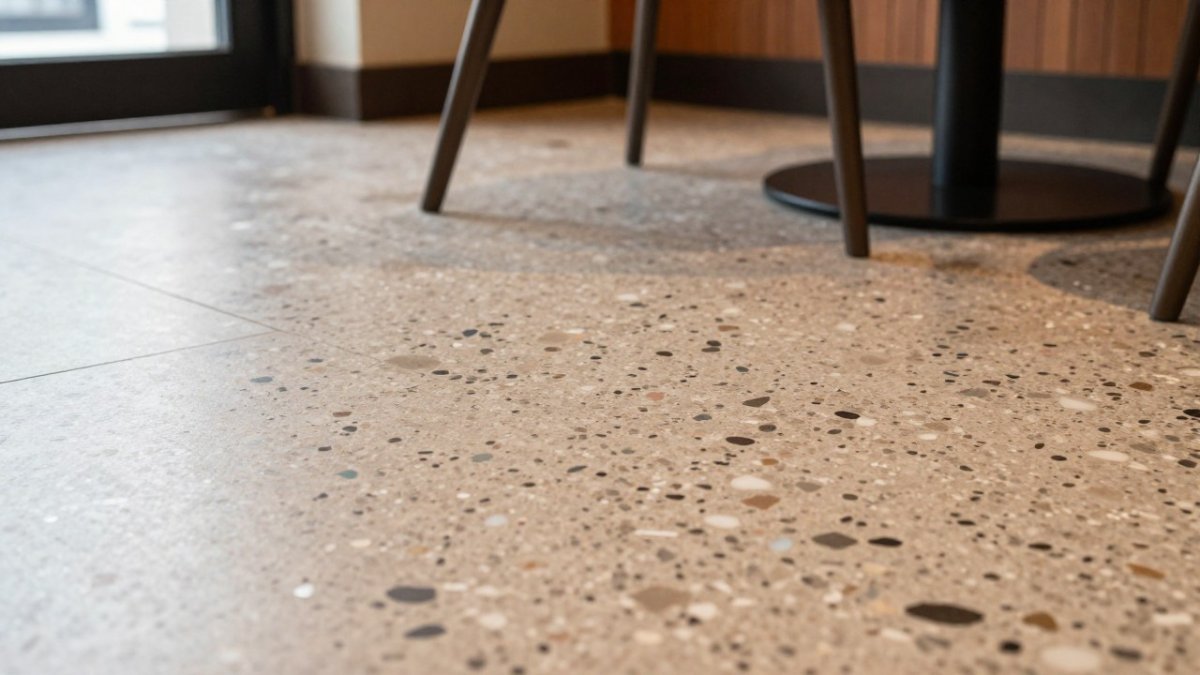
Here is how the three compare for a restaurant:
| Finish | Look | Slip resistance when wet | Best for |
|---|---|---|---|
| Polished | High gloss, reflective | Lowest; needs care near wet zones | Dining rooms, host stands |
| Honed | Matte, even tone | Good grip underfoot | Kitchens, service corridors |
| Satin | Soft sheen | Moderate grip | Bars, transitional areas |
How Each Finish Handles Spills, Scuffs, and Slip Risk
Slip resistance is the factor most guides skip, and it is the one that matters most in a restaurant.
Polishing closes surface pores and creates a glassy, low-friction plane. Honing stops short of that closure, leaving microscopic texture that interrupts the film of water or grease that causes hydroplaning.
Grease changes the equation. Water evaporates; grease does not. A polished floor in a kitchen or behind a bar accumulates a thin oil film far slicker than water alone.
Scuffs show up differently too. Dark scuff marks from rubber soles and cart wheels stand out on a high-gloss polish.
Watch out: choosing one finish for the entire building. We routinely recommend polished in the front of house and honed in the back, because a single finish forces a compromise you will feel every service.
The Cleaning Trade-Off Nobody Mentions
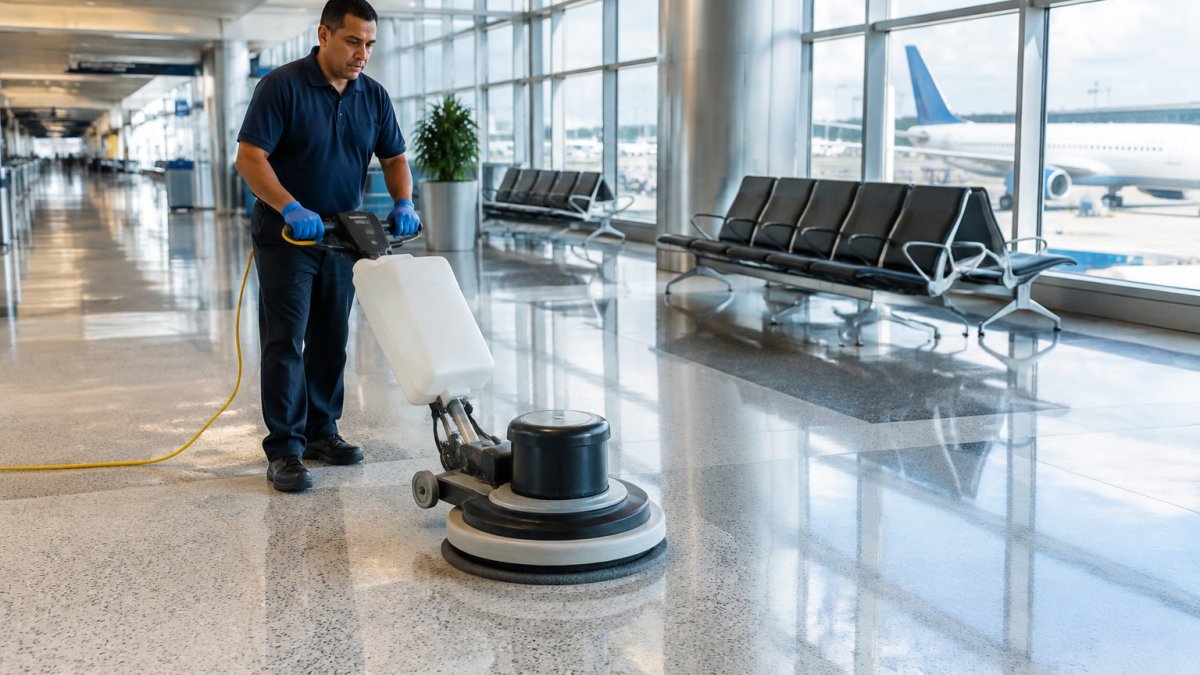
Grip and cleanability pull in opposite directions. The open texture that gives a honed floor traction also gives soil and grease a place to lodge, so it needs a daily degreasing mop and periodic scrubbing with a neutral pH cleaner. A polished floor wipes clean easily but slips easily. Neither finish is "better"; match it to the zone and the cleaning labor you can staff.
Sealers interact with finish choice too. A penetrating sealer on a honed floor slows stain absorption without filling the texture that provides grip. A film-forming topcoat on a polished floor adds gloss and chemical resistance but can become slick when wet. Confirm with your installer which sealer chemistry is specified for each finish, because the wrong pairing can erase the traction advantage you chose the finish for.
Terrazzo vs Epoxy Flooring in a Working Restaurant
The terrazzo vs epoxy flooring question comes down to what each system is made of and how long you expect it to last. Epoxy terrazzo uses a resin binder, cures faster, and allows thinner pours and brighter colors.
Epoxy systems are popular because they install faster and produce a seamless surface. The trade-off is sensitivity to moisture in the substrate; without proper slab preparation and testing, an epoxy floor can fail early.
Cementitious terrazzo is slower to install but famously durable, which is why it still appears in historic buildings and high-traffic terminals. For a restaurant that cannot afford a long closure, epoxy usually wins on downtime; for maximum service life, cementitious earns its place.
White Terrazzo Finishes for Restaurant Floors
White terrazzo finishes for restaurant floors are the most requested look we get, and they are also the least forgiving. Because crumbs, spills, and scuffs stand out so clearly on white terrazzo, a consistent care routine helps preserve its bright appearance, and Johnny Stone Work offers practical advice on maintaining commercial stone floors.
The fix is in the aggregate and the finish, not the base color alone. Larger marble or quartz chips in a white matrix break up the visual field, so marks read less clearly. A satin or honed finish hides daily wear better than a mirror polish.
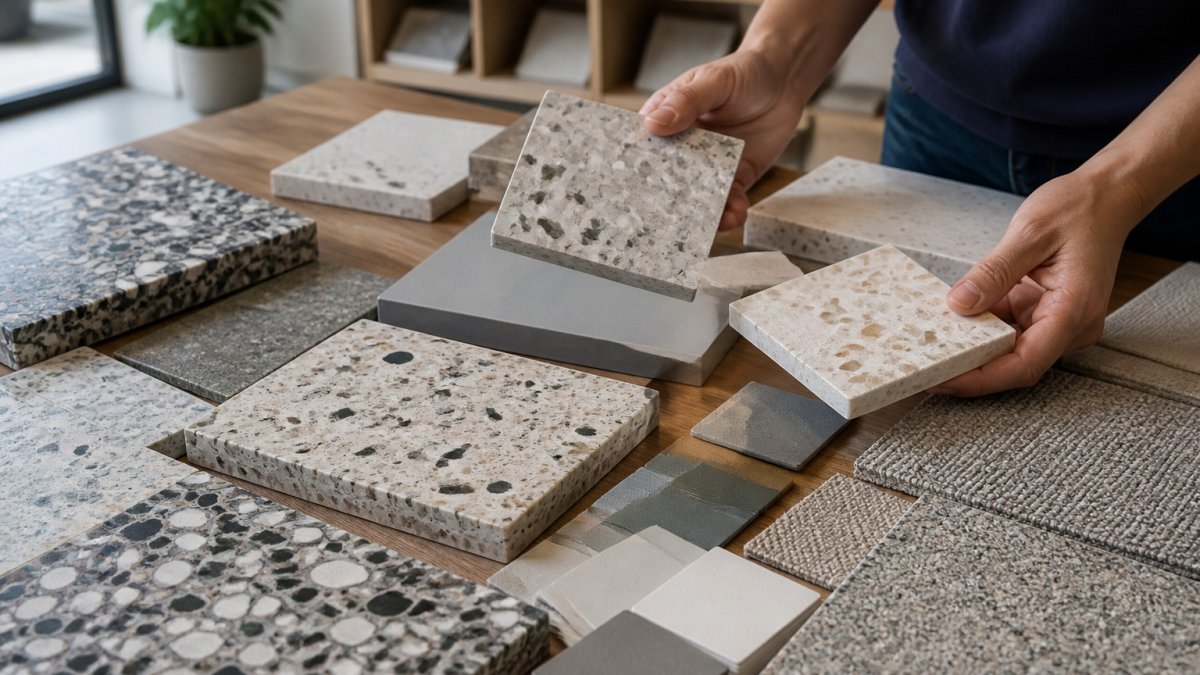
Sealing matters even more on light floors. If you are weighing a white palette, order a terrazzo sample so you can see how the chips and finish read under your own lighting before you commit.
What Terrazzo Finishes for Restaurant Floors Cost
Pricing for terrazzo finishes for restaurant floors depends on the system, the finish, the square footage, and substrate prep. No single number fits every project, and any contractor who quotes one without a site visit is guessing.
Published industry estimates put poured terrazzo installation in a broad range, often cited from around $20 to $100 or more per square foot depending on system type and design complexity, according to TERRAZZCO's restaurant terrazzo guidance. Terrazzo tile runs lower on material, with one supplier citing $7 to $10 per square foot for tile alone, per Greatmats' terrazzo tile cost overview, though that figure excludes installation.
For a project-specific figure, see our breakdown of the cost of terrazzo and request a quote based on your actual square footage and finish choice.
Lifecycle Cost and Installation Downtime
The installed price is only part of the story. A polished floor that needs refinishing every few years costs more over a decade than a honed floor that holds its appearance with routine care. Factor in cleaning labor, sealer reapplication, and any closure time, and the cheaper up-front option is not always cheaper overall.
Separate lifecycle cost into four buckets: initial installation, routine cleaning labor, periodic sealer and polish renewal, and repair of localized damage. Owners focus on installation, but over ten years the cleaning and renewal buckets often rival or exceed it in a high-traffic dining room. Honed and satin finishes hold their appearance longer between renewals because they hide scuffs that high-gloss polish amplifies, which does not make polished wrong, just shorter on renewal interval and higher on maintenance budget.
Downtime is the hidden cost restaurants feel most. Epoxy systems cure faster and often allow a quicker return to service; cementitious pours need more time. Plan installation around a slow season or a scheduled closure, and confirm the cure schedule in writing before you sign.
Before you commit, ask each bidder for a day-by-day schedule covering demolition, substrate prep, pour, cure, grind, polish, and sealer cure, and compare the closure time along with the price.
Repair Economics and Finish Renewal
A chipped or stained area can often be ground out and re-poured with matching aggregate, rather than requiring a tear-out of the whole field.
Sealer renewal is the most predictable recurring cost. High-traffic zones such as entryways and bar fronts generally wear faster than dining areas. A full grind and re-polish restores gloss but is the most disruptive step, so plan it for a closure window, not a live service day.
Watch out: deferring sealer renewal to save a line item. Once the sealer thins, stains reach the aggregate and the repair shifts from a surface refresh to a grind-and-patch, which costs more and takes longer. The cheapest lifecycle strategy is almost always to renew the sealer on schedule rather than to repair after failure.
Terrazzo Floor Coating and Finish Renewal Over Time
A terrazzo floor coating is not permanent, and pretending otherwise is how floors end up dull. Sealers wear down under foot traffic, especially in entryways and behind the bar. When the sealer thins, stains penetrate faster and the surface loses its sheen.
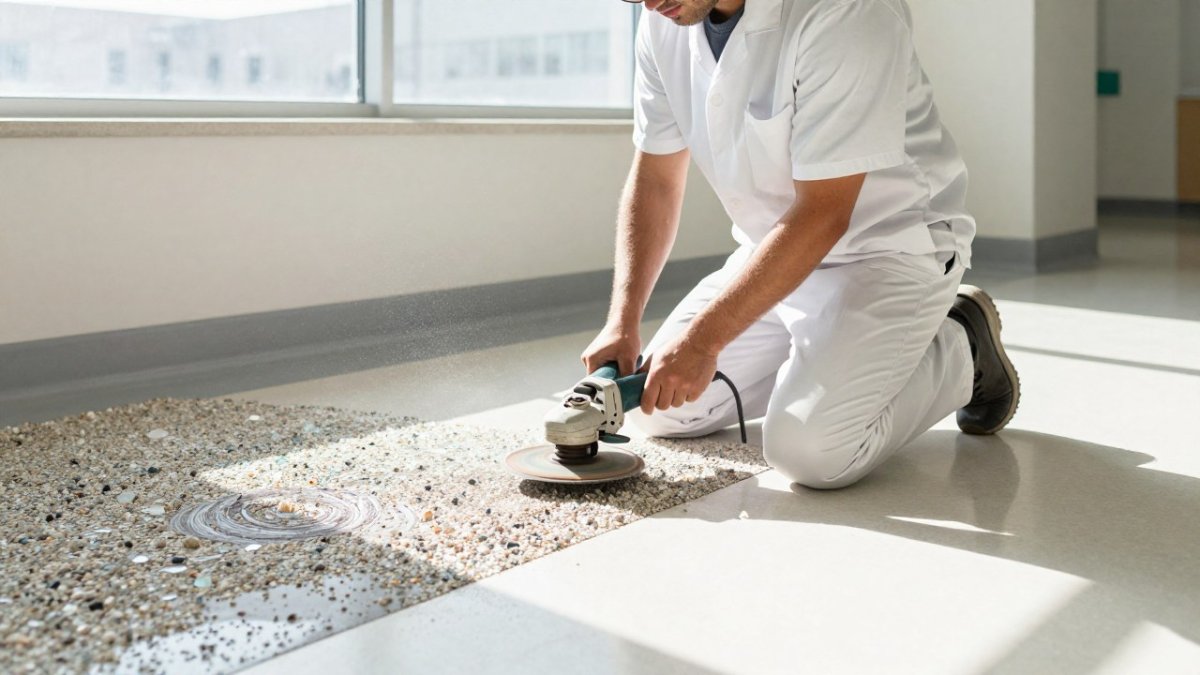
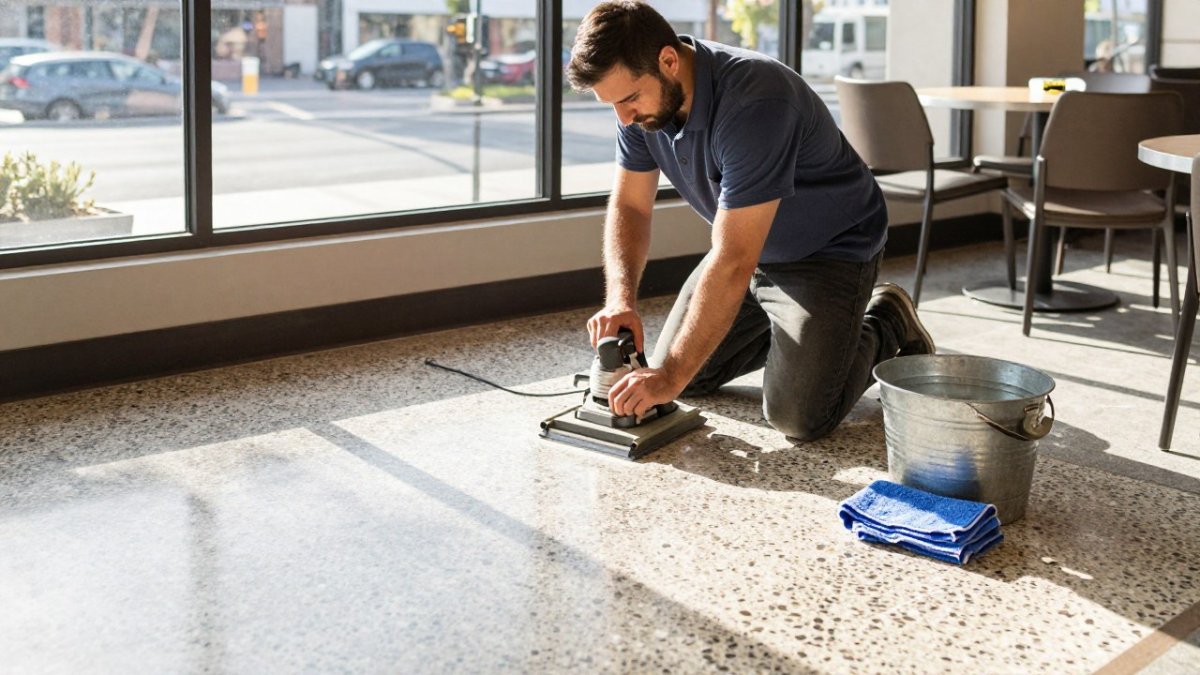
The good news is that terrazzo is repairable. Periodic deep cleaning, spot sealing, and re-polishing keep the surface sharp without a full replacement, and a full grind and re-polish can bring back the original gloss on floors that have gone dull.
If your floor has lost its shine, our guide to restoring dull terrazzo floors to high gloss walks through the renewal process step by step. The key is catching wear early, before stains reach the aggregate.
Matching the Finish to Each Restaurant Zone
A single finish rarely serves an entire restaurant well, and zoning is where most floor plans go wrong. The dining area wants a polished finish for its reflective look. The kitchen and dish pit need honed for grip under grease and water. Bars and service corridors do well with satin, which balances appearance and traction.
Entryways deserve special attention. Wet shoes and umbrella drips make a polished entry a slip hazard, so a honed or satin finish with a quality sealer is the safer call. Restrooms and back-of-house corridors follow the same logic.
If you are comparing options for a high-traffic space, our article on the 5 best terrazzo finishes for high-traffic retail covers the same trade-offs from a retail angle, and the principles carry over to restaurants.
Planning a Terrazzo Floor for Your Restaurant
Substrate preparation is critical to how long a terrazzo floor lasts. Moisture testing, crack repair, and proper surface profiling should all happen before any aggregate is poured.
A realistic plan looks like this:
- Test the slab for moisture and repair cracks
- Choose the system: epoxy or cementitious
- Select finish by zone: polished, honed, or satin
- Confirm the cure and downtime schedule in writing
- Set a cleaning protocol with approved products
One common mistake is letting staff use the wrong cleaner. Acidic or abrasive products strip sealer and dull the finish fast. Lock in a cleaning routine from day one.
When you are ready to move from planning to installation, review our commercial terrazzo services and get a site assessment before you finalize your budget.
A restaurant floor has to survive grease, spills, and constant traffic while still looking the part. The right terrazzo finishes for restaurant floors balance slip resistance, cleanability, and appearance zone by zone, starting with proper substrate prep and the correct system choice.
Frequently Asked Questions
Is polished terrazzo slippery when wet?
A high-polish terrazzo finish gives the lowest slip resistance when water, oil, or grease sits on the surface, so it is a poor choice for kitchens, dish stations, and entryways in wet weather. Honed and satin finishes leave a light texture that grips better underfoot. For dining rooms, many operators pair a polished look with a slip-resistant sealer or choose a honed finish and let the aggregate pattern carry the visual interest.
Which terrazzo finish is easiest to maintain in a restaurant?
Honed and satin finishes are the simplest to keep clean day to day. They hide scuffs, tire marks, and fine scratches that show on a mirror-polish surface, and they do not need frequent re-polishing to look presentable. Routine cleaning means sweeping, damp mopping with a pH-neutral cleaner, and prompt spill cleanup. Avoid acidic or abrasive products, which dull the finish and can etch cement-based terrazzo.
How does terrazzo compare with epoxy flooring in a restaurant?
Epoxy terrazzo and resin coatings cure faster and install thinner than cementitious terrazzo, and both can give a seamless surface. Cementitious terrazzo takes longer to cure and is generally more durable over time. In kitchens and dish areas, check the slip rating of any epoxy system when wet, since glossy resin can be slick.
How much does terrazzo flooring cost for a restaurant?
Pricing depends on square footage, substrate condition, aggregate selection, and finish. Request a project-specific quote from A1 Terrazzo.