 How-to
Moisture Mitigation for Airport Subfloors: A Step-by-Step Prep Guide
Last Updated: November 13, 2026
Quick Summary
Airport subfloor moisture mitigation means testing the slab with in-situ relative humidity probes and calcium chloride tests, then comparing every reading against the adhesive and flooring manufacturer's published limits. If readings are clearly high or the slab has a history of failure, specify a mitigation coating or moisture-tolerant underlayment before any finish goes down.
- Concrete holds moisture from the original pour, groundwater wicking, and humid air moving through the slab.
- The in-situ relative humidity probe (ASTM F2170) is the primary quantitative test most manufacturers reference.
- Surface-applied epoxy or urethane moisture-control coatings are the most common retrofit answer for airport work.
- Confirm the coating, primer, patching compound, adhesive, and flooring are approved as a system before ordering.
- Build the manufacturer's cure and recoat window into the phasing plan so crews do not start early.
Table of Contents
- Why Moisture Mitigation Comes Before Any Airport Flooring Installation
- Concrete Subfloor Moisture Testing: Methods, Thresholds, and Documentation
- Choosing Concrete Moisture Mitigation Systems for Airport Slabs
- Concrete Slab Preparation for Flooring: Surface Profile, Flatness, and Dust Control
- Moisture Mitigation System Cure Time and Application Windows
- Airport Operating Constraints: Phasing, Containment, and Handover
- Best Practices by Subfloor Type: A Comparison Table
- Planning Your Airport Subfloor Moisture Mitigation with A1 Terrazzo
- Frequently Asked Questions
Why Moisture Mitigation Comes Before Any Airport Flooring Installation
Airport subfloor moisture mitigation decides whether a concourse floor lasts decades or fails in its first year. The slab under the floor matters more than the floor itself.
Concrete never stops holding water. It holds moisture from the original pour, from groundwater wicking upward, and from humid air moving through the slab.
What happens next is expensive:
- Adhesive lets go and tiles or terrazzo sections debond
- Efflorescence salts push through seams
- Vinyl and resin finishes bubble at the edges
- Mold grows in the adhesive bed where nobody can see it
For an airport, the cost is worse than the repair. Closing a concourse gate for floor work means rebooking flights and reworking security flow. That is why we test and mitigate before a single finish coat goes down.
If you are weighing the flooring system itself, our guide on choosing high performance flooring for airport concourses covers the options in detail.
Concrete Subfloor Moisture Testing: Methods, Thresholds, and Documentation
The three common tests:

- Calcium chloride test (ASTM F1869). Measures moisture vapor emission rate (MVER) in pounds per 1,000 square feet over 24 hours (F1869 Standard Test Method for Measuring Moisture Vapor Emission Rate of Concrete...). It is a surface-emission test, so it reflects what is leaving the top of the slab rather than what is stored deeper in the concrete.
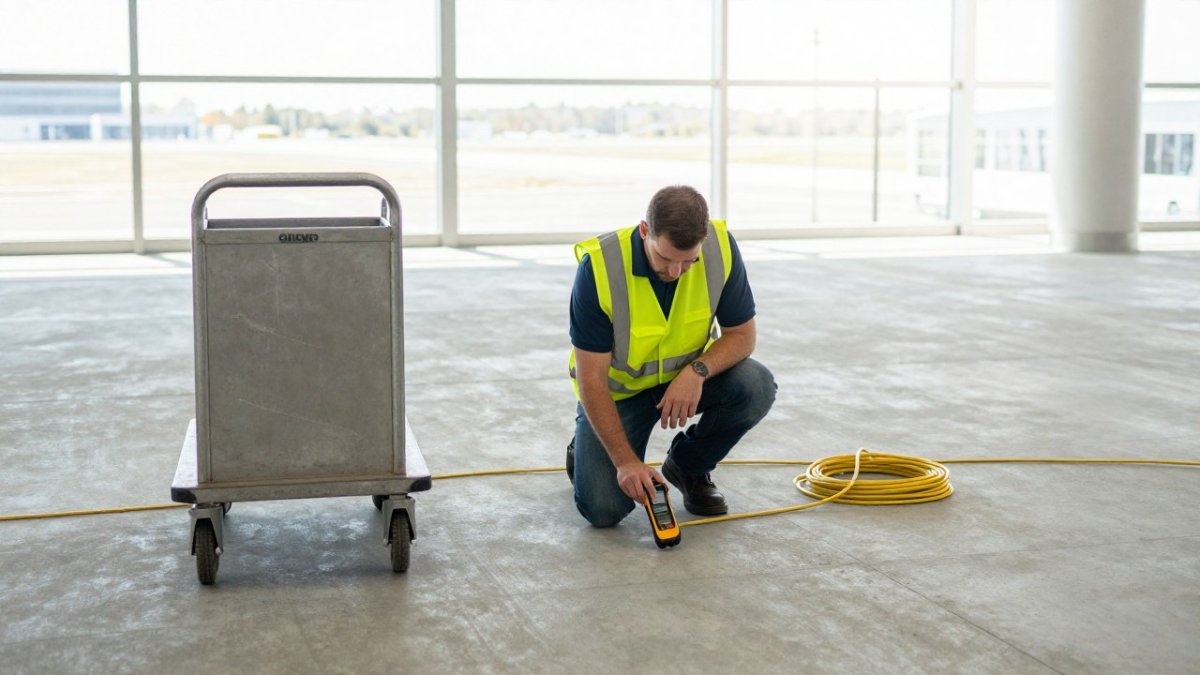
- In-situ relative humidity probe (ASTM F2170). Drills to a specified depth (commonly 40 percent of the slab thickness for a slab drying from one side) and reads humidity inside the concrete. This is the test most flooring manufacturers now reference for relative humidity limits.
- Polyethylene sheet test (ASTM D4263). A plastic sheet taped to the slab for 16 to 24 hours shows whether moisture is collecting underneath. It is a qualitative indicator, not a measurement.
Reading the numbers. Manufacturers publish their own limits, and those limits govern. Confirm the exact relative humidity and moisture vapor emission figures for the specific adhesive and finish you are installing.
A decision workflow that holds up:
- Confirm the slab is cured and the building's HVAC is running at its design condition, because testing a slab in an unconditioned shell produces numbers that will not match the occupied building.
- Map the slab into test zones by age, exposure, and finish schedule, and take multiple readings per zone rather than one per floor.
- Run in-situ RH probes as the primary quantitative test, and use calcium chloride or sheet tests as corroboration where the specification or manufacturer calls for them.
- Record pH at the same locations.
- Compare every reading against the adhesive and flooring manufacturer's published limits.
- Decide: if readings are within limits, proceed to prep and installation; if they are marginally high, consider a longer drying period with temporary heat and dehumidification; if they are clearly high or the slab has a history of failure, specify a mitigation coating or a moisture-tolerant underlayment; if the slab is wet from a source that will not stop, redesign the assembly or address the source before flooring.
Documentation. Every reading should carry a location identifier that matches the construction drawings, the date, the test method and standard, the instrument serial number, the slab and ambient temperature, and the technician's name.
Watch out: the sheet test alone is not proof.
If your readings come back high, our article on terrazzo subfloor moisture and what to do next walks through the immediate steps.
Choosing Concrete Moisture Mitigation Systems for Airport Slabs
Concrete moisture mitigation systems fall into three families, and the right pick depends on your readings, your slab conditions, and your schedule. Here is how we sort them, and what we check before a drum is ordered.
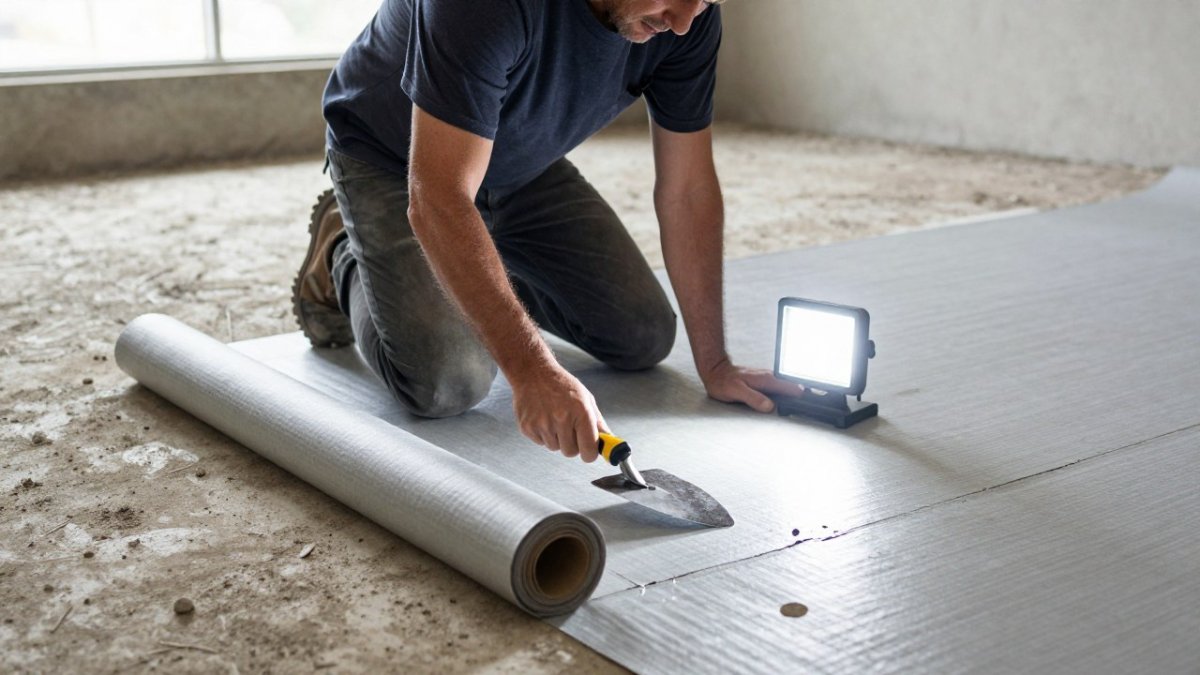
- Vapor retarders under the slab. Sheet membranes placed below the pour. Best planned at new construction, not retrofit, because once the slab is poured the barrier is inaccessible.
- Surface-applied moisture-control coatings. Epoxy or urethane coatings rolled or sprayed onto the prepared slab to block vapor. The most common retrofit answer, and the family most airport work uses.
- Self-leveling underlayment with a moisture-tolerant binder. Adds a flat, dry surface while managing residual moisture, and is often paired with a coating rather than used alone.
Epoxy versus urethane. Epoxy coatings block vapor well and bond hard, but they need a dry, clean, sound slab and careful surface prep, and they generally require a longer cure before topcoats and adhesives. Whichever coating is chosen, sound results depend on matching the system to the slab and preparing the concrete carefully, a principle reflected in Integrity Coatings’ approach to surface preparation.
Airport-specific slab conditions that change the selection:
- Slab age and history. Older slabs with unknown coatings, old adhesive residue, or a prior failure need stripping, grinding, and re-testing before any new coating is specified. A slab that failed once will fail again if the moisture source was never addressed.
- Ground-level and below-grade areas. Baggage areas, service corridors, and lower-level hold rooms often sit closer to groundwater and see higher vapor drive than upper concourse slabs.
- HVAC commissioning and seasonal humidity. A slab tested before the building is conditioned can read differently once the terminal is at design humidity. Plan testing and mitigation around commissioning, and account for seasonal swings in coastal and humid climates.
- Deicing-fluid exposure. Apron-adjacent and ground-level areas can see glycol and other deicing chemicals tracked or drained onto the slab. Confirm the coating and finish resist those chemicals, not just moisture.
- Transitions between terminal zones. Where a mitigated slab meets an unmitigated one, or where finish flooring changes, plan a transition detail so movement and moisture do not concentrate at the joint.
Compatibility mapping before purchase. A coating that blocks moisture but will not accept your flooring adhesive is a wasted pour.
A selection sequence that works:
- Start from the test results and the flooring manufacturer's limits.
- Identify the slab conditions above that apply to each zone.
- Shortlist coatings that meet the moisture and chemical requirements.
- Confirm the full assembly is compatible and, where possible, covered by a system warranty.
- Match the cure schedule to the airport's work windows.
- Specify the prep, primer, and patching products by name and number so the field crew cannot substitute.
One rule we never bend: check adhesive compatibility before you buy the coating. The cheapest coating on the bid is expensive if the finish flooring will not bond to it.
For a full walkthrough of the sequence, see our guide to substrate preparation for terrazzo in seven steps.
Concrete Slab Preparation for Flooring: Surface Profile, Flatness, and Dust Control
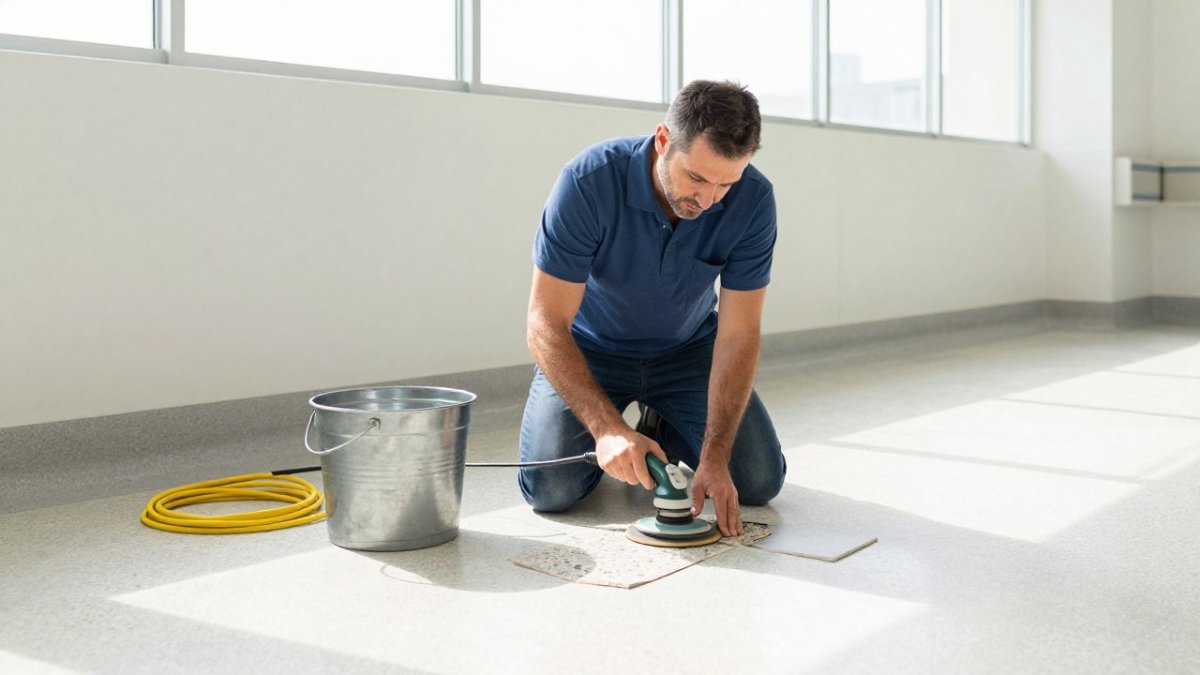
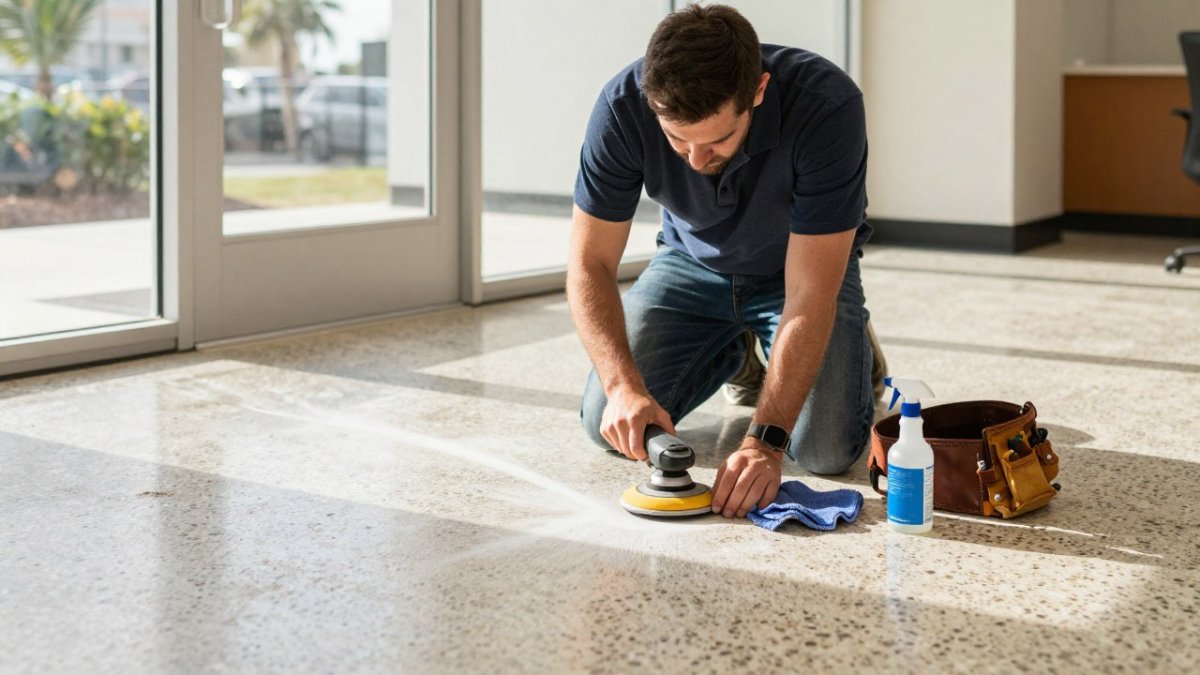
Concrete slab preparation for flooring makes or breaks the coating bond. A moisture-control coating only works if it sticks, and it only sticks to a properly prepared surface.
What prep involves:
- Grinding or shot blasting to open the concrete surface profile so the coating can grip
- Flatness checks because a coating follows every dip and crown in the slab
- Patching and floor patching of cracks, spalls, and old adhesive residue
- Primer application matched to the coating system
- Dust control with HEPA vacuums and containment, which is non-negotiable in an operating terminal
A slab that looks clean can still be too smooth for a coating to hold, so test a small patch first.
For a full walkthrough of the sequence, see our guide to substrate preparation for terrazzo in seven steps.
Moisture Mitigation System Cure Time and Application Windows
Moisture mitigation system cure time controls your whole schedule, so plan it before the first drum arrives. Cure windows vary by product, slab temperature, and humidity. Cure and recoat windows vary by product, so follow the manufacturer's data sheet for the exact timing.
Three things stretch cure time:
- Cold slab temperatures
- High ambient humidity
- Thick application passes
Get the manufacturer's written application guidelines and build the cure window into your phasing plan. Do not let a flooring crew start early because the schedule slipped. A coating that has not fully cured will trap solvent and fail under the finish.
Airport Operating Constraints: Phasing, Containment, and Handover
Airport operating constraints change subfloor prep. Work often takes place beside live gates, security checkpoints, and passenger flow.
What to plan around:
- Night and off-peak windows for noisy work like grinding and shot blasting
- Containment walls and negative air to keep dust out of the terminal
- Phased zones so one section cures while another stays open
- Handover checkpoints with documented sign-off before a zone reopens
Handover is where projects often go wrong. Write down acceptance criteria: coating thickness, adhesion test results, and a final moisture reading on the finished system.
If future maintenance is on your mind, our guide to low maintenance flooring for airports shows how the right system cuts disruption later.
Best Practices by Subfloor Type: A Comparison Table
Not every slab needs the same approach. Use this table as a starting point, then confirm against your test results and the manufacturer's limits.
| Subfloor Type | Typical Moisture Risk | Recommended Approach | Key Watch Point |
|---|---|---|---|
| New concrete slab, on grade | Moderate to high | Vapor retarder plus surface coating | Full cure before coating |
| Older slab, unknown history | High | In-situ RH testing, then epoxy or urethane coating | Old adhesive residue |
| Slab with prior coating failure | High | Strip, grind, re-test, recoat | Hidden moisture pockets |
| Elevated structural slab | Low to moderate | Surface coating after profile check | Flatness at joints |
| Slab over crawl space | High | Vapor barrier plus coating | Groundwater wicking |
Planning Your Airport Subfloor Moisture Mitigation with A1 Terrazzo
Getting moisture mitigation right on an airport slab takes testing, the right system, disciplined prep, and documented handover. Skip any one and the floor pays for it later.
A1 Terrazzo offers commercial terrazzo flooring installation and professional maintenance services in Florida, backed by 35 years of experience.
If you are planning an airport subfloor project, contact our team to talk through your slab conditions and schedule.
Airport floors fail from the slab up, not the surface down. If your concourse project is heading toward installation and the moisture question is still open, get the testing and mitigation plan settled first.
Frequently Asked Questions
How do you test a concrete subfloor for moisture before installing flooring?
Use in-situ relative humidity probes or ASTM F2170 testing, or calcium chloride tests under ASTM F1869, depending on the flooring manufacturer's requirements. Install probes to the manufacturer's specified depth, let them equalize, and record readings in a written report. Document each test location, date, and result for your records. Test after the slab has cured and before any coating or barrier goes down.
What moisture levels are acceptable for concrete flooring?
Acceptable limits come from the flooring and adhesive manufacturers, not a single universal number. Relative humidity readings and moisture-vapor emission rates each have their own thresholds, and some systems require both. Always check the published limits for the specific flooring system going in. If readings exceed those limits, concrete moisture mitigation systems are needed before installation. Record the thresholds and the test results together so acceptance is clear.
How long does a concrete moisture mitigation system take to cure?
Moisture mitigation system cure time depends on the product, film thickness, slab temperature, and ambient humidity. Follow the manufacturer's data sheet for the exact recoat window, and do not install flooring before the coating has fully cured. In airport work, schedule cure time into the phasing plan so a delayed cure does not push back the handover.
Can terrazzo be installed over a moisture mitigation system?
Yes, when the mitigation system is compatible with the terrazzo installation method and the adhesive or bonding agent specified, as confirmed by the manufacturers. Confirm adhesion, bond strength, and surface profile requirements with both the coating and terrazzo system manufacturers before work begins. Proper concrete slab preparation for flooring, including flatness and a level subfloor, matters as much as the coating itself. Document compatibility in writing so moisture-related failures do not become a warranty dispute.