 blog
Durable Flooring Alternatives to Carpet for Retail
Table of Contents
- Why Carpet Falls Short in Retail Environments
- Retail Store Flooring Options: A Material Comparison
- Epoxy Terrazzo Flooring for High-Traffic Retail
- Performance in Humid and Wet Retail Conditions
- Commercial Flooring Maintenance: Long-Term Cost and Durability
- Slip Resistance and Safety Standards
- Installation, Subfloor Preparation, and Timeline
- Frequently Asked Questions
Last Updated: October 21, 2026
Why Carpet Falls Short in Retail Environments
Carpet in retail spaces creates problems that compound over time. Moisture from tracked-in water, humidity, and spills seeps into fibers and backing, creating an ideal environment for mold and mildew growth. Stains become permanent within hours. High foot traffic causes matting and wear patterns that no amount of cleaning reverses.
Most retail managers discover these issues too late. By the time they realize carpet isn't working, they're already dealing with replacement costs, customer complaints about appearance, and potential health concerns. The real issue isn't that carpet is inherently bad, it's that retail environments demand something fundamentally different.
Durable flooring alternatives carpet options address what carpet cannot: consistent performance under constant stress. Whether you're managing a grocery store, boutique, or health facility, the flooring carries your brand's first impression. It also carries liability. Slippery surfaces invite lawsuits. Poor drainage creates safety hazards. Difficult-to-clean floors harbor bacteria and allergens.
This guide covers durable flooring alternatives to carpet that actually work in retail spaces. Below, you'll see exactly how each option performs in the specific challenges retail environments present, especially in humid climates where moisture control becomes critical.
Retail Store Flooring Options: A Material Comparison
Selecting the right commercial flooring material depends on traffic patterns, moisture exposure, maintenance capacity, and budget constraints. Each material type offers distinct trade-offs. Understanding those trade-offs prevents costly mistakes.
Luxury Vinyl Plank and Luxury Vinyl Tile
Luxury vinyl plank (LVP) and luxury vinyl tile (LVT) dominate retail flooring decisions because they balance affordability with performance. These waterproof vinyl products resist moisture completely, making them ideal for spaces where water exposure is routine.
LVP and LVT handle heavy foot traffic well. The wear layer protects against scratches and scuffs that would damage other surfaces. Installation is relatively fast, which minimizes business disruption. Many retailers choose vinyl because it requires minimal maintenance, regular sweeping and occasional damp mopping keep it looking new.
The limitation appears over time. Vinyl can fade under direct sunlight. In high-traffic zones, seams may separate slightly after several years. The material also generates more noise underfoot compared to alternatives. For retail spaces where sound matters (upscale boutiques, wellness centers), this becomes a consideration.
Pros:
- Waterproof and moisture-resistant
- Affordable initial cost
- Quick installation
- Easy maintenance and cleaning
Cons:
- Can fade in direct sunlight
- Seams may separate with heavy use
- Higher noise levels underfoot
- May feel less premium than tile or terrazzo
Porcelain and Ceramic Tile
Porcelain tile offers durability that outlasts most retail flooring. The material is fired at extremely high temperatures, creating a dense, non-porous surface that resists staining and moisture penetration. Porcelain handles heavy traffic without showing wear patterns.
Ceramic tile costs less than porcelain but sacrifices some durability. The softer material can chip under impact and shows wear more visibly over time. For high-traffic retail, porcelain is the stronger choice.
Both materials require proper grout selection. Standard grout absorbs moisture and stains. Epoxy grout performs better in wet environments but costs more to install. The grout joint itself becomes a maintenance point, dirt accumulates in lines between tiles, requiring regular attention.
Pros:
- Extremely durable and long-lasting
- Non-porous and stain-resistant
- Available in endless design options
- Easy to clean and sanitize
Cons:
- Grout joints require ongoing maintenance
- Hard underfoot, less comfortable for standing
- Slippery when wet without textured finish
- Higher installation cost than vinyl
Laminate Flooring
Laminate is rarely the right choice for retail environments. The material consists of a photographic layer bonded to a particle board core. Moisture penetration causes swelling and delamination. Retail spaces with any water exposure will see laminate fail within 2-3 years.
Laminate works only in dry retail environments with minimal moisture risk. Even then, better alternatives exist at similar price points.
Pros:
- Lower cost than tile or vinyl
- Wide design variety
- Quick installation
Cons:
- Moisture causes permanent damage
- Not suitable for humid or wet conditions
- Limited lifespan in retail use
- Poor for areas near entrances or restrooms
Polished Concrete
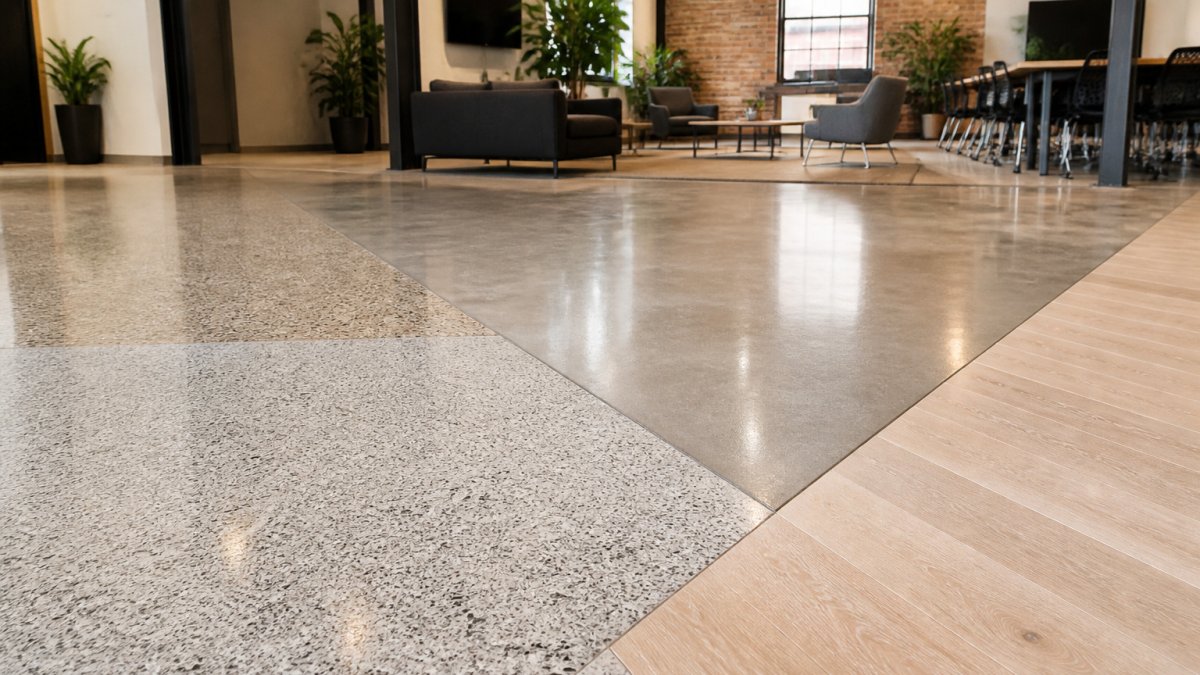
Polished concrete offers an industrial aesthetic that appeals to certain retail concepts. The process grinds the concrete surface smooth and seals it, creating a glossy finish. The material is extremely durable and requires minimal maintenance.
Concrete's main limitation is slip resistance. A polished concrete floor becomes dangerously slippery when wet. Retail environments with any moisture risk require anti-slip coatings, which add cost and maintenance complexity. The hard surface also creates significant noise and offers no cushioning for staff standing all day.
Pros:
- Extremely durable and long-lasting
- Minimal maintenance required
- Cost-effective for large spaces
- Modern aesthetic appeal
Cons:
- Slippery when wet without coatings
- Hard underfoot, uncomfortable for prolonged standing
- Noise amplification
- Requires regular sealing maintenance
Epoxy Terrazzo Flooring for High-Traffic Retail
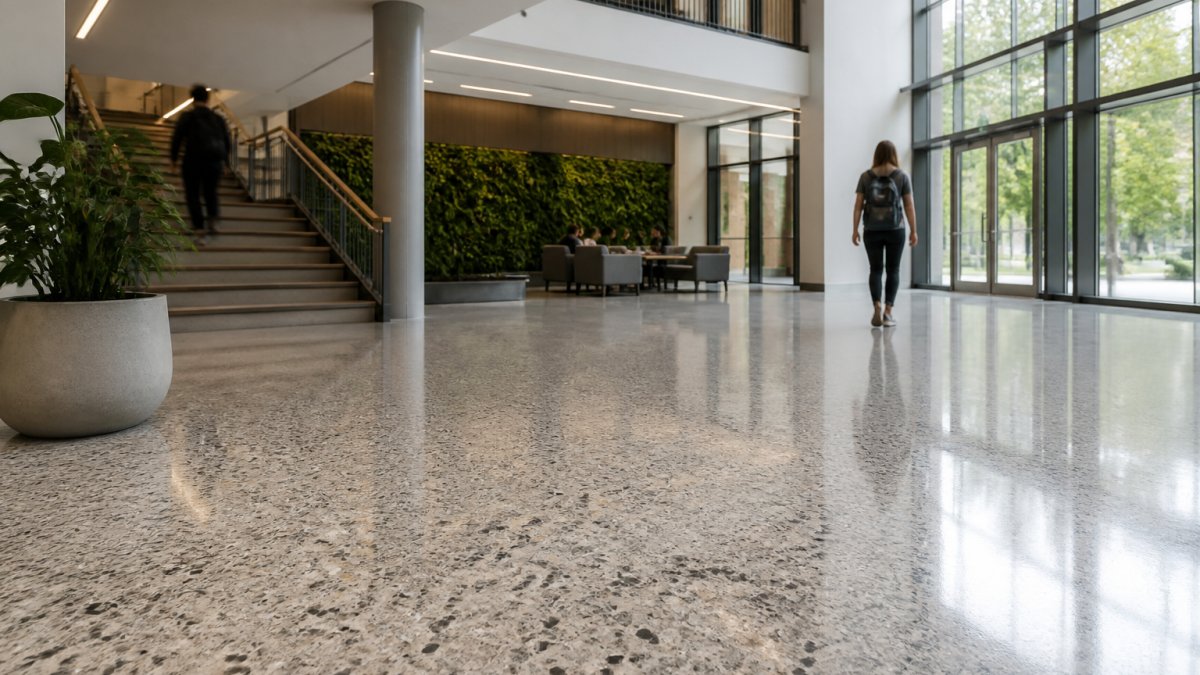
Terrazzo represents the premium solution among durable flooring alternatives carpet in retail spaces. The material combines marble, granite, and glass chips set in a cement or epoxy binder. Once cured and polished, terrazzo creates a seamless, non-porous surface that handles any retail challenge.
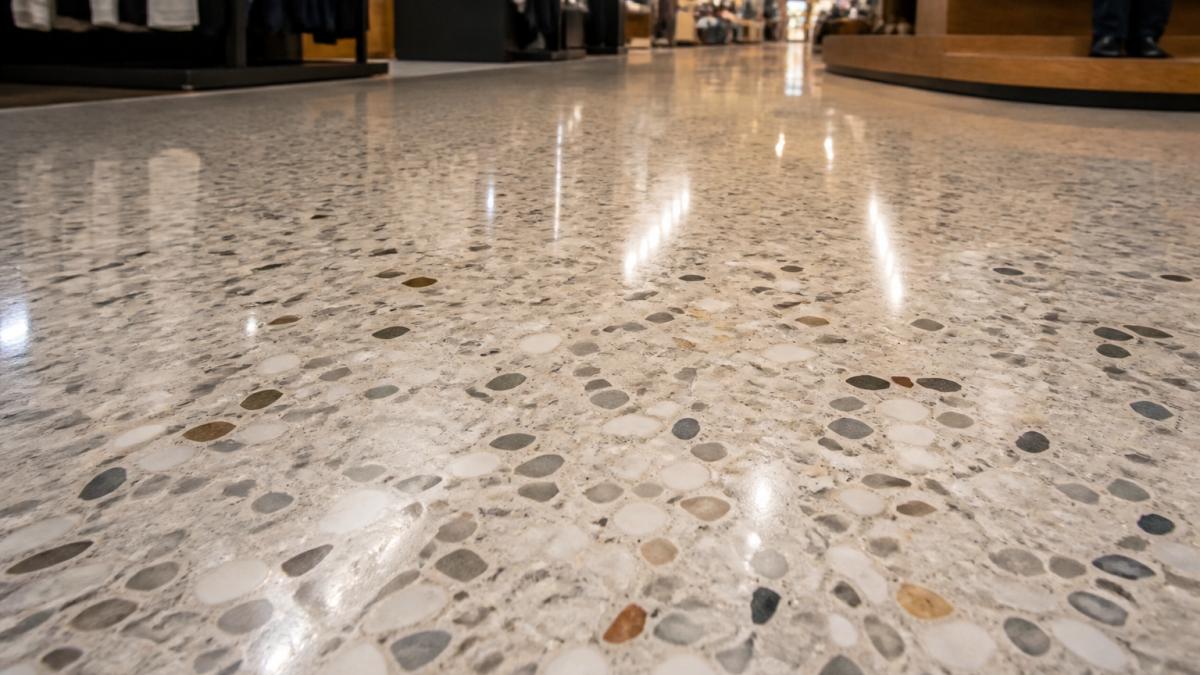
Epoxy terrazzo outperforms other materials in several critical ways. The seamless surface eliminates grout lines where dirt accumulates and bacteria hide. Moisture cannot penetrate the epoxy binder, making it immune to humidity and water exposure.
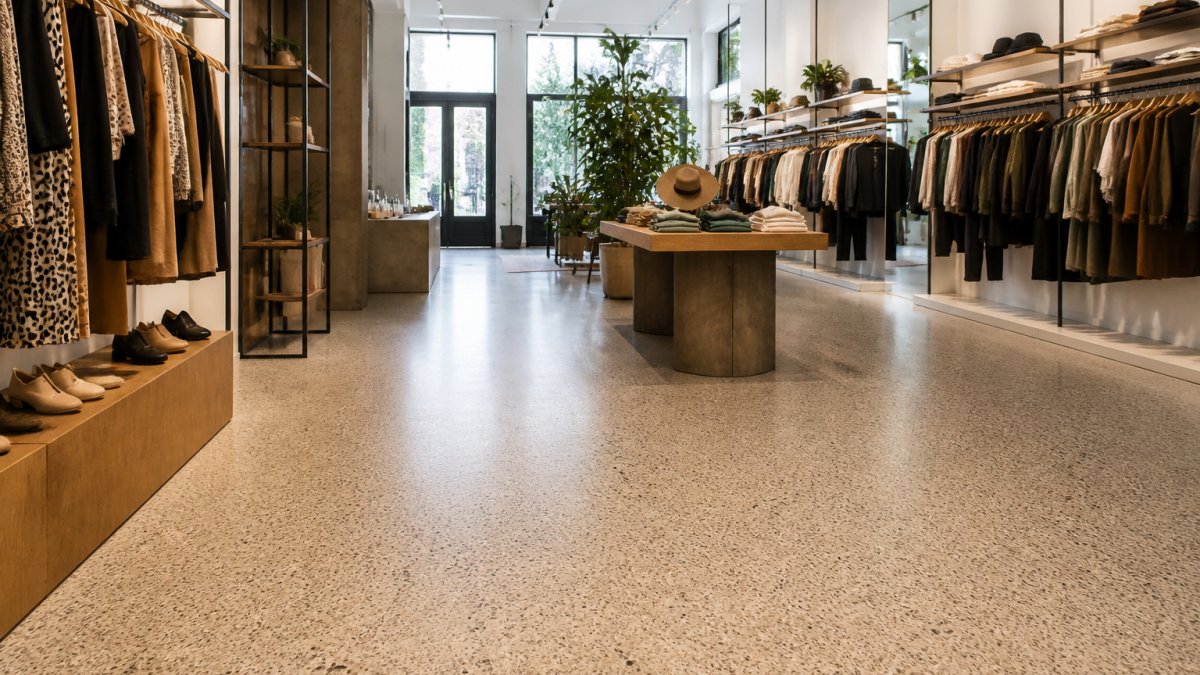
The aesthetic advantage matters for retail. Terrazzo creates a finished, upscale appearance that communicates quality to customers. The material is available in countless color and aggregate combinations, allowing custom designs that reinforce brand identity.
Installation requires expertise. The substrate must be properly prepared, and the terrazzo must be installed by experienced professionals who understand moisture testing and curing protocols. This is where A1 Terrazzo's 35 years of commercial experience becomes critical.
Pros:
- Seamless, non-porous surface
- Completely waterproof and moisture-resistant
- No visible wear patterns under heavy traffic
- Customizable colors and designs
- Premium aesthetic that enhances retail environment
- Lifespan of 25+ years with proper maintenance
Cons:
- Higher initial installation cost
- Requires experienced professional installation
- Longer installation timeline than vinyl or laminate
- Professional maintenance recommended for optimal results
Performance in Humid and Wet Retail Conditions
Humidity and moisture are the primary enemies of retail flooring. In humid climates, moisture migrates through concrete substrates from below. Poor ventilation traps moisture in the air. Water from customer traffic, cleaning, and weather accumulates on surfaces.
Materials respond differently to these conditions. Vinyl resists surface moisture but can trap moisture underneath if substrate preparation is inadequate. Tile's grout joints become moisture pathways. Laminate absorbs moisture and fails. Polished concrete requires constant resealing to prevent moisture penetration.
Terrazzo's epoxy binder creates a complete moisture barrier. Water cannot penetrate from above or migrate from below. The seamless surface means no joints for moisture to exploit. In retail environments where moisture control determines success, terrazzo eliminates the primary failure point.
Proper substrate preparation determines performance for all materials. Concrete must be tested for moisture content before any flooring installation. If moisture levels are too high, the flooring will fail regardless of material type. Many retail flooring failures trace back to skipped moisture testing, not material failure.
Commercial Flooring Maintenance: Long-Term Cost and Durability
Initial installation cost tells only part of the story. Long-term maintenance costs and replacement cycles determine true value. A cheaper material that requires replacement every 5-7 years costs more than a premium material lasting 20+ years.
Vinyl requires regular maintenance, sweeping, damp mopping, and occasional stripping and waxing. Traffic patterns show in the wear layer over time. Most vinyl installations need replacement within 7-10 years in high-traffic retail.
Tile requires grout maintenance. Grout sealing must be refreshed every 1-3 years. Stained grout cannot be cleaned and must be replaced. In retail spaces, this becomes a recurring expense.
Polished concrete needs regular sealing, typically every 1-2 years. The seal protects against stains and moisture but requires professional application.
Terrazzo requires professional maintenance but far less frequently. A high-quality sealant applied during installation protects the surface for years. Regular cleaning with appropriate products keeps terrazzo looking new. Professional maintenance every 2-3 years restores the polish and refresh the seal. Over a 25-year lifespan, this maintenance schedule costs significantly less than replacing vinyl multiple times or continuously resealing concrete.
| Material | Typical Lifespan | Maintenance Frequency | Maintenance Type | Replacement Cycle |
|---|---|---|---|---|
| Luxury Vinyl | 7-10 years | Monthly | Sweeping, mopping, occasional stripping | Every 7-10 years |
| Porcelain Tile | 15-20 years | Monthly | Sweeping, mopping, grout sealing | Every 15-20 years |
| Polished Concrete | 10-15 years | Quarterly | Sweeping, sealing, occasional polishing | Every 10-15 years |
| Terrazzo | 25+ years | Quarterly | Professional cleaning, sealing refresh | Every 25+ years |
Slip Resistance and Safety Standards
Slip resistance determines liability in retail environments. A customer who falls due to a slippery floor can pursue legal claims. Staff working on slippery surfaces face injury risk. OSHA guidelines emphasize slip resistance as a critical safety requirement in commercial spaces.
Different materials present different slip risks. Polished concrete becomes extremely slippery when wet. Polished tile without texture creates hazards in areas near restrooms or entrances. Vinyl with a textured surface offers better slip resistance. Terrazzo can be finished with a slip-resistant texture without sacrificing aesthetics.
The coefficient of friction (COF) measures slip resistance. A higher COF indicates better grip. Most safety standards recommend a minimum COF of 0.5 for level surfaces (D2047 Standard Test Method for Static Coefficient of Friction of Polish-Coated Flooring...). Retail spaces with moisture exposure should exceed this standard.
Terrazzo can be finished with multiple texture options. A honed finish provides excellent slip resistance while maintaining the material's elegant appearance. This combination, safety and aesthetics, is difficult to achieve with other materials. Polished concrete requires additional anti-slip coatings. Tile needs textured options that limit design flexibility.
Installation, Subfloor Preparation, and Timeline
Installation quality determines flooring performance more than material selection. A poorly installed premium material fails faster than a well-installed standard material. Subfloor preparation is where most problems originate.
Concrete substrates must be tested for moisture before any flooring installation. Moisture testing involves specialized equipment that measures moisture content at depth. High moisture levels prevent proper adhesion and cause premature failure.
The concrete surface must be clean, level, and free of contaminants. Dust, oil, and previous sealants prevent proper bonding. Any high spots must be ground down. Low spots must be filled.
Installation timelines vary by material. Vinyl can be installed in 1-2 days for most retail spaces. Tile takes 3-5 days depending on complexity. Terrazzo requires more time, typically 5-7 days for installation plus curing time. The curing process cannot be rushed.
The longer installation timeline for terrazzo creates business disruption. This is a legitimate consideration for active retail spaces. However, the 25-year lifespan means this disruption occurs once per generation of ownership.
Selecting durable flooring alternatives to carpet for retail requires balancing performance, cost, and aesthetics. A1 Terrazzo offers expert commercial terrazzo flooring installation and professional maintenance services across Florida, leveraging over 35 years of specialized experience to deliver durable and beautiful flooring solutions.
Frequently Asked Questions
What are the most durable flooring alternatives to carpet for retail stores?
Luxury vinyl plank (LVP), porcelain tile, polished concrete, epoxy terrazzo, and rubber flooring all outperform carpet in retail. LVP offers water resistance and easy maintenance. Porcelain tile delivers exceptional durability and stain resistance. Epoxy terrazzo combines aesthetic appeal with superior wear resistance and is ideal for high-traffic areas. Each option handles heavy foot traffic, moisture, and spills better than carpet while reducing replacement cycles and maintenance costs.
Is terrazzo flooring a good choice for high-traffic retail spaces?
Yes. Terrazzo, especially epoxy terrazzo flooring, excels in retail environments. It resists wear, stains, and moisture while maintaining appearance under constant foot traffic. Terrazzo's seamless finish eliminates grout lines where dirt accumulates, making cleaning straightforward. Its durability means fewer replacements over the flooring's lifespan, and professional installation ensures proper substrate preparation prevents cracking and moisture issues that compromise performance.
How does terrazzo compare with luxury vinyl flooring for retail stores?
Luxury vinyl is cheaper upfront and easier to install, but terrazzo offers longer lifespan, superior durability, and better stain and moisture resistance. Terrazzo requires professional installation and proper subfloor preparation, but resists wear better in high-traffic retail. Both are waterproof and easy to clean. Terrazzo's seamless design and aesthetic options make it ideal for upscale retail, while vinyl suits budget-conscious operations prioritizing quick installation.
Which commercial flooring is easiest to clean and maintain?
Epoxy terrazzo and polished concrete are among the easiest to maintain. Both have seamless surfaces that eliminate grout lines and dirt traps. Regular sweeping and damp mopping keep them clean. Avoid harsh chemicals; use pH-neutral cleaners recommended for the specific finish. Terrazzo's sealed surface resists stains and moisture damage. Professional commercial flooring maintenance services ensure proper care, extend lifespan, and prevent damage from incorrect cleaning products or techniques.