 How-to
How to Choose Slip Resistant Flooring for Florida Classrooms
Last Updated: November 17, 2026
Quick Summary
Choose slip resistant flooring for Florida classrooms by matching the surface to each zone and requiring measured wet traction data, not texture or adjectives. Ask for a coefficient of friction test report naming the method, finish, and wet conditions, then protect that traction with entrance matting and approved cleaning products.
- Safety vinyl and LVT suit general classrooms, rubber suits corridors and gyms, and resin suits labs and cafeterias.
- Static coefficient of friction measures the force to start movement; dynamic coefficient of friction measures resistance while a foot slides.
- The DCOF AcuTest (ANSI A326.3) is the current consensus method for hard-surface flooring and reports a wet value.
- Texture can wear smooth or trap dirt, wax, and cleaning residue that reduce shoe contact.
- Use scraper matting outside and absorbent matting in a second zone, long enough for several footsteps.
Table of Contents
- Why Florida Classrooms Need Slip Resistant Flooring Solutions
- Classroom Flooring Options Compared: Vinyl, Rubber, Resin, and Terrazzo
- How to Evaluate Slip-Resistant School Flooring Objectively
- Zone-by-Zone Selection for Corridors, Labs, Libraries, and Cafeterias
- School Flooring Maintenance and Wet-Floor Risk Management
- Terrazzo Flooring for Schools: Where It Fits and What to Expect
- Planning Your Classroom Flooring Project with A1 Terrazzo
- Frequently Asked Questions
Why Florida Classrooms Need Slip Resistant Flooring Solutions
Slip resistance is the measure of how well a floor surface resists losing friction when it is wet, contaminated, or worn. It is not a permanent property.
Florida makes this harder than it is elsewhere. Humidity stays high, rain arrives most afternoons for much of the year, and entrances take a beating.
Below, we break down the main classroom flooring options, how to judge slip resistance objectively, and how to match the right surface to each zone on campus.
Classroom Flooring Options Compared: Vinyl, Rubber, Resin, and Terrazzo
Four flooring families dominate education settings, and each behaves differently under wet conditions. Resilient flooring is the umbrella term for surfaces that give slightly underfoot, and it covers most of what schools actually install.
- Safety vinyl and luxury vinyl tile (LVT): Sheet vinyl and LVT are common classroom flooring options because they are easy to clean and handle rolling loads. Look for a slip-resistant surface finish and a wear layer thick enough for carts and chairs.
- Rubber flooring: Rubber is cushioning, quiet underfoot, and generally performs well wet and dry. It absorbs sound, which matters in corridors and music rooms.
- Resin and epoxy flooring: Seamless resin systems are popular in school laboratories and cafeterias because they resist chemicals and clean up fast. Slip resistance depends heavily on the aggregate broadcast into the topcoat.
Pros and Cons by Material
| Material | Strengths | Watch Out For | Best For |
|---|---|---|---|
| Safety vinyl / LVT | Easy to clean, low maintenance, handles rolling loads | Traction varies by finish; seams can trap moisture | General classrooms |
| Rubber | Cushioning, sound absorption, strong wet grip | Higher material cost; limited chemical resistance | Corridors, gyms, primary grades |
| Resin / epoxy | Seamless, chemical resistant, hygienic | Slippery if aggregate is wrong; needs skilled prep | Labs, cafeterias, kitchens |
| Terrazzo | Very durable, seamless, low lifecycle cost | Higher upfront cost; needs correct finish and care | Corridors, libraries, high-traffic halls |
For a direct head-to-head on the two most common choices, see our comparison of terrazzo vs vinyl flooring for Florida schools.
How to Evaluate Slip-Resistant School Flooring Objectively
Ask for test data, not adjectives. Any supplier can call a product "slip resistant," but slip-resistant school flooring should come with a measured coefficient of friction (COF) from a recognized test method, and the report should tell you whether the number was measured wet or dry, on which finish, and on which sample.
Two references matter most in the United States. The ADA Standards for Accessible Design set accessibility requirements that affect floor surfaces and transitions, and the National Floor Safety Institute publishes walkway safety standards and product certification tied to measured traction. Ask for the test method, the result, and the conditions under which it was measured.
What the Test Methods Actually Measure
Traction is measured two ways, and the difference matters when you compare reports.
- Static coefficient of friction (SCOF) measures the force needed to start a stationary object, or a shoe, moving across the surface. It is the older reference point and is often cited against a 0.6 threshold for level walking surfaces.
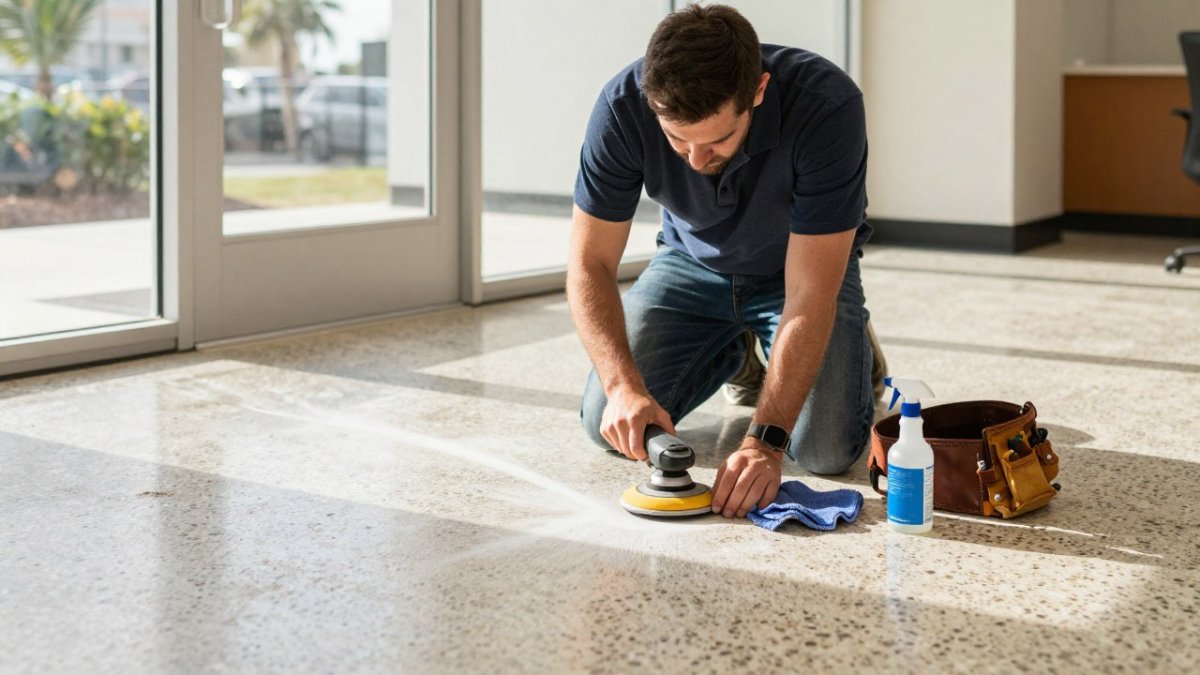
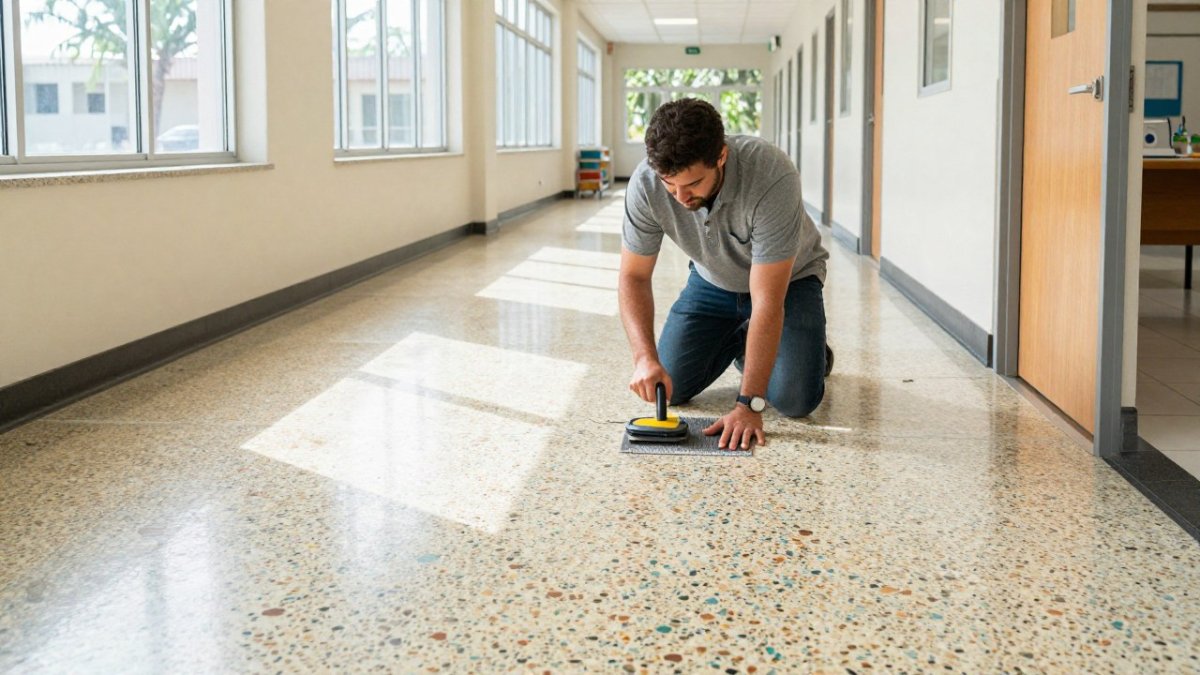
- Dynamic coefficient of friction (DCOF) measures resistance while a foot is already sliding, which is closer to what happens in a real slip. The DCOF AcuTest (ANSI A326.3) is the current consensus method for hard-surface flooring, and it reports a wet DCOF value. Confirm the wet DCOF threshold your project's design team or insurer requires rather than assuming one number fits every zone.
A report that lists only a dry number tells you almost nothing about a Florida classroom in August. Water, tracked-in grit, and cleaning residue are the conditions that produce falls, so insist on wet results on the finish that will actually be installed.
Why Texture Alone Does Not Establish Safety
A deeply textured surface feels grippy underfoot, but texture is not a measurement. Two problems recur:
- Texture can wear down. A profiled finish that tests well when new may polish smooth in the highest-traffic path within a few years, and the tested sample no longer represents the floor in service.
- Texture can trap contamination. Deep profiles hold dirt, wax, and cleaning residue that fill the voids and reduce contact between the shoe and the surface. A floor that feels rough can still be slick when wet and dirty.
Surface texture is a design feature. The COF report is the evidence. Specify both, but judge safety on the measured result.
A Practical Evaluation Checklist
Use this sequence for every candidate floor, and require written answers before the product is approved:
- Request the COF test report, wet and dry, with the test method named (for example, ANSI A326.3 DCOF AcuTest)
- Confirm the finish and aggregate specified in the bid match the sample that was tested
- Ask how traction changes after the manufacturer's recommended cleaning routine and after accelerated wear
Our slip resistant flooring campus selection guide walks through these criteria in more depth.
Watch out: a COF number quoted from a competitor's product or a generic industry article is not evidence for the floor in your building. Traction depends on the specific finish, the installation, and the cleaning program, so require test data tied to the exact specification you are buying.
Zone-by-Zone Selection for Corridors, Labs, Libraries, and Cafeterias
One floor rarely suits an entire campus. Match the surface to what happens in each space, and specify traction accordingly.
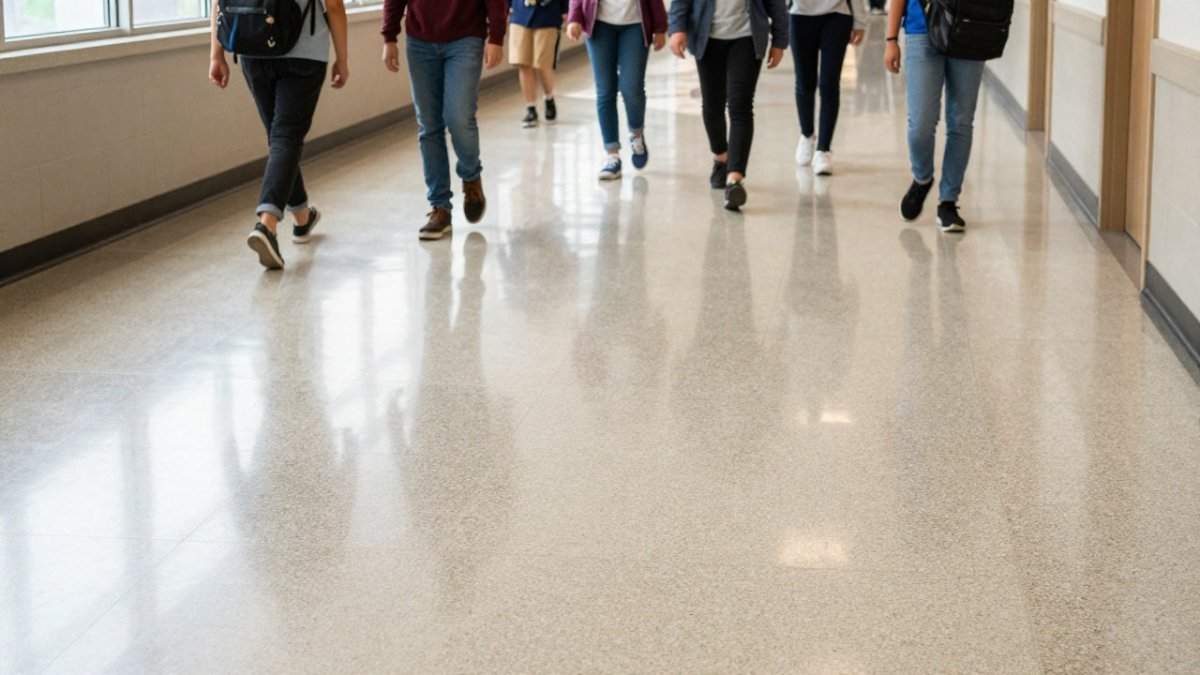
Corridors see the heaviest foot traffic and the most tracked-in water. Comparing how different surfaces balance damp traction, durability, comfort, and cleanup can help schools match each space to its needs, and RW Flooring offers another perspective on those trade-offs.
The mistake we see most often is specifying one product everywhere to simplify procurement.
School Flooring Maintenance and Wet-Floor Risk Management
Most slip incidents happen after installation, not because of it. School flooring maintenance decides whether a good floor stays safe, and the difference between a floor that holds its traction for fifteen years and one that turns slick in three usually comes down to a handful of routines.
Start at the Entrances
Wet-floor risk management is mostly about entrances, because that is where water enters the building. A common pattern in Florida schools is a single walk-off mat inside the door that is saturated by mid-morning. A matting system is often more effective than a single mat:
- Scraper matting outside or just inside the door to remove grit and bulk water from shoes
- Absorbent matting in a second zone to take up residual moisture
- Enough length for several footsteps on each mat, so students actually wipe their feet rather than stepping across in one stride
Mats must be cleaned and dried on a schedule, not just when they look dirty. A saturated mat stops absorbing and starts spreading water onto the floor.
Match Cleaning Products to the Finish
The two biggest culprits behind lost traction are over-application of polish and the wrong cleaning chemical. A floor finished with a high-gloss coating can lose wet traction, and an incompatible cleaner can strip, haze, or leave a film that fills the surface texture.
- Keep the manufacturer's approved chemical list posted where the custodial crew can see it, and cross-reference every product the district already buys.
- Dilute according to the label. Over-concentrated cleaner leaves residue that acts like a lubricant when damp.
- Avoid mixing products. A common pattern is an acid-based cleaner used on a floor that requires neutral pH, which dulls the finish and reduces traction.
Build a Spill and Wet-Weather Response Routine
A written response sequence shortens the window when a floor is hazardous:
- Barricade and sign the area immediately, using cones and signs that meet the district's safety policy.
- Absorb the bulk of the liquid with the appropriate absorbent, then clean with the approved chemical for that surface.
- Dry the area before removing barricades. Drying time depends on the surface, airflow, and humidity, on a humid day, a floor that looks dry can still be damp enough to reduce traction.
- Log the incident so patterns (a recurring leak, a problem entrance, a specific cleaner) become visible.
During rainy season, increase cleaning frequency at entrances and inspect for standing water after storms. Assign someone to walk the entry zones after the afternoon storm passes rather than waiting for the next scheduled cleaning.
Inspect on a Schedule
Traction degrades gradually, so inspection has to be routine rather than reactive.
For realistic upkeep figures before you commit, read our guide to terrazzo maintenance costs for schools.
Watch out: using a general-purpose cleaner on a sealed or polished floor can dull the finish and reduce traction. Always confirm the chemical against the manufacturer's list, and re-test traction after any change in the cleaning program.
Terrazzo Flooring for Schools: Where It Fits and What to Expect
Terrazzo earns its place in the busiest parts of a campus.
Where it fits best: corridors, lobbies, libraries, cafeterias, and other high-traffic areas. Where it fits less well: rooms needing soft cushioning or heavy sound absorption.
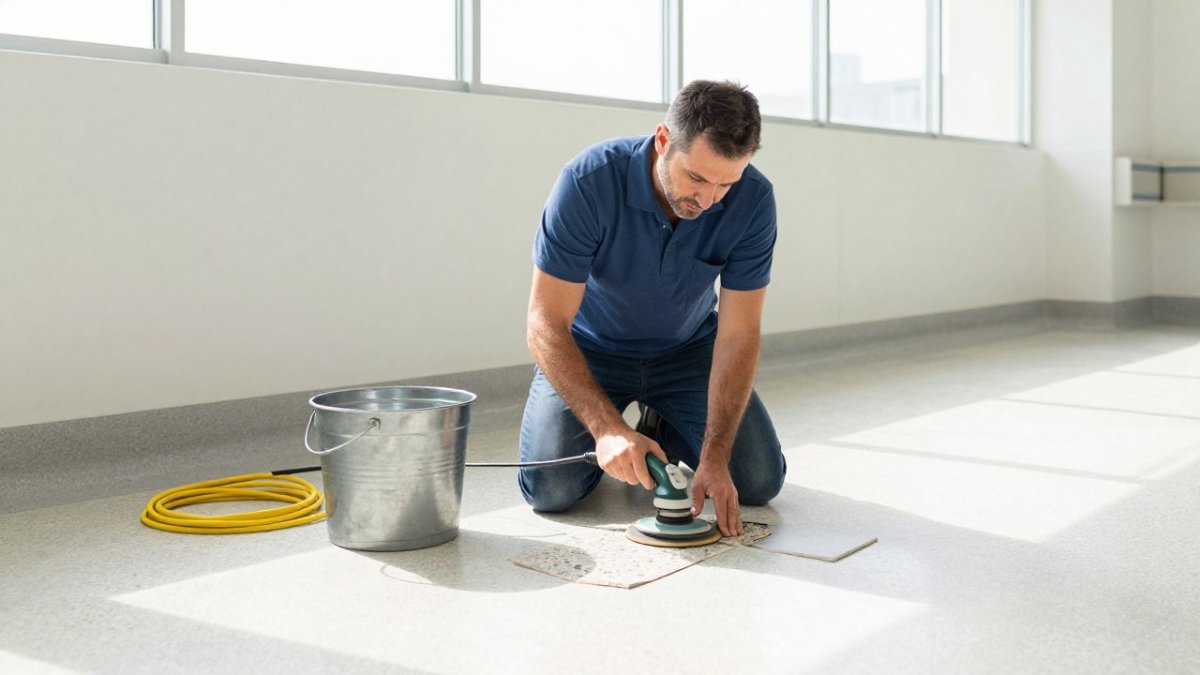
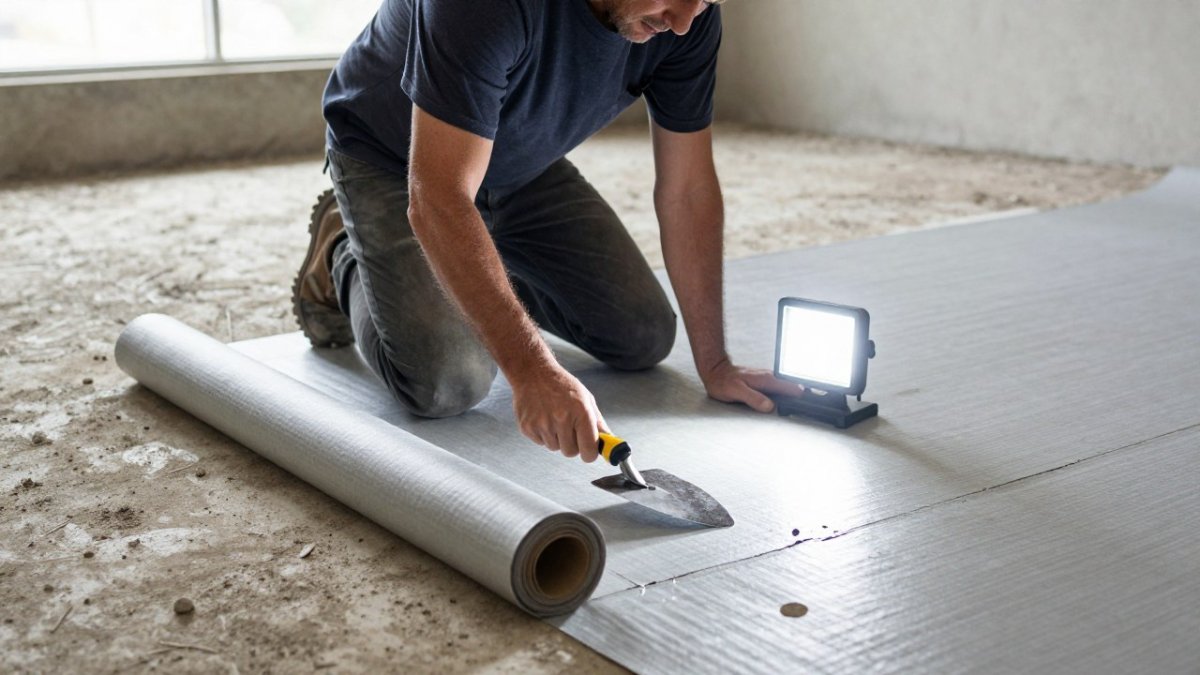
Expect a higher upfront cost and a more involved installation. Subfloor preparation matters enormously, and a poor substrate leads to cracking and failures later.
Planning Your Classroom Flooring Project with A1 Terrazzo
Start with the zones, then the budget, then the finish. Bring your floor plan and traffic patterns to the first conversation, and ask for slip test data on every product proposed.
Before you contact a contractor, review how to meet terrazzo flooring installation requirements for schools so you know what subfloor prep and curing time the job demands. If you want to see more of our work and expertise first, browse the A1 Terrazzo blog.
At A1 Terrazzo, we have spent over 35 years installing and maintaining commercial terrazzo across Florida, for commercial clients.
Getting slip resistance right in a Florida school means choosing the correct surface for each zone, verifying traction with real test data, and maintaining it properly afterward.
Frequently Asked Questions
What is the best slip resistant flooring for Florida classrooms?
There is no single best material; the right choice depends on the space. Rubber offers strong wet and dry traction and noise absorption for classrooms and libraries. Safety vinyl and LVT work well in corridors and general teaching areas when specified with a textured wear layer. Resin and epoxy suit laboratories and cafeterias where chemical resistance matters. Terrazzo delivers long lifecycle value in high-traffic corridors and commons. Evaluate each zone against slip resistance, moisture exposure, and cleaning routine before deciding.
How can schools compare slip resistance across flooring products?
Ask suppliers for documented slip-resistance test results rather than marketing claims. Request the test method used, the condition tested (wet or dry), and the numeric result. Compare products using the same test method so the numbers are directly comparable. Also ask how the surface performs after cleaning and over time, since polish buildup or wear can change traction. A written specification that names the test standard and minimum result protects your school during procurement and after installation.
Is terrazzo a practical flooring option for schools?
Yes, particularly in corridors, commons, and entry areas that see heavy foot traffic. Terrazzo is hard, resists scuffs and stains, and can last decades with routine maintenance, which supports lifecycle value on large campus renovations. It also handles rolling loads from carts and equipment. The key is proper subfloor preparation and a slip-resistant finish specified for wet conditions. Terrazzo is less suited to spaces needing underfoot cushioning, such as early-childhood rooms, where rubber performs better.
How does Florida's humidity affect classroom flooring choices?
High humidity and frequent wet weather raise the risk of moisture damage, adhesive failure, and mold in school buildings. Specify materials with strong moisture resistance, such as terrazzo, resin, rubber, and quality vinyl with sealed seams. Subfloor moisture testing before installation is essential; skipping it is a common cause of failures. Also plan entry matting and prompt spill response, since wet floors are when slip accidents happen. A flooring contractor experienced with Florida conditions will build these steps into the project.