 how-to
Terrazzo Floor Repair for Businesses: 7-Step Guide
Table of Contents
- Assess the Damage Before Any Terrazzo Repair Begins
- Terrazzo Floor Crack Repair: Matching the Method to the Crack
- Terrazzo Chip Repair and Patching Surface Defects
- Grinding, Honing, and Polishing to Restore the Finish
- What Drives Terrazzo Floor Repair Cost on a Commercial Project
- Planning Repairs Around Business Hours and Phased Closures
- Terrazzo Floor Maintenance That Prevents Repeat Repairs
- Frequently Asked Questions
Last Updated: October 17, 2026
Assess the Damage Before Any Terrazzo Repair Begins
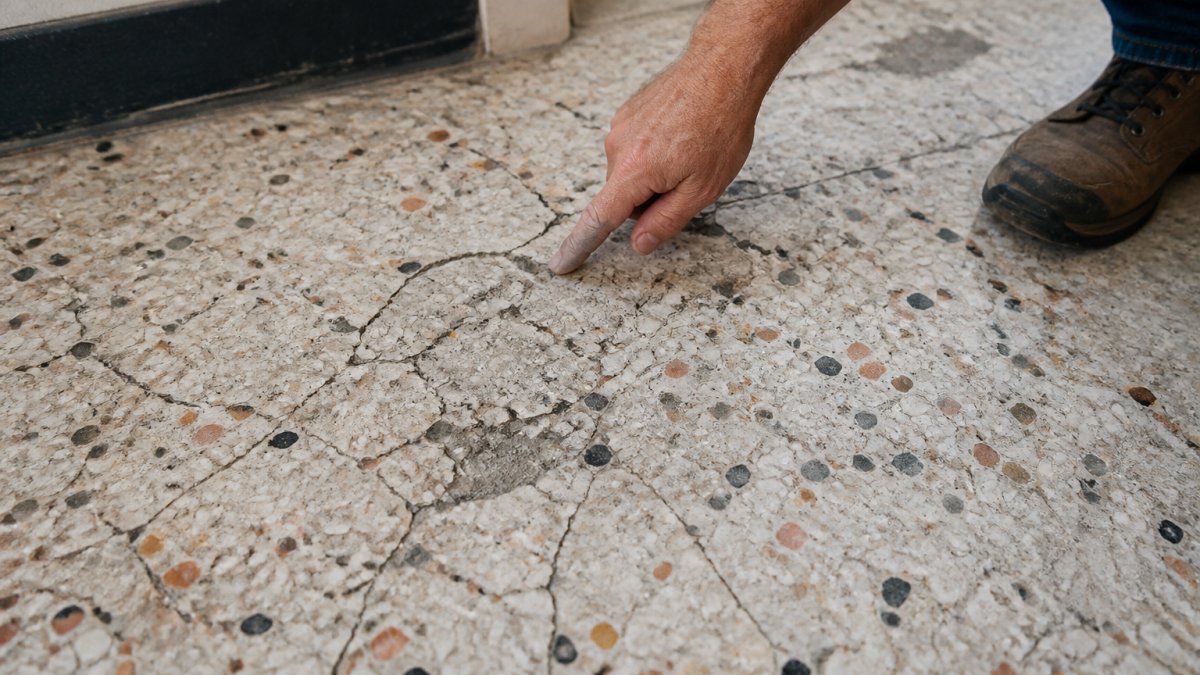
Terrazzo floor repair for businesses starts with a honest assessment, not a repair crew. Walk the floor before anyone quotes a fix.
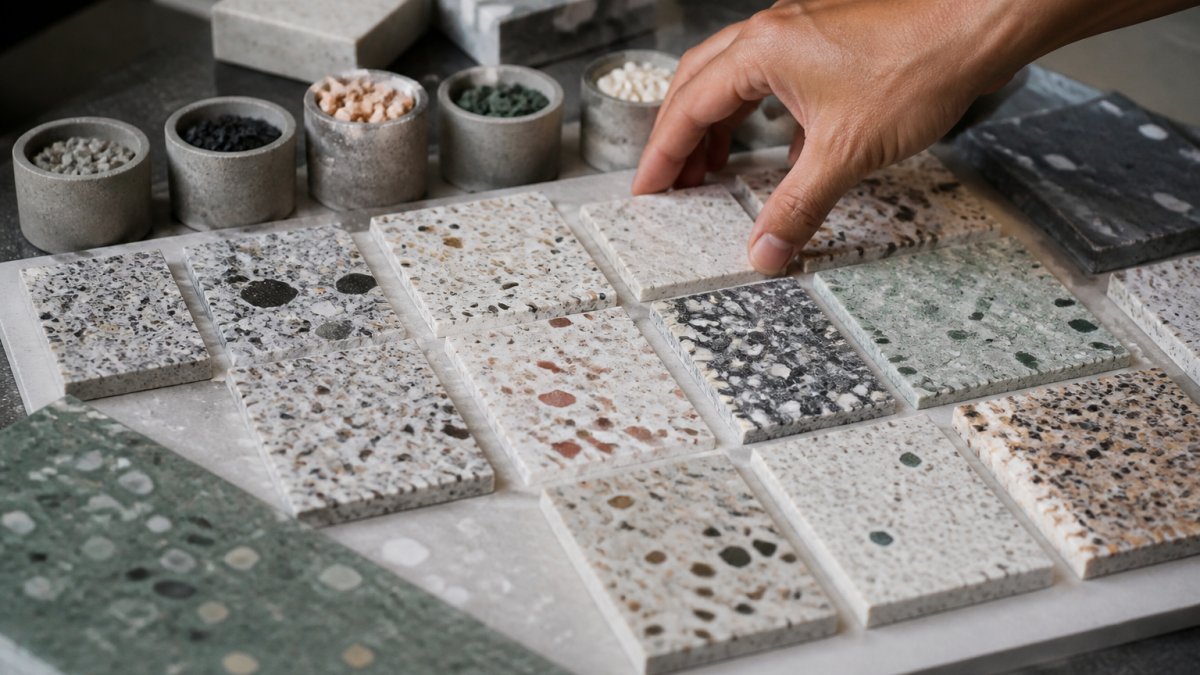
Terrazzo is a poured or precast floor made of marble, granite, or glass chips set in a cement or epoxy binder, then ground flat and polished.
Here is the throughline for this whole guide: most failed commercial terrazzo repairs trace back to a skipped assessment, not bad patching material.
What to Record During the Walkthrough
Bring a notebook and a phone camera. Log each defect by location and type.
- Cracks: length, width, and whether edges are raised or level
- Chips: depth, and whether aggregate is exposed or missing
- Stains: color, and whether they sit on the surface or soak in
Photograph every defect with something for scale. This record becomes your repair scope and your baseline for judging the finished work.
Terrazzo Floor Crack Repair: Matching the Method to the Crack
Terrazzo floor crack repair works best when the method matches the crack type. Hairline cracks get injected. Wide or moving cracks get routed and filled.
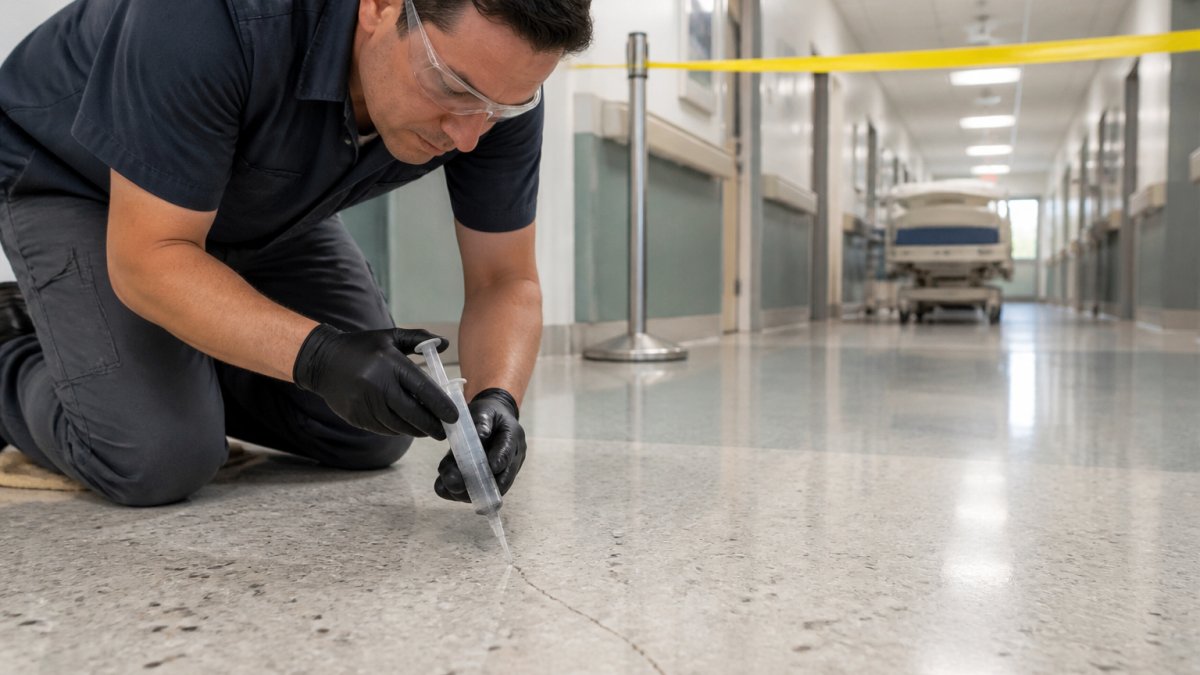
Match the repair to what you see:
| Crack Type | What It Looks Like | Repair Method |
|---|---|---|
| Hairline | Thin, stable, no edge lift | Inject epoxy, grind flush |
| Wide or chipped | Visible gap, missing material | Route out, fill with matched mix |
| Moving or recurring | Returns after patching | Fix substrate, then repair |
| Spider cracking | Network of fine lines | Grind, hone, seal the zone |
The last row is the one most guides skip. If a crack keeps coming back, the floor is telling you the slab beneath is moving. Patch it again and you will be patching it again next year.
When a Crack Signals a Substrate Problem
A crack that returns after two repairs is a substrate problem, not a surface problem. Look for these signs:
- The crack follows a straight line, often over a control joint
- Edges are uneven or one side sits higher
- The floor sounds hollow along the crack
When you see these, bring in a flooring contractor to check the slab before spending more on cosmetic patching. Fixing the cause first saves money. The National Terrazzo and Mosaic Association publishes technical guidance on substrate and crack issues worth reviewing before you scope the work.
Terrazzo Chip Repair and Patching Surface Defects
Terrazzo chip repair restores small missing areas by filling them with a color-matched mix, then grinding the patch level with the surrounding floor. The goal is a repair you cannot spot from standing height.
The process, in order:
- Clean the chip and remove loose material
- Match the binder and aggregate color as closely as possible
- Fill in thin layers, letting each set
- Grind the patch flush with the floor
- Hone and polish the area to blend the finish
Color matching is where cheap repairs show. A patch that is slightly off in tone will catch the light and stand out in a lobby. On older terrazzo, an exact match may need custom blending.
Grinding, Honing, and Polishing to Restore the Finish
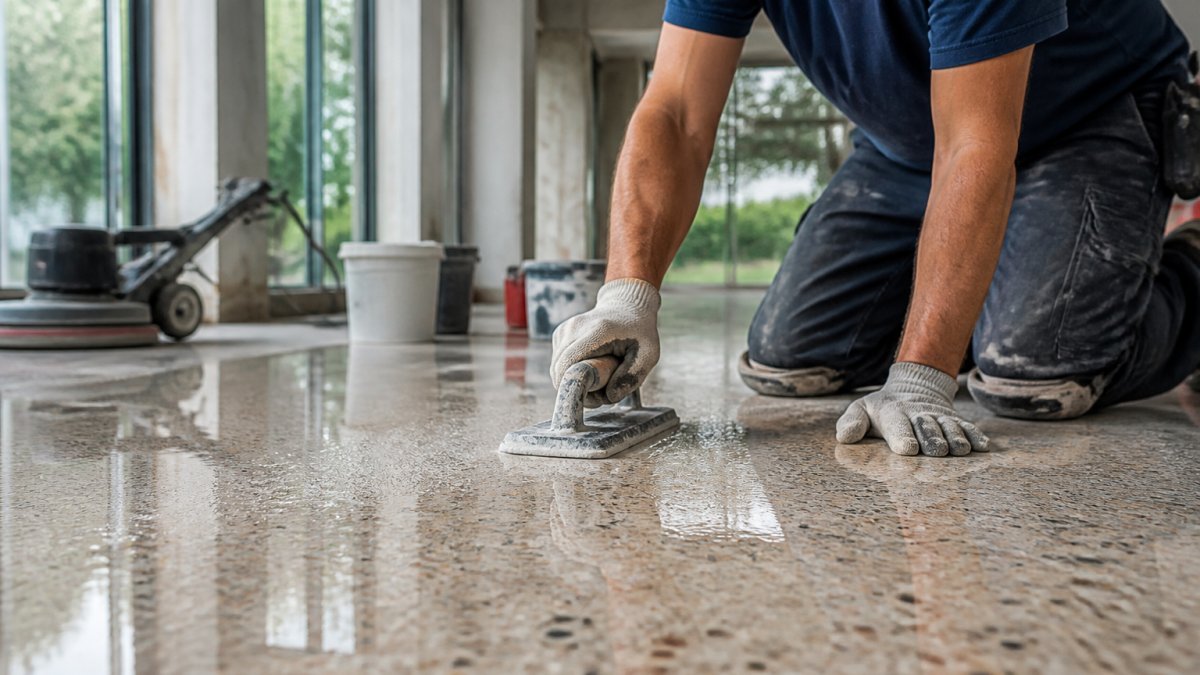
Grinding, honing, and polishing restore the surface look of worn terrazzo without replacing it. Grinding removes scratches and lippage with coarse diamond abrasives. Honing smooths with finer grits. Polishing brings back the shine.
These are three stages of one process, not three separate services:
- Grinding: coarse diamond abrasives level the surface and remove deep scratches
- Honing: finer grits smooth the floor to a matte, even finish
- Polishing: high-grit passes and a protective finish bring back the gloss
For a commercial property, this is often the highest-value service you can buy. The Occupational Safety and Health Administration notes that floor surface condition affects slip resistance, so specify the finish sheen with safety in mind, not just looks.
What Drives Terrazzo Floor Repair Cost on a Commercial Project
Terrazzo floor repair cost on a commercial job is not a flat rate. It is a stack of variables that a contractor should price line by line after walking the floor.
The useful way to budget is to separate the estimate into four buckets: diagnosis, repair, finish, and logistics. Each bucket has its own cost drivers, and each one can be scoped independently so you can compare bids apples to apples.
The Four Cost Buckets
1. Diagnosis and mobilization. This covers the site walk, moisture or substrate testing if needed, and getting crews and equipment on site.
2. Repair scope. This is the biggest swing factor. Price scales with the number and type of defects, not just square footage:
- A handful of isolated chips is a spot-repair job.
- Widespread cracking or hollow-sounding areas pushes into full-zone repair.
- Substrate problems (see the crack section above) add slab work that is priced separately from the terrazzo surface.
3. Finish restoration. Grinding, honing, and polishing are usually priced by square foot, with the rate stepping down as area increases.
4. Logistics and scheduling. After-hours work, phased zones, freight elevator access, floor protection for adjacent areas, and disposal of grinding slurry all add labor.
Questions That Prevent Budget Surprises
When you review a restoration estimate, ask:
- Is the repair scope listed defect by defect, or lumped into one line?
- Is substrate testing included, and what happens to the price if a substrate problem is found mid-job?
- What finish sheen is being priced, and is the final polish pass included?
The single most useful line in any bid is the exclusions list. A bid that names what it does not cover is more trustworthy than one that claims to cover everything.
For a site-specific number, have a contractor walk the floor and produce a written, itemized estimate. That document is also your baseline for judging the finished work against the scope you paid for.
Planning Repairs Around Business Hours and Phased Closures
Before you schedule anything, answer the bigger question: does this floor need repair, full restoration, or replacement? The answer sets the schedule, the budget, and whether phasing is even possible.
Repair, Restore, or Replace: A Condition-Based Call
Use the walkthrough record from the first section to sort the floor into one of three paths:
- Localized repair fits when damage is isolated, a few chips, a stable hairline crack, a stained patch, and the surrounding finish is still sound. This is the lowest-cost path and the easiest to phase.
- Full restoration fits when the floor is structurally sound but worn across large areas: dull finish, widespread scratching, lippage, or surface staining that cleaning cannot lift. Grinding and polishing can bring it back without a tear-out, and it is usually the highest-value option per dollar on a commercial floor.
- Replacement becomes the rational call when the terrazzo has separated from the substrate across large zones, when substrate moisture or movement cannot be corrected economically, or when the floor is at the end of its service life and repairs keep recurring. A floor that needs the same repair every year is telling you the math has flipped.
A practical test: if the estimated repair cost approaches a substantial fraction of replacement cost and the underlying slab is suspect, get a replacement quote before committing to another repair cycle. Most facilities teams find that repeated localized repairs on a failing substrate cost more over a few years than one correct restoration.
Phasing That Keeps the Doors Open
Once the path is set, plan around operating hours, not the contractor's convenience. A phased approach lets you keep serving customers while the floor gets fixed.
A workable phasing plan:
- Split the floor into zones by foot traffic and department, and rank them by how much downtime each can tolerate.
- Schedule noisy work (grinding, routing) for closed hours or low-traffic windows.
- Sequence curing time so each zone is walkable before the next one opens, build the cure window into the schedule, not on top of it.
Hospitals, schools, and terminals cannot simply close. Phasing costs a little more in labor and mobilization, but it protects revenue and safety, and it is far cheaper than a single lost operating day.
Reopening Safely
A repaired floor is not automatically a safe floor. Before a zone reopens, confirm the finish has cured, wet-floor controls are in place for any remaining work, and the specified slip resistance has been achieved on the restored surface. The U.S. Access Board publishes guidance on accessible routes and floor surfaces that matters when you reroute foot traffic during repairs and when you reopen a zone.
Terrazzo Floor Maintenance That Prevents Repeat Repairs
A terrazzo floor maintenance plan protects the repair investment and extends service life. Most repeat repairs come from skipped maintenance, not bad workmanship.
Build a simple plan with measurable checks:
| Task | Frequency | What to Check |
|---|---|---|
| Dust mop high-traffic zones | Daily | Grit and debris buildup |
| Damp mop with pH-neutral cleaner | Weekly | Surface film and stains |
| Inspect for new chips and cracks | Monthly | Early damage before it spreads |
| Deep clean and reseal | As needed | Finish wear and dull patches |
The rule that saves floors: use pH-neutral cleaners only. Harsh or acidic products strip the protective finish and dull the surface over time. Train your cleaning crew on this one point.
At A1 Terrazzo, we have spent 35 years installing and maintaining commercial terrazzo, and the floors that last are the ones with a maintenance plan behind them.
Frequently Asked Questions
Can chipped terrazzo be repaired without replacing the whole floor?
Yes. Terrazzo chip repair is a localized job in most cases. A technician removes loose material, cleans the cavity, and fills it with a matching epoxy or cementitious mix, then grinds and polishes the patch flush with the surrounding floor. Color and aggregate matching determines how invisible the repair looks, so expect a contractor to bring samples before committing. Full replacement only becomes necessary when chips cover a large area or the binder itself has failed across the slab.
Can a business stay open during terrazzo floor repairs?
Often, yes, if the work is phased. Contractors typically section the floor into zones, repair and cure one area while staff and visitors use the rest, then move on. Grinding and polishing create dust and noise, so most projects schedule those steps after hours or on weekends. Healthcare and school facilities usually require containment barriers and negative air machines. Ask for a written phasing plan with cure times before signing, and confirm which entrances stay open each day.
How much does commercial terrazzo floor repair cost per square foot?
Terrazzo floor repair cost depends on the repair scope, damage severity, terrazzo type, and access to the work area, so no honest contractor quotes a flat rate sight unseen. Small crack and chip repairs cost far less per square foot than large-area patching combined with grinding and polishing. Get a written restoration estimate that separates labor, materials, and finish work, and ask whether the price includes sealing. Contact A1 Terrazzo for a quote after a site assessment.
When should a business hire a terrazzo restoration professional instead of patching it in-house?
Bring in a professional when damage is structural, when the floor is in a high-traffic setting such as an airport terminal or hospital corridor, or when appearance matters to clients. Cracks that keep reopening, widespread dullness, and failed sealer all point to restoration rather than spot fixes. A flooring contractor can assess floor condition, confirm whether the binder is cementitious terrazzo or epoxy terrazzo, and recommend repair versus replacement based on expected service life.
Terrazzo floor repair for businesses is a decision about service life, not just appearance. Get the assessment right, match the method to the damage, and plan around your operating hours. A1 Terrazzo brings 35 years of commercial terrazzo experience to every project, from repair and restoration to ongoing maintenance. Contact A1 Terrazzo to schedule a floor assessment and get a clear, line-by-line repair plan for your building.