 how-to
Terrazzo Restoration for Historic University Buildings
Table of Contents
- Why Historic Terrazzo Deserves Restoration
- Terrazzo Restoration Cost: Budget Planning and Financial Justification
- Terrazzo Restoration vs Replacement: Making the Right Choice
- The Terrazzo Floor Restoration Process: Step-by-Step
- University-Specific Planning and Phasing
- Terrazzo Floor Maintenance: Protecting Your Investment
- Historic Preservation Approvals and Documentation
- Selecting the Right Restoration Contractor
- Frequently Asked Questions
Last Updated: October 12, 2026
Why Historic Terrazzo Deserves Restoration
Terrazzo restoration historic buildings represents an investment in durability and architectural character that few modern materials can match.
The reality is straightforward: terrazzo restoration for historic buildings makes financial and practical sense. These floors were engineered to last generations. Cracks, chips, and surface wear don't mean the floor has failed, they mean it's ready for professional care.
Terrazzo restoration historic buildings is fundamentally different from replacing the floor. The original terrazzo construction methods created a monolithic surface bonded directly to the substrate. That bond, when intact, represents structural integrity that's difficult to replicate.
Terrazzo Restoration Cost: Budget Planning and Financial Justification
Understanding terrazzo restoration cost requires separating the actual work from common misconceptions about what restoration entails. The expense depends on the scope of damage, the square footage involved, and the complexity of matching original aggregate and color specifications.
For most institutions, the cost-effective restoration approach involves a phased strategy. Rather than restoring the entire campus at once, prioritize high-traffic areas and spaces with visible damage.
Several factors drive terrazzo restoration cost:
- Damage extent: Surface scratches and minor chips require less intervention than deep gouges or structural cracks
- Aggregate matching complexity: Sourcing materials that match the original marble chips and color adds time and expense
- Substrate condition: If the underlying concrete or base layer shows moisture issues, remediation becomes necessary before restoration begins
- Square footage: Larger floors benefit from economies of scale; smaller restoration projects carry higher per-square-foot costs
- Access and phasing: Campus buildings require careful scheduling to minimize disruption to operations
The financial justification for restoration becomes clear when you compare the lifespan of a restored terrazzo floor to replacement options. A properly restored historic terrazzo floor continues performing for decades with routine maintenance.
Terrazzo Restoration vs Replacement: Making the Right Choice
The decision between terrazzo restoration and replacement hinges on substrate condition and your institution's long-term priorities. This choice affects both immediate budget and decades of maintenance costs.
Restoration wins when:
- The substrate (concrete base) is structurally sound with no major cracks or moisture issues
- Surface damage is limited to the terrazzo layer itself
- You want to preserve the building's historic character and original finishes
- Your budget allows for phased work over multiple years
- The original aggregate and color are worth preserving Adopting these rigorous standards for restoration ensures the longevity of the material, a principle that remains equally vital when preserving historic surfaces across other masonry elements found on campus.
Replacement becomes necessary when:
- The substrate shows serious deterioration, structural movement, or persistent moisture problems
- The terrazzo layer has separated from the base in large areas
- Damage extends deep into the monolithic layer
- Historic preservation requirements don't apply to your building
- You need the floor restored to service in a compressed timeline
The terrazzo restoration vs replacement conversation often overlooks a critical factor: institutional identity. Historic buildings carry the visual legacy of their construction era. Original terrazzo flooring, even when damaged, represents authentic material from that period.
From a cost perspective, restoration typically requires less upfront capital than complete replacement, especially when you're working with large square footage.
The Terrazzo Floor Restoration Process: Step-by-Step
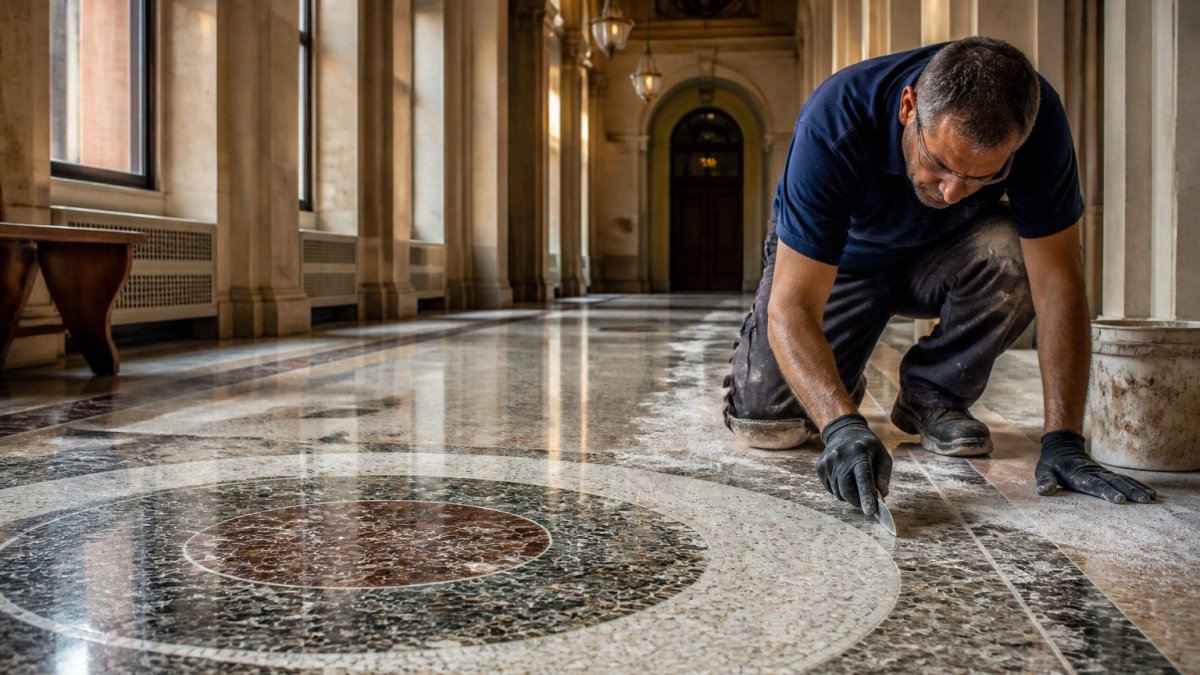
Professional terrazzo restoration follows a structured sequence designed to address damage while preserving the integrity of the original floor. Understanding each phase helps you evaluate contractor proposals and anticipate project timelines.
Assessing Condition and Damage
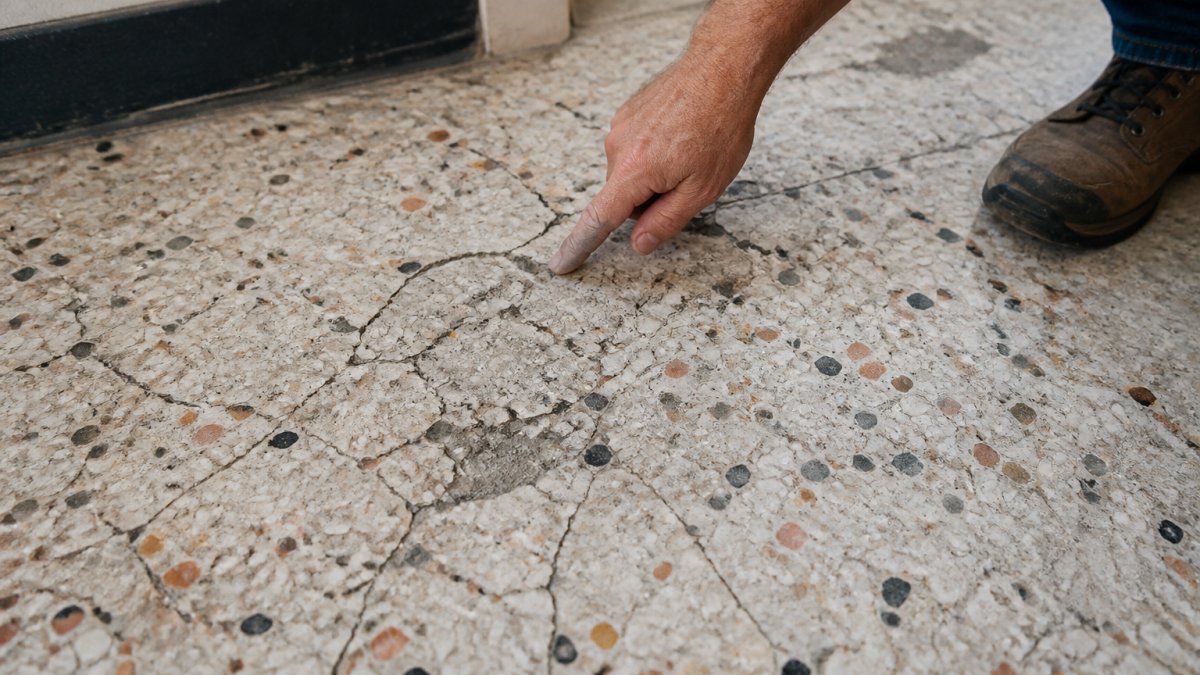
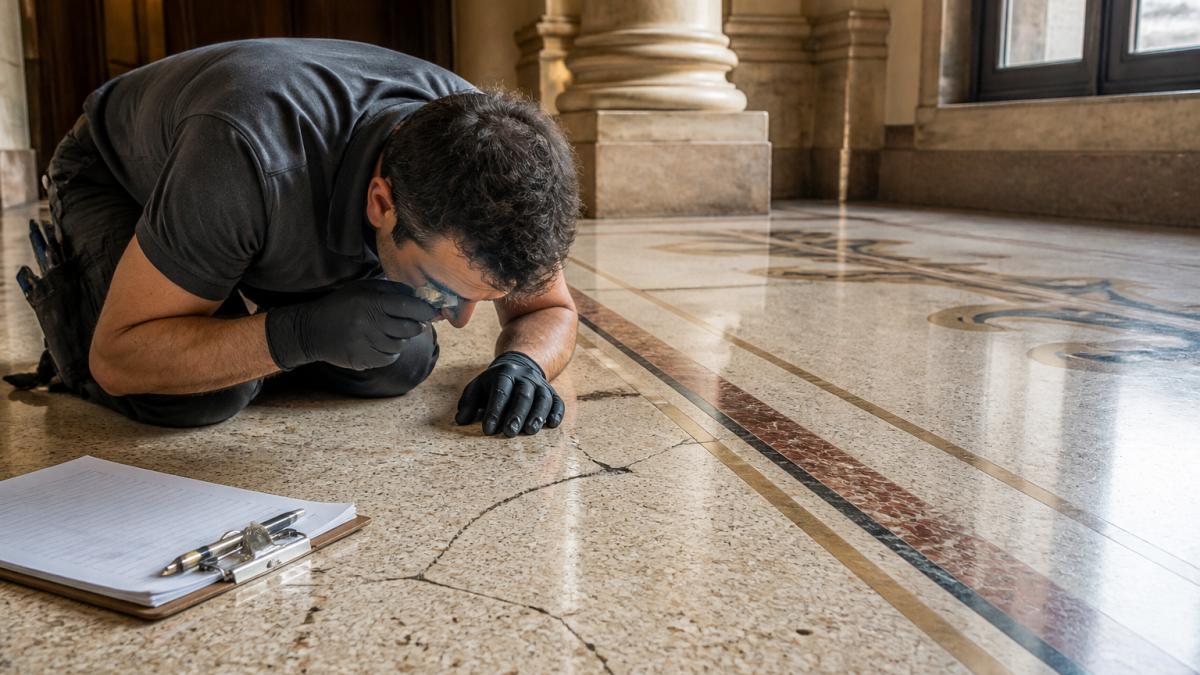
The restoration process begins with a thorough evaluation of the existing terrazzo floor. A qualified contractor examines the entire surface systematically, identifying cracks, chips, gouges, and areas where the terrazzo has separated from the substrate.
This assessment determines whether restoration is feasible. Contractors look for:
- Structural integrity of the substrate by sounding the floor with a hammer (hollow spots indicate delamination)
- Moisture conditions in the concrete base using moisture meters
- The pattern and extent of surface damage
- Original aggregate size and color specifications
- The type of terrazzo (cementitious, epoxy, bonded, or sand-cushion construction)
A professional evaluation answers critical questions before work begins: Is the substrate sound enough to support restoration? Can the original aggregate and color be matched? How much of the floor requires repair versus light refinishing?
Matching Original Aggregate and Color
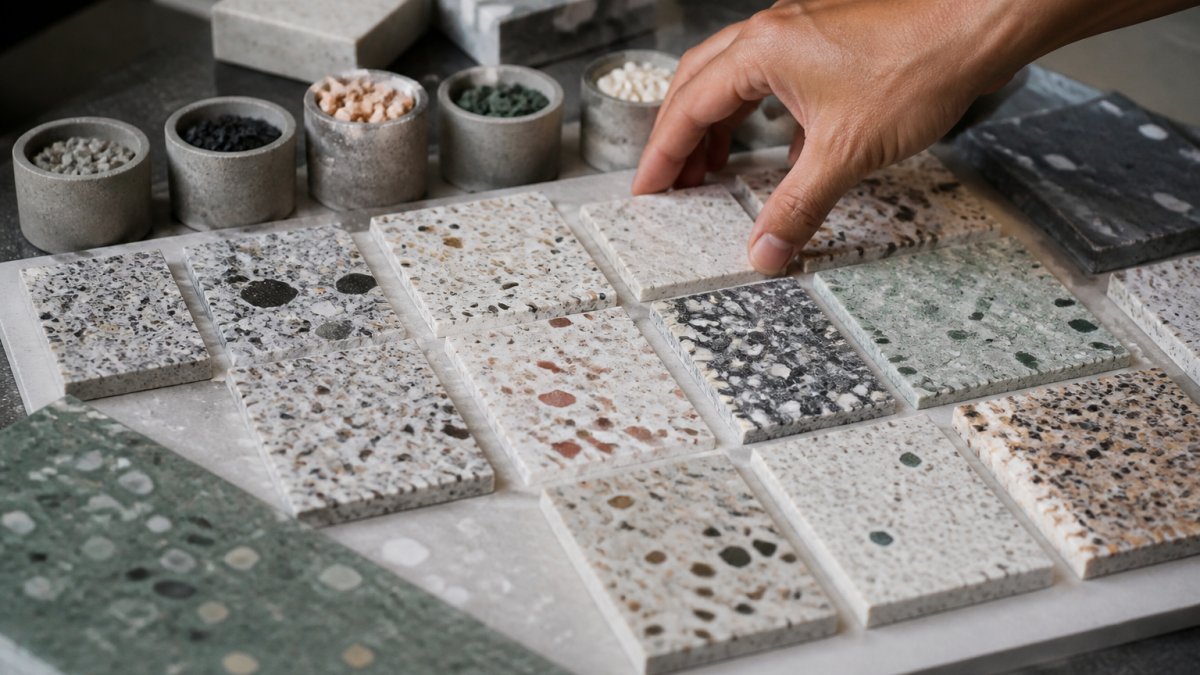
Matching the original terrazzo's appearance requires access to samples of the marble chips, aggregate size, and binder color. This is where historic terrazzo restoration becomes specialized work.
Contractors source aggregate that replicates the original material. The marble chips must match in size, color variation, and composition. The matrix (the binding material between chips) must replicate the original cementitious or epoxy formula.
For university buildings and historic structures, this accuracy matters. A floor where repair sections stand out visually fails to preserve the building's original aesthetic. Proper aggregate matching ensures restored areas blend seamlessly with undamaged portions.
Grinding, Honing, and Sealing
Once repairs are complete, the entire floor undergoes grinding and honing to create a uniform surface finish. Grinding removes the top layer of the terrazzo, exposing fresh aggregate and eliminating scratches, stains, and minor imperfections.
Honing follows grinding, refining the surface to the desired smoothness and sheen. This step determines whether the finished floor has a matte, satin, or polished appearance.
The grinding and honing process is essential. It's what transforms a patched, worn floor into a restored surface that looks intentional and well-maintained. Professional contractors use equipment and techniques calibrated for terrazzo's specific properties.
University-Specific Planning and Phasing
Managing terrazzo restoration across a university campus requires coordination that goes beyond typical commercial flooring projects. Campus buildings operate continuously with high foot traffic, events, and operational demands that constrain when work can happen.
Successful phasing strategies:
- Prioritize by traffic volume: Start with high-traffic corridors, lobbies, and administrative buildings where damage is most visible and impact is greatest
- Coordinate with academic calendar: Schedule major restoration during summer breaks or winter recesses when buildings have minimal occupancy
- Plan around events: Avoid restoration timelines that conflict with graduation, orientation, or major institutional events
- Phase by building cluster: Group adjacent buildings to maximize contractor efficiency and reduce mobilization costs
- Secure interim solutions: Plan for temporary floor protection or routing if buildings must remain partially operational during work
The cost-effective approach for large institutions involves multi-year restoration plans.
University facilities teams benefit from transparent communication with contractors about operational constraints. A contractor experienced with institutional work understands that campus restoration isn't purely about the flooring, it's about minimizing disruption to teaching, research, and campus life.
Terrazzo Floor Maintenance: Protecting Your Investment
Proper maintenance after restoration determines how long the restored terrazzo floor performs at its best. A well-maintained floor can serve the institution for decades without requiring major intervention.
Daily and routine maintenance:
- Sweep or vacuum regularly to remove dirt and debris that can scratch the surface
- Damp mop with pH-neutral cleaner (never acidic or alkaline products that damage terrazzo)
- Avoid harsh chemicals, bleach, and abrasive scrubbing pads
- Wipe spills immediately to prevent staining
Periodic maintenance:
- Strip and rewax annually or as needed to maintain surface protection
- Professional cleaning using terrazzo-specific techniques and products
- Resealing every 2-3 years depending on traffic and wear patterns
- Touch-up repairs for new chips or scratches before they spread
Many institutions mistakenly believe terrazzo maintenance is complicated or expensive. In reality, it's straightforward when you use the right products and follow basic protocols. The hygienic properties of terrazzo make it ideal for healthcare facilities, universities, and public buildings where cleanliness is essential.
A1 Terrazzo provides guidance on maintenance protocols tailored to your specific terrazzo type and finish. Proper maintenance is the most cost-effective way to extend floor life and keep restoration investments protected.
Historic Preservation Approvals and Documentation
Universities and institutions managing historic buildings often operate under preservation guidelines that affect restoration scope and methods. Understanding these requirements early prevents costly rework or approval delays.
Many historic buildings are listed on the National Register of Historic Places or subject to local historic district regulations. These designations may require:
- Documentation of the original terrazzo specifications, including aggregate type, color, and installation method
- Approval from a historic preservation authority before major restoration work begins
- Use of materials and methods that preserve the floor's historic character
- Photographic documentation of the restoration process
- Detailed records of repair methods and materials used
The approval process typically involves submitting a preservation plan that describes the restoration approach, materials, and timeline.
Working with a contractor experienced in historic terrazzo restoration simplifies this process. They understand preservation documentation requirements and can prepare submission materials that satisfy regulatory bodies.
Documentation serves another purpose: it creates a permanent record of the floor's condition, restoration methods, and materials used. Future facility managers benefit from this documentation when planning maintenance or additional restoration work.
Selecting the Right Restoration Contractor
Your contractor choice determines whether terrazzo restoration succeeds or becomes a costly disappointment. The wrong contractor can create substrate damage, fail to match original aggregate, or use inappropriate materials that compromise the floor's longevity.
Evaluate contractors on these criteria:
- Experience with historic terrazzo: General flooring contractors may lack the specialized knowledge required for matching original aggregate and color or understanding historic construction methods
- Portfolio of institutional work: Universities, hospitals, and government buildings require specific expertise in phasing work around operational constraints
- Substrate assessment capability: The contractor should identify substrate issues before they become problems during restoration
- Material sourcing: Can they source aggregate that matches your original terrazzo? Do they have relationships with suppliers who specialize in historic materials?
- Timeline and scheduling flexibility: Can they work within your campus calendar and operational constraints?
- Warranty and guarantees: What do they guarantee about their work? What recourse exists if restored sections fail prematurely?
Ask prospective contractors about their experience with buildings similar to yours. Request references from university facilities departments or historic building managers. A contractor with 35 years of institutional experience brings perspective and reliability.
The lowest bid rarely represents the best value for historic terrazzo restoration. A contractor willing to cut corners on substrate preparation, aggregate matching, or sealing creates problems that become expensive to fix later.
Historic terrazzo restoration transforms worn floors into assets that serve your institution for decades. A1 Terrazzo's 35 years of commercial terrazzo installation and maintenance experience positions us to guide your restoration from initial assessment through completion and ongoing care.
Frequently Asked Questions
Is it cheaper to restore terrazzo or replace it?
Restoration typically costs significantly less than replacement and preserves the historic character of your building. Restoration extends the service life of existing terrazzo by decades when done properly, while replacement removes original material and requires new installation. The decision depends on the extent of damage, substrate condition, and whether the terrazzo has architectural or historic value. A qualified contractor can assess your specific situation and provide a cost comparison for your budget committee.
How long does terrazzo floor restoration take?
Timeline varies based on floor area, damage severity, and campus operations. Small sections may take 1-2 weeks, while large multi-building university projects require phased scheduling over several months to minimize disruption. Grinding and honing typically takes 3-5 days per 1,000 square feet. Planning for phased restoration allows you to maintain campus operations while completing work building-by-building or floor-by-floor.
Can damaged terrazzo be repaired without replacing the entire floor?
Yes. Cracks, chips, and gouges can be patched using matching aggregate and cementitious or epoxy terrazzo material. The key is finding aggregate that matches the original color and size. Small repairs are cost-effective and preserve the original floor. However, extensive damage across large areas may warrant restoration of the entire section. A professional assessment determines whether targeted repairs or full restoration makes sense for your building.
What maintenance is required after terrazzo restoration?
Historic terrazzo requires regular cleaning with pH-neutral cleaners and periodic resealing to protect the surface and maintain hygienic conditions. Avoid acidic or alkaline products that damage the matrix. Waxing extends the service life and improves appearance. Most facilities establish a maintenance schedule with their restoration contractor to ensure the floor remains protected and performs well for decades. Proper care prevents premature deterioration and maximizes your restoration investment.