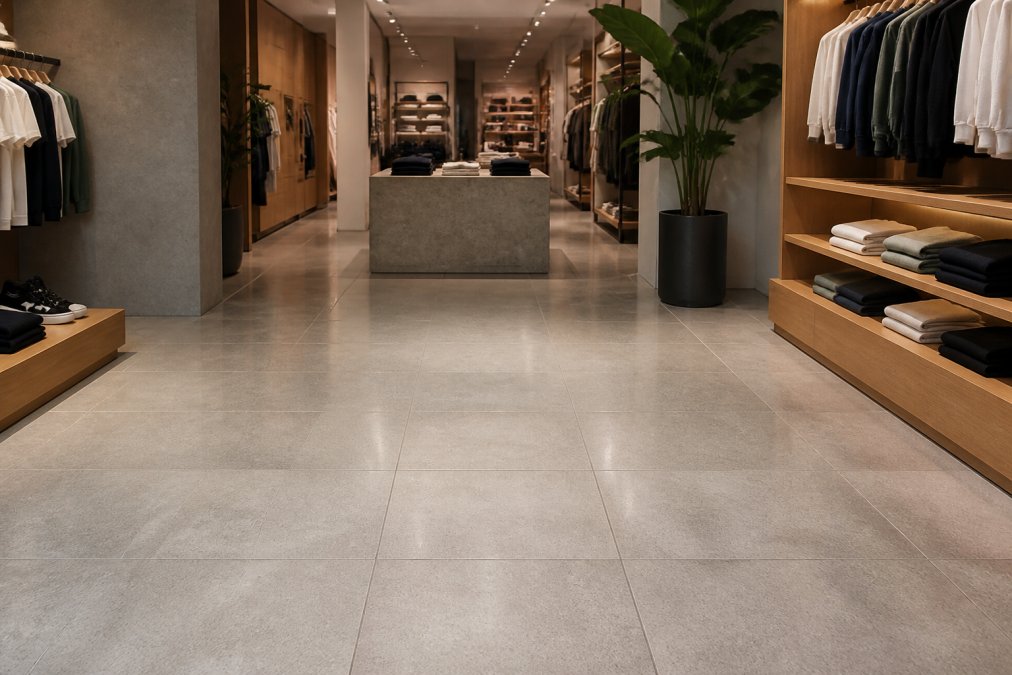
 comparison
Alternatives to Epoxy Flooring for Retail Stores
Table of Contents
- Why Retail Stores Need Alternatives to Epoxy Flooring
- Terrazzo Flooring for Retail Stores
- Polyaspartic and Polyurea Coatings: Fast-Cure Resinous Alternatives
- Polished Concrete and LVT Flooring Options
- Commercial Rubber Flooring: Comfort and Safety
- Commercial Flooring Maintenance Costs and Installation Timeline
- Comparison Table: Epoxy Alternatives for Retail Spaces
- Environmental Impact and Repairability Considerations
- Frequently Asked Questions
Last Updated: September 20, 2026
Why Retail Stores Need Alternatives to Epoxy Flooring
Epoxy flooring has dominated retail for decades, but it forces a one-size-fits-all approach when retailers' actual needs are far more specific.
Epoxy requires 24-72 hours of curing before reopening, a direct revenue hit for retail. It also yellows under UV light, requires specialized cleaning, and cracks are visible and costly to repair.
Alternatives to epoxy flooring offer faster curing, modular replacement, acoustic benefits, or superior slip resistance, features that matter more in certain retail environments.
This guide provides that assessment framework.
Terrazzo Flooring for Retail Stores
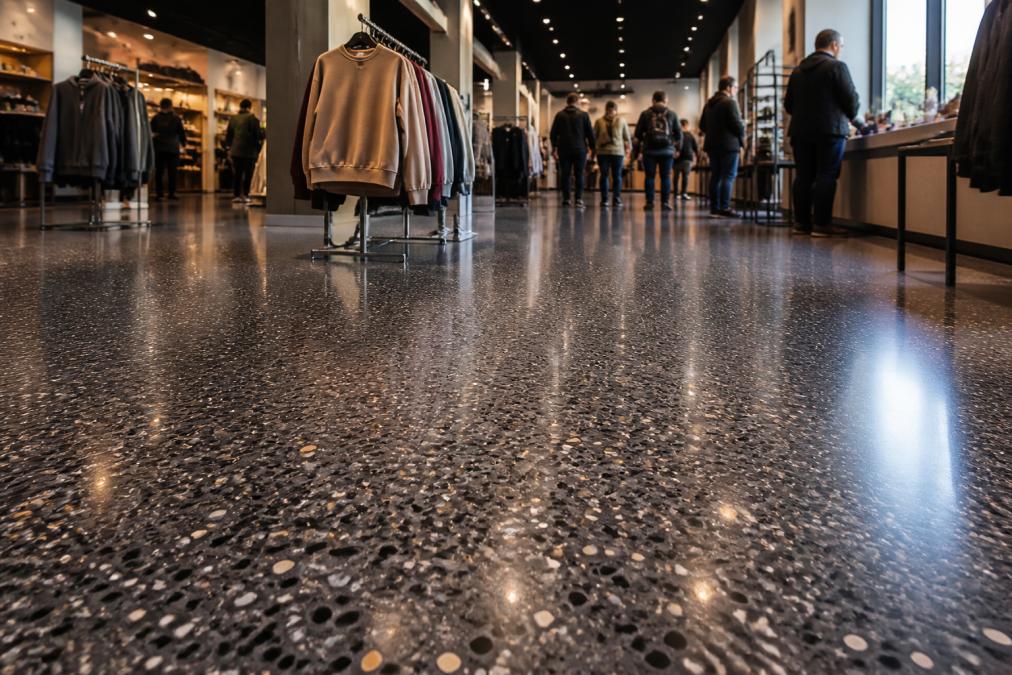
Terrazzo is marble, granite, or glass chips bound in resin and polished to a high gloss. It delivers a seamless, decorative surface that's industrial-grade durable.
Durability and Impact Resistance
Stone chips absorb shock, so the floor doesn't transfer impact stress to the substrate like epoxy does. In high-traffic retail, it resists chipping and thermal cracking, and damage is localized and repairable.
Terrazzo's polished surface improves with age, light scratches blend into the aggregate pattern rather than showing visible damage, unlike epoxy.
Substrate preparation determines longevity. Substrate preparation determines longevity. Our 35 years of experience centers on this assessment, the difference between a 20-year floor and a five-year failure.
Aesthetic Versatility and Design Options
Terrazzo's aesthetic appeal lies in customization: you select aggregate color, size, density, binder color, and grout pattern. The result is unique to your space, not a catalog option.
A high-end boutique can specify marble and mirror chips; a contemporary showroom can use recycled glass; an industrial space can emphasize aggregate. Terrazzo adapts to your brand identity.
Metallic pigments create a reflective, three-dimensional effect that draws the eye, visual interest epoxy cannot match.
Seamless Surface Advantages
A seamless surface eliminates seams where dirt accumulates and moisture seeps. For grocery stores, pharmacies, and boutiques, this is a meaningful operational advantage.
Seamless design simplifies cleaning, no crevices trap debris, and standard commercial protocols work without specialized equipment.
Polyaspartic and Polyurea Coatings: Fast-Cure Resinous Alternatives
Polyaspartic coatings cure in 4-8 hours versus epoxy's 24-72 hours, a transformative difference for retail operations.
Performance is comparable to epoxy, with superior UV stability, polyaspartic resists yellowing far better, which matters for retail spaces with high natural light.
Polyaspartic costs more per square foot than epoxy. For most retailers, avoiding a 48-hour closure justifies the material premium, as a single day of lost sales often exceeds it.
Polyaspartic flexes with substrate movement, resisting thermal shock and settling, especially valuable in older retail buildings.
Polished Concrete and LVT Flooring Options
Polished Concrete: Industrial Durability
Polished concrete is created through mechanical grinding and polishing with no topical coating. This eliminates epoxy's vulnerability to coating failure, nothing to peel or chip.
Polished concrete resists abrasion and impact, lasting 20+ years with minimal degradation. The reflective surface reduces lighting requirements, saving operational costs.
The industrial-modern aesthetic suits contemporary fashion, tech retail, and design-forward spaces, but not traditional brands.
Maintenance is straightforward, sweeping and damp mopping suffice, without epoxy's specialized cleaning protocols.
Polished concrete is cold underfoot and susceptible to staining if spills aren't cleaned promptly. For grocery stores or pharmacies, this is problematic; for boutiques, it's manageable.
Luxury Vinyl Tile: Aesthetic Flexibility
Luxury vinyl tile (LVT) is a resilient, multi-layered flooring that mimics the appearance of natural materials, wood, stone, ceramic, while delivering durability and ease of replacement. For retail, LVT's main advantage is aesthetic flexibility without the commitment of permanent installation.
LVT resists water and moisture, making it suitable for retail environments with cleaning demands. Individual tiles can be replaced if damaged, which means you're not tearing out the entire floor for a localized problem. The installation is faster than epoxy or terrazzo, and downtime is minimal.
The trade-off is longevity and seamless appearance. LVT has visible seams where tiles meet. These seams are where dirt accumulates and moisture can infiltrate. For high-traffic retail spaces with rigorous cleaning protocols, seams become a maintenance liability over time. The floor also wears visibly, scratches and scuffs show more readily than they do on terrazzo or polished concrete.
LVT is best suited for retail environments where aesthetic flexibility and easy replacement matter more than absolute durability. A fast-fashion retailer redesigning every season might prefer LVT's adaptability. A luxury brand seeking a permanent, distinctive surface would choose terrazzo.
Commercial Rubber Flooring: Comfort and Safety
Commercial rubber flooring delivers superior slip resistance and acoustic performance, two properties that epoxy cannot match. The material is inherently grippy, which reduces slip-and-fall risk in high-traffic retail environments. For grocery stores, pharmacies, or any space where safety liability is a concern, this is a meaningful advantage.
The acoustic benefit is underestimated. Rubber absorbs sound, which means a retail space with rubber flooring feels quieter and less chaotic. For customers and staff alike, this translates to a more pleasant shopping experience. In contrast, epoxy and polished concrete amplify sound, creating an industrial echo that many retailers find undesirable.
Comfort is another advantage. Rubber is softer underfoot than concrete, epoxy, or terrazzo. For retail staff standing for 8-10 hours daily, this reduces fatigue and foot pain. Customer comfort matters too, people linger longer and spend more in spaces where their feet don't hurt.
The limitations are maintenance and aesthetics. Rubber is harder to clean than smooth, non-porous surfaces. It's also less visually distinctive than terrazzo or polished concrete. For a high-end retail environment where aesthetics are paramount, rubber flooring may not align with brand positioning. For a functional, high-traffic space prioritizing safety and comfort, it's an excellent choice.
Commercial Flooring Maintenance Costs and Installation Timeline
Maintenance Requirements by Flooring Type
| Flooring Type | Routine Cleaning | Specialized Care | Annual Maintenance Cost* |
|---|---|---|---|
| Terrazzo | Damp mopping, neutral pH cleaner | Periodic repolishing | Moderate |
| Polyaspartic | Damp mopping, pH-neutral cleaner | Minimal | Low |
| Polished Concrete | Sweeping, damp mopping | Sealing every 2-3 years | Low |
| LVT | Damp mopping, avoid excess water | Seam maintenance | Low |
| Rubber | Damp mopping, specialized cleaners | Sanitization protocols | Moderate |
*Costs vary by square footage and cleaning frequency; contact A1 Terrazzo for a quote specific to your space.
Terrazzo maintenance is straightforward but requires understanding. The floor should never be stripped with harsh chemicals or abrasive scrubbers. A neutral pH cleaner and soft mop are standard. Periodically, typically every 3-5 years depending on traffic, the floor benefits from repolishing, which restores the gloss and seals the surface. This isn't a full reinstallation; it's a maintenance service that extends the floor's lifespan and appearance.
Polyaspartic and epoxy share similar cleaning protocols. Damp mopping with pH-neutral cleaner is sufficient. No specialized care is required. The advantage of polyaspartic is that it resists yellowing, so the cleaning regimen doesn't need to compensate for UV degradation.
Polished concrete requires minimal maintenance beyond regular sweeping and damp mopping.
Installation Downtime Impact on Revenue
Installation downtime is often overlooked in flooring decisions, but for a retail operation, it's a direct cost. A 5,000-square-foot retail space generating $500 per square foot annually loses $2,500 per day of closure. Over a 48-hour epoxy cure, that's a $5,000 loss before you account for lost customer momentum and disrupted supply chains.
Comparison Table: Epoxy Alternatives for Retail Spaces
| Alternative | Curing Time | Lifespan | Best For | Key Advantage |
|---|---|---|---|---|
| Terrazzo | 3-5 days | 20+ years | High-end retail, showrooms | Seamless, customizable, durable |
| Polyaspartic | 4-8 hours | 10-15 years | High-traffic retail | Minimal downtime, UV stable |
| Polished Concrete | 2-4 days | 20+ years | Modern, industrial retail | Low maintenance, cost-effective |
| LVT | 1-2 days | 10-12 years | Fast-changing retail | Aesthetic flexibility, easy replacement |
| Rubber | 1-2 days | 12-15 years | Safety-focused retail | Slip resistance, acoustic benefits |
Environmental Impact and Repairability Considerations
Environmental impact is increasingly important for retail brands positioning themselves as sustainable. Terrazzo, when made with recycled glass or reclaimed stone, offers genuine environmental benefits. The material is durable, which means fewer replacements over time, a significant environmental advantage. A terrazzo floor lasting 25 years has a lower lifecycle carbon footprint than three epoxy floors over the same period.
Frequently Asked Questions
What is the best alternative to epoxy flooring for high-traffic retail stores?
Terrazzo flooring, polyaspartic coatings, and polished concrete each excel in different situations. Terrazzo offers superior durability, seamless surfaces, and aesthetic versatility for retail environments. Polyaspartic coatings provide faster installation with minimal downtime, while polished concrete delivers industrial durability and low maintenance. The best choice depends on your store's design aesthetic, traffic volume, and acceptable installation timeline. A1 Terrazzo specializes in commercial-grade terrazzo solutions designed specifically for retail durability demands.
How do alternatives to epoxy flooring compare in terms of durability?
Terrazzo and polished concrete offer superior abrasion resistance and impact resistance compared to standard epoxy. Polyaspartic coatings match epoxy durability but cure faster, reducing installation downtime. Luxury vinyl tile provides good durability for moderate traffic but may show wear faster in high-traffic zones. Commercial rubber flooring excels in impact resistance and slip coefficient ratings, making it ideal for safety-focused retail spaces. Terrazzo's seamless surface eliminates seams where dirt accumulates, extending floor life significantly.
What is the typical flooring installation timeline for retail stores?
Installation timelines vary significantly. Polyaspartic coatings offer the fastest turnaround, often allowing store reopening within 24-48 hours due to rapid curing time. Polished concrete typically requires 3-7 days. Luxury vinyl tile installation usually takes 2-5 days depending on square footage. Terrazzo installation requires proper substrate preparation and curing, typically 5-10 business days. Contact A1 Terrazzo for a customized timeline based on your specific retail space requirements.
Does terrazzo flooring work well for retail stores compared to epoxy?
Terrazzo flooring outperforms epoxy in several key retail applications. It provides superior aesthetic appeal with customizable aggregates and finishes, seamless surfaces that eliminate dirt-trapping seams, and exceptional durability in high-traffic areas. Terrazzo resists chemical spills, impact damage, and abrasion better than standard epoxy. The polished surface offers excellent light reflection, reducing lighting costs. For retail showrooms requiring both durability and design impact, terrazzo flooring for retail stores is a premium choice. A1 Terrazzo's 35 years of commercial experience ensures proper substrate preparation and professional installation.