 How-to
Commercial Flooring Abrasion Resistance Testing Explained
Last Updated: November 11, 2026
Quick Summary
Abrasion resistance testing measures how well a commercial floor resists surface wear from foot traffic, rolling loads, and grit. The test method depends on the material: ASTM D4060 (Taber) for resilient flooring and coatings, ASTM C501 for terrazzo, ASTM C779 for concrete slabs, and EN 13329 AC ratings for laminate. Results report mass loss, wear depth, or an abrasion class, and only compare numbers run with the same method, load, wheels, and cycle count.
- Abrasion resistance is a floor's ability to resist surface wear from foot traffic, rolling loads, and grit.
- The Taber test mounts a circular sample on a turntable and applies two abrasive wheels under a set load.
- Most labs run at least two or three replicates per material and report the average and spread.
- A useful report states the standard and revision, load, wheel type, cycle count, conditioning, and replicates.
- Treat abrasion data as a comparison tool, not a service life forecast for real traffic.
Table of Contents
- What Abrasion Resistance Means for Commercial Flooring
- Choosing the Right Abrasion Resistance Test Method
- How the Taber Abrasion Test for Flooring Works
- Running a Concrete Abrasion Test on Slabs
- Sample Preparation, Load, and Test Cycles
- Reading Results: Mass Loss, Thickness Loss, and Wear Depth
- What Abrasion Testing Says About Terrazzo Floor Durability
- Limits, Repeatability, and Reporting for Real Traffic
- Frequently Asked Questions
What Abrasion Resistance Means for Commercial Flooring
Abrasion resistance is a floor's ability to resist surface wear from foot traffic, rolling loads, and grit. In a hospital corridor or an airport terminal, that number decides how the floor looks after years of constant use.
Most buyers skip the test data and pick on color and price. That works until the floor starts showing wear paths two years in.
Abrasion testing gives you a way to compare materials on wear performance before you commit.
The 8 sections below walk through the standards, the equipment, the sample prep, and how to read mass loss and wear depth. Keep reading to see how to run a test end to end and what the numbers actually tell you.
Choosing the Right Abrasion Resistance Test Method
The right abrasion resistance test method depends on the material and on the question you are trying to answer, not on habit. A concrete slab, a resilient sheet, a terrazzo floor, and a resinous coating each follow a different standard, and each standard reports a different endpoint.
Most practitioners find that the fastest way to choose is to work backward from the material and the reported unit. The table below is a decision guide, not a substitute for the standard itself.
| Flooring material | Typical method | Reported endpoint | What it tells you |
|---|---|---|---|
| Resilient sheet and tile (vinyl, rubber, linoleum) | ASTM F510 (rolling load) and ASTM D4060 (Taber) | Mass loss in mg, or visual change after a set cycle count | How the surface resists rolling loads and abrasive grit |
| Laminate | EN 13329 (AC rating) | Abrasion class (AC1-AC5) based on cycles to a defined wear-through | Which traffic class the wear layer is rated for |
| Cement-based screeds and toppings | EN 13892-4 | Abrasion depth in mm after a set number of cycles | How the screed surface resists grinding wear |
| Terrazzo tile and similar hard surfaces | ASTM C501 | Mass loss in g after a set number of cycles | How the aggregate and binder resist surface abrasion |
| Concrete slabs | ASTM C779 (rotating cutter) or ASTM C944 (rotating cutter, field) | Depth of wear in mm or inches | How the slab surface resists abrasion under a loaded cutter |
| Resinous coatings and toppings | ASTM D4060 (Taber) | Mass loss in mg per 1,000 cycles | Coating wear resistance at a defined load and wheel set |
Matching the Standard to the Material
Cement terrazzo and epoxy terrazzo do not wear the same way, so they do not share a single test result. Test labs generally match the method to the binder and the finish. Epoxy and cement terrazzo differ in how they respond to abrasion, and the standard you choose should reflect that.
A common mistake is comparing a Taber result from one material against a different method's result from another. That comparison means nothing. Same method, same load, same wheels, or the numbers are not comparable.
Reading the Endpoint Before You Test
Each method reports a different unit, and the unit changes how you interpret the result. Mass loss in milligrams is a relative ranking within a material family. Abrasion depth in millimeters is closer to a wear-rate estimate.
Watch out: a specification that cites a cycle count without the load, wheel type, and conditioning regime is not a specification. It is a number that cannot be reproduced.
Acceptance Criteria and Specification Language
A useful specification states the method, the load, the wheel type, the cycle count, the conditioning regime, and the pass/fail threshold in the method's own units. For example, a resilient flooring specification might require ASTM D4060 at a stated load and wheel set, with mass loss not exceeding a threshold the manufacturer publishes for that product.
If a manufacturer publishes an abrasion result, ask for the method, the load, the wheel set, and the cycle count alongside it. A result without those four details cannot be checked or compared.
How the Taber Abrasion Test for Flooring Works
The Taber abrasion test for flooring measures how much material a rotating sample loses when abrasive wheels grind against it.
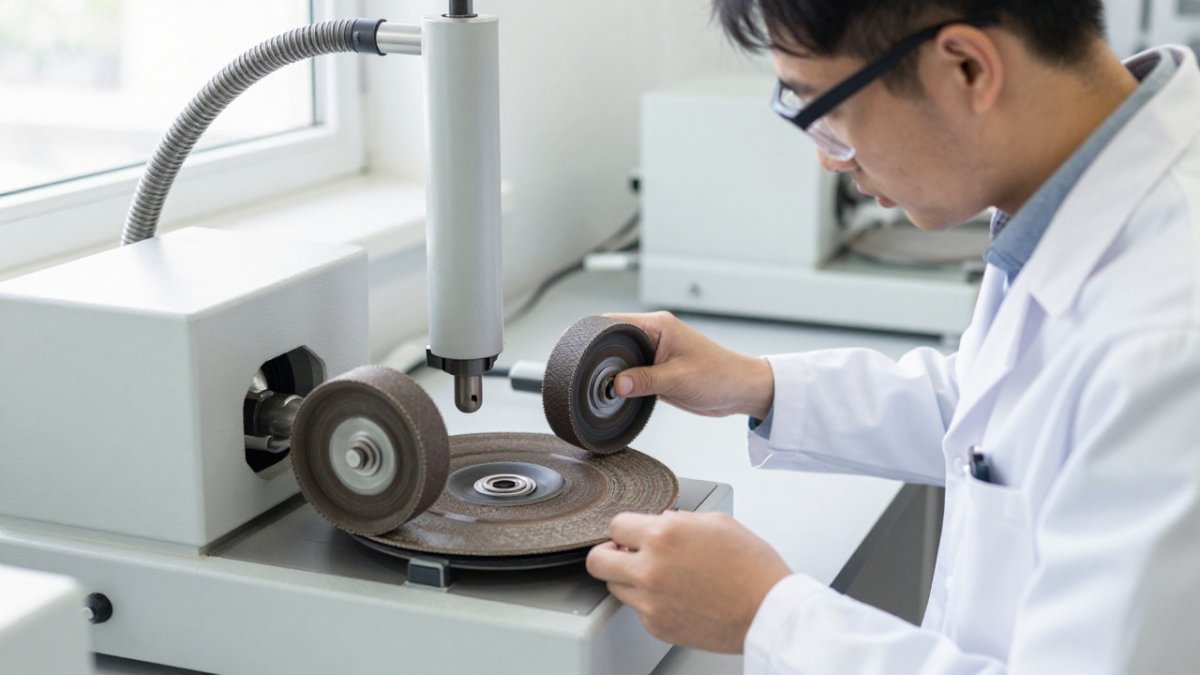
A grit feeder drops abrasive material between the wheels and the sample. The machine counts abrasion cycles and applies a set load.
The ASTM D4060 standard for abrasion resistance of organic coatings defines the wheels, load, and cycle counts. Following it exactly is what makes results repeatable.
Running a Concrete Abrasion Test on Slabs
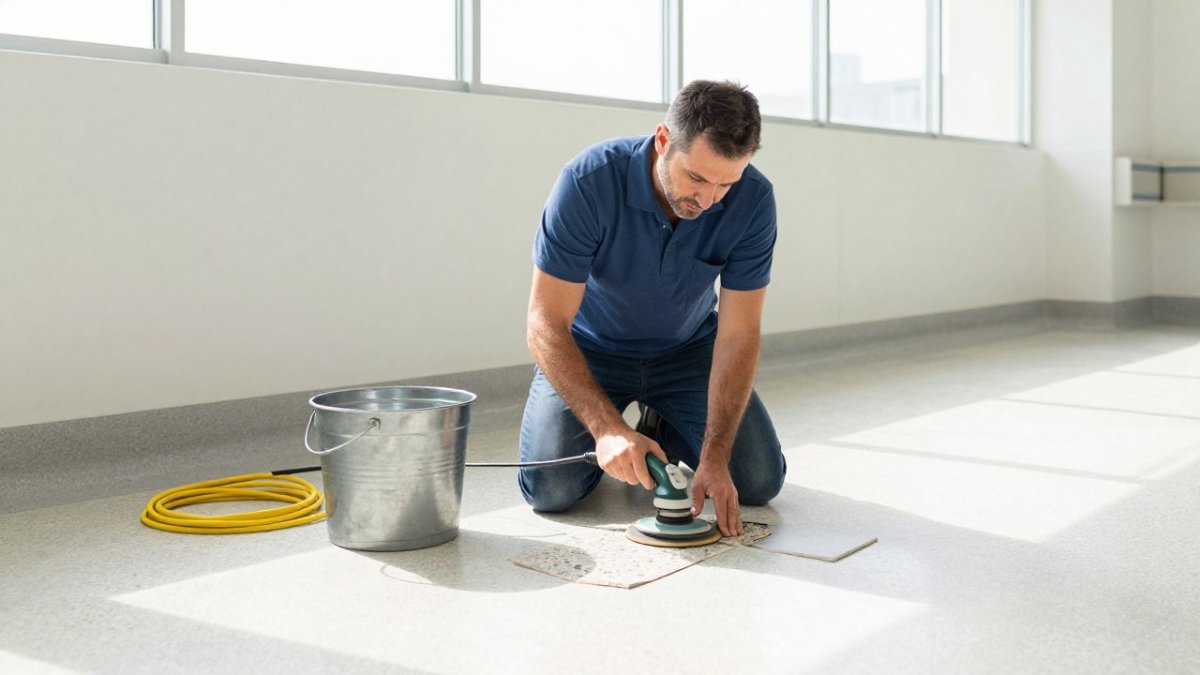
A concrete abrasion test on a slab starts with getting a flat, clean sample. For a lab test, crews cut a core from the slab and grind the face flat. For field testing, a machined template holds the tester steady against the floor surface.
The steps we follow:
- Cut or core the sample from a representative test location
- Grind the surface flat and remove dust
- Condition the sample to the lab's standard temperature and humidity
- Mount it in the abrasion tester and set the load
- Run the set number of wear cycles
- Weigh the sample and record mass loss
Watch out: a sample taken from a patched or sealed area will not represent the rest of the slab. Pick test locations that match the actual floor.
Sample Preparation, Load, and Test Cycles
Sample preparation decides whether the result means anything. A rough or contaminated surface wears faster, so the sample must be flat, clean, and conditioned before testing. The applied load and abrasion cycles come from the standard, not from preference. Change either one and the result no longer compares to published data.
A practical, end-to-end protocol that most labs follow looks like this:
- Select representative locations. Pick test areas that match the actual floor, not patched, sealed, or repaired zones.
- Cut or core the sample. For lab work, cut a core or tile-sized specimen. For field work, use a machined template to hold the tester steady against the slab.
- Grind and level the test face. Remove dust and loose material so the abrasive wheels contact a flat surface.
- Condition the sample. Hold it at the lab's standard temperature and humidity for the period the method specifies.
- Set the load and wheels. Use the load and wheel type named in the standard. Check wheels for wear before each run.
- Run the specified cycle count. Count cycles with the machine's counter, not by hand.
- Measure the endpoint. Weigh the sample for mass loss, measure thickness or depth for wear, or record visible change, depending on the method.
- Record and report. Log the method, load, wheels, cycles, conditioning, and result together.
Replicates, Calibration, and Repeatability
A single specimen is an anecdote, not a result. Most labs run at least two or three replicates per material and report the average and the spread. If the spread is wide, sample prep or wheel condition is the usual culprit.
Watch out: a sample taken from a patched or sealed area will not represent the rest of the slab. Pick test locations that match the actual floor.
What a Useful Test Report Contains
A result without the method, load, and cycle count is not usable. A useful report states the standard and revision, the load, the wheel type and condition, the cycle count, the conditioning regime, the number of replicates, the average and spread, and the endpoint in the method's own units. It also notes any deviation from the standard. Write those down every time, because a number without them cannot be checked or compared.
Reading Results: Mass Loss, Thickness Loss, and Wear Depth
Mass loss is the most common result: the sample's weight before and after testing, in milligrams. Thickness loss and wear depth measure how much material came off the surface. Lower loss means better abrasion resistance.
For real commercial traffic, read the number against the material's own baseline, not against a different material. A terrazzo result and a laminate result are not a fair fight. Comparing commercial flooring durability ratings helps you put a single number into context across products.
First damage and surface damage also matter. Some floors lose little mass but show visible scuffs early. Others wear evenly and stay presentable longer.
What Abrasion Testing Says About Terrazzo Floor Durability
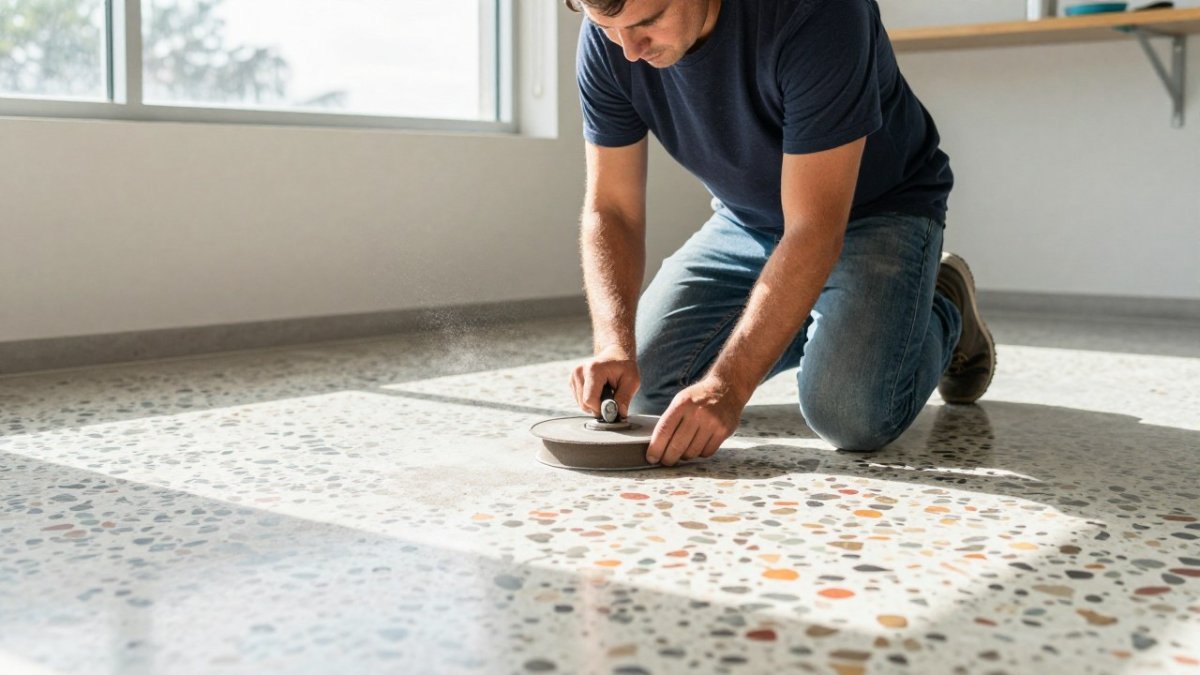
Terrazzo floor durability shows up well in abrasion testing because the aggregate and binder form a hard, dense surface.
ASTM C501 test method for abrasion resistance of terrazzo covers laboratory abrasion of terrazzo tiles and similar surfaces. Lab results give you a baseline.
Two comparisons worth reading before you choose a hard surface: terrazzo against porcelain tile and terrazzo against polished concrete. Both tie wear performance back to the material decision.
The test tells you how the surface resists abrasion. It does not tell you how the floor will look after years of cleaning and traffic.
Limits, Repeatability, and Reporting for Real Traffic
Abrasion results have real limits. A lab test runs a set number of cycles under controlled conditions.
To use results well:
- Run the same method across every material you compare
- Record load, cycles, wheels, and conditioning in the report
- Keep test locations representative of the actual floor
- Repeat runs to check repeatability
- Pair lab data with field observations over time
What most guides miss is the reporting side. A result without the method, load, and cycle count is not usable. Write those down every time.
For high-traffic spaces, we at A1 Terrazzo pair abrasion data with proper substrate prep and a maintenance plan. A hard surface still wears if the base is wrong or the cleaning products are harsh. A shortlist of proven high-traffic flooring helps you match material to traffic level before testing begins.
Choosing a floor for a busy hospital, airport, or campus comes down to more than a test number.
Frequently Asked Questions
What is abrasion resistance testing for commercial flooring?
It is a laboratory or field procedure that measures how much a floor surface wears away under controlled rubbing. A sample is abraded with abrasive wheels, grit, or sand under a set load for a set number of cycles, then mass loss, thickness loss, or wear depth is recorded. The result feeds an abrasion rating you can compare across materials. It shows relative wear resistance, not a guaranteed service life, so pair it with traffic data and maintenance plans before specifying a floor.
How does the Taber abrasion test for flooring work?
A flooring sample is mounted on a turntable and two abrasive wheels are lowered onto it under a specified load. As the turntable rotates, the wheels trace a ring and grind the surface. A grit feeder can drop abrasive material into the wear path for harsher conditions. After a set number of abrasion cycles, the lab weighs the sample or measures thickness loss. Standards such as ASTM D4060 govern the setup, and results are reported as mg loss per cycle count so different products can be compared.
Can abrasion testing predict how long a commercial floor will last?
Not directly. Accelerated testing compresses wear into hours, while a real floor faces soil, moisture, cleaning chemicals, point loads, and uneven traffic. Abrasion resistance testing ranks materials and flags weak surfaces, but it cannot convert cycles into years. Use it alongside concrete abrasion test data for the slab, field testing on site, and a maintenance schedule. For terrazzo floor durability, the binder, aggregate, and substrate prep often matter as much as the wear number.
What factors can affect the results of a flooring abrasion test?
Sample preparation is the biggest variable. Poorly cured, uneven, or contaminated samples skew mass loss. Wheel type and condition, applied load, rotation speed, grit feed rate, and the number of abrasion cycles all change outcomes. Lab temperature and humidity matter too, which is why conditioning before testing is standard. For a concrete abrasion test, aggregate hardness and surface finish add another layer. Report every parameter so results are repeatable and comparable across batches.