 blog
blog
7 Best Commercial Flooring for High-Traffic Areas
Table of Contents
- Why Commercial Flooring for High-Traffic Areas Demands Durability
- Most Durable Commercial Flooring Materials Ranked
- Commercial Flooring Options Comparison by Performance
- Heavy-Duty Commercial Vinyl Flooring: What Sets It Apart
- Commercial Flooring Maintenance and Lifecycle Cost
- Choosing the Right Flooring for Your Commercial Space
- Frequently Asked Questions
Last Updated: October 6, 2026
Why Commercial Flooring for High-Traffic Areas Demands Durability
Foot traffic in commercial flooring high-traffic areas creates relentless wear. Hospitals see thousands of people moving through corridors daily.
Damaged flooring creates liability risks, disrupts operations, and forces costly replacements.
At A1 Terrazzo, we've installed flooring in healthcare facilities, airports, universities, and commercial buildings across Florida for over 35 years.
This guide covers seven commercial flooring options proven in demanding spaces, plus a comparison framework to match materials to your facility type.
Most Durable Commercial Flooring Materials Ranked
The ranking below reflects durability under continuous foot traffic, not aesthetic appeal alone.
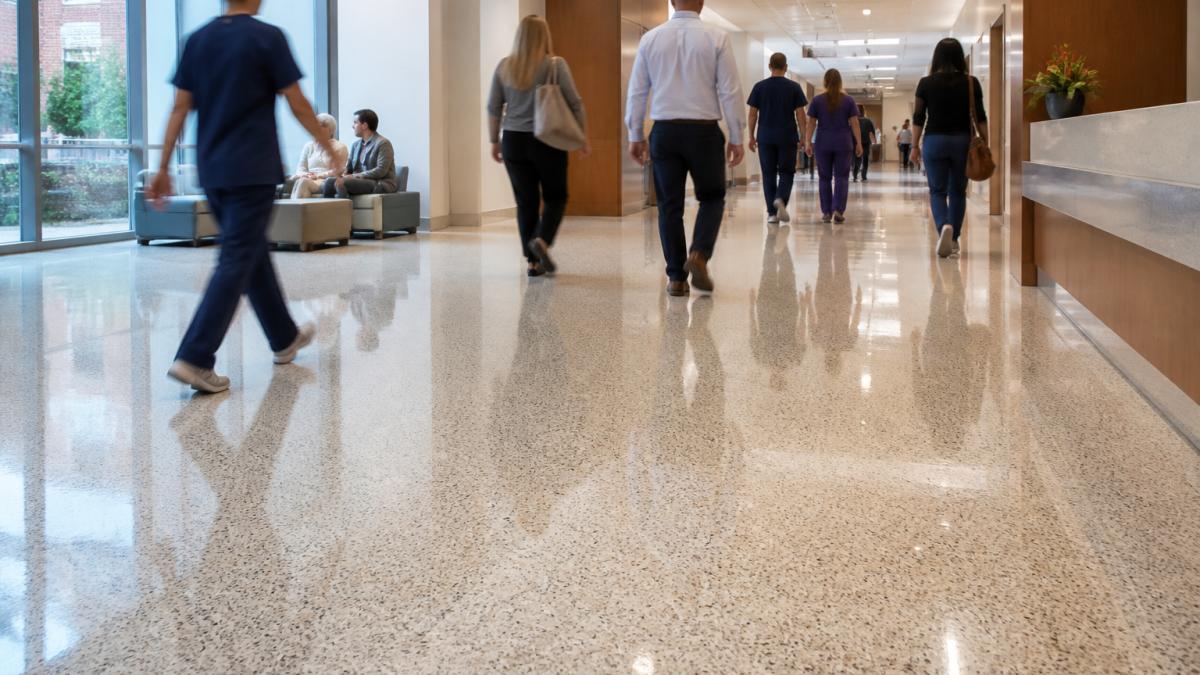
1. Terrazzo Flooring
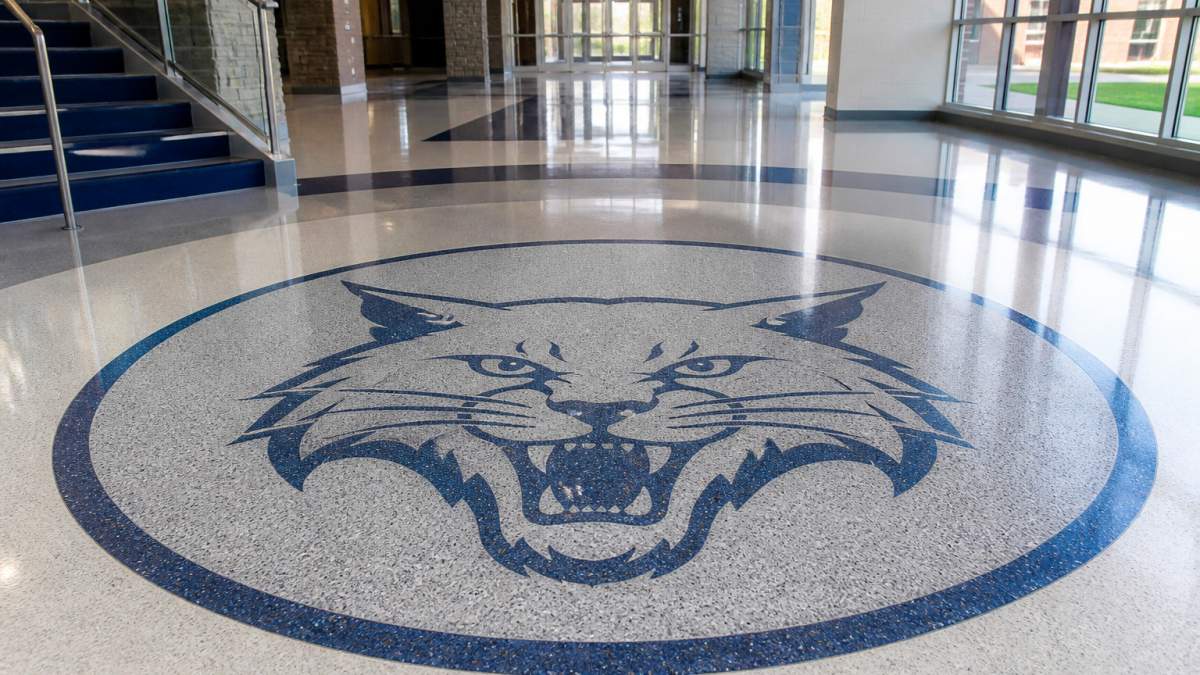
Terrazzo is a composite of marble, granite, or glass chips embedded in a cement or epoxy binder. Properly installed and maintained, it lasts 40+ years in high-traffic commercial environments, handling heavy foot traffic, wheeled equipment, and repeated cleaning without degrading.
Pros:
- Exceptional durability in high-traffic areas
- Seamless installation eliminates grout lines where dirt accumulates
- Customizable appearance with color and aggregate options
Cons:
- Higher upfront installation cost compared to some alternatives
- Requires specialized installation expertise
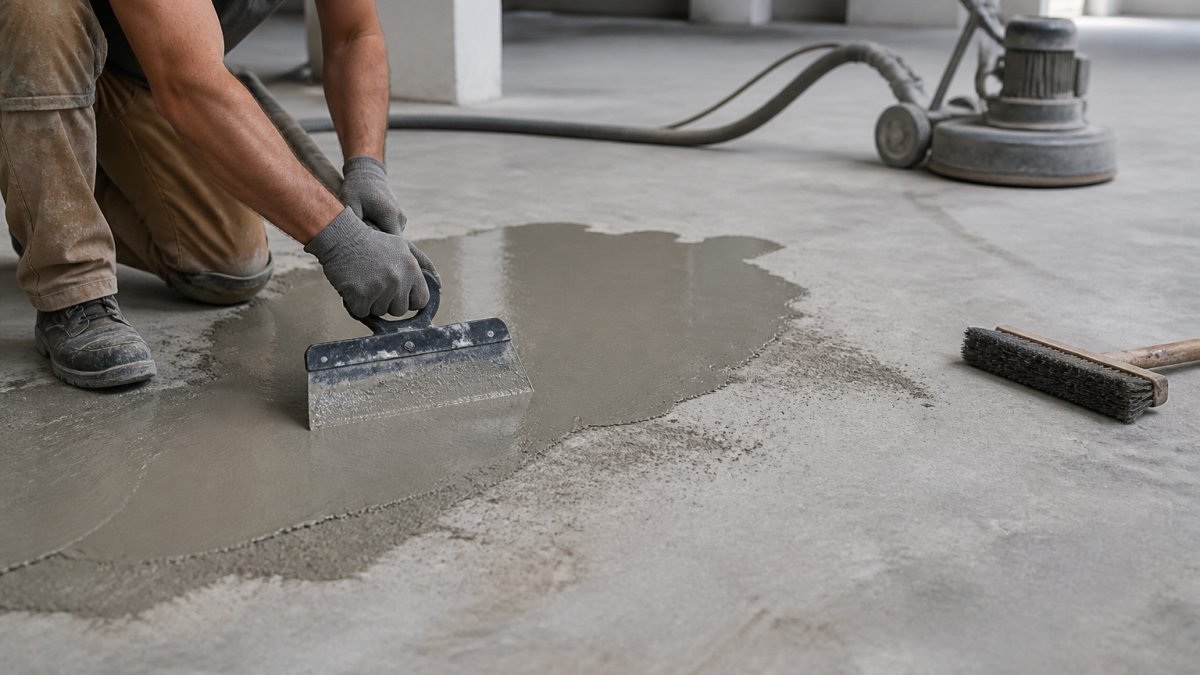
- Substrate preparation is critical, poor prep leads to cracks and failures
2. Luxury Vinyl Tile and Plank (LVT/LVP)
Luxury vinyl is the most popular commercial flooring choice today. A wear layer protects the decorative layer beneath; commercial-grade LVT typically includes a 12-20 mil wear layer for substantial scratch and stain protection, and installs faster and cheaper than many alternatives.
Pros:
- Lower installation cost and faster deployment
- Excellent water resistance and stain resistance
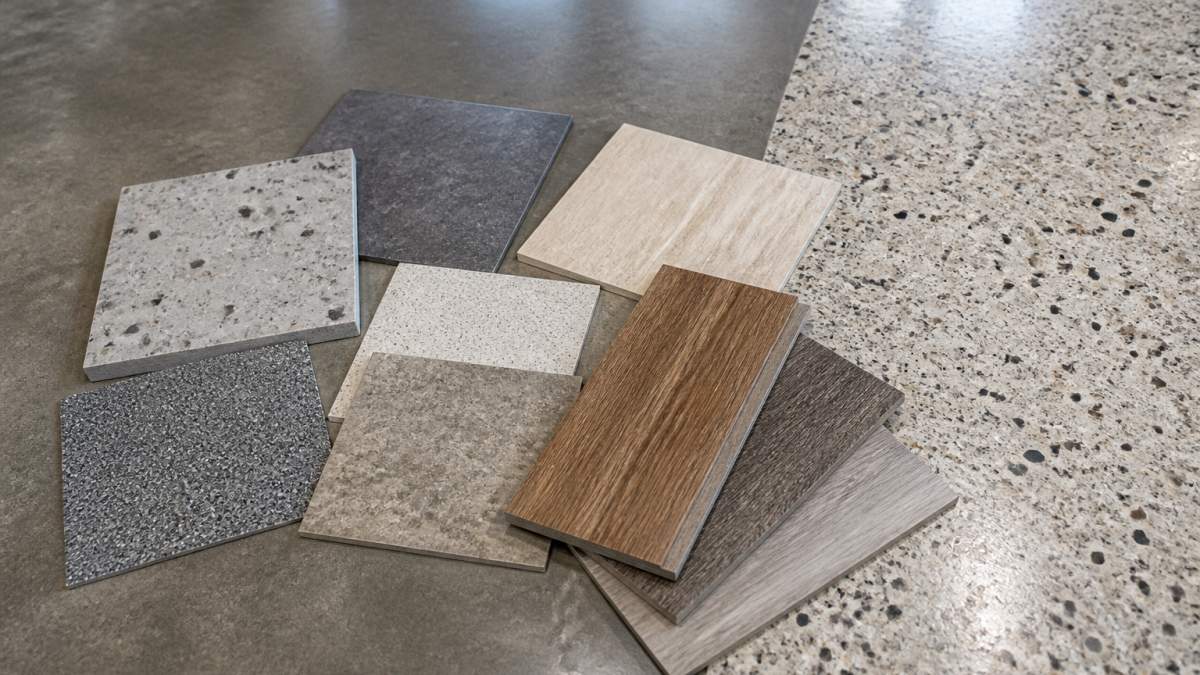
- Wide design flexibility mimicking wood, stone, or tile
Cons:
- Wear layer eventually degrades under extreme foot traffic
- Not ideal for spaces with sharp wheeled equipment (casters can damage)
- Susceptible to heavy impact damage in some environments
3. Porcelain and Ceramic Tile
Porcelain tile is harder and denser than ceramic, making it more suitable for commercial spaces. Its fired composition resists moisture, staining, and abrasion, though grout lines trap dirt and need ongoing maintenance.
Pros:
- Excellent abrasion resistance and durability
- Highly stain resistant and moisture resistant
- Available in slip-resistant finishes for safety-critical areas
- Lasts 15-20+ years with proper maintenance
Cons:
- Grout lines are maintenance-intensive and can harbor bacteria
- Hard surface can be uncomfortable for extended standing
- Cracked tiles require replacement, disrupting the floor
- Installation costs are moderate to high
4. Rubber Flooring
Commercial rubber flooring, including recycled and synthetic products, absorbs impact, making it comfortable underfoot while resisting wear from foot traffic and equipment. It excels where comfort and noise reduction matter.
Pros:
- Excellent shock absorption and comfort for standing workers
- Good noise reduction in busy environments
- Slip resistant even when wet
- Resists stains and cleans easily
Cons:
- Can retain odor if not properly sealed
- Susceptible to damage from certain cleaning chemicals
- Requires specific maintenance products
- May not suit all design aesthetics in customer-facing spaces
5. Concrete Flooring
Polished or sealed concrete is increasingly common in retail, offices, and industrial spaces. Properly sealed and maintained, it resists traffic wear and staining, and its hardness suits heavy wheeled equipment and sustained foot traffic.
Pros:
- Extremely durable and long-lasting (20+ years)
- Low maintenance compared to many alternatives
- Works well with radiant heating systems
- Sustainable option with minimal material waste
Cons:
- Can be cold and uncomfortable underfoot
- Dust generation if not properly sealed
- Staining is visible without protective coating
- Cracking can occur from substrate movement or heavy impact
6. Quarry Tile
Quarry tile is a dense, unglazed ceramic fired at high temperatures. Developed for industrial kitchens, it excels where moisture and food residue are constant challenges, and its porous surface provides natural slip resistance.
Pros:
- Exceptional durability in wet, food-service environments
- Natural slip resistance without coating
- Resists grease and food stains effectively
- Lasts 20+ years with proper maintenance
Cons:
- Porous surface requires sealing to prevent staining
- Grout lines trap bacteria and require frequent cleaning
- Higher cost than standard ceramic tile
- Limited color and design options
7. Carpet Tiles
Modular carpet tiles offer flexibility where comfort and acoustics matter. Individual tiles can be replaced if damaged, reducing downtime, and commercial-grade products use dense fibers and backing designed for heavy foot traffic.
Pros:
- Easy replacement of damaged sections without full floor removal
- Excellent acoustic properties reduce noise
- Comfortable underfoot for standing workers
- Design flexibility with multiple colors and patterns
Cons:
- Wear layer degrades faster than hard surfaces in very high-traffic zones
- Staining requires prompt attention to prevent permanent marks
- Moisture can damage backing if not addressed quickly
- Lifespan typically 7-10 years in heavy-traffic areas
Commercial Flooring Options Comparison by Performance
Two products that look identical on a showroom floor can behave very differently after 18 months of cart traffic. The table below translates each material into the specifications that actually predict performance: wear-layer thickness, abrasion and indentation resistance, slip resistance, moisture tolerance, and expected service life under continuous commercial traffic.
| Material | Wear Layer / Surface | Abrasion & Indentation Resistance | Slip Resistance (typical DCOF) | Moisture Tolerance | Expected Service Life |
|---|---|---|---|---|---|
| Terrazzo (epoxy or cement) | 1/4"-3/8" matrix, polished | Very high; aggregate resists abrasion | 0.45-0.60 when polished; higher when honed | High (sealed) | 40+ years |
| LVT / LVP (commercial grade) | 12-20 mil wear layer | Moderate-high; casters can indent | 0.42-0.55 depending on finish | Very high | 10-15 years |
| Porcelain tile | Glazed or through-body | Very high; PEI 4-5 for commercial | 0.42+ wet; 0.60+ for textured | Very high | 15-20+ years |
| Ceramic tile | Glazed | Moderate-high; PEI 3-4 | 0.42+ wet | High | 10-15 years |
| Rubber | 3-8 mm sheet or tile | High; excellent indentation recovery | 0.60+ wet | High | 10-15 years |
| Polished concrete | Densified, 800-3000 grit | Very high; dusts if unsealed | 0.45-0.55; lower when glossy | High (sealed) | 20+ years |
| Quarry tile | Unglazed, vitrified | Very high | 0.60+ wet (naturally textured) | Very high | 20+ years |
| Carpet tile | Face weight 18-32 oz/yd² | Moderate; crushes in pivot zones | N/A (not a wet-area product) | Low | 7-10 years |
How to Read These Specifications
Wear layer thickness (LVT/LVP). The single most predictive number for vinyl.
Abrasion ratings (tile). Porcelain and ceramic are rated on the PEI scale from 1 to 5; only PEI 4 and 5 suit commercial corridors and entries.
Slip resistance (DCOF). The DCOF (Dynamic Coefficient of Friction) is the current measurable standard for tile.
Indentation resistance. Rubber and terrazzo outperform vinyl here.
Warranty limits. Commercial warranties are almost always shorter than the marketing language suggests.
Heavy-Duty Commercial Vinyl Flooring: What Sets It Apart
Heavy-duty commercial vinyl flooring uses thicker wear layers and more durable backing than residential products, a difference that matters where foot traffic never stops.
Commercial-grade vinyl includes reinforced backing that resists indentation from wheeled equipment and furniture.
Vinyl installs faster than terrazzo or tile, reducing labor costs and getting your space operational sooner, a real advantage for facilities that cannot afford extended downtime.
Commercial Flooring Maintenance and Lifecycle Cost
Material selection is only half the decision. The other half is what it costs to keep the floor in service for 20 years. Two floors with identical purchase prices can differ by a factor of three in total cost of ownership once you account for labor, chemicals, downtime, and replacement timing.
The Four Cost Buckets
Every commercial flooring decision carries four cost buckets. Most buyers only look at the first.
- Acquisition, material plus installation labor, substrate prep, and any moisture mitigation.
- Routine maintenance, daily and weekly labor, cleaning chemicals, equipment, and consumables.
- Periodic restoration, stripping and refinishing, deep cleaning, resealing, or re-polishing on a multi-year cycle.
- Replacement and disruption, the cost of removing the old floor, installing the new one, and the operational downtime during both.
How the Buckets Compare by Material
Terrazzo. Highest acquisition cost, lowest routine maintenance cost per square foot because the seamless surface needs no stripping.
LVT / LVP. Low acquisition cost and fast installation.
Porcelain and ceramic tile. Moderate to high acquisition cost.
Rubber. Moderate acquisition cost.
Polished concrete. Low acquisition cost in new construction, higher in retrofit because of grinding and densifying.
Quarry tile. Moderate to high acquisition cost.
Carpet tile. Low acquisition cost and the fastest installation.
The Downtime Multiplier
Downtime is the most often ignored cost bucket and often the largest. A hospital corridor, retail sales floor, or school cafeteria cannot simply close for a week. Fast-installing, fast-curing materials (LVT, carpet tile, rubber sheet) minimize disruption; materials requiring curing, grinding, or multi-day installation (terrazzo, polished concrete, tile with mortar beds) push it higher, sometimes requiring phased night-and-weekend work at premium labor rates.
When you compare quotes, ask each vendor to break out:
- Material cost per square foot
- Installation labor per square foot
- Substrate prep and moisture mitigation
- Estimated annual maintenance labor hours per square foot
A Simple 20-Year Framework
Multiply acquisition cost by one, add 20 years of routine maintenance, add periodic restoration at the manufacturer's recommended interval, then add one replacement cycle for materials with a service life under 20 years. Terrazzo, polished concrete, and quarry tile typically show one acquisition and zero full replacements in that window; LVT, rubber, and carpet tile typically show one acquisition plus one or two replacements.
Choosing the Right Flooring for Your Commercial Space
Different commercial environments demand different flooring solutions.
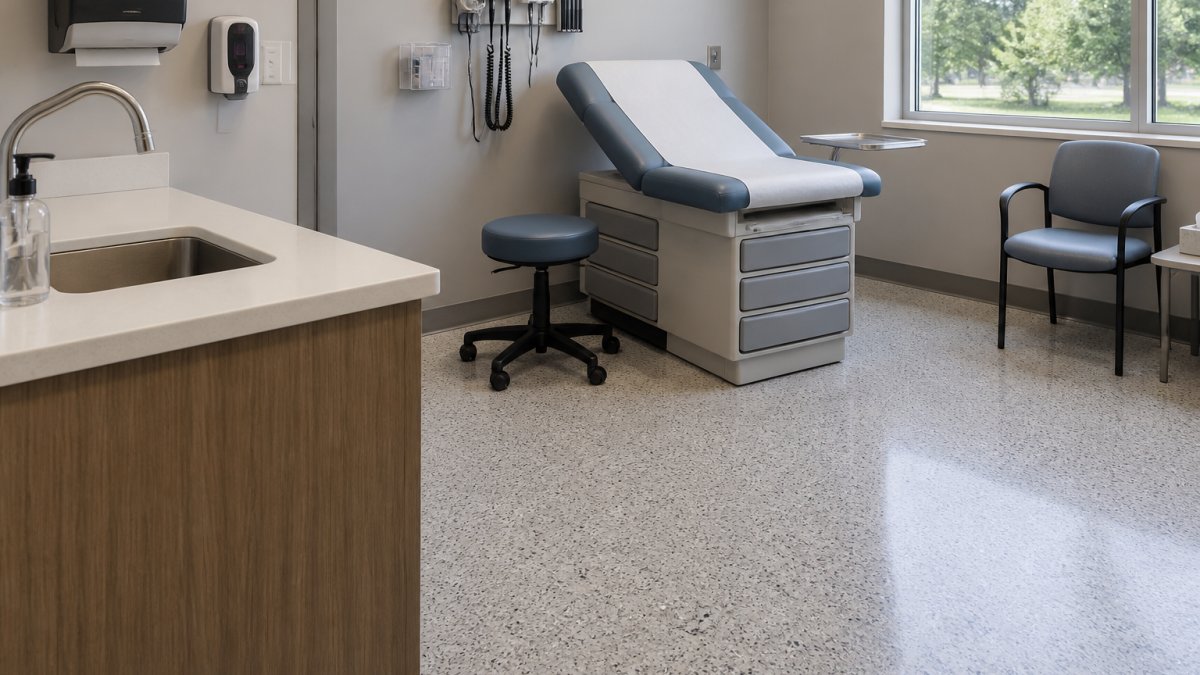
Healthcare facilities prioritize sanitation and durability.
Airports and transportation hubs see relentless foot traffic and wheeled equipment.
Retail and hospitality spaces balance durability with design flexibility.
Commercial kitchens require quarry tile or sealed concrete.
Universities and schools manage multiple building types across large campuses.
Selecting commercial flooring high-traffic solutions requires balancing durability, maintenance demands, and total cost of ownership.
Frequently Asked Questions
What is the best commercial flooring for high-traffic areas?
The best choice depends on your specific environment and budget. Terrazzo excels in durability and aesthetics, lasting 25+ years with proper maintenance. Luxury vinyl tile offers affordability and water resistance, making it ideal for kitchens and healthcare facilities. Porcelain tile provides excellent durability and slip resistance, while rubber flooring delivers comfort underfoot and sound absorption. For commercial spaces requiring both performance and appearance, terrazzo and high-quality porcelain tile consistently outperform other options in high-traffic areas.
Is terrazzo a good choice for high-traffic commercial areas?
Yes. Terrazzo is one of the most durable commercial flooring materials available, with a wear layer that can withstand decades of heavy foot traffic without significant degradation. Its seamless construction eliminates grout lines where dirt accumulates, making it easier to maintain in sanitary environments like hospitals and food service areas. Terrazzo's non-porous surface resists staining and moisture penetration, and it can be restored to original appearance through professional polishing, making it cost-effective over its lifecycle.
What is the most durable commercial flooring?
Terrazzo and porcelain tile are the most durable commercial flooring options. Terrazzo offers superior longevity, often lasting 25-30 years or more, with the ability to be refinished and restored multiple times. Its seamless installation and non-porous composition make it ideal for high-traffic areas requiring both durability and sanitation. Porcelain tile ranks equally high in wear resistance and is more affordable upfront, though it requires grout maintenance. Concrete, when properly sealed, also provides exceptional durability but requires more frequent maintenance.
How do you choose flooring for a busy commercial space?
Evaluate flooring based on foot traffic volume, moisture exposure, cleaning requirements, and budget constraints. High-traffic areas in hospitals and airports prioritize durability, slip resistance, and ease of sanitization, terrazzo and porcelain tile excel here. Retail spaces benefit from design flexibility and comfort, luxury vinyl tile or carpet tiles work well. Consider the lifecycle cost, including installation, maintenance, and eventual replacement. Consult with commercial flooring professionals who understand your industry's specific demands and can assess subfloor conditions and site requirements.