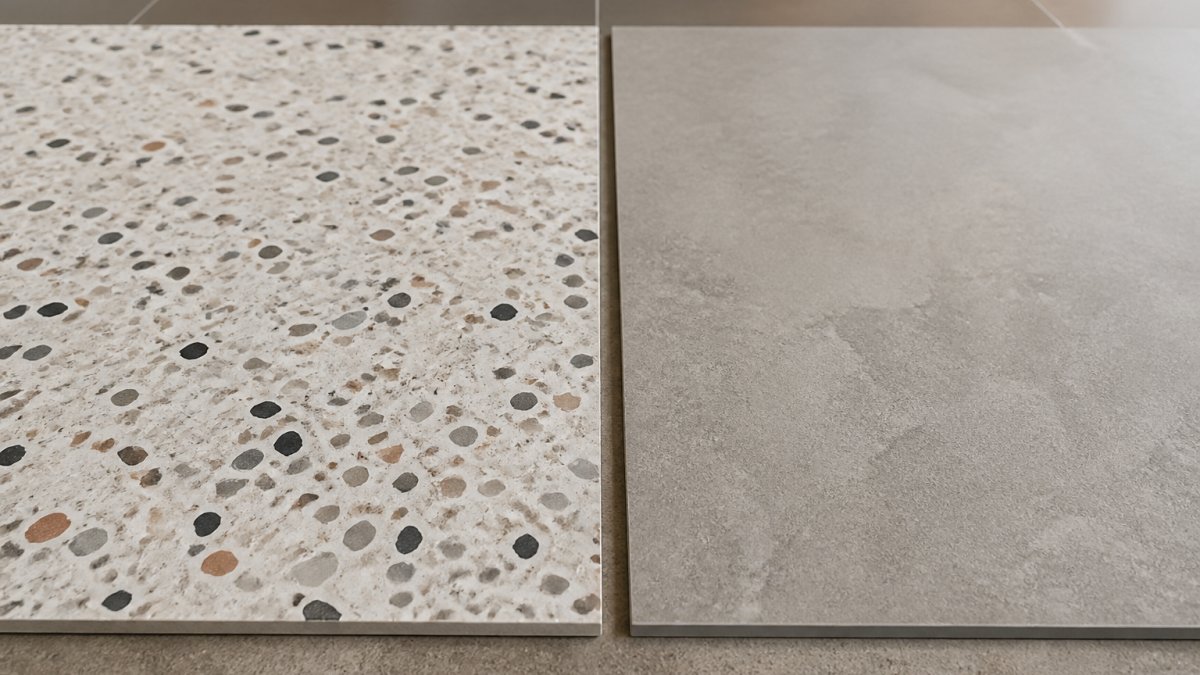
 comparison
Terrazzo vs Porcelain Tile for Commercial Design
Table of Contents
- Terrazzo vs Porcelain Tile: Key Differences for Commercial Spaces
- Durability and Wear Resistance in High-Traffic Areas
- Terrazzo vs Porcelain Tile Cost Comparison
- Maintenance Requirements and Cleaning Protocols
- Epoxy Terrazzo Flooring Installation Process
- Design Flexibility and Aesthetic Versatility
- Commercial Flooring Maintenance Services and Repairability
- Choosing the Right Material for Your Commercial Project
- Frequently Asked Questions
Last Updated: October 1, 2026
Terrazzo vs Porcelain Tile: Key Differences for Commercial Spaces
When facility managers and commercial developers evaluate flooring for high-traffic environments, the choice between terrazzo and porcelain tile shapes durability, maintenance costs, and long-term aesthetics for years to come. The answer depends less on which material is "better" and more on what your specific space demands.
Both materials dominate commercial flooring for good reason. Authentic terrazzo offers unmatched design flexibility and a monolithic finish that porcelain tile cannot replicate. Porcelain tile delivers faster installation, lower upfront costs, and simplified maintenance routines. The real tension lies in total cost of ownership: what you save upfront on porcelain often gets spent later on repairs, resealing, and replacement.
Here's what separates them: terrazzo vs porcelain tile for commercial design isn't just about aesthetics. It's about slip resistance ratings, moisture absorption rates, acoustic performance in institutional settings, and whether your subfloor can handle the structural weight. Below, we'll show you exactly how these materials perform in the environments where they're most tested.
Durability and Wear Resistance in High-Traffic Areas
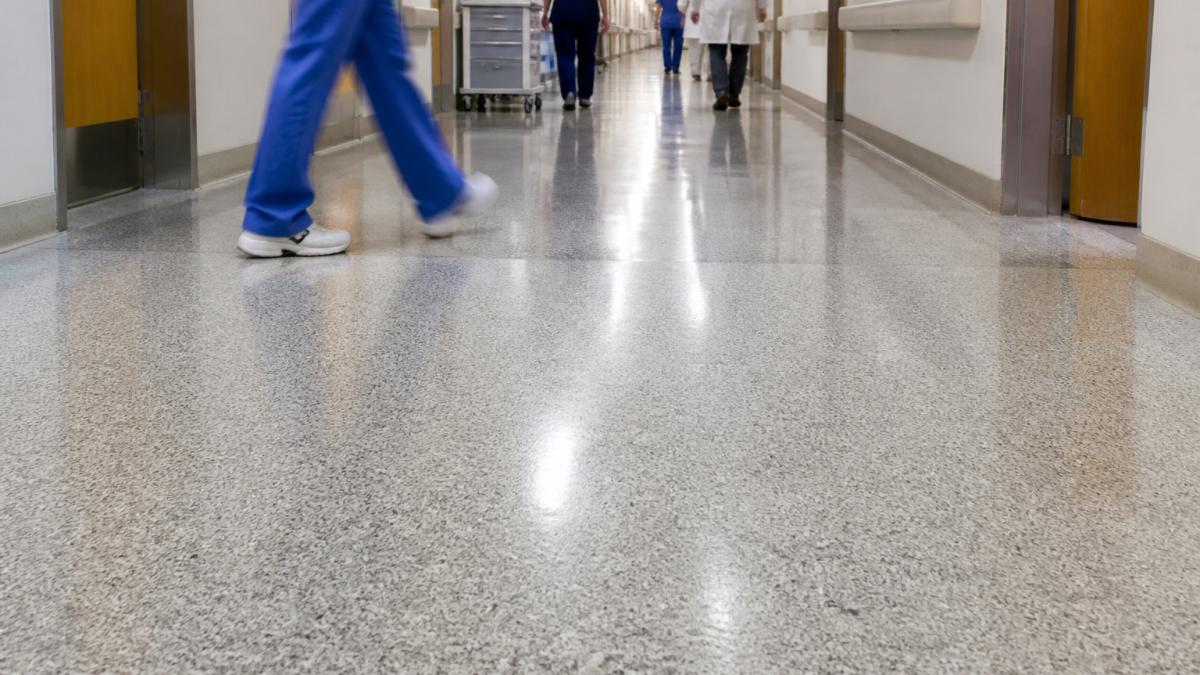
Authentic terrazzo outlasts porcelain tile in most high-traffic commercial applications. When properly installed and maintained, terrazzo floors in hospitals, airports, and government buildings routinely exceed 30 years of service. Porcelain tile typically performs well for 15-20 years before grout degradation and surface wear become visible problems.
Impact Resistance and Structural Load Capacity
Terrazzo absorbs impact differently than tile. Its monolithic structure distributes force across the entire floor system rather than concentrating stress at grout lines. This matters in facilities handling heavy equipment, carts, and constant foot traffic. Porcelain tile's individual units create stress points at grout lines, areas prone to cracking under sustained mechanical load.
Structural weight is a real consideration. Poured-in-place terrazzo adds significant load to your subfloor. A typical installation runs 2-3 inches thick, adding roughly 15-20 pounds per square foot. Porcelain tile weighs considerably less, typically 5-8 pounds per square foot. If your building has older structural systems or you're working within weight restrictions, this difference affects feasibility and installation cost.
Slip Resistance and Safety Ratings
This is where specification matters. Both materials can achieve appropriate slip resistance ratings, but the methods differ. Terrazzo's coefficient of friction (COF) depends on aggregate selection and surface finish. A polished finish scores lower on slip resistance; a honed or textured finish scores higher. You control this during the poured-in-place process.
Porcelain tile's slip resistance is determined at manufacture. Textured surfaces perform better, but you're limited to the patterns available from your supplier. For healthcare facilities where fall prevention is non-negotiable, terrazzo gives you more control over the final COF rating. The ASTM International standards for slip resistance provide the testing protocols both materials must meet for commercial installations.
Terrazzo vs Porcelain Tile Cost Comparison
Cost analysis reveals why this decision requires a lifecycle perspective, not just opening-bid comparison.
Initial Installation Investment
Porcelain tile's installation cost is significantly lower than poured-in-place terrazzo. Tile arrives pre-manufactured, requires minimal subfloor preparation, and installs faster. A typical tile project moves quickly, often completed within 2-4 weeks depending on square footage.
Terrazzo installation is labor-intensive. Subfloor preparation, pouring, grinding, and sealing take 4-8 weeks minimum. The skilled labor required commands higher hourly rates than tile installation. However, when you're comparing authentic terrazzo to terrazzo-look porcelain tile (engineered porcelain designed to mimic terrazzo's appearance), the cost gap narrows. Terrazzo-look porcelain from manufacturers like Emilgroup and Marble Systems offers visual depth approaching authentic terrazzo at lower installation cost.
Long-Term Lifecycle Costs
This is where terrazzo's economics shift. A porcelain tile floor installed today will need grout resealing every 3-5 years and selective tile replacement as wear develops. Over 20 years, these maintenance cycles add up. Terrazzo requires professional resealing every 2-3 years and occasional spot repairs, but the monolithic structure means you're not replacing individual failed units.
The real cost difference emerges in year 10-15. Porcelain grout lines show visible wear, staining becomes difficult to reverse, and replacement tiles rarely match the aged patina of the original installation. Terrazzo, when properly sealed and maintained, maintains consistent appearance and can be refreshed through professional polishing without full replacement.
Maintenance Requirements and Cleaning Protocols
Daily maintenance differs fundamentally between these materials.
Sealing and Protection Schedules
Terrazzo demands a professional sealing schedule. Proper sealing protects the stone matrix from moisture penetration and staining. Without it, liquids absorb into the material, creating permanent discoloration. Professional sealing every 2-3 years is standard.
Porcelain tile's non-porous surface requires no sealing. This is a genuine advantage for facilities with limited maintenance budgets.
Moisture Absorption and Stain Resistance
Terrazzo's porosity is its vulnerability. The stone matrix absorbs liquids if not properly sealed. In healthcare facilities, this means aggressive cleaning protocols must be balanced against moisture exposure. The wrong cleaning products, acidic solutions or excessive water, can damage the sealing layer and compromise the floor.
Epoxy Terrazzo Flooring Installation Process
Understanding installation reveals why subfloor quality determines long-term performance.
Subfloor Preparation and Labor Intensity
Proper terrazzo installation begins months before pouring. The subfloor must be structurally sound, properly sloped for drainage, and treated to prevent moisture transmission. Inadequate subfloor preparation causes the cracking failures that give terrazzo a bad reputation. When facility managers report terrazzo failure within a year, the cause is almost always substrate preparation, not the terrazzo itself.
Installation Timeline and Project Disruption
Terrazzo projects require extended facility closure or careful phasing. The pouring and curing process cannot be rushed. In operating hospitals or airports, this creates logistical challenges. Porcelain tile installation can often proceed in phases, allowing partial facility operation during installation.
Design Flexibility and Aesthetic Versatility
This is where terrazzo's competitive advantage becomes clear.
Custom Aggregate Options vs. Limited Tile Patterns
Terrazzo offers virtually unlimited design possibilities. You select aggregate colors, sizes, and patterns, then custom-pour the floor to your specifications. Monolithic terrazzo-look finishes, where the entire space flows as one continuous surface, create visual impact that tiled installations cannot match. Historical buildings often choose terrazzo restoration specifically for this seamless aesthetic.
Monolithic Finish and Visual Depth
A poured terrazzo floor creates depth and light reflection that tile cannot replicate. The continuous surface catches light uniformly. Grout lines in tile installations create visual breaks that, over time, accumulate visual noise in large spaces. In lobbies, atriums, and high-visibility areas, this aesthetic difference justifies terrazzo's premium.
Commercial Flooring Maintenance Services and Repairability
Long-term performance depends on maintenance protocols and repair accessibility.
Repair and Restoration Logistics
Terrazzo repair is straightforward. Small cracks or chips are patched with matching terrazzo mix and repolished. The repair blends seamlessly into the surrounding floor. Larger damaged areas can be cut out and replaced with new terrazzo, again creating an invisible repair.
Acoustic Performance in Healthcare and Institutional Settings
Terrazzo's dense structure provides moderate sound absorption. In hospitals and schools, this reduces noise reflection and creates a quieter environment. Porcelain tile is hard and reflective, it amplifies footsteps and mechanical noise. Healthcare facilities increasingly specify terrazzo or acoustic-enhanced flooring to reduce noise pollution, which affects patient recovery and staff stress levels.
| Comparison Factor | Terrazzo | Porcelain Tile |
|---|---|---|
| Upfront installation cost | Higher | Lower |
| Lifespan (years) | 30+ | 15-20 |
| Slip resistance control | Customizable | Limited to manufactured patterns |
| Moisture absorption | Requires sealing | Non-porous |
| Repair visibility | Seamless | Visible patches |
| Design flexibility | Unlimited custom options | Predetermined patterns |
| Acoustic performance | Good sound absorption | High noise reflection |
| Maintenance complexity | Professional sealing required | Grout maintenance required |
| Structural weight | 15-20 lbs/sq ft | 5-8 lbs/sq ft |
Choosing the Right Material for Your Commercial Project
The decision hinges on three factors: your facility type, budget timeline, and long-term operational priorities.
Frequently Asked Questions
Is terrazzo more durable than porcelain tile for commercial use?
Both materials excel in commercial settings, but they perform differently. Terrazzo offers superior impact resistance and can be repaired seamlessly, making it ideal for spaces requiring custom aesthetics and long-term durability. Porcelain tile resists staining and moisture better, requiring less maintenance. For high-traffic healthcare or airport environments, terrazzo's monolithic structure and repairability provide distinct advantages, while porcelain tile suits facilities prioritizing low-maintenance operations.
What is the cost difference between terrazzo and porcelain tile flooring?
Terrazzo typically requires higher initial installation investment due to labor-intensive subfloor preparation and skilled craftsmanship. Porcelain tile offers lower upfront costs and faster installation. However, terrazzo's lifespan and minimal maintenance needs often deliver better long-term value through lower lifecycle costs. The total cost of ownership depends on your facility's operational budget, traffic volume, and maintenance capacity. Contact A1 Terrazzo for a detailed cost comparison specific to your project scope.
Does terrazzo require more maintenance than porcelain tile?
Terrazzo requires regular sealing and professional maintenance to preserve its finish and protect against staining. Porcelain tile needs only routine cleaning with appropriate products. Professional commercial flooring maintenance services ensure both materials perform optimally. The choice depends on whether your facility can commit to scheduled maintenance or requires minimal upkeep.
Can terrazzo be repaired if it cracks, unlike porcelain tile?
Yes, this is a key advantage of terrazzo. Cracks can be repaired by injecting epoxy or resin, restoring the surface's integrity and appearance. Porcelain tiles require full replacement of damaged pieces, disrupting the floor and creating color-matching challenges. For facilities managing large spaces like university campuses or airports, terrazzo's repairability reduces long-term replacement costs and minimizes operational disruption from flooring repairs.
Which flooring option is better for high-traffic commercial areas?
Terrazzo excels in high-traffic settings due to its monolithic structure, superior impact resistance, and seamless finish eliminating trip hazards. Its coefficient of friction (COF) ratings meet safety standards for healthcare and institutional spaces. Porcelain tile also handles heavy traffic well but grout lines accumulate dirt and create maintenance challenges in high-use areas. For hospitals, airports, and courthouses, terrazzo's durability, sanitary properties, and aesthetic elegance make it the preferred choice for demanding commercial environments.