 listicle
Terrazzo Restoration for Retail Stores: 2026 Florida Guide
Table of Contents
- Why Retail Stores in Florida Need Terrazzo Restoration
- Top Terrazzo Restoration Providers for Florida Retail
- The Terrazzo Floor Restoration Process: Step by Step
- Commercial Terrazzo Polishing Cost: What Retailers Should Budget
- Maintenance Schedules for High-Traffic Retail Stores
- Choosing the Best Terrazzo Floor Cleaner for Retail Spaces
- Maintenance Schedules for High-Traffic Retail Stores
- Sustainability and Eco-Friendly Sealants for Terrazzo
- Conclusion
- Frequently Asked Questions
Last Updated: September 10, 2026
Why Retail Stores in Florida Need Terrazzo Restoration
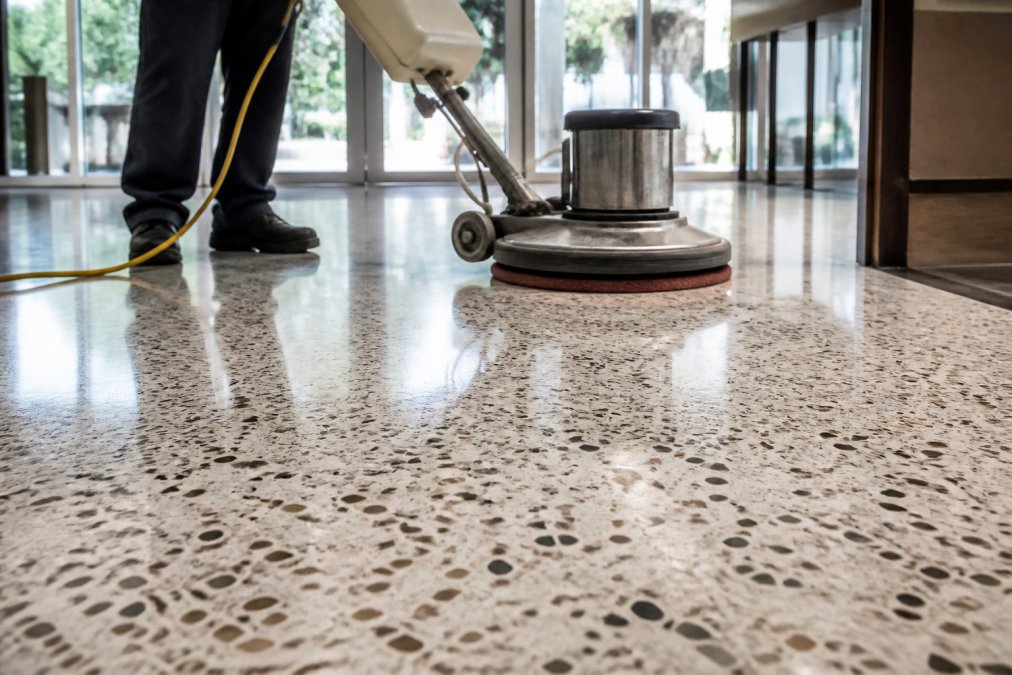
Terrazzo restoration for retail stores Florida is the process of grinding, honing, repairing, and sealing an existing terrazzo floor to bring it back to a durable, sanitary, and visually sharp finish (nps.gov). At A1 Terrazzo, we have spent 35 years on commercial floors, and retail is one of the toughest environments terrazzo faces: shopping carts, pallet jacks, and constant foot traffic grind grit across the surface, while Florida's humidity and coastal salt air make an unprotected floor dull, stain, and crack within a few seasons. Restoration protects a floor designed to last decades.
Top Terrazzo Restoration Providers for Florida Retail
Choosing a provider comes down to three things: commercial experience, repair capability, and how well the crew works around your store hours.
A1 Terrazzo
With 35 years of specialized experience and statewide Florida coverage, the team handles installation and maintenance, which matters when a floor needs structural repair, not just a shine.
All Floors Restoration
Covers Southeast and Central Florida with terrazzo cleaning, polishing, crack and chip repair, and sealing. Quotes are project-based and require an on-site assessment, so budget planning takes longer.
Cubix, Inc.
Repairs and restores terrazzo in high-traffic commercial and retail settings, specializing in seamless blending so repairs disappear into the original pattern. Works exclusively on commercial engagements, so small one-off jobs may not fit.
Elite Terrazzo LLC
A hard surface restoration specialist offering grinding, polishing, and statewide availability; confirm specific regions by direct call.
High End Commercial Cleaning
Publishes transparent restoration cost ranges for the Tampa area, backed by commercial-grade deep cleaning and polishing. Actual pricing varies widely with floor condition.
Love Marble Stone Restoration
Offers free estimates and finishes from matte to high gloss, best for retailers refreshing an existing finish without a full rebuild. Public information on commercial projects is limited, so ask for references.
Colonial Stone and Floor Care
A Miami-based company specializing in high-quality polishing and maintenance for terrazzo floors. The service area is geographically restricted, so stores outside Miami need another option.
TerCon Systems
Provides industry-standard cost guidance and manages grinding and polishing projects with a consultative approach; published ranges are general, not final quotes.
Vaquero Painting
A multi-service Miami contractor that includes terrazzo restoration among its offerings rather than as a sole specialty.
Building A Dream Remodeling & Services
A local remodeling and flooring provider with nearly 20 years of experience. Best for small retail businesses that want direct communication with the owner, though its commercial portfolio is limited.
| Provider | Service Area | Specialty | Pricing Model |
|---|---|---|---|
| A1 Terrazzo | Statewide | Commercial terrazzo installation and maintenance | Contact for quote |
| All Floors Restoration | Southeast and Central | Full-service restoration | Project-based quote |
| Cubix, Inc. | Commercial statewide | Seamless repairs | Project-based quote |
| Elite Terrazzo LLC | Statewide | Grinding and polishing | Project-based quote |
| High End Commercial Cleaning | Tampa area | Deep cleaning and polishing | Per square foot |
| Love Marble Stone Restoration | Regional | Custom finishes | Free estimate |
| Colonial Stone and Floor Care | Miami | Polishing and maintenance | Project-based quote |
| TerCon Systems | Commercial statewide | Grinding and polishing | Per square foot |
| Vaquero Painting | Miami | Multi-service maintenance | Project-based quote |
| Building A Dream | Local | Remodeling and flooring | Project-based quote |
The Terrazzo Floor Restoration Process: Step by Step
The terrazzo floor restoration process follows four stages, and skipping any one is why some restored floors fail within a year. A proper job creates dust and noise, so after-hours scheduling matters.
Step 1: Assessment and Subfloor Preparation
A technician maps cracks, chips, stains, and any areas where the terrazzo has debonded from the slab. Moisture testing comes next. If the substrate is wet or unstable, grinding over it just hides a problem that will return.
Step 2: Diamond Grinding and Honing
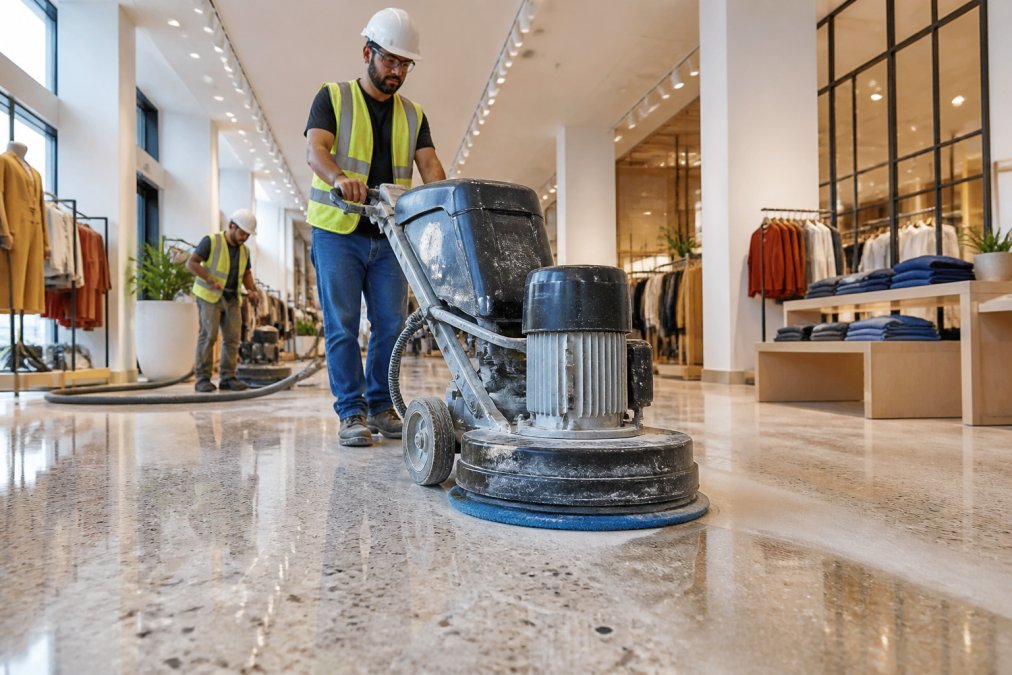
Diamond grinding removes the damaged top layer and exposes fresh aggregate. Crews work through progressively finer grit levels, from coarse grinding to honing, prepping the surface without over-cutting.
Step 3: Crack and Chip Repair
Cracks get cleaned, filled with color-matched epoxy or cementitious patching material, and blended into the surrounding pattern. Grout lines between divider strips are repaired at the same stage.
Step 4: Polishing and Sealing
Polishing builds the gloss, and sealing locks in the finish. A penetrating sealer protects against stains while keeping the floor breathable; a topical sealer adds a sacrificial layer that takes the wear instead of the terrazzo.
Commercial Terrazzo Polishing Cost: What Retailers Should Budget
Commercial terrazzo polishing cost depends on square footage, floor condition, and the finish you want. For an accurate number on your space, request an assessment from A1 Terrazzo.
What Actually Drives the Number
Four variables move a retail terrazzo quote more than anything else:
- Square footage and layout. Open sales floors price lower per square foot than stores chopped up by fixtures, fitting rooms, and back-of-house corridors, where crews spend more time repositioning equipment and protecting merchandise.
- Condition of the substrate. Debonded sections, active moisture, or widespread cracking need substrate work before grinding, the biggest swing factor between a $3 and $12 per-square-foot job.
- Finish specification. A matte or satin hone costs less than a high-gloss polish because it requires fewer grit passes. A mirror finish in the entry vestibule carries a premium.
- Scheduling window. After-hours and overnight work carries a labor premium but eliminates lost sales hours, for most retailers a smaller cost than closing the sales floor for two days.
The Retail ROI Angle Most Contractors Skip
Restoration is a capital decision, so evaluate it like one. Retail operators compare the per-square-foot restoration cost against replacement plus revenue lost during a multi-day install. Terrazzo restoration is typically completed in phases that let the store keep operating, while full replacement means closing sections of the sales floor and disrupting fixtures, displays, and inventory.
The second half of the ROI equation is harder to quantify but real: a dull, stained, or cracked floor reads as neglect and undermines the perceived quality of everything displayed on it. Consistent gloss supports brand presentation the way lighting and fixtures do.
How to Budget Without a Final Quote
A practical approach for store managers and facility planners:
- Measure square footage of the sales floor, back-of-house, and any stockroom terrazzo.
- Note problem zones, entry vestibule, checkout lanes, cracking, and staining.
- Ask for a phased quote separating substrate repair from grinding, polishing, and sealing.
- Ask whether the sealer is penetrating or topical and how often it needs reapplication, since that recurring cost belongs in your maintenance budget.
Maintenance Schedules for High-Traffic Retail Stores
High-traffic retail floors need a written schedule, not an occasional deep clean. A practical cadence looks like this:
- Daily: Dust mop or auto-scrub with a neutral cleaner to remove grit before it abrades the finish.
- Weekly: Machine buff with a soft pad to restore sheen in entry and checkout zones.
- Monthly: Inspect for new cracks, chips, and sealer wear, and log problem areas.
- Quarterly: Spot-treat stains and reapply sealer in the highest-traffic lanes.
- Annually: Schedule a professional honing or polishing pass to reset the finish.
Why Retail Traffic Is Different From Office Traffic
A retail floor takes abuse a general commercial schedule does not account for: shopping carts and pallet jacks roll grit and metal across the surface, fixtures get dragged during resets, seasonal merchandising moves heavy displays across the same lanes, and coastal stores face tracked-in sand and salt inland stores never see.
The consequence is uneven wear: the middle of the sales floor may look fine while entry and checkout zones are already dull. Treating the whole floor the same wastes labor on low-wear areas and under-serves the zones that need attention.
A Zone-Based Maintenance Framework
Instead of one schedule for the whole store, split the floor into three zones:
- Zone 1, Entry and vestibule: Highest grit and moisture load. Daily auto-scrub, weekly buff, and the most frequent sealer touch-ups. Walk-off matting is the cheapest way to reduce this load.
- Zone 2, Checkout, aisles, and high-traffic lanes: Daily dust mop, weekly buff, monthly inspection for sealer wear.
- Zone 3, Perimeter, back-of-house, and low-traffic corners: Daily dust mop, monthly buff, quarterly inspection.
What Store Managers Should Track
A simple log kept by the closing manager catches problems before they become restoration costs:
- New cracks or chips and the date noticed
- Areas where gloss has visibly dulled
- Staining that does not lift with the standard neutral cleaner
- Sealer reapplication dates by zone
When the log shows a pattern, the same zone dulling every few months, or cracks reappearing in one spot, the cause is likely substrate or moisture related, not cleaning. That is the point to bring in a terrazzo specialist rather than adding more buffing.
Training Staff on the Right Products
The best schedule fails if the wrong cleaner gets used. Train closing staff on the difference between pH-neutral terrazzo cleaners and general-purpose degreasers, and keep abrasive pads out of the supply closet, one acidic cleaner can etch the surface and undo months of finish in a single shift.
Choosing the Best Terrazzo Floor Cleaner for Retail Spaces
The best terrazzo floor cleaner for a retail space is a pH-neutral product with no acidic or abrasive ingredients. Acidic cleaners etch the surface; gritty pads scratch the polish. A neutral cleaner paired with a microfiber mop handles daily soil without harming the sealer, and for heavier grime a dedicated terrazzo cleaner diluted to the label ratio beats a general-purpose degreaser. One wrong product can undo a restoration in weeks.
Why Cleaner Choice Matters More in Retail Than Anywhere Else
Most terrazzo cleaning advice targets homeowners or low-traffic facilities. Retail differs in three ways:
- Cleaning volume. A retail floor may be cleaned nightly, sometimes twice a day in food-adjacent formats, so a slightly aggressive cleaner causes cumulative damage fast.
- Mixed soil types. Retail floors collect tracked-in grit, food and beverage spills, cosmetic and fragrance residue, and adhesive from price tags and display tape, no single product handles all of it well.
- Staff turnover. Cleaning often falls to rotating associates who may not know the floor's history; clear labeling and a written product list prevent accidental damage.
Matching the Cleaner to the Soil
A practical product matrix for retail terrazzo:
- Daily soil and dust: pH-neutral terrazzo cleaner diluted per label, applied with a microfiber flat mop or auto-scrubber.
- Food, beverage, and grease spills: A dedicated alkaline terrazzo cleaner, diluted correctly, followed by a clean-water rinse; do not let it dwell longer than the label allows.
- Cosmetic, fragrance, and adhesive residue: A terrazzo-safe solvent or targeted adhesive remover, spot-applied and rinsed; test in an inconspicuous area first.
- Hard-water film near entrances: A mild acidic cleaner formulated for terrazzo, used sparingly and always followed by a neutral rinse to avoid etching.
Products and Practices to Avoid
- General-purpose degreasers not labeled for stone or terrazzo
- Any cleaner containing hydrochloric, phosphoric, or citric acid at full strength
- Abrasive powders and scouring pads
- Steam mops on a topical sealer, which can lift the sacrificial layer
- Bleach-based products, which can dull the finish over repeated use
A Simple Rule for Store Managers
If a product is not labeled safe for terrazzo or natural stone, it does not go on the floor. Keep a laminated one-page list of approved cleaners in the janitorial closet and post it wherever supplies are stored. Verify new products against the sealer type used in your last restoration, penetrating and topical sealers tolerate different chemistries.
Maintenance Schedules for High-Traffic Retail Stores
High-traffic retail floors need a written schedule, not an occasional deep clean. A practical cadence looks like this:
- Daily: Dust mop or auto-scrub with a neutral cleaner to remove grit before it abrades the finish.
- Weekly: Machine buff with a soft pad to restore sheen in entry and checkout zones.
- Monthly: Inspect for new cracks, chips, and sealer wear, and log problem areas.
- Quarterly: Spot-treat stains and reapply sealer in the highest-traffic lanes.
- Annually: Schedule a professional honing or polishing pass to reset the finish.
Sustainability and Eco-Friendly Sealants for Terrazzo
Eco-friendly sealants have moved from niche to standard for commercial terrazzo. Water-based, low-VOC penetrating sealers protect the floor without the solvent smell that forces a store to close during application, a low-odor sealer can be applied after hours and the store can open on schedule (the EPA). Terrazzo is also one of the more sustainable flooring choices because the original material is restored in place rather than replaced and landfilled, and a low-VOC sealer keeps that advantage intact (the EPA).
Conclusion
Every retail floor has a decision point: restore what is there, or replace it and start over. Terrazzo almost always rewards restoration, but only when the crew understands substrate prep, diamond grinding, and proper sealing. A1 Terrazzo brings 35 years of commercial terrazzo experience, high-quality installation, and professional maintenance to retail spaces across Florida. Contact A1 Terrazzo to schedule an assessment and get a floor that holds up to your traffic.
Frequently Asked Questions
How much does terrazzo restoration cost for a retail store in Florida?
Costs vary based on square footage, floor condition, and finish level. Factors like crack repair, stain removal, and subfloor preparation can influence the overall cost. For an accurate quote, schedule a site assessment with a qualified contractor. A1 Terrazzo provides estimates for commercial projects across Florida.
What is the terrazzo floor restoration process?
The process begins with a thorough assessment and subfloor preparation. Contractors then use diamond grinding at progressively finer grit levels to remove surface damage and expose the aggregate. Cracks and chips are repaired with color-matched epoxy. Finally, the floor is honed, polished, and sealed for durability and shine. Most retail projects take 3-7 days depending on square footage and condition.
Can old terrazzo be refinished to look new?
Yes. Old terrazzo can be restored to a like-new appearance through diamond grinding and polishing. Even floors with heavy scratches, stains, or dull finishes can be revived. For historic buildings, contractors can match original patterns and finishes. The key is proper subfloor preparation and using the right grit sequence. A1 Terrazzo has 35 years of experience restoring antique terrazzo in commercial spaces.
How often should retail stores schedule professional terrazzo maintenance?
High-traffic retail stores should schedule professional maintenance every 6-12 months. This includes deep cleaning, buffing, and re-sealing to protect the surface. Daily sweeping and damp mopping with a pH-neutral terrazzo floor cleaner extend the time between professional services. Stores with heavy foot traffic may need quarterly attention. A maintenance schedule prevents costly repairs and preserves floor longevity.
What is the average lifespan of a terrazzo floor?
A properly installed and maintained terrazzo floor can last 40 years or more. With regular polishing and sealing, many commercial terrazzo floors outlive the buildings they are in. The key is avoiding abrasive cleaners and scheduling professional maintenance. Terrazzo's durability makes it a cost-effective choice for high-traffic retail environments where floor replacement is disruptive and expensive.