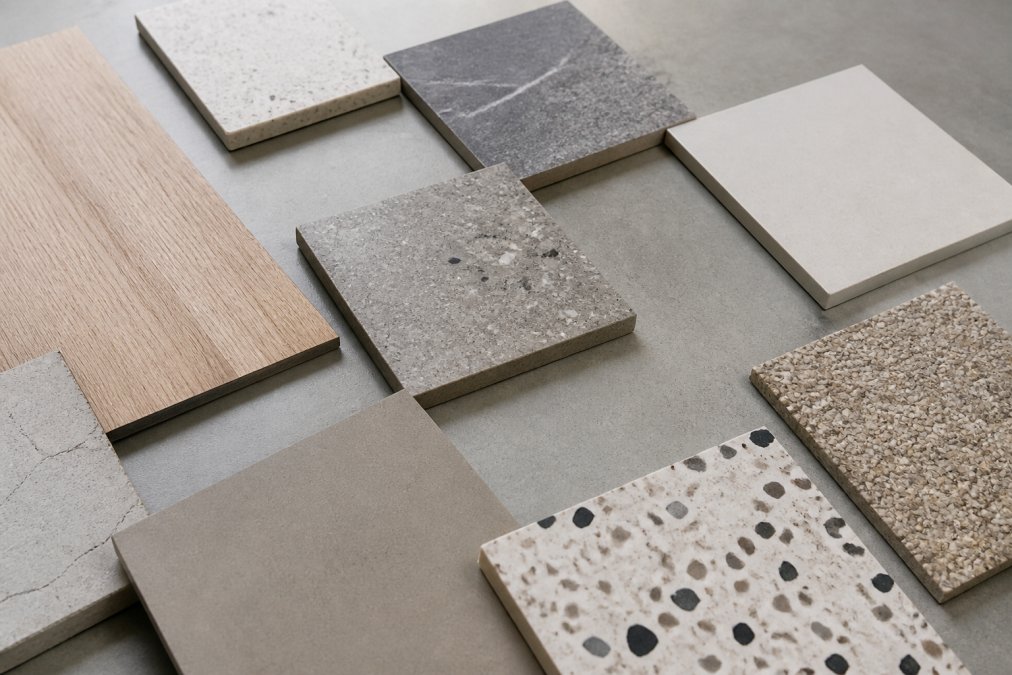
 comparison
Doyle Dickerson Terrazzo Alternatives for 2026
Table of Contents
- Why Look Beyond Doyle Dickerson for Terrazzo?
- Quick Comparison: Top Terrazzo Alternatives
- A1 Terrazzo: Full-Service Installation and Maintenance
- Terrazzo vs Epoxy Flooring: Which System Wins?
- Understanding Commercial Flooring Installation Cost
- Terrazzo Maintenance Requirements vs. Alternatives
- Budget-Friendly Alternatives: Polished Concrete and Tile
- Making the Right Choice for Your Commercial Space
- Frequently Asked Questions
Last Updated: September 7, 2026
Why Look Beyond Doyle Dickerson for Terrazzo?
When facility managers begin researching terrazzo alternatives, they often start with one name: Doyle Dickerson Terrazzo. It is a recognized player in the industry, but it is rarely the only qualified option for a complex commercial project. The A1 Terrazzo team has spent over 35 years installing and maintaining terrazzo systems across Florida, and we have seen firsthand how the right contractor choice affects project outcomes for decades.
The real issue is fit. A contractor that excels at historic restoration may not be the best match for a new airport terminal with aggressive deadlines. A firm focused on regional projects may lack the capacity for a multi-building university renovation. Terrazzo is a permanent investment in your building's infrastructure, so the selection process deserves more than a single bid.
This guide evaluates terrazzo alternatives and discusses how to vet a flooring contractor.
Quick Comparison: Top Terrazzo Alternatives
The table below summarizes the primary differences between full-service terrazzo installation and the most common alternatives. Use it as a starting point, then read the detailed sections that follow.
| Flooring System | Best For | Installation Time | Maintenance Level | Aesthetic Range |
|---|---|---|---|---|
| Cementitious Terrazzo | Schools, airports, courthouses | Longest (poured, cured, ground) | Low | Custom aggregate, unlimited patterns |
| Epoxy Terrazzo | Hospitals, labs, retail | Moderate | Very low | High gloss, vibrant color |
| Epoxy Flooring | Industrial, parking garages | Fast | Low | Limited to solid or flake |
| Polished Concrete | Warehouses, showrooms | Moderate | Low | Gray tones, some staining |
| Porcelain Tile | Restrooms, light commercial | Fast | Moderate (grout lines) | Extensive, mimics stone |
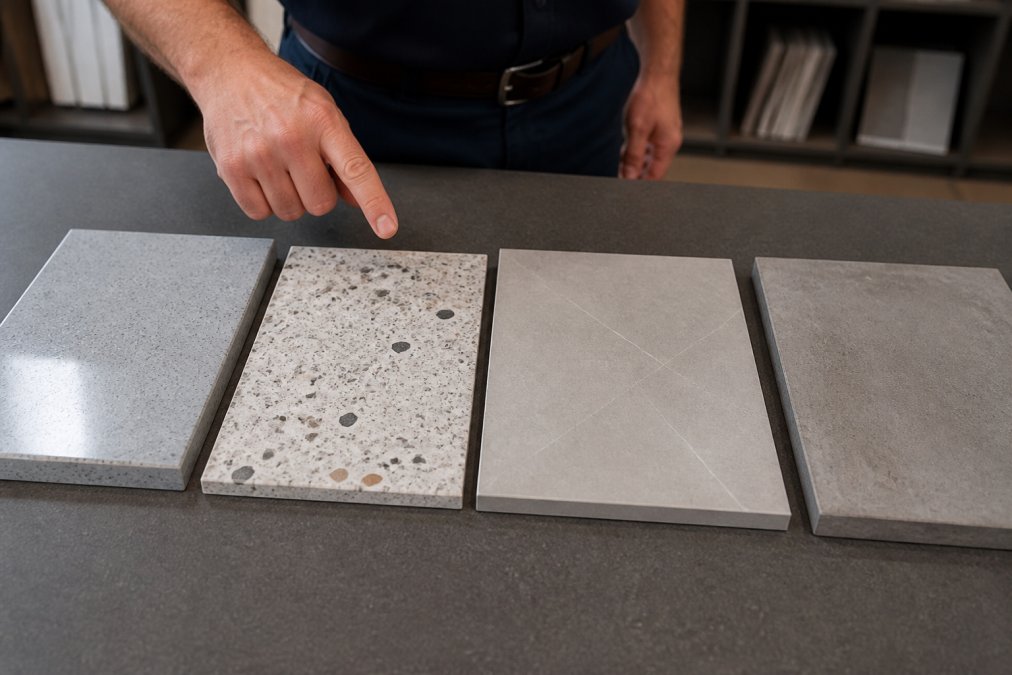
The single most important distinction is seamless versus jointed systems. Poured terrazzo and epoxy create a continuous surface with no grout lines, which matters in sanitation-critical environments like hospitals (the CDC). Tile and some other flooring options introduce joints where bacteria can harbor and where moisture can penetrate.
A1 Terrazzo: Full-Service Installation and Maintenance
We specialize exclusively in commercial terrazzo flooring, which means every project receives focused expertise rather than a general contractor's sideline service. Our 35 years of experience span hospitals, airports, schools, courthouses, and government buildings across Florida.
A full-service approach changes the project equation. We handle installation and provide professional maintenance services, which protects the floor's surface integrity over its entire life cycle. When one team understands the exact aggregate blend and matrix used during installation, the maintenance program aligns perfectly with the system's requirements.
The primary limitation is geographic. Our service coverage is concentrated in Florida, so projects outside that region would need a local specialist. For commercial property managers and architects within our footprint, the combination of deep installation expertise and lifecycle maintenance support is difficult to match.
What most guides miss is that terrazzo failures usually trace back to subfloor preparation, not the material itself. A contractor who shortcuts moisture testing or fails to address substrate cracks will deliver a floor that fails within the first year. That risk applies to any installer, which is why vetting processes matter more than brand names.
Terrazzo vs Epoxy Flooring: Which System Wins?
Terrazzo and epoxy flooring are frequently confused because both can create seamless, resin-based surfaces. The distinction comes down to composition and performance. Terrazzo is a composite material that binds marble, quartz, granite, or glass chips within a cementitious or epoxy matrix. Epoxy flooring, by contrast, is primarily a resin coating applied over a concrete substrate.
For high-traffic areas, terrazzo wins on durability and flooring longevity. The aggregate content gives terrazzo superior resistance to abrasion and impact, which is why it remains the standard for airports and school corridors. Epoxy systems perform well in lighter commercial settings but can scratch and yellow over time under heavy use.
Epoxy does have advantages. It installs faster, costs less upfront, and offers excellent chemical resistance for industrial flooring. The trade-off is aesthetic versatility and lifespan. A well-installed terrazzo floor can last the life of the building, while epoxy systems typically require recoating within five to ten years depending on traffic levels (nist.gov).
The decision framework is straightforward. Choose terrazzo when the floor must survive decades of heavy traffic with minimal maintenance. Choose epoxy when budget constraints dominate, the space has moderate traffic, and a shorter replacement cycle is acceptable.
Understanding Commercial Flooring Installation Cost
Commercial flooring installation cost is the most misunderstood factor in the selection process. Buyers fixate on the initial material cost and overlook the life-cycle cost, which includes maintenance, repairs, and eventual replacement. This is where terrazzo's economics become compelling.
Terrazzo installation costs more per square foot than most alternatives. The process involves subfloor preparation, aggregate blending, pouring, grinding, and polishing. Installation time runs longer than a simple epoxy application. For a budget committee, that initial quote can be intimidating.
The calculation changes when you extend the timeline. A porcelain tile floor may cost less to install, but it requires grout maintenance, occasional tile replacement, and eventual full replacement. A polished concrete floor needs periodic resealing. Terrazzo, properly maintained, avoids replacement almost entirely.
Pricing for any of these systems depends on project scope, square footage, aggregate selection, and site conditions. We recommend requesting detailed proposals from multiple flooring contractors and asking each to provide a projected life-cycle cost analysis rather than a simple installation quote. These comparisons belong in front of a budget committee before any system is selected.
Terrazzo Maintenance Requirements vs. Alternatives
Terrazzo maintenance requirements are modest but non-negotiable. The sealed surface resists staining and bacterial growth, but it requires a specific cleaning regimen. pH-neutral cleaners are essential; acidic or harsh chemical products degrade the sealer and dull the finish over time (ntma.org).
The maintenance schedule is straightforward. Daily dust mopping or auto-scrubbing removes abrasive particles. Periodic burnishing or polishing restores gloss. Depending on traffic levels, resealing may be needed every few years. The cost is predictable and low compared to systems that require frequent refinishing.
Epoxy flooring demands similar care but has a shorter service life before recoating becomes necessary. Polished concrete requires periodic reapplication of densifiers and sealers. Tile systems introduce grout lines that need regular cleaning and occasional repair, and cracked tiles must be replaced individually.
Many facility managers worry that choosing a full-service installer locks them into that contractor's maintenance program. It does not. You are free to use any qualified maintenance provider. The advantage of staying with the original installer is that they know the exact system specifications and can diagnose issues before they become visible damage. budget-friendly flooring alternatives.
Budget-Friendly Alternatives: Polished Concrete and Tile
Not every project justifies a poured terrazzo system. For budget-constrained renovations or spaces where the seamless aesthetic is not critical, polished concrete and large-format porcelain tile offer strong value.
Polished Concrete: The Industrial Minimalist
Polished concrete starts with the existing slab, which eliminates the cost of demolition and new material. The concrete is ground, densified, and polished to a high gloss. It delivers a modern, industrial look that suits showrooms, retail spaces, and warehouses. Slip resistance can be adjusted during the polishing process. The trade-off is a limited color palette and the absence of the decorative aggregate that defines terrazzo.
Terrazzo-Look Porcelain Tile: The Residential Sweet Spot
Large-format porcelain tile can capture the terrazzo aesthetic without the poured-system commitment. Modern digital printing produces tiles that can mimic the speckled aggregate patterns of classic terrazzo.
The advantages over poured terrazzo are substantial for residential and light-commercial users:
- Installation cost: Porcelain tile installation typically runs $8-$15 per square foot installed, versus $25-$50+ for poured terrazzo. That gap is decisive for a kitchen backsplash, a bathroom floor, or a 500-square-foot home office.
- DIY feasibility: A competent DIYer with a wet saw and backer board can install terrazzo-look tile over a weekend. Poured terrazzo requires specialized mixing equipment, grinding machinery, and trained crews.
- Maintenance: Grout lines are the main drawback. Use epoxy grout to minimize staining and keep the joints sealed. Large formats reduce the number of grout lines versus small mosaic tiles.
- Durability: Porcelain is harder than natural stone and resists scratching, moisture, and staining. It is an excellent choice for kitchens, bathrooms, mudrooms, and entryways.
The aesthetic gap versus real terrazzo is real but narrowing. Up close, the tile's repeating pattern is detectable, and the grout lines interrupt the seamless surface. For most residential applications, however, the visual difference is negligible at standing height.
Luxury Vinyl Tile (LVT): The Budget Champion
LVT's strengths are practical:
- Water resistance: Most LVT is fully waterproof, making it suitable for bathrooms, laundry rooms, and basements where poured terrazzo would be overkill.
- Comfort: LVT is warmer and softer underfoot than tile or concrete, a real advantage in bedrooms and living spaces.
- Easy replacement: Damaged planks can be popped out and replaced individually, unlike tile or poured systems.
The trade-offs are equally clear. LVT will not last 50 years; expect 10-20 years of service life depending on traffic and product quality. It can dent under heavy furniture or sharp impacts. And the printed pattern, while convincing in photographs, lacks the depth and light-reflecting quality of real aggregate.
A Quick Decision Guide for Residential and Light-Commercial Projects
| Option | Installed Cost (per sq ft) | DIY Feasibility | Lifespan | Terrazzo Authenticity | Best For |
|---|---|---|---|---|---|
| Poured Terrazzo | $25-$50+ | No | 50+ years | 100% | High-end commercial, luxury residential |
| Terrazzo-Look Porcelain Tile | $8-$15 | Moderate | 30+ years | 85-90% | Kitchens, baths, entryways, light commercial |
| Luxury Vinyl Tile (LVT) | $4-$9 | High | 10-20 years | 70-80% | Rentals, basements, budget renovations |
| Polished Concrete | $3-$10 (over existing slab) | Low | 30+ years | 40-50% | Basements, industrial-style spaces |
These alternatives sacrifice some of the design customization and seamless surface that make terrazzo distinctive. For a facility manager weighing flooring options, the question is whether the cost savings justify those compromises over a 20-year horizon.
Making the Right Choice for Your Commercial Space
Selecting a flooring system requires matching the material to the building's function, traffic patterns, and maintenance capacity. A hospital corridor demands seamless, sanitary, chemical-resistant flooring. An airport terminal requires extreme abrasion resistance. A university lecture hall benefits from acoustic performance and aesthetic flexibility. No single system excels at everything.
Technical Comparison Matrix
To make an informed decision, you need more than marketing claims. The table below compiles typical technical specifications for each system. Values represent common industry ranges; always verify with the specific manufacturer's data sheet for your project.
| Property | Cementitious Terrazzo | Epoxy Terrazzo | Epoxy Flooring | Polished Concrete | Porcelain Tile | LVT |
|---|---|---|---|---|---|---|
| Compressive Strength (PSI) | 5,000-8,000 | 4,000-6,000 | 2,000-4,000 (coating) | 4,000-8,000 (substrate) | 8,000-15,000 | N/A (not structural) |
| Flexural Strength (PSI) | 800-1,200 | 600-1,000 | 500-800 | 400-700 | 1,500-3,000 | N/A |
| Abrasion Resistance (ASTM C501, weight loss) | 0.5-1.5 g | 0.8-2.0 g | 2.0-4.0 g | 1.0-2.5 g | 0.1-0.5 g | N/A |
| Slip Resistance (COF, dry) | 0.6-0.8 | 0.5-0.7 | 0.4-0.6 | 0.5-0.7 (adjustable) | 0.6-0.8 (adjustable) | 0.4-0.6 |
| VOC Content (g/L) | <50 (low-VOC systems) | <50 (low-VOC systems) | 50-200 (varies by system) | <50 (densifiers are water-based) | 0 (fired product) | 50-150 (varies by product) |
| Typical Service Life | 50+ years | 30-50 years | 5-15 years (recoat) | 20-30 years (reseal) | 30-50 years | 10-20 years |
| Chemical Resistance | Good (cementitious) to Excellent (epoxy matrix) | Excellent | Excellent | Good (sealer-dependent) | Excellent | Good (seam-dependent) |
| Impact Resistance | Excellent | Good | Fair | Good | Good (cracking risk) | Fair (denting risk) |
Environmental Impact Comparison
The sustainability conversation around flooring often stops at "terrazzo lasts a long time." But a full life-cycle assessment reveals a more nuanced picture. Here is how the systems compare across key environmental metrics:
Embodied Carbon (Manufacturing + Extraction):
- Porcelain tile has a significant embodied carbon footprint due to the energy-intensive kiln firing process (typically 1,200-2,000°F).
- Cementitious terrazzo relies on Portland cement, which is carbon-intensive to produce. However, the aggregate content (marble, glass, quartz) is often recycled or locally sourced, reducing transportation emissions.
- Epoxy terrazzo and epoxy flooring are petroleum-derived. The resin system carries a high embodied carbon load, - Polished concrete has the lowest embodied carbon because it uses the existing slab. The densifiers and polishing process add minimal carbon, - LVT is PVC-based, which is petroleum-intensive.
Operational Carbon (Maintenance + Cleaning):
- Terrazzo and epoxy require pH-neutral cleaners and periodic burnishing. Daily auto-scrubbing energy is modest. Over 30 years, the operational carbon is low because the surface does not need replacement.
- Polished concrete requires only dust mopping and occasional re-densifying. It has the lowest operational carbon of any system.
- Porcelain tile needs grout cleaning and occasional resealing. The grout lines collect dirt, requiring more aggressive cleaning chemicals over time.
- LVT needs only damp mopping, but its shorter lifespan means more frequent replacement, which resets the embodied carbon burden every 10-20 years.
End-of-Life Considerations:
- Terrazzo can be crushed and recycled as aggregate in new concrete or terrazzo installations. This is an emerging practice in several states.
- Porcelain tile is difficult to recycle due to its hardness and glaze; most ends up in landfills.
- Epoxy systems are thermoset plastics that cannot be remelted. They are typically landfilled.
- LVT is increasingly recyclable through manufacturer take-back programs, but participation is limited.
- Polished concrete has no end-of-life burden because it is the substrate itself.
The 30-Year Picture:
When you model a 30-year building life, the ranking shifts. Polished concrete has the lowest total carbon footprint because it avoids new material manufacturing entirely. Cementitious terrazzo with recycled aggregate is a close second, its high embodied carbon is offset by zero replacement cycles. Epoxy terrazzo and porcelain tile are comparable, with porcelain's kiln emissions balanced against terrazzo's cement footprint. LVT has the highest 30-year carbon footprint because it must be replaced one to two times, doubling or tripling its embodied carbon.
The Decision Framework
Terrazzo remains the gold standard for institutions that plan to own their buildings for decades. The initial investment in terrazzo alternatives like epoxy or tile may look attractive on paper, but the life-cycle cost analysis usually favors the poured system. When you factor in installation time, maintenance labor, and replacement frequency, terrazzo's durability delivers measurable savings over a 30-year building life.
The choice of contractor matters as much as the choice of material. Look for demonstrated experience in your specific facility type, not just general terrazzo work. Ask about subfloor preparation protocols, moisture testing, and quality control procedures. Request references from projects similar in scale to yours. A contractor with 35 years of commercial terrazzo experience across healthcare, aviation, and education sectors brings a depth of knowledge that a generalist cannot match.
Sustainability is increasingly part of the decision. Terrazzo's longevity means fewer material replacements over the building's life. Modern systems use low-VOC resins, and the aggregate can include recycled glass. When compared to flooring options that require periodic replacement, terrazzo's environmental footprint over its full life cycle is competitive, and when the aggregate is recycled and the matrix is cementitious, it can be the most sustainable choice for a permanent installation.
Frequently Asked Questions
What are the most durable alternatives to terrazzo flooring?
Epoxy systems and polished concrete are the top contenders for durability. Epoxy terrazzo offers a seamless, high-build surface that withstands heavy traffic and chemical exposure. Polished concrete delivers comparable abrasion resistance and can last decades with proper care. Large-format porcelain tile is also highly durable, though its grout lines require maintenance. For high-traffic commercial spaces like hospitals and airports, epoxy and cementitious terrazzo remain the gold standard for longevity and surface integrity.
How does the cost of terrazzo installation compare to alternative flooring materials?
Commercial flooring installation cost varies significantly by material. Poured terrazzo systems typically have a higher upfront cost due to skilled labor and custom aggregate. Epoxy flooring generally costs less than traditional terrazzo but more than polished concrete. Porcelain tile often presents a lower initial material cost. However, evaluating life-cycle cost matters more than upfront price. Terrazzo's 50-plus year lifespan and minimal maintenance offer long-term value compared to materials that require replacement or frequent repair.
Is terrazzo still trendy in 2026?
Yes, and its appeal has shifted from trend to timeless standard. Designers continue to favor terrazzo for its aesthetic versatility and design customization options. Modern resin-based systems allow for vibrant colors, intricate patterns, and even recycled glass aggregates. Beyond aesthetics, its durability and low maintenance requirements make it a practical choice for commercial spaces. While aesthetic preferences evolve, the functional benefits of seamless, long-lasting terrazzo ensure its continued use in architectural finishes for new builds and renovations.
What are the main differences between terrazzo and epoxy flooring?
The primary difference lies in the binder. Terrazzo uses either a cementitious or epoxy resin binder mixed with aggregate like marble or glass chips. Epoxy flooring typically refers to a smoother, aggregate-free system or a broadcast system with lighter aggregate loading. Terrazzo offers a more decorative, speckled appearance and often greater longevity. Epoxy provides excellent chemical and slip resistance in a thinner profile. Both are seamless, but terrazzo generally requires more specialized installation skills. Your choice depends on design goals, traffic levels, and maintenance capabilities.
Are there low-maintenance alternatives to terrazzo for high-traffic areas?
For high-traffic areas, seamless systems minimize maintenance. Epoxy and polyaspartic coatings offer easy cleaning with no grout lines to harbor dirt. Polished concrete is another low-maintenance option, requiring only periodic re-polishing and pH-neutral cleaning. While terrazzo maintenance requirements include regular cleaning and occasional re-sealing or polishing, its dense surface resists stains well. Large-format porcelain tile with epoxy grout reduces maintenance compared to standard tile. Always choose a system with documented performance in environments similar to your facility.
Choosing the right flooring contractor is a decision that will affect your facility for decades. The A1 Terrazzo team brings 35 years of specialized commercial terrazzo installation and maintenance experience to every project, backed by extensive service coverage across Florida. Contact us to discuss your project requirements and request a detailed life-cycle cost analysis.